
Fast, reliable pest control from Hernando County’s most trusted family-owned team—with most quotes given over the phone.
Contact Info
Fast, reliable pest control from Hernando County’s most trusted family-owned team—with most quotes given over the phone.
Contact Info
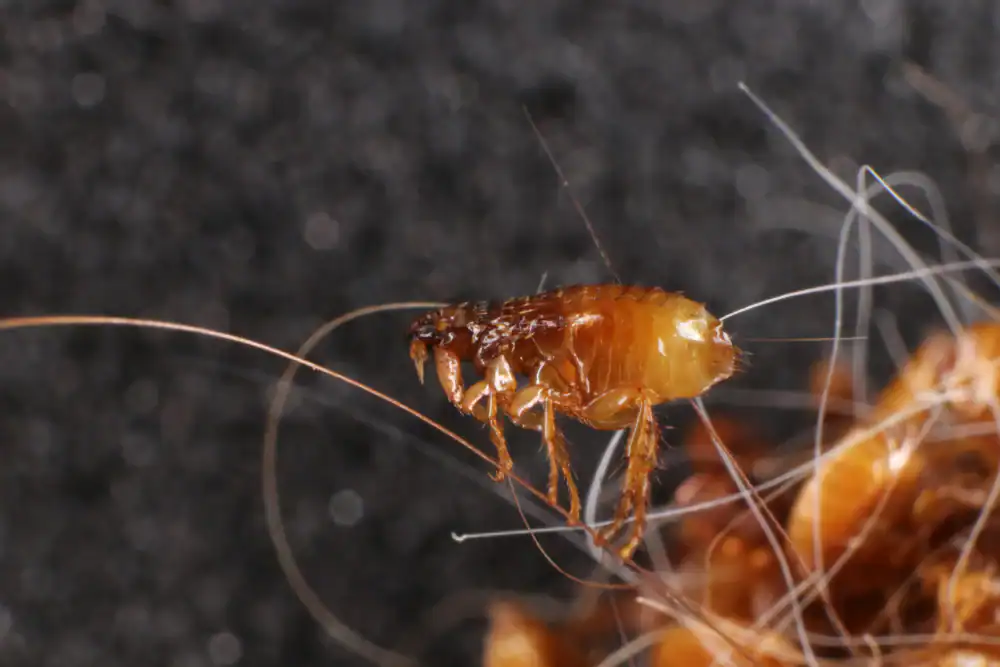
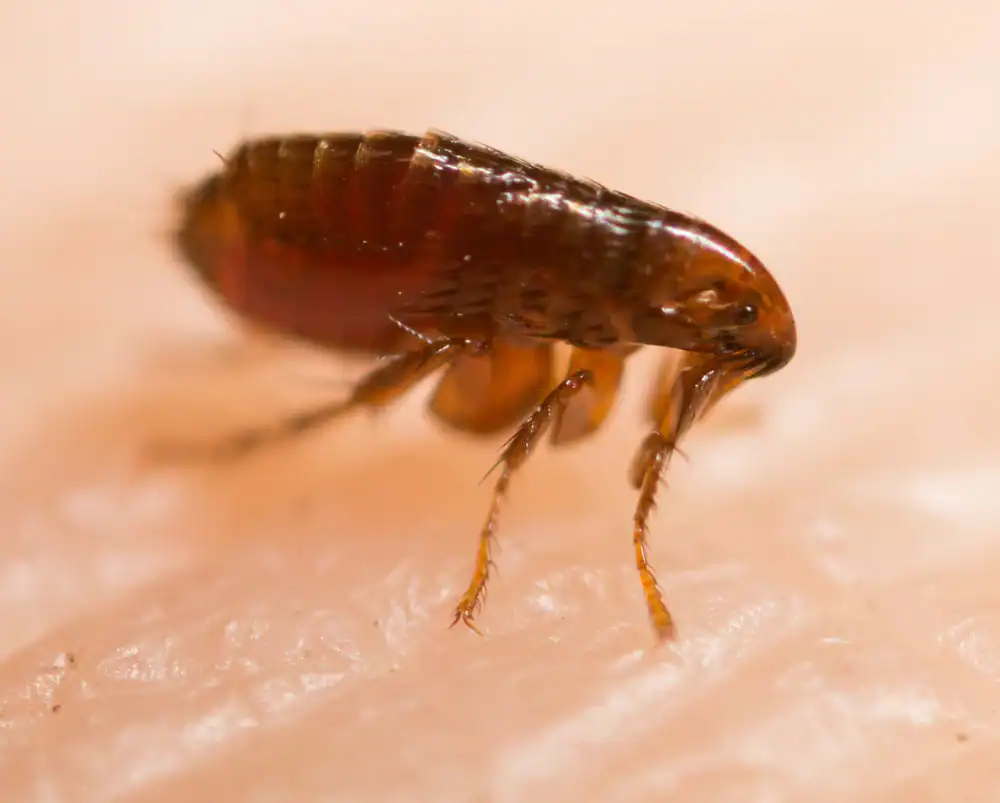
Your dog stops scratching. Your kids stop getting bitten at the ankles. You stop pulling flea combs through fur every other day and wondering why nothing you’ve tried has stuck. That’s what a real flea treatment looks like when it’s done right — not just fewer adults for a week, but the whole cycle interrupted at every stage.
Here’s what most people don’t know: roughly 95% of the fleas in your home aren’t on your pet. They’re in your carpet, in the baseboards, tucked into the furniture cushions, and waiting in the cracks of your floor. Forest Hills homes are predominantly 1960s and 1970s construction — deep-pile carpet, mature landscaping, older structural gaps. That housing stock holds flea eggs and larvae in ways a brand-new build simply doesn’t. Treating your pet alone addresses maybe 5% of the problem. Professional treatment targets the other 95%.
And if your yard backs up to one of the freshwater canals that run through parts of Forest Hills toward the Anclote River, there’s an additional layer most people don’t consider. Raccoons, opossums, and feral cats use those canal banks as travel corridors every night — depositing flea eggs in your yard whether your pet ever goes outside or not. Flea and tick yard treatment in Forest Hills isn’t optional if you live near that waterway. It’s the missing piece that explains why indoor-only treatments keep failing.
We’ve been serving southern Pasco County for over 14 years. Forest Hills isn’t a market we’re stretching to reach — it’s a neighborhood we know well, from the older homes near the Forest Hills Golf Course to the canal-front properties that back up to the Anclote River watershed. We hold multiple Florida Department of Agriculture and Consumer Services licenses, all valid through 2027, and we’ve earned BBB Accreditation and over 100 five-star Google reviews from real customers in Hernando and Pasco Counties.
What actually sets us apart is simple: when you call, you’re talking to George, the owner. Not a call center. Not a scheduling bot. Not a subcontractor who’s never been to your street. George can give you a real quote over the phone on the first call — no inspection appointment required, no waiting around. For a flea problem that’s already uncomfortable and getting worse, that matters. We’re available seven days a week, including weekends, at no extra charge. New homeowners and military families also receive special discounts, because we know exactly who lives in communities like Forest Hills.

It starts with a real conversation. When you call, George walks through what you’re seeing — where the activity is, whether you have pets, how long it’s been going on, and whether the home has been vacant recently. That last question matters more in Forest Hills than most people realize. Flea pupae can remain dormant in carpet and flooring for up to 140 to 170 days, waiting for vibration that signals a host has arrived. If you’ve moved into a previously vacant Forest Hills home and suddenly feel like fleas appeared out of nowhere, that’s exactly what happened — and it’s one of the most common calls we get in this neighborhood.
Once we’re on-site, treatment covers both the indoor environment and the outdoor perimeter. Inside, we apply professional-grade adulticides that kill adult fleas on contact, combined with insect growth regulators — IGRs — that prevent eggs and larvae from ever developing into breeding adults. That combination is what breaks the flea life cycle in Forest Hills homes rather than just knocking down the adults temporarily. Outside, we treat the yard perimeter, shaded areas, and any canal-adjacent zones where wildlife pressure is reintroducing flea eggs to your property.
After treatment, we’ll walk you through the re-entry timeline for your pets and kids, what to expect over the next few days as remaining pupae hatch and contact the treated surfaces, and when a follow-up visit makes sense. In Florida’s climate, where fleas are biologically active every single month of the year, we’ll also talk through flea prevention services that keep your home protected between treatments — because one visit handles the infestation, but ongoing prevention is what keeps it from coming back.
Ready to get started?
Flea control in Forest Hills isn’t a single product applied once and forgotten. The service covers what actually needs to be addressed: the indoor environment where most of the flea population is living, the outdoor perimeter where wildlife is continuously reintroducing pressure, and a follow-up structure that accounts for Florida’s year-round flea activity. Every treatment is applied by a state-licensed technician using FDACS-approved products at precise concentrations — which is how we can tell you clearly what was used, why, and when it’s safe to bring your pets and children back inside.
For homes near the Forest Hills Golf Course, outdoor treatment pays particular attention to shaded turf edges and landscaped borders where flea larvae thrive in the moisture and cover that Bermuda grass rough areas provide. For canal-front properties, the yard perimeter treatment extends to the areas where wildlife traffic is heaviest. For older homes with established carpet, indoor treatment goes beyond surface application to reach the depth where eggs and larvae are actually living. These aren’t add-ons — they’re adjustments based on what’s actually present in your specific property and what the surrounding environment is doing.
We also offer flea prevention services in Forest Hills for homeowners who want to stay ahead of the problem rather than react to it. Pasco County’s Gulf Coast climate means there’s no off-season. Quarterly prevention keeps a continuous barrier in place and removes the guesswork of trying to time a single annual treatment against a flea season that never actually ends. If you’re a new homeowner in Forest Hills or managing a rental property that’s been vacant, call us before the infestation establishes — it’s a much easier conversation than the one that happens after.

The most common reason is flea pupae — the cocoon stage of the flea life cycle. Pupae are completely resistant to insecticides, and they can stay dormant in carpet fibers and floor gaps for up to 140 to 170 days. After a treatment kills the adult fleas, pupae that were already in place continue to develop and hatch over the following weeks. When they emerge and contact the treated surfaces, they die — but in the meantime, it can look like the infestation is returning. This is normal, and it’s not a sign the treatment failed.
In Forest Hills specifically, this cycle is compounded by outdoor reinfestation pressure. If your yard backs up to one of the canals connecting to the Anclote River, wildlife is moving through that corridor regularly and depositing flea eggs in your yard. Without outdoor perimeter treatment alongside indoor treatment, the source of pressure stays active. A follow-up visit timed around the pupal hatch cycle, combined with yard treatment, is what closes that loop and stops the pattern for good.
Yes — but the honest answer is that “pet-safe” depends entirely on who’s applying what, at what concentration, and whether they’re telling you the re-entry timing. When you work with a licensed technician, you get a specific product list, specific application rates, and a specific window before it’s safe to bring pets and children back into treated areas. That’s not something you get with a flea bomb from the hardware store, which saturates the air and surfaces with no precision and no guidance.
We hold multiple FDACS licenses and apply products that are approved for residential use in Florida. After treatment, we walk you through exactly what was used in each area of your home, how long to stay out, and any specific precautions for pets — particularly cats, which can be more sensitive to certain product classes than dogs. If you have fish tanks, reptiles, or birds, let us know before the appointment so we can adjust the treatment approach accordingly. The goal is a home that’s clear of fleas and safe for everyone living in it.
Yes, and this is one of the most common misconceptions we run into with Forest Hills homeowners who moved here from northern states. Florida doesn’t have a flea winter. Pasco County’s Gulf Coast proximity keeps temperatures above the threshold for flea activity every month of the year — even in January and February. Fleas slow down slightly when temperatures dip, but they don’t die off, and they don’t stop reproducing. A homeowner who skips prevention in November and December is accumulating flea pressure that will become visible by February or March.
The practical consequence of this is that flea prevention services in Forest Hills aren’t a seasonal product — they’re a year-round necessity. Quarterly treatments maintain a continuous barrier that matches the pace of Florida’s flea season. Waiting until you see active fleas before calling means you’re already dealing with a multi-generational population that’s had weeks or months to establish in your carpet and yard. Staying ahead of it is genuinely easier and less expensive than treating an established infestation.
This is one of the most common flea scenarios in Forest Hills, and it has a very specific explanation. Flea pupae — the cocoon stage — can remain completely dormant in carpet fibers and floor gaps for months. During that dormancy, they’re undetectable and resistant to any insecticide. When you walk into a home that’s been sitting vacant, the vibration from your footsteps triggers the pupae to hatch simultaneously. What feels like a sudden explosion of fleas from a clean, empty house is actually a dormant population that’s been waiting for exactly that signal.
Forest Hills has a residential vacancy rate around 18.6%, which is higher than the vast majority of U.S. neighborhoods. Seasonal residents, rental turnovers, and homes that sat on the market before sale all create this exact scenario regularly. If you’ve just moved into a Forest Hills home or returned after an extended absence and you’re suddenly dealing with fleas, call us before you try anything else. The treatment approach for a post-vacancy pupal emergence is specific, and treating it wrong — especially with a flea bomb that doesn’t reach deep into carpet pile — will leave the pupae untouched and the problem unsolved.
The honest answer is that the best way to kill fleas in carpet is professional treatment with a combination of adulticides and insect growth regulators — not a single product, and not a flea bomb. Flea bombs release a cloud of insecticide that settles on surfaces but rarely penetrates deep into carpet pile where flea larvae actually live. They kill exposed adults, leave eggs and larvae untouched, and give the impression of solving the problem for about a week before the next generation emerges.
Forest Hills homes are predominantly 1960s and 1970s construction, which means deep-pile wall-to-wall carpet in most living areas and bedrooms. That carpet depth is a significant factor — larvae burrow down into it specifically to avoid light and contact with the surface. Professional treatment uses products that are applied at the carpet level and work through the pile, combined with IGRs that interrupt the development cycle so eggs and larvae can’t mature into breeding adults. Thorough vacuuming before treatment helps by stimulating pupae to hatch and by reducing the organic debris that larvae feed on. We’ll walk you through the prep steps before we arrive so the treatment can do its job fully.
Flea treatment costs in the Forest Hills and Holiday area generally range from around $150 to $350 for a standard residential treatment, depending on the size of the home, the severity of the infestation, and whether outdoor yard treatment is included. Homes with active canal-adjacent yards or significant wildlife pressure may need a more comprehensive outdoor application, which affects the total. A follow-up visit, if needed, is typically less than the initial treatment because the environment has already been addressed.
What affects the price most is the scope of what actually needs to be treated. A two-bedroom Forest Hills home with a mild infestation and no outdoor pressure is a different job than a three-bedroom home with deep-pile carpet throughout, a yard backing up to the Anclote River canal system, and a history of vacancy. When you call, George will ask the right questions and give you a real quote over the phone — not a vague range that balloons into something else when the technician arrives. For new homeowners in Forest Hills, we offer a discount specifically because we know that moving into a home with an inherited flea problem is already expensive enough.
Other Services we provide in Forest Hills