
Fast, reliable pest control from Hernando County’s most trusted family-owned team—with most quotes given over the phone.
Contact Info
Fast, reliable pest control from Hernando County’s most trusted family-owned team—with most quotes given over the phone.
Contact Info
Discover how to identify Hernando County's most common spiders, from venomous black widows to harmless wolf spiders, and learn when to call an exterminator.
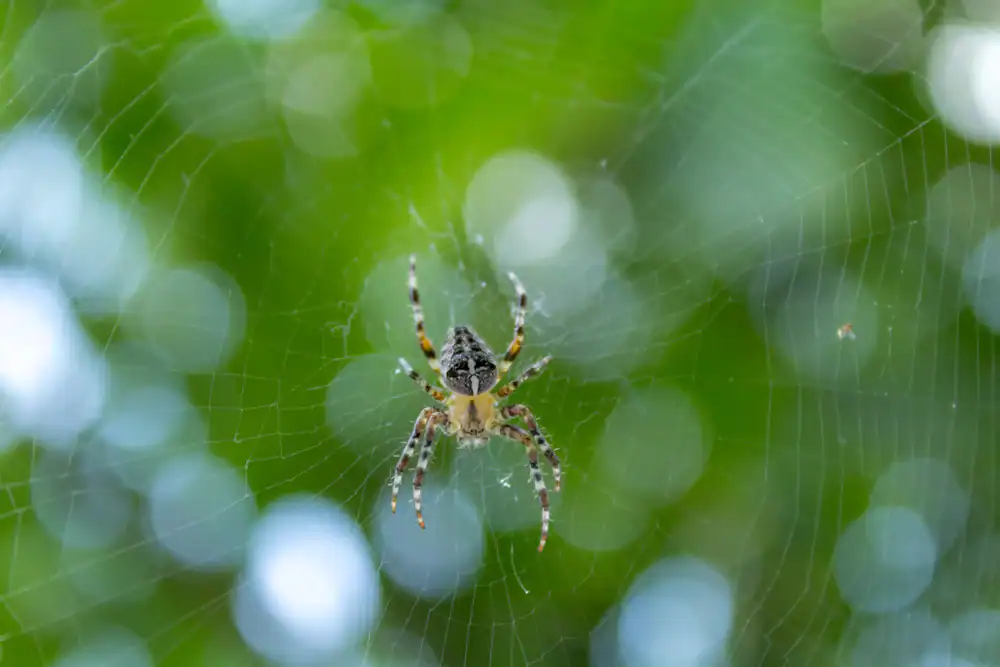
You’re doing laundry and there it is—a spider the size of a quarter staring back at you from the corner of your garage. Your heart skips. Is it dangerous? Should you call someone? Most people in Hernando County and Pasco County have been there.
Florida’s warm, humid climate makes it prime real estate for spiders, and not all of them are welcome guests. Some are harmless helpers that eat mosquitoes and flies. Others carry venom that can send you to urgent care. The trick is knowing which is which.
This guide breaks down the five most common spiders you’re likely to encounter in Hernando County, what they look like, where they hide, and when you should be concerned enough to call for professional spider control services. Proper identification, targeted treatment, and preventative sealing of entry points are key to keeping your home safe and spider-free.
The Southern black widow is the spider most Floridians fear, and for good reason. This is the most venomous spider native to Hernando County and Pasco County.
Females are easy to spot if you know what to look for. They have a shiny, jet-black body and a distinctive red hourglass marking on the underside of their abdomen. They’re about 1.5 inches long when you include the legs. Males are much smaller, less noticeable, and rarely bite. If you flip over a black widow, that hourglass is unmistakable.
Black widows aren’t aggressive. They bite when threatened, cornered, or accidentally squeezed—like when you’re reaching into a dark shed or putting on shoes left outside. Their venom is neurotoxic, which means it attacks your nervous system and can cause severe muscle pain, cramping, nausea, and difficulty breathing.

Black widows prefer dark, undisturbed spaces where they can build their messy, irregular webs in peace. You’ll most often find them in garages, sheds, woodpiles, crawl spaces, and under outdoor furniture. They also love hiding in the corners of basements, behind stored boxes, and around the edges of attics.
Outside, they’re drawn to areas with clutter. Stacks of firewood, piles of debris, unused grills, and even the underside of patio chairs are prime real estate for black widows. If you’re reaching into any space you can’t see clearly, especially outdoors, take a second to check first.
Their webs are a giveaway. Unlike the neat, organized webs of orb-weavers, black widow webs look chaotic—tangled and sticky, often near the ground. If you spot one of these webs in a high-traffic area of your property, it’s worth calling a professional for black widow control. The risk isn’t worth handling it yourself, especially if you have kids or pets.
The reality is that black widows are reclusive. They don’t want to be near you any more than you want to be near them. But when they do end up inside your home, it’s usually because they’re following a food source—other insects. That’s why effective spider control often starts with managing the pests that attract them in the first place.
If you spot a black widow in your home, don’t panic, but don’t ignore it either. The first rule is simple: don’t try to catch it with your bare hands or swat at it. Black widows bite when they feel trapped, and that’s exactly what happens when you try to grab one or corner it with a shoe.
If the spider is in an area you can avoid—like a far corner of the garage or a rarely used shed—you can call a professional exterminator to handle it safely. If it’s in a high-traffic area or somewhere your kids or pets might encounter it, keep everyone away from that spot and get help immediately.
Some people try the vacuum method, and while it can work, it’s not foolproof. Black widows are tough, and there’s always a risk of the spider crawling back out if the vacuum isn’t sealed properly. Plus, if there’s one black widow, there’s a chance there are more nearby or egg sacs waiting to hatch.
Professional spider control is the safest route for venomous spider identification and removal. An experienced exterminator knows where to look for hidden black widows, how to eliminate them without putting your family at risk, and how to treat the areas where they’re most likely to return. We handle black widow control throughout Hernando County and Pasco County with fast response times and honest, straightforward service. If you’re dealing with a black widow problem, it’s worth the call.
Want live answers?
Connect with a Around The Clock Pest Service expert for fast, friendly support.
Wolf spiders are the ones that make people jump. They’re big, fast, and hairy—and they look a lot scarier than they actually are. These spiders are common throughout Hernando County and Pasco County, and while they’re intimidating, they’re not dangerous to humans.
Wolf spiders are hunters, not web-builders. They chase down their prey on the ground, which is why you’ll often see them darting across your floor or wall at night. They’re typically brown or gray with darker markings that help them blend into their surroundings. Some can grow up to two inches, and their hairy bodies make them look even larger.
The good news? Wolf spiders are not venomous in a way that harms people. Their bite can be painful and might cause some swelling, but it’s not medically dangerous. They’re also not aggressive—they’d much rather run away from you than bite.

This is where things get tricky. A lot of people mistake wolf spiders for brown recluse spiders, and that misidentification causes unnecessary panic. The two look similar at first glance—they’re both brown, they’re both found indoors, and they’re both reclusive by nature. But there are clear differences once you know what to look for.
Wolf spiders are hairy. If you can see distinct hair or fur covering the body and legs, it’s a wolf spider. Brown recluse spiders have smooth, hairless bodies. That’s the easiest way to tell them apart from a distance.
Size is another clue. Wolf spiders are significantly larger—about three times the size of a brown recluse. If the spider you’re looking at is hefty and robust, it’s almost certainly a wolf spider.
The brown recluse has a violin-shaped marking on its back, with the neck of the violin pointing toward the rear of the spider. Wolf spiders have various markings, but none of them look like a violin. They’re more likely to have stripes or spots running down their bodies.
Eye arrangement is the definitive test, though you’d need to get pretty close to see it. Brown recluse spiders have six eyes arranged in pairs, while wolf spiders have eight eyes in three rows, with two large forward-facing eyes that reflect light at night. If you shine a flashlight in a dark room and see tiny glowing eyes on the floor, that’s a wolf spider.
Here’s the reality: brown recluse spiders are rare in Florida. They’re not native to the state, and confirmed sightings are uncommon. Most of the time, what people think is a brown recluse is actually a wolf spider, a southern house spider, or another harmless species. If you’re unsure, we can provide accurate venomous spider identification and put your mind at ease.
Wolf spiders are beneficial. They eat roaches, ants, flies, and other pests that you definitely don’t want in your home. In that sense, they’re doing you a favor. But that doesn’t mean you want them running across your living room floor at night.
If you see one wolf spider occasionally, it’s not necessarily a problem. You can catch it in a cup and release it outside, or just leave it alone and let it do its job. But if you’re seeing wolf spiders regularly, that’s a sign of a bigger issue. Wolf spiders don’t just wander into your home for fun—they’re following food. If they’re inside, it means you have other insects that are attracting them.
That’s where professional pest control becomes valuable. Effective wolf spider removal isn’t just about getting rid of the spiders you see. It’s about addressing the insect population that’s drawing them inside in the first place. A good exterminator will treat for the underlying pest problem, seal up entry points, and create a barrier that keeps both the spiders and their prey from getting in.
We take this approach with every service call. We don’t just spray and leave—we identify what’s attracting pests to your property, treat the root cause, and give you honest advice on how to keep your home pest-free long-term. If you’re dealing with frequent wolf spider sightings in Hernando County or Pasco County, a quick call can save you a lot of stress.
Beyond black widows and wolf spiders, Hernando County is home to a few other spiders you’re likely to encounter. Brown widows are cousins to the black widow but less dangerous. They have a tan or brown body with an orange or yellow hourglass marking and are often found on outdoor furniture, mailboxes, and under eaves. Their venom is less potent than the black widow’s, but you should still treat them with caution.
Golden silk orb-weavers, often called banana spiders, are the large yellow spiders you see building impressive webs in your yard. They look intimidating because of their size, but they’re completely harmless to humans. They’re actually beneficial because they catch mosquitoes, flies, and other flying pests. If you find their webs annoying, a spider web removal service can clear them out without harming the spiders.
Common house spiders are small, brown or gray, and build messy cobwebs in corners, closets, and basements. They’re harmless and tend to stay out of sight. Jumping spiders are tiny, colorful, and have large forward-facing eyes. They don’t build webs—they hunt during the day and are completely harmless. In fact, they’re one of the most helpful spiders to have around because they eat other pests.
Knowing the difference between these common spiders in Hernando County helps you respond appropriately. Not every spider needs professional intervention, but if you’re unsure, it’s always better to get an expert opinion than to take a chance with your family’s safety. We offer honest assessments and will never upsell you on services you don’t need. That’s the difference a family-run business makes.
Summary:
Article details:
Share: