
Fast, reliable pest control from Hernando County’s most trusted family-owned team—with most quotes given over the phone.
Contact Info
Fast, reliable pest control from Hernando County’s most trusted family-owned team—with most quotes given over the phone.
Contact Info
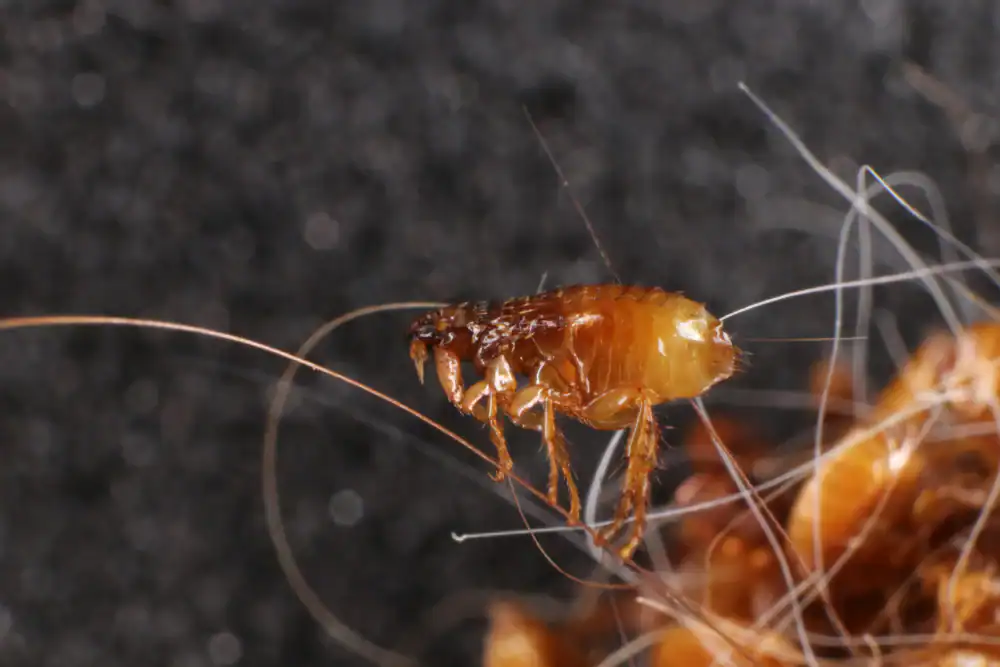
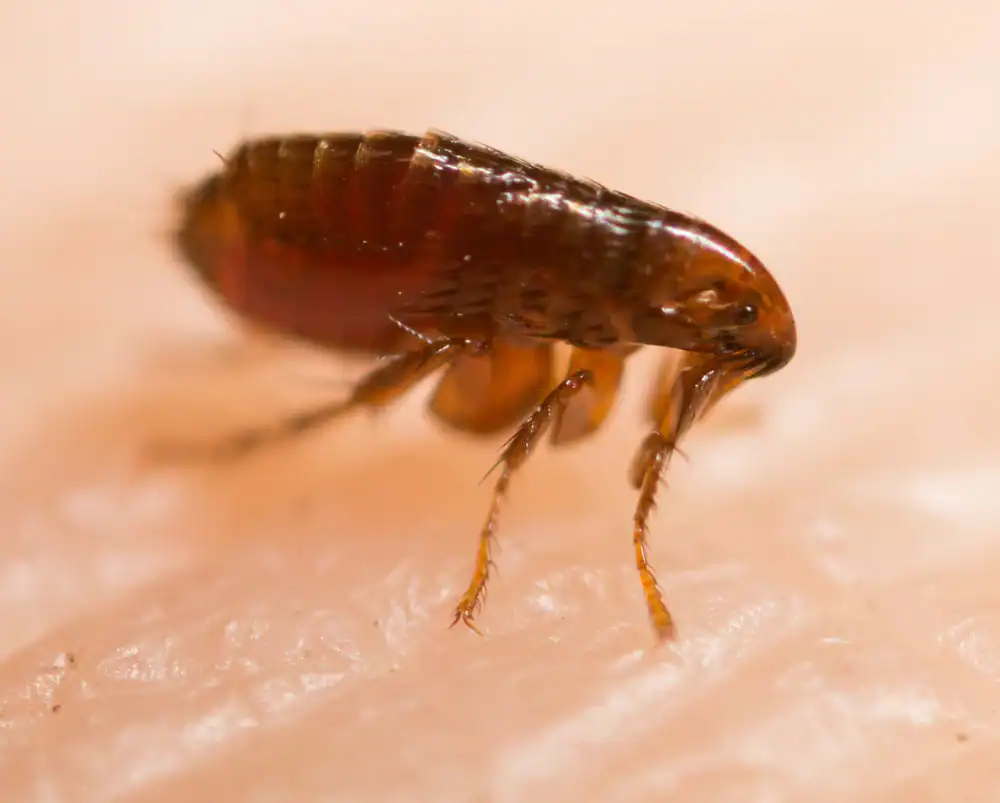
The scratching stops. The bites stop. Your dog stops dragging himself across the floor at 2am. That’s the obvious part. What most people don’t realize is that getting there requires more than treating the pet — it requires treating the environment where 95% of the flea population actually lives.
Garden Grove properties face a specific kind of flea pressure that a lot of pest control companies don’t fully account for. Raccoons, opossums, and armadillos move through the wooded corridors along the Brooksville-Tampa Bay Regional Airport perimeter and across the hammock-adjacent lots that make this community what it is. Your pet goes outside, picks up eggs deposited overnight by wildlife, and carries them in. The fleas you’re seeing on your dog are maybe 5% of the problem. The other 95% are already in your carpet, baseboards, and furniture.
Because Hernando County doesn’t get a real winter, that cycle runs all year. There’s no cold snap in January that resets things. A flea problem that starts in June can still be building in November if it’s not treated completely — indoors, outdoors, and at every stage of the life cycle simultaneously.
Around The Clock Pest Service is a family-run operation based in Spring Hill, right at the end of Spring Hill Drive where it meets the Garden Grove corridor. George built this business because he watched too many Hernando County homeowners get burned by companies that didn’t answer calls, sent different technicians every time, or quoted one price and charged another. That’s not how we work.
When you call, you get George. He knows the wildlife pressure that comes with living near the Chocochatti Hammock land that Garden Grove was built on. He knows the seasonal patterns in this part of Hernando County. And he can give you a real quote over the phone — no sales visit required, no waiting for someone to call you back from a call center three counties away.
Over 100 five-star Google reviews from verified homeowners in Hernando and Pasco Counties back that up. We hold multiple FDACS licenses through 2027, are BBB Accredited, and available 24/7 including weekends at no extra charge.

It starts with a phone call. George will ask you the right questions — how long the problem has been going on, whether you have pets, whether you’ve already treated, and what areas of the home are most affected. Most of the time, he can give you a quote right there. No appointment needed just to find out what it costs.
When service day comes, we treat the full environment — not just where you’ve seen fleas. That means interior rooms including carpets, baseboards, furniture, and pet bedding areas, plus the yard and perimeter where the flea cycle is often starting in the first place. For Garden Grove properties with wooded lots, shaded yards, or homes backing onto the airport perimeter land, outdoor treatment isn’t optional — it’s where the reinfestation is coming from.
The products we use combine an adulticide that kills active fleas with an insect growth regulator, or IGR, that prevents eggs and larvae from becoming breeding adults. That combination is what breaks the cycle. Before you leave for the day, you’ll know exactly what was applied, when it’s safe to re-enter, and what to expect in the days that follow — including why you might still see some flea activity for a short period after treatment and why that’s completely normal.
Ready to get started?
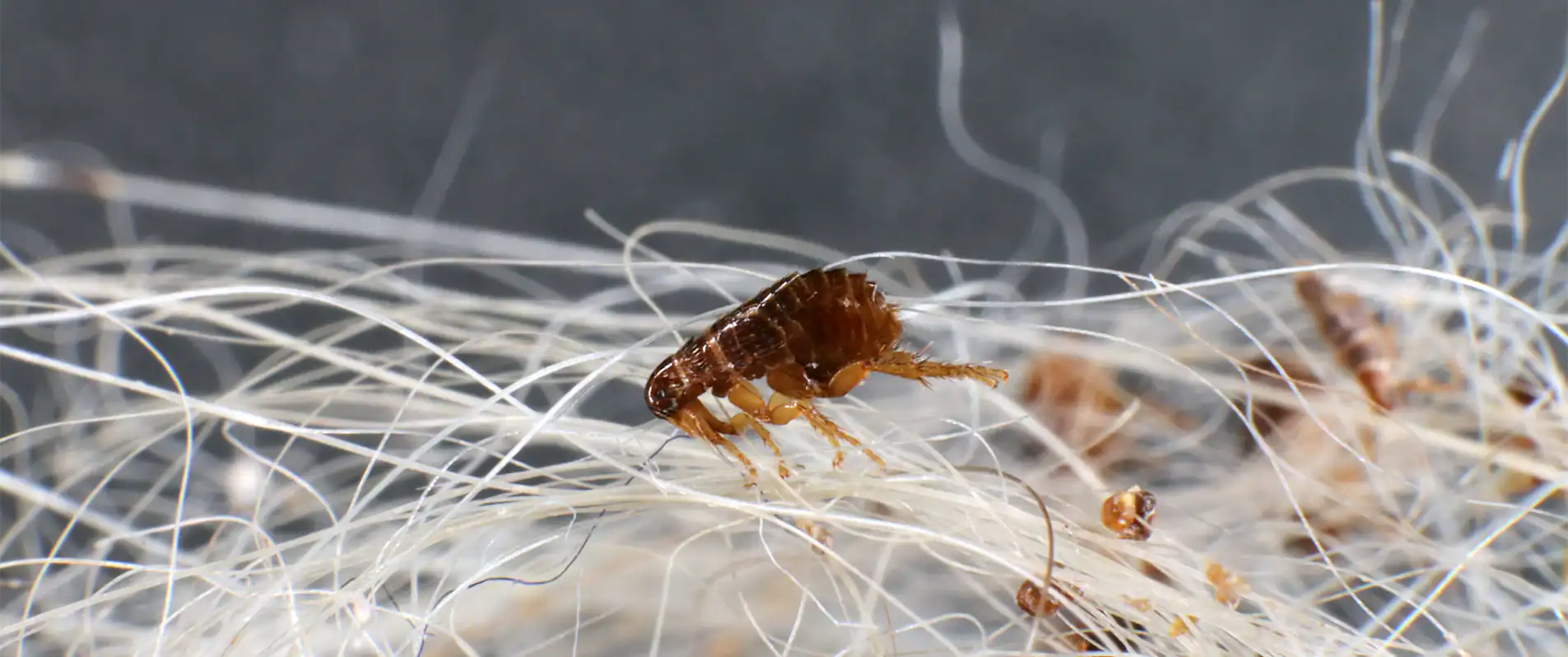
Flea control in Garden Grove means treating four life stages — adult, egg, larva, and pupa — because missing even one of them is why infestations come back. The pupal stage is the one most treatments miss entirely. Pupae can sit dormant in your carpet for up to 170 days, completely protected from any insecticide. When your foot traffic triggers them to hatch, it can feel like the treatment failed. It didn’t — those were already in their cocoons when service happened, and the residual products in a proper treatment are designed to catch them as they emerge.
For homeowners in the Trails of Rivard community and surrounding Garden Grove neighborhoods, we cover all living areas, bedrooms, and high-contact zones in our indoor flea extermination. Pet-safe flea removal is a core part of every service — you’ll know exactly what was used, at what concentration, and when it’s safe for your dogs and cats to re-enter. Yard treatment addresses the soil, turf, and shaded areas along your property line where flea eggs are deposited by wildlife passing through.
All services are performed under multiple active FDACS licenses — numbers verifiable through the Florida Department of Agriculture and Consumer Services. Garden Grove is unincorporated Hernando County, so state licensing is the governing standard, and we meet it across multiple pest control categories. If you’ve recently moved into a new build in the area or purchased an existing home, ask about the new homeowner discount — it’s a real number, not a gimmick.

This is the most common flea frustration, and the answer is almost always the same: you treated 5% of the problem. Only about 5% of the flea population in an infested home lives on the pet at any given time. The other 95% — eggs, larvae, and pupae — are embedded in your carpet, furniture, baseboards, and anywhere your pet rests or travels. Flea shampoos, collars, and topical treatments kill the adults on the animal, but they do nothing to the population already living in your home.
In Garden Grove specifically, there’s another layer to this. Wildlife moving through your yard — raccoons, opossums, armadillos — deposits flea eggs in the soil and grass overnight. Your pet picks those up the next morning and brings them inside. Even if you’ve treated your pet completely, the yard is still introducing new eggs into the cycle. A complete treatment addresses the pet, the interior environment, and the yard — all at the same time.
It doesn’t slow down — not meaningfully. Florida’s subtropical climate keeps fleas active and reproductive every month of the year. There’s no frost in Garden Grove that resets the population the way it does in northern states. Flea season peaks between April and September when humidity is highest and the breeding cycle runs fastest, but the population doesn’t collapse in October or November. It just keeps building.
This matters practically because homeowners who treat in summer and assume the problem is handled often find themselves dealing with a larger infestation by late fall or early spring. Hernando County hosts conditions that support at least 19 documented flea species in Florida — far more than most other states — because the environment never becomes hostile enough to drive them out. Year-round flea prevention services are worth considering if you have pets and outdoor wildlife exposure, which most Garden Grove properties do.
Yes — but the specific answer depends on what was applied, at what concentration, and how much time has passed since treatment. That’s why we walk you through exactly what was used before you leave for the day. You’ll know the re-entry timing for people and pets, and you’ll know what to expect during that window.
Professional-grade products used in flea treatment are applied by state-certified technicians who are trained in safe application rates and proper protocols. The concern most pet owners have is completely valid — and it’s one George addresses directly on every job, not as an afterthought. If you have specific sensitivities in your household, a senior pet, or a very young animal, mention it when you call. That context affects how the treatment is approached and what post-service instructions you’ll need to follow.
Possibly, yes — and it’s more common than most new homeowners expect. The Trails of Rivard community and the surrounding Garden Grove area have seen active new construction on land that previously supported wildlife and the flea populations that come with them. Building a house doesn’t eliminate the flea eggs already in the soil. And if you’ve purchased an existing home that had prior pet owners or sat vacant for any period of time, flea pupae can be waiting in the carpet — dormant, protected from any cleaning or spraying, just waiting for the vibration of foot traffic to trigger hatching.
The classic sign is moving in, having no pets, and getting bitten within the first week. That’s not a coincidence — that’s dormant pupae hatching in response to your movement through the home. We offer a new homeowner discount specifically because this situation is real and common in Garden Grove’s active real estate market. Call before the fleas announce themselves if you can.
They didn’t come back — they were already there. What you’re seeing two weeks after treatment is the pupal stage playing out. Flea pupae form a cocoon that is completely resistant to every insecticide available. No product penetrates it. When treatment is applied, the adults are killed and the eggs and larvae are addressed by the insect growth regulator, but any pupae already in their cocoons at the time of service survive. They can remain dormant for 140 to 170 days.
When foot traffic, vibration, or warmth triggers them to hatch, you see a sudden surge of adult fleas — and it looks exactly like a reinfestation. It isn’t. A quality professional treatment includes residual products designed to kill these emerging adults as they come out of their cocoons. This is why we explain the pupal stage to every client before service, not after. Knowing what to expect prevents a lot of unnecessary alarm and helps you understand what’s actually happening in your home.
For most Garden Grove properties, yes — outdoor treatment is not optional if you want lasting results. The flea problem in this part of Hernando County frequently originates in the yard, not inside the home. Wildlife corridors along the airport perimeter land and through the hammock-adjacent lots that define this community mean that raccoons, opossums, and other animals are moving through residential yards regularly, depositing flea eggs in soil and turf. If you treat the interior of your home but leave the yard untreated, you’re removing the infestation from one end while the other end keeps feeding it back in.
Yard treatment covers the turf, soil, and shaded areas along your property line where flea eggs and larvae concentrate — particularly under trees, along fence lines, and in areas where wildlife tends to travel or rest. For homes in the Trails of Rivard community with properties bordering the golf course or its landscaped perimeter, that edge habitat is especially active. Treating the yard alongside the interior is what makes the difference between a treatment that holds and one that requires you to call again in six weeks.
Other Services we provide in Garden Grove