
Fast, reliable pest control from Hernando County’s most trusted family-owned team—with most quotes given over the phone.
Contact Info
Fast, reliable pest control from Hernando County’s most trusted family-owned team—with most quotes given over the phone.
Contact Info
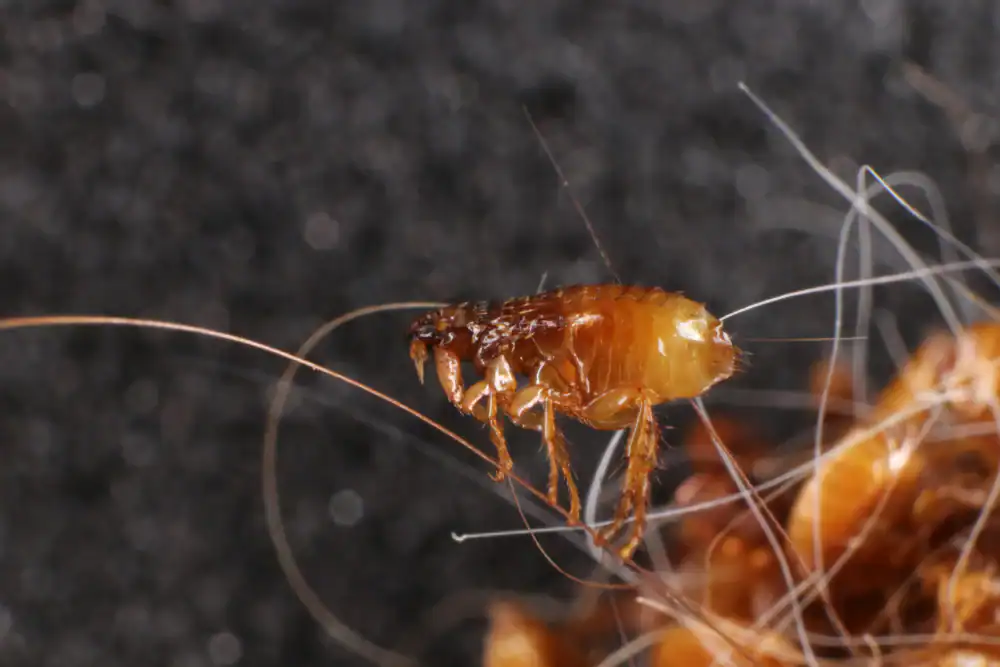
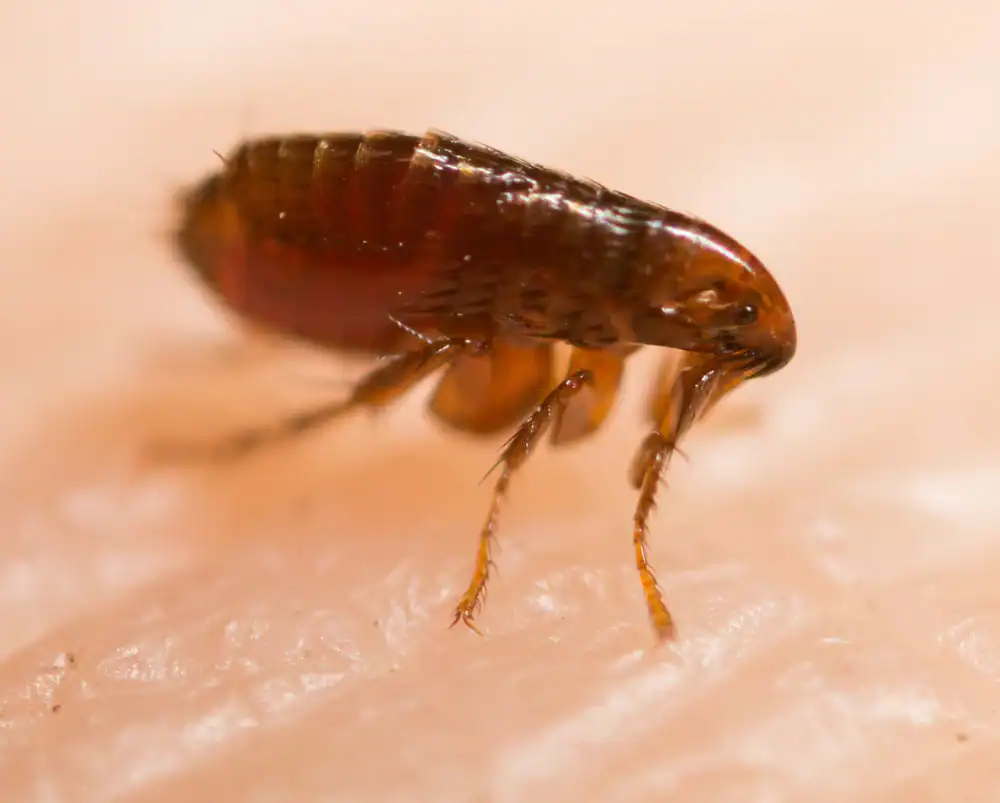
Here’s what most people get wrong: they treat the dog, the fleas come back, and they assume the product failed. It didn’t fail — it just never reached the actual problem. Only about 5% of fleas in an infested home are living on your pet as adults. The other 95% are in your carpet, your furniture, your baseboards, and the shaded soil under your porch — waiting.
That ratio matters even more out here in Lake Lindsey. When your property backs up to wooded acreage or sits along one of the rural roads feeding into Croom Wildlife Management Area, the outdoor environment is constantly being reseeded. Deer bed near fence lines. Raccoons cut through yards nightly. Every pass through deposits eggs you never see. Indoor flea extermination only holds if the outdoor source gets treated at the same time.
When both environments are addressed together — with professional-grade products that kill adults on contact and insect growth regulators that stop eggs and larvae from ever maturing — the cycle actually breaks. You stop chasing the same infestation every few weeks and start living in a home that stays clear.
We’re based in Hernando County and have been serving the county — including its rural northeastern communities like Lake Lindsey — for over 14 years. This isn’t a Tampa company stretching its service map to pick up extra zip codes. Lake Lindsey, the roads off CR 476, the properties near Lake McKethan, the acreage lots that border the forest — that’s familiar territory to us.
When you call, George answers. Not a call center, not a scheduler in another city — the owner, directly, any day of the week including weekends. Most quotes happen over the phone, so you’re not waiting on a sales visit just to find out what something costs. That’s how we built this business, because we saw too many Hernando County families get the runaround from companies that didn’t actually show up for rural communities the way they should.
Over 100 five-star Google reviews from verified local customers in Hernando and Pasco Counties back that up. Multiple FDACS licenses — valid through 2027 — confirm our credentials. BBB Accredited since 2022.

It starts with a phone call. You describe what you’re dealing with — how long it’s been going on, whether you have pets, how much outdoor space you have, whether you’ve already treated. George listens, asks the right questions, and gives you a real quote before anyone drives anywhere. No obligation, no pressure, no waiting.
When service is scheduled, the treatment covers both environments — inside the home and the outdoor areas where flea pressure is highest. Inside, that means carpets, baseboards, furniture edges, pet resting areas, and any room with documented activity. Outside, the focus goes to shaded areas under trees and porches, along fence lines, leaf litter zones, and the areas where wildlife traffic is most likely. On a Lake Lindsey property with mature oak canopy — the kind that overhangs Lake Lindsey Road and keeps the ground cool and damp year-round — those shaded zones are where flea populations concentrate most heavily.
The products we use combine a fast-acting adulticide with an insect growth regulator. The adulticide handles the adults present at the time of treatment. The IGR prevents the eggs and larvae already in the environment from ever reaching breeding age. One important heads-up: you may still see fleas in the first week or two after treatment. Those are dormant pupae hatching — they were already in cocoons when the treatment was applied, and no product penetrates a flea cocoon. The residual treatment catches them as they emerge. That’s not the treatment failing — that’s the process working exactly as it should.
Ready to get started?
Flea and tick yard treatment in Lake Lindsey looks different than it does in a Spring Hill subdivision. The lots are bigger, the shade is denser, the wildlife pressure is real, and some properties have horses, livestock, or working dogs that spend most of their time outside. The treatment has to account for all of that — not just the square footage of a living room carpet.
Every service we apply is delivered by a state-certified technician using professional-grade products at precise concentrations. Before treatment begins, you’ll know exactly what’s being used, where it’s going, and what the re-entry timing is for your specific animals — including large animals if you have them. Pet-safe flea removal in Lake Lindsey isn’t a marketing phrase here; it’s a conversation that happens before the first product is opened.
For properties with ongoing pressure — acreage lots adjacent to the Withlacoochee State Forest, homes with multiple outdoor animals, or any property where wildlife moves through regularly — flea prevention services on a quarterly schedule are the most practical long-term solution. A single treatment solves the current infestation. A quarterly program keeps it from rebuilding every time a deer or raccoon reintroduces eggs from the forest edge. Florida’s climate doesn’t give fleas a slow season, and out here, neither does the wildlife.

Treating your pet addresses the adult fleas living on the animal — which is only about 5% of the total flea population in an infested environment. The remaining 95% are in your home and yard as eggs, larvae, and pupae. Flea pupae in particular are essentially untouchable — they sit inside a sticky cocoon that no insecticide penetrates, and they can stay dormant for up to 140 days before hatching when they detect warmth and vibration.
In Lake Lindsey, there’s an additional factor that most suburban homeowners don’t deal with: wildlife reintroduction. Deer, raccoons, opossums, and wild hogs from the Croom Wildlife Management Area and the surrounding Withlacoochee State Forest pass through residential properties regularly, dropping new flea eggs every time they do. Even if you completely clear your home and yard, a single deer bedding near your fence line can restart the cycle within days. That’s why effective flea control here requires treating the outdoor environment — not just the interior — and why recurring prevention makes more practical sense than repeated one-time treatments.
It’s year-round. Florida’s subtropical climate keeps temperatures and humidity high enough to sustain flea populations through every month of the calendar. There’s no winter freeze that resets the population the way northern states experience. Flea activity peaks between April and September, when heat and humidity are highest and breeding cycles accelerate — but Hernando County’s inland climate means flea pressure never drops to zero, even in January or February.
For Lake Lindsey residents specifically, the year-round reality is compounded by the wildlife corridor created by the Withlacoochee State Forest. Wildlife doesn’t stop moving in winter, which means the outdoor flea reservoir doesn’t stop being replenished. If you have outdoor dogs, horses, or any animals that spend time in shaded yard areas, you’re dealing with a 12-month exposure window. The most practical response to that is a quarterly flea prevention program — not waiting for an infestation to develop and then reacting to it.
Yes — but the answer deserves more than a one-word response, especially for properties with large animals. Professional-grade flea treatments use products that are applied at specific concentrations and in specific locations. The application method, the product choice, and the re-entry timing all matter, and they vary depending on what animals you have and how they use the space.
Before any treatment begins on your property, you’ll know exactly what products we’re using, which areas will be treated, and how long you should keep your animals out of treated zones. For horses and livestock, that conversation is specific — not a generic disclaimer. Large animals have different sensitivities and different exposure patterns than a house cat or an indoor dog, and the treatment plan should reflect that. If you have a barn, paddock, or pasture area with flea pressure, that gets addressed as part of the outdoor treatment — not ignored because it falls outside a standard suburban service scope.
The best way to kill fleas in carpet is a professional treatment that combines a residual adulticide with an insect growth regulator applied directly into the carpet fibers and surrounding areas — followed by simultaneous outdoor treatment. That last part is what flea bombs miss entirely.
Flea bombs and foggers release a cloud of pesticide that settles on exposed surfaces. They don’t penetrate carpet fibers where flea larvae develop, they don’t reach the cracks and crevices where eggs accumulate, and they do nothing about the outdoor environment where wildlife keeps reintroducing fleas to your property. In Lake Lindsey, where the outdoor flea reservoir is constantly being refilled by forest wildlife, a flea bomb is essentially treating half the problem once and leaving the other half completely untouched. Professional treatment applies product where fleas actually live — deep in carpet pile, along baseboards, under furniture — and addresses the yard at the same visit so you’re not solving the interior while leaving the exterior as an active source.
Almost certainly not. What you’re seeing is dormant flea pupae hatching — and this is one of the most misunderstood parts of the flea life cycle. When treatment is applied, it kills adult fleas on contact and prevents eggs and larvae from maturing. But flea pupae — the cocoon stage — are completely resistant to all insecticides. They can remain dormant for up to 140 to 170 days, and they hatch when they detect vibration, warmth, and carbon dioxide from a nearby host.
When you start walking through your home after treatment, you’re triggering those dormant cocoons. The fleas that emerge are newly hatched adults, and they will contact the residual product left behind during treatment before they can breed. This is the process working as designed. The population you’re seeing will not reproduce — the IGR in the treatment prevents that — and it will taper off within two to three weeks as the remaining dormant pupae hatch and are eliminated. If you’re still seeing significant activity beyond that window, that’s worth a follow-up call — but in most cases, the two-week hatch is a normal and expected part of the treatment process.
Nationally, professional flea exterminator costs range from roughly $75 to $400, with most residential treatments landing around $270. For a Lake Lindsey property — where the job typically involves both indoor treatment and outdoor yard treatment on a larger lot, and where animals may be a factor — you’re likely looking at the middle to upper end of that range depending on square footage and the extent of outdoor coverage needed.
The most useful thing you can do before committing to anything is call and describe your situation. Property size, number of animals, whether you need barn or paddock treatment, how long the infestation has been active — all of that affects the scope and the price. We provide most quotes over the phone, so you get a real number before anyone shows up at your door. What you’re quoted is what you pay. For new homeowners who’ve recently moved to a rural Lake Lindsey property and are dealing with flea pressure for the first time, there’s also a new homeowner discount available — worth asking about when you call.
Other Services we provide in Lake Lindsey