
Fast, reliable pest control from Hernando County’s most trusted family-owned team—with most quotes given over the phone.
Contact Info
Fast, reliable pest control from Hernando County’s most trusted family-owned team—with most quotes given over the phone.
Contact Info
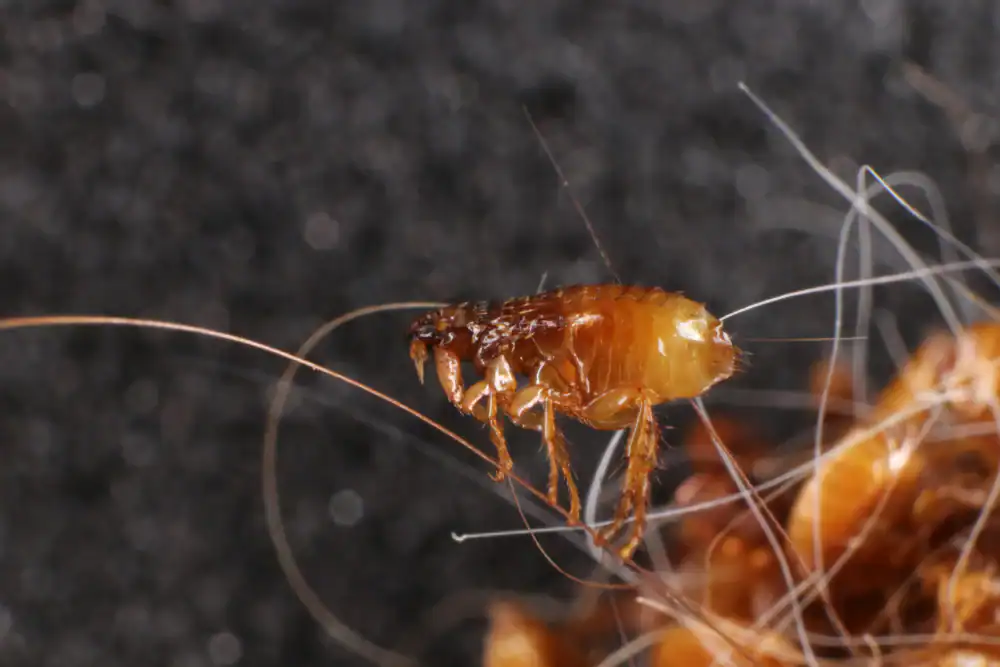
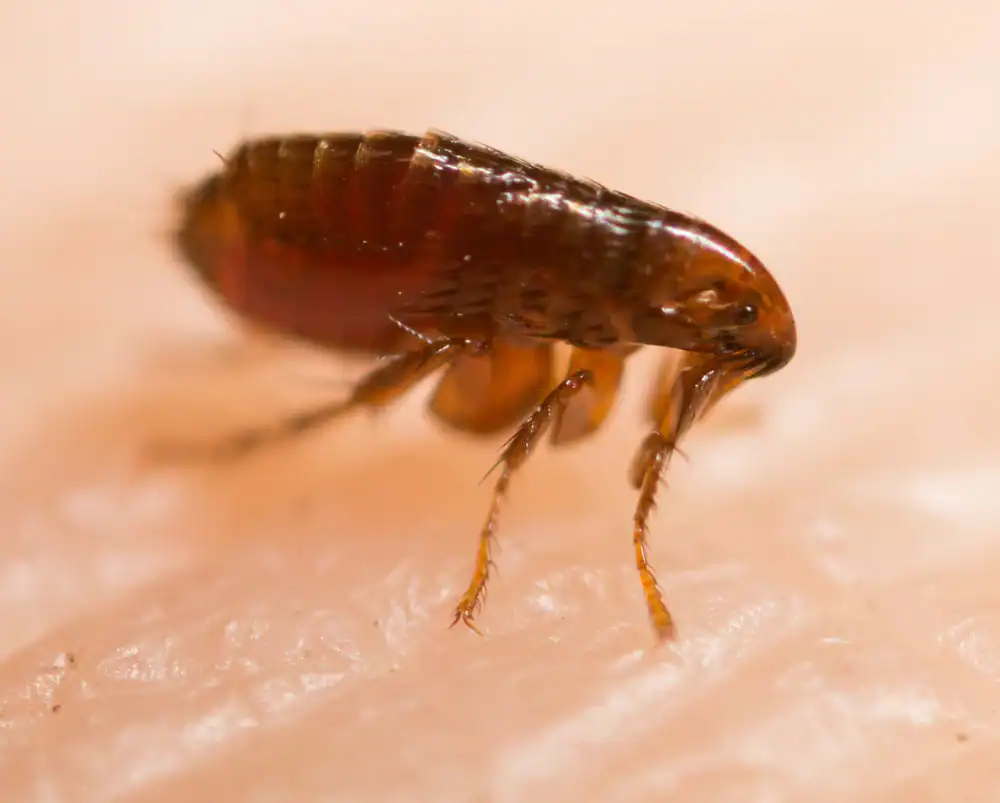
Most people treat their pets and wonder why the biting doesn’t stop. Here’s the reality: up to 95% of a flea infestation isn’t on your dog or cat — it’s in your carpet, your furniture, your baseboards, and your yard. If you’re only treating the animal, you’re leaving almost the entire problem untouched.
In Saint Joseph, that outdoor piece matters more than almost anywhere else in Pasco County. Properties along St. Joe Road and Scharber Road border wooded terrain, citrus groves, and undeveloped land that wildlife move through constantly. White-tailed deer, raccoons, opossums, and feral cats are all flea hosts, and every time one crosses your yard, it deposits eggs into your grass and shaded areas. Your dog doesn’t have to go anywhere to pick them up — the fleas come to him.
Once you’ve had a full indoor and outdoor treatment that actually targets all four stages of the flea life cycle — not just the adults you can see — the difference is immediate and lasting. No more biting, no more constant scratching, no more wondering if the store-bought spray did anything. Just a home that feels clean and a yard your pets can actually use.
Around The Clock Pest Service is a family-owned, owner-operated business serving Hernando and neighboring Florida counties, including the rural communities of northeast Pasco County like Saint Joseph. When you call about flea control, you’re not getting a call center or a franchise employee — you’re talking directly to the owner, who can give you a real quote over the phone and get you scheduled without the runaround.
Saint Joseph is a tight-knit community where people know their neighbors and have long memories about who showed up and who didn’t. That’s exactly the kind of accountability we built this business on. No subcontractors, no surprise fees, no strangers you can’t reach after the job is done.
With over 100 five-star Google reviews from Pasco and Hernando County residents, FDACS licensing verified through 2027, and BBB Accreditation, the credibility is there — but the real proof is in how the phone gets answered and how the work gets done.

The first step is a conversation. When you call, the owner walks through your situation — how many pets, how severe the problem is, whether you’re dealing with indoor infestation only or outdoor exposure too. For most Saint Joseph properties, it’s both, and the quote reflects that honestly. No sales visit required, no waiting for an estimate in the mail.
When the treatment happens, it covers the full picture. Indoors, that means treating carpets, baseboards, furniture, and pet resting areas with a combination of adulticides — which kill adult fleas on contact — and insect growth regulators (IGRs) that prevent eggs and larvae from ever developing into breeding adults. That two-part approach is what actually breaks the flea life cycle instead of just knocking down the adults temporarily.
Outdoors, the treatment targets the shaded zones, fence lines, and ground-level areas where flea larvae develop — the exact microenvironments that rural properties along St. Joe Road tend to have in abundance. After treatment, you’ll know exactly what was applied, when it’s safe for your pets to re-enter, and what to expect over the following two weeks as any dormant pupae hatch and encounter the residual. Florida’s year-round flea pressure means one treatment may not be the end of the story — but you’ll have a clear plan either way.
Ready to get started?
Flea control in Saint Joseph, FL isn’t a one-product job. Because this community sits in the rolling, wooded terrain of northeast Pasco County — with properties that border agricultural land and active wildlife corridors — effective treatment has to account for both the infestation already inside your home and the environmental pressure constantly coming from outside.
Indoors, the treatment covers every area where flea eggs, larvae, and pupae develop: carpets, rugs, upholstered furniture, baseboards, and anywhere your pets sleep or spend time. The IGR component is critical here — it’s what stops the next generation from hatching and starting the cycle over again, and it’s what separates a professional flea infestation treatment for your home from anything you’ll find on a store shelf.
Outdoors, we focus on shaded zones, leaf litter, ground cover, and perimeter areas where larvae survive and develop before jumping onto a host. For larger rural properties, that can mean treating a meaningful amount of yard — and it’s worth doing right. As an unincorporated community under Pasco County jurisdiction, there are no city-level permits or restrictions that complicate the process. The work is done efficiently, with full transparency on what’s used and why. If your situation calls for a follow-up or a quarterly flea prevention service to keep pressure from rebuilding, that conversation happens upfront — not after you’ve already paid.

This is the most common frustration people run into, and the answer comes down to where fleas actually live. Adult fleas — the ones you see jumping on your dog or biting your ankles — make up only about 5% of a flea infestation. The other 95% is eggs, larvae, and pupae living in your carpet, your furniture, your pet’s bedding, and your yard. Flea treatments applied only to the animal do nothing to address any of that.
In Saint Joseph specifically, there’s an added layer. Your property likely borders wooded land or open acreage that wildlife move through regularly. Deer, raccoons, and opossums are constant flea hosts, and they’re reseeding your yard with eggs every time they pass through. So even if you treat your pets consistently, new fleas are hatching in your environment and jumping back onto them within days. A full indoor and outdoor treatment that targets all four life cycle stages — not just the adults — is the only approach that actually resolves the problem rather than temporarily reducing it.
If you’re seeing fleas again shortly after a professional treatment, it’s almost certainly not because the treatment failed — it’s because of the pupal stage. Flea pupae are encased in a sticky, protective cocoon that makes them completely resistant to insecticides. They can remain dormant in that state for up to 170 days, and they don’t hatch until they detect warmth, vibration, or carbon dioxide — signals that a host is nearby. Treatment doesn’t kill them. It kills everything that hatches after.
What that means in practice is that you may see a small number of adult fleas emerge in the week or two following treatment as dormant pupae finally hatch. Those adults will encounter the residual IGR and adulticide still active in your environment and die before they can reproduce. This is the life cycle working as expected, not the treatment breaking down. We explain this before the job is done so you’re not caught off guard — and so you know the difference between a normal post-treatment observation and something that actually warrants a follow-up.
No — and this catches a lot of people off guard, especially those who moved to northeast Pasco County from northern states. In Florida’s subtropical climate, flea populations don’t die off in cold weather the way they do in states that experience hard freezes. Pasco County rarely gets temperatures low enough to eliminate outdoor flea populations, which means the pressure on your home and pets continues year-round without any natural break.
For Saint Joseph residents, this matters even more because the wooded, shaded terrain around rural properties maintains the moisture and ground-level conditions that flea larvae need to develop — even in the cooler months. The peak infestation period runs from April through September when populations multiply fastest, but fall and winter don’t bring relief. If anything, a summer’s worth of flea generations means the population is at its densest heading into fall. Year-round flea prevention services exist for exactly this reason — not as an upsell, but because a single treatment in June doesn’t hold through the following March in Florida’s climate.
Yes — and this question matters more in a rural community like Saint Joseph than it does in most suburban areas. Households here are more likely to have working dogs, outdoor dogs, multiple pets, or animals that spend significant time outside on larger properties. The concern about chemical safety is completely valid, and it deserves a straight answer rather than a generic reassurance.
We use professional-grade products applied by FDACS-licensed technicians who are trained in proper application rates, product selection, and re-entry timing for different types of animals. Before the job is done, you’ll know exactly what was applied, the active ingredients, and when it’s safe for your pets to re-enter treated areas. That information isn’t offered as an afterthought — it’s part of every job. If you have specific animals or specific concerns about a product, that conversation happens on the phone before anyone shows up. No guesswork, no assumptions, no finding out after the fact.
The most effective approach for carpet treatment combines two things: an adulticide that kills adult fleas on contact and an insect growth regulator (IGR) that prevents eggs and larvae from developing into breeding adults. Using only one without the other is why most treatments — including store-bought foggers and sprays — produce temporary results. The adults die, but the eggs and larvae survive, mature, and restart the infestation within weeks.
For Saint Joseph homes, carpet treatment is only part of the picture. Fleas develop in carpets because that’s where eggs fall after being laid on the pet, but they also thrive in upholstered furniture, baseboards, and any low-traffic area where larvae can feed undisturbed. A thorough indoor flea extermination in Saint Joseph, FL treats all of these areas together — not just the carpet — and coordinates with outdoor treatment to cut off the source of reinfestation. Vacuuming before treatment helps by stimulating dormant pupae to hatch, making them vulnerable to the residual products already in place.
Yes — we offer discounts for new homeowners and military families in Saint Joseph, FL. The new homeowner discount exists because moving into a property in northeast Pasco County — especially a rural one with acreage and previous animal occupants — often means inheriting a flea problem you didn’t create. Flea pupae can lie dormant in carpet and soil for months, meaning a home can appear pest-free during a walkthrough and become a full infestation within weeks of move-in, particularly once the warmth and activity of new occupants triggers hatching.
The military discount reflects something straightforward: families who’ve served often relocate frequently, set up households quickly, and don’t always have the time to vet multiple pest control companies before a problem gets out of hand. Getting a fair price from someone who answers the phone and gives you a real quote upfront is the practical thing to offer. Both discounts are applied transparently — no hoops, no fine print. Just ask when you call.
Other Services we provide in Saint Joseph