
Fast, reliable pest control from Hernando County’s most trusted family-owned team—with most quotes given over the phone.
Contact Info
Fast, reliable pest control from Hernando County’s most trusted family-owned team—with most quotes given over the phone.
Contact Info
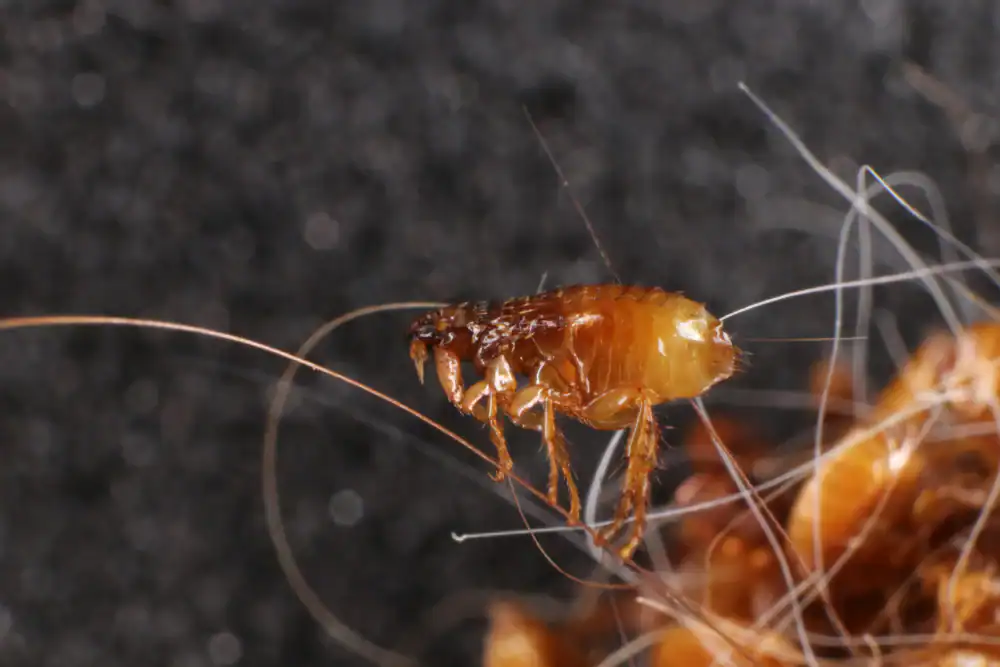
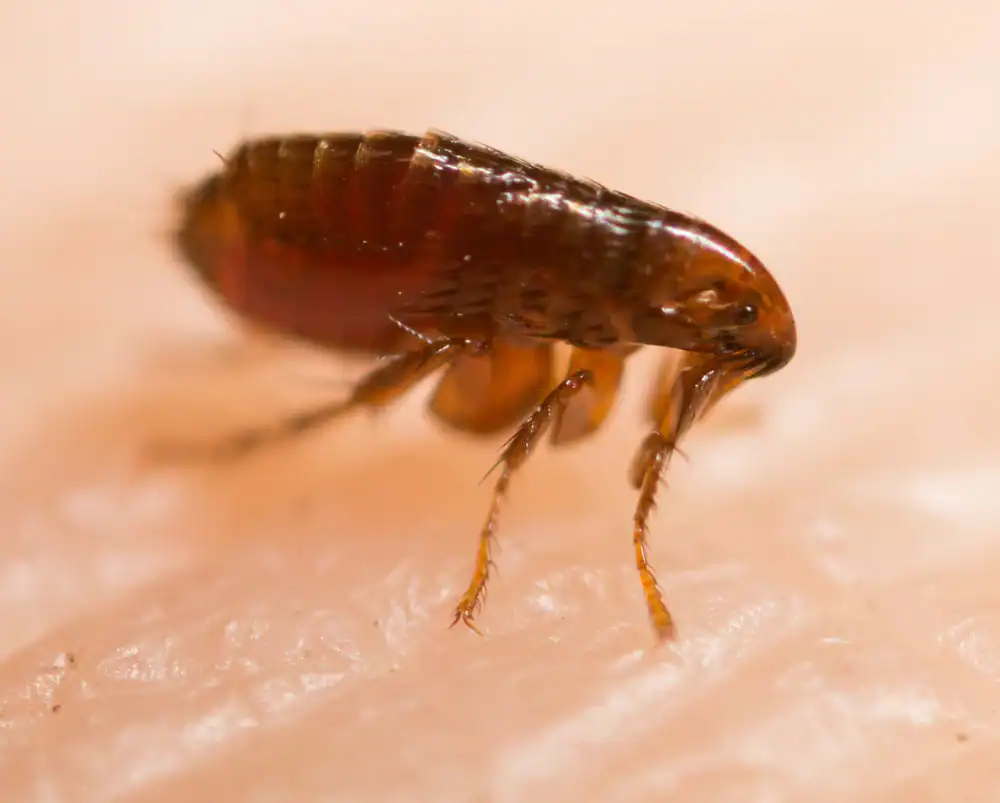
Your dog stops scratching. Your kids stop getting bitten on the couch. You stop second-guessing every room in your house. That’s what a complete flea treatment looks like — not just fewer fleas for a week, but a home where the infestation is actually resolved from the inside out.
Here’s what most people don’t realize until it’s too late: the fleas you can see on your pet are only about five percent of the problem. The other ninety-five percent are already in your carpet, your furniture cushions, and your baseboards as eggs, larvae, and pupae. Store-bought sprays and flea bombs only hit the surface. They leave the next generation untouched. That’s why you treat, feel relief for a few days, and then watch them come back.
Wesley Chapel’s subtropical humidity keeps flea populations active every single month of the year. Add in the wildlife corridors running along the Cypress Creek Preserve — where deer, raccoons, and opossums regularly move into residential yards and drop flea eggs in your grass — and you’ve got pressure coming from multiple directions at once. A treatment plan that doesn’t account for both the indoor environment and the yard isn’t a complete plan.
Around The Clock Pest Service is a family-run operation based in Wesley Chapel and the surrounding Pasco County area, serving the region for over 14 years. When you call, you’re talking to George — the owner, the person who built this business, and the person accountable for what happens at your home. No call center. No subcontractors showing up unannounced. Just a direct line to someone who actually knows what they’re doing.
George has watched Wesley Chapel grow from a quiet stretch of Old Pasco Road into one of Pasco County’s most vibrant suburban areas — and he understands the specific flea pressures that come with it. New construction displacing wildlife. Pet-friendly amenities drawing dogs from across the neighborhood. Families moving in from northern states who’ve never dealt with year-round flea activity before.
Over 100 five-star Google reviews, four active FDACS licenses through 2027, and BBB Accreditation since 2022 back up what the reviews already say: this is a business that shows up, does the job right, and answers the phone when you call back.

It starts with a phone call. George will walk through what you’re dealing with, ask the right questions, and give you a real quote — not a “someone will call you back to schedule an estimate” runaround. Most quotes happen right there on the first call, which means you know what you’re paying before anyone sets foot in your home.
When we arrive, the treatment addresses all four stages of the flea life cycle — not just the adults. That means professional-grade adulticides for immediate knockdown combined with insect growth regulators, or IGRs, that prevent eggs and larvae from ever maturing into breeding adults. This is the part that over-the-counter products skip entirely, and it’s the reason DIY treatments fail. In Wesley Chapel specifically, we also assess your yard and perimeter — because if wildlife from the Cypress Creek Preserve corridor is moving through your property, treating only the inside of your home is a short-term fix at best.
One thing worth knowing before we start: you may see fleas in the first one to two weeks after treatment. That’s not the treatment failing — that’s dormant pupae hatching into a residual treatment environment. Flea pupae can survive inside their cocoons for up to 140 days, resistant to everything, and they hatch when they detect movement and heat. We explain this upfront because informed homeowners get better results and don’t panic when they see a flea on day ten. If activity continues past the expected window, we come back — that’s part of the commitment.
Ready to get started?
The first question most Wesley Chapel families ask is whether the treatment is safe for their dogs and kids. It’s a fair question, and the answer isn’t just “yes” — it’s that the products we use are selected specifically because they’re effective against fleas at every life stage while being appropriate for homes with pets and children. We’ll tell you exactly what we’re applying, what to expect during and after, and how long to keep pets off treated surfaces. No vague reassurances — just straight answers.
Flea and tick yard treatment in Wesley Chapel, FL is a standard part of how we approach infestations here, not an add-on afterthought. Residents in communities like Estancia and Epperson spend real time outdoors — on trails, in yards, at the dog park — and that outdoor exposure is often where the cycle restarts. We target the shaded perimeter areas, leaf litter zones, and the spaces under decks and around landscaping to cut off the reinfestation pathway that indoor-only treatments leave wide open.
For new homeowners in Wesley Chapel’s master-planned communities, we offer a specific discount because we know the flea problem often shows up after move-in — not before. Previous owners with pets can leave dormant flea eggs in the carpet that hatch the moment your family starts moving through the home. If you’ve recently moved into a new build or a resale in Meadow Pointe, Seven Oaks, or Chapel Crossings, it’s worth a conversation before you assume you’re starting clean. Military families also qualify for a discount — just mention it when you call.

There is no slow season for fleas in Wesley Chapel. Florida’s humid subtropical climate means temperatures rarely drop low enough to suppress flea populations, even in January. Unlike northern states where a hard freeze kills off a significant portion of the flea population each winter, Pasco County stays warm and humid enough for fleas to breed continuously through every month of the year.
The pressure does peak between April and September when heat and humidity are at their highest. A single female flea can lay forty to fifty eggs per day, so populations can go from manageable to severe within two to three weeks during summer. But the important thing to understand is that even outside of peak season, the conditions in Wesley Chapel never fully reset. If you’ve got an active infestation in October, waiting for winter to solve it isn’t a strategy — it’s just more time for the population to grow.
This is one of the most common calls we get after a treatment, and it almost always means the same thing: flea pupae are hatching. The pupal stage is the one part of the flea life cycle that no insecticide can penetrate. Pupae sit inside a protective cocoon — sometimes for up to 140 days — completely resistant to chemical treatment. They hatch when they detect warmth, vibration, and carbon dioxide from movement in the home.
After a professional treatment, the residual products left in your carpet and on surfaces are still active. When those dormant pupae hatch, they emerge into that treated environment and die quickly. So what looks like the treatment failing is actually the final stage of the cycle playing out. It’s expected, and it’s temporary. If you’re still seeing significant flea activity past the three to four week mark, that’s when a follow-up treatment is warranted — and that’s a conversation we’re always available to have.
Yes — and this is one of the more underappreciated flea introduction pathways in Wesley Chapel specifically. The Cypress Creek Preserve and Carney Land & Wildlife Preserve sit directly adjacent to residential development in this area, and the wildlife that lives there — deer, raccoons, opossums, feral cats — moves through residential yards regularly, especially at dawn and dusk. Every time one of those animals crosses your lawn, it can deposit flea eggs in your grass.
This means your yard can become a flea reservoir even if your pet never leaves the property. It also means that treating only the inside of your home leaves the reinfestation source completely untouched. Flea and tick yard treatment in Wesley Chapel, FL is a standard part of how we approach infestations for homeowners near these preserve corridors — targeting the shaded perimeter areas, landscape beds, and the zones where wildlife tends to travel. If your home backs up to a green space or conservation area, that outdoor treatment isn’t optional — it’s the part that makes the indoor treatment last.
Preparation makes a real difference in how effective the treatment is. Before we arrive, you’ll want to vacuum all carpeted areas thoroughly — including under furniture, along baseboards, and in any spots your pet frequents. Vacuuming stimulates dormant pupae to hatch before treatment, which puts more of the flea population in a vulnerable stage when we apply products. Bag and dispose of the vacuum contents immediately after.
Wash your pet’s bedding on the hottest setting your washer allows, and have your pet treated by a veterinarian for fleas on or around the same day as the home treatment — ideally the same day. Clear floors of clutter so we can reach all the areas that need treatment, and plan to keep your family and pets out of the treated areas for the time we’ll specify when we arrive. In Wesley Chapel’s newer construction homes, which tend to have open floor plans and large carpeted areas, thorough prep makes a meaningful difference in the outcome. We’ll walk you through everything specific to your home when you call.
It’s more common than most new homeowners expect, and the timing of when it happens tends to catch people off guard. If you moved into a resale home where the previous owners had pets, flea eggs and pupae can remain dormant in the carpet and flooring for months — sometimes up to 140 to 170 days. The moment you move in and start generating the warmth, vibration, and movement that pupae are waiting for, they hatch. Many Wesley Chapel families describe walking into what felt like a sudden explosion of fleas a week or two after move-in, with no idea where they came from.
Even in brand-new construction, the surrounding environment matters. Wesley Chapel is in a period of constant development — new communities like Epperson and Chapel Crossings are being built on land that was recently undeveloped habitat. Construction displaces wildlife, and that wildlife moves into adjacent established yards carrying fleas. If your new home is near active construction or backs up to a preserve, a proactive treatment and perimeter inspection is worth considering before you assume you’re starting with a clean slate. We offer a new homeowner discount specifically because this situation is so common here.
Most professional flea treatments in the Wesley Chapel area fall somewhere between $150 and $350, depending on the size of your home, the severity of the infestation, and whether the treatment includes yard and perimeter work. Homes in communities like Meadow Pointe and Seven Oaks tend to be larger — often 2,000 to 3,500 square feet or more — which can push the cost toward the higher end of that range when full coverage is needed.
What matters more than the number is what’s actually included. A treatment that only targets adult fleas with a surface spray is going to cost less upfront and deliver less. A complete treatment that uses professional-grade adulticides alongside insect growth regulators — the compounds that prevent eggs and larvae from maturing — costs a bit more and actually resolves the infestation rather than temporarily reducing it. When you call, George will give you a real quote over the phone based on your specific situation. No in-person sales visit required, no quote that changes when the technician shows up. Just a straight answer so you can make an informed decision.
Other Services we provide in Wesley Chapel