
Fast, reliable pest control from Hernando County’s most trusted family-owned team—with most quotes given over the phone.
Contact Info
Fast, reliable pest control from Hernando County’s most trusted family-owned team—with most quotes given over the phone.
Contact Info

Out here along Powell Road, properties aren’t just homes — they’re working land. Sheds, garages, barns, woodpiles, fence lines running into tree cover. Every one of those spaces is an invitation for black widows and brown widows to move in quietly and stay. Once they’re treated and the harborage is addressed, you stop finding webs in corners you forgot existed and stop second-guessing whether it’s safe to reach into the garage cabinet.
The difference between a one-time spray and a real spider control treatment is what happens three months later. In Hernando County’s climate, there’s no winter reset. Populations stay active, prey insects stay abundant, and spiders keep moving toward your structure unless there’s a treated barrier stopping them. A proper outdoor spider barrier keeps that pressure from ever reaching the door.
For properties near the Spring Lake corridor or backing up to the wooded stretches east of U.S. 41, the exposure is real and consistent. Getting ahead of it — with de-webbing, barrier treatment, and a plan that accounts for your full property footprint — is the only approach that holds up long-term.
Around The Clock Pest Service is a family-owned, owner-operated pest control company serving Hernando County and the surrounding area. There’s no franchise behind the name, no rotating crew, and no call center fielding your questions. When you call about a spider problem on your Powell-area property, you’re talking to the licensed professional who will actually come out and handle it.
We hold FDACS license LF286842 — active, publicly verifiable, and the legal standard for pest control in Florida. Over 109 five-star Google reviews from real Hernando County customers back up what the license confirms: this is a company that shows up, does the work right, and doesn’t disappear after the invoice.
Rural Hernando County — the stretch from Brooksville south along U.S. 41 through communities like Powell, Spring Lake, and Garden Grove — is the kind of area where people expect straight answers and honest service. That’s exactly what we deliver. Most quotes are given over the phone, discounts are available for new homeowners and military families, and 24/7 personal response means you’re never waiting until Monday to get help.

It starts with a phone call. You describe what you’re seeing — where the spiders are showing up, what the property looks like, whether there are outbuildings or wooded areas involved — and we build a quote around that conversation. No in-home sales visit required. You know what you’re paying before anyone sets foot on your property.
When the treatment day comes, the first step is a full exterior walkthrough. On rural Powell-area properties, that means checking more than just the foundation line. We look at the detached garage, the shed in the back, the eaves along the covered porch, the fence line where the yard meets the tree cover. Every active web is physically removed, including egg sacs — because leaving those behind just resets the problem in a few weeks.
After de-webbing, we apply a professional-grade outdoor spider barrier to the foundation perimeter, entry points, eaves, and any outbuilding exteriors included in the treatment. This is an EPA-registered product that isn’t available at any hardware store, and it creates a chemical perimeter that stops spiders before they reach the structure. Given that Hernando County’s rainy season runs June through September and keeps insect prey — and spider populations — at peak levels, timing your initial treatment before that window and following up quarterly is the approach that actually keeps properties protected through the full year.

Ready to get started?
Spider control in Powell, FL covers the full range of what rural Hernando County properties actually face. That includes venomous spider removal for black widows and brown widows — both of which are confirmed in this region and commonly found in undisturbed outbuildings, woodpiles, and storage areas. We provide spider de-webbing services across all exterior surfaces, spider web removal from eaves and soffits, and outdoor spider barrier application to the full structure perimeter.
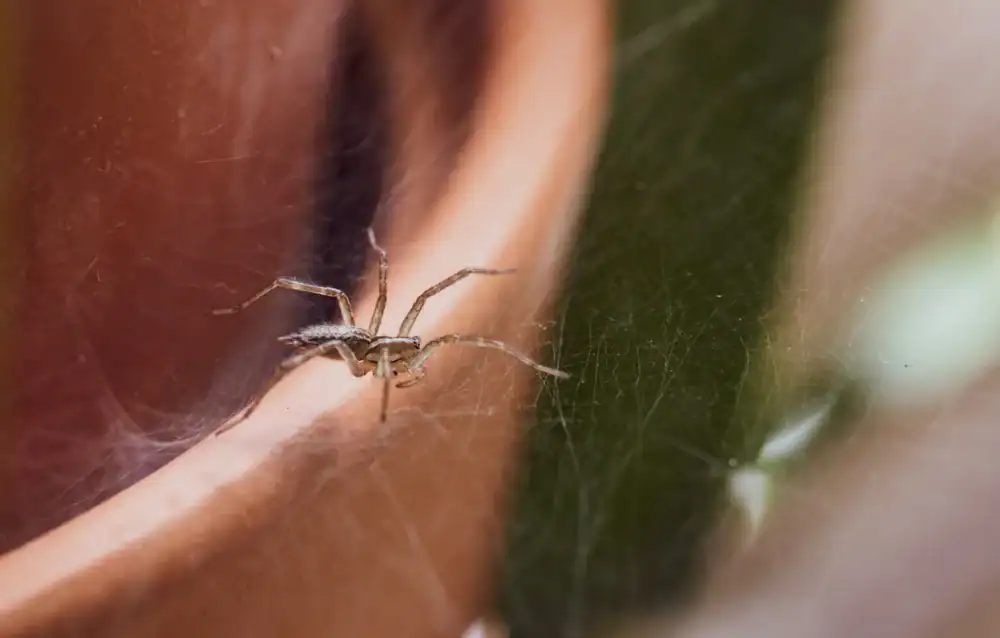
Wolf spider extermination is part of the picture too. Wolf spiders don’t build webs — they hunt across the ground, which means they show up in garages, on porches, and inside the home without warning. They’re especially common on properties near the wooded and grassy edges that define the Powell Road corridor. We address the entry points and perimeter conditions that are drawing them in, not just the individual spiders you’ve already spotted.
For Powell-area homeowners asking about brown recluse control — it’s worth knowing that the brown recluse is not native to Florida and doesn’t have established populations in Hernando County. What most residents are seeing is something else, often a wolf spider or grass spider. Accurate identification is part of every service call, because treating the wrong species wastes your money and doesn’t solve the problem. If a brown recluse is confirmed — typically from an item shipped in from out of state — we provide targeted treatment. Either way, you get the honest answer first.
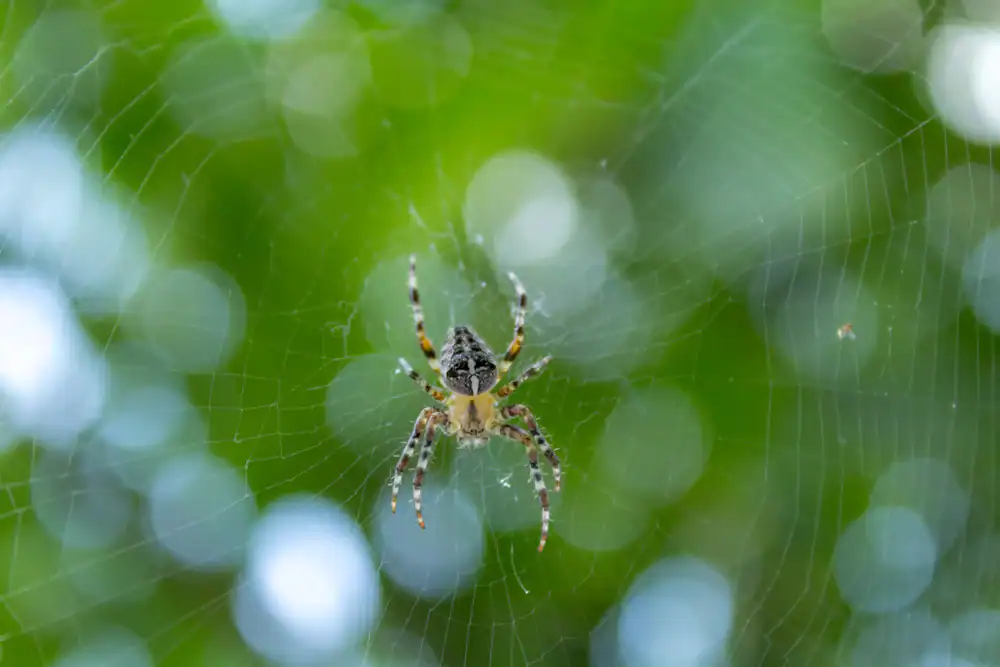
The two species that genuinely warrant concern in the Powell area are the black widow and the brown widow. Both are present in Hernando County, and both are regularly found in the kinds of spaces that rural properties have in abundance — woodpiles, detached garages, storage sheds, under decking, and in corners of outbuildings that don’t get disturbed often. Black widows are identifiable by the red hourglass marking on the underside of the abdomen. Brown widows are lighter in color with an orange hourglass and are actually more common in residential areas than the black widow in recent years.
Neither species is aggressive, but both will bite if disturbed — which is exactly what happens when someone reaches into a dark cabinet or picks up a box that’s been sitting in the garage for months. If you’re on a property along Powell Road or in the Spring Lake area with outbuildings or wooded borders, the risk is real enough to take seriously. We remove the current population and put a barrier in place to prevent re-establishment.
In Hernando County’s subtropical climate, a single treatment won’t hold up through the full year. There’s no hard winter to suppress spider populations the way it does in northern states, and the summer rainy season — which runs roughly June through September — drives insect populations up sharply, which in turn drives spider activity. By late summer and early fall, spider populations hit their peak and begin moving toward structures. If your last treatment was in the spring, that barrier has already worn down by the time the pressure is highest.
Quarterly prevention is the standard recommendation for properties in this area, and it’s especially relevant for rural Powell-area homes with significant harborage — wooded lots, outbuildings, agricultural borders. Each quarterly visit includes a fresh barrier application, de-webbing, and a visual inspection for new activity. That consistent schedule keeps the protection current and catches problems before they become infestations, rather than responding after they already have.
This is one of the most common questions from homeowners in the Powell area, and it’s a fair one. Many properties along the Powell Road corridor include dogs, cats, chickens, and cattle — and the concern about chemical exposure is legitimate. The products we use are EPA-registered and applied by a licensed operator. Application protocols are designed to minimize contact risk: treatments are applied to exterior surfaces, foundation lines, and eaves, and are allowed to dry fully before re-entry.
That said, it’s always a good idea to let us know about any animals on the property before the visit. That information affects where and how certain products are applied, particularly around water sources, animal enclosures, or areas where livestock graze close to the structure. We treat rural Hernando County properties regularly and are accustomed to working around the specific conditions that come with agricultural land — this isn’t a conversation that needs to be had with someone reading from a script.
Wolf spiders are ground hunters — they don’t build webs and wait for prey to come to them. They actively roam across the ground looking for insects, which means they cover a lot of territory and show up in places that feel random. Garages and sheds are especially common because they offer shelter, ground-level entry, and usually a steady supply of insects drawn to light or stored food. On rural properties near Powell with wooded edges, grassy pasture borders, or agricultural land nearby, the insect prey base is high enough to support large wolf spider populations year-round.
The fix isn’t just treating the spiders you see — it’s addressing the entry points and perimeter conditions that are making your garage or shed an easy target. Sealing gaps at ground level, reducing exterior lighting that draws insects, and applying an outdoor spider barrier around the structure perimeter all work together to reduce the draw. A treatment that only focuses on the spiders already inside will have the same ones replaced within weeks.
Spider de-webbing is a physical removal process — webs, egg sacs, and debris are manually cleared from exterior surfaces before any chemical treatment is applied. It’s a separate and necessary step, not just a cosmetic add-on.
The reason it matters is that egg sacs left in place can contain hundreds of spiderlings, and a chemical barrier applied over an active web doesn’t address the eggs already protected inside it. De-webbing removes the existing harborage, disrupts the established activity, and gives the barrier treatment a clean surface to work from. On Powell-area properties with covered porches, eaves, outbuilding rafters, and fence lines, there’s usually a significant amount of web activity that has built up over time — especially in structures that don’t get opened or cleaned regularly. Skipping de-webbing and going straight to spray is the reason a lot of DIY attempts don’t hold. The physical removal step is what makes the chemical step actually work.
Yes — we offer new homeowner discounts, and they’re relevant to what’s happening along the Powell Road corridor right now. Land along CR 572 near the Suncoast Parkway interchange is seeing growing development interest, and new residents moving into properties in eastern Hernando County are often coming from more suburban areas where spider pressure looks very different. A wooded lot, a detached garage, a property line that backs up to pasture — these are conditions that catch new rural homeowners off guard, and the discount is a straightforward way to get professional protection in place from the start rather than after the problem has already established itself.
Military discounts are also available. Hernando County has a meaningful veteran and military-connected population, and we extend that discount as a direct acknowledgment of that — no hoops, no fine print. If you’re new to the area or have served, just mention it when you call. The quote process is done over the phone, so there’s no pressure, no in-home sales visit, and no surprise when the invoice arrives.