
Fast, reliable pest control from Hernando County’s most trusted family-owned team—with most quotes given over the phone.
Contact Info
Fast, reliable pest control from Hernando County’s most trusted family-owned team—with most quotes given over the phone.
Contact Info
Most Florida homeowners miss the early warning signs of termites until damage reaches thousands of dollars. Learn what to look for before it's too late.
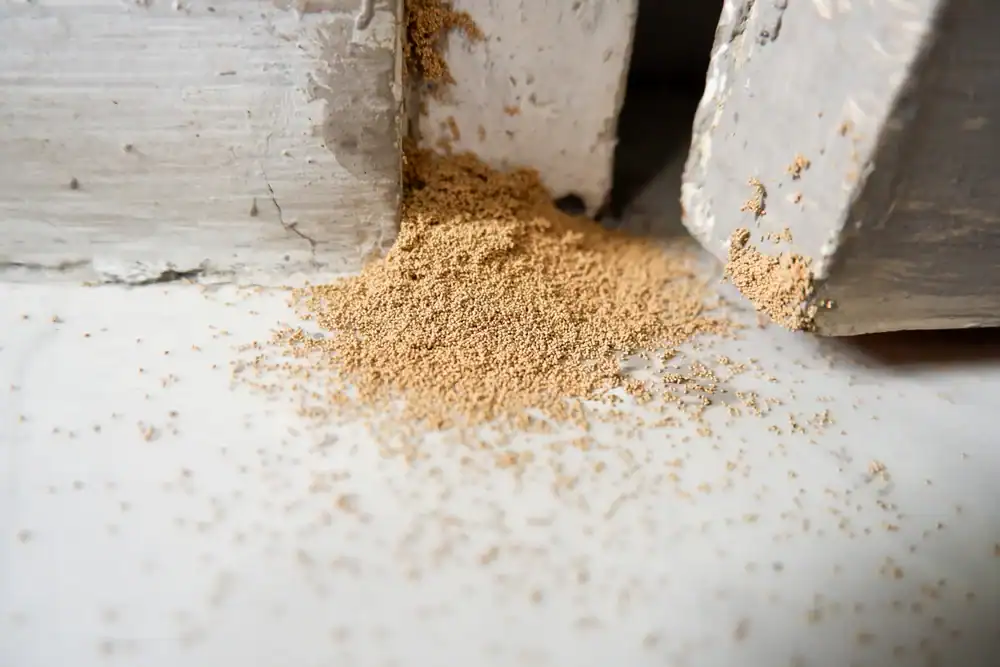
You walk past it every day. That slight crack in the paint near your baseboard. The door that’s been sticking for a few weeks. The small pile of what looks like sawdust under your window. You tell yourself you’ll get to it later. But here’s what most Hernando County homeowners don’t realize until it’s too late: those aren’t minor annoyances. They’re warning signs of termites already feeding inside your walls. By the time the damage becomes obvious, you’re often looking at thousands in repairs that insurance won’t cover. The good news? If you know what to look for, you can catch termite activity early, before it turns into a financial nightmare. Let’s walk through the seven signs most people miss.
Florida’s year-round warmth and humidity create perfect conditions for termites to stay active every single month. Unlike colder states where termite activity slows in winter, your home faces constant risk. That’s why recognizing the early signs matters so much.
Termites don’t announce themselves. They work silently inside walls, under floors, and in crawl spaces you rarely check. Most homeowners in Hernando County don’t discover an infestation until they’re selling their home or notice visible structural damage. By then, colonies may have been feeding for three to five years.
The signs you’re about to learn aren’t always dramatic. Some look like normal wear and tear. Others are so small you’d walk right past them. But each one tells you termites are either exploring your property or already established inside your home.
If you see pencil-width tubes made of dirt running up your foundation, along your exterior walls, or in your crawl space, you’re looking at one of the clearest signs of termites in house structures. These are mud tubes, and subterranean termites build them to travel between their underground colonies and the wood they’re feeding on inside your home.
Subterranean termites need moisture to survive. They can’t handle dry air or direct sunlight. So they construct these protective tunnels out of soil, wood particles, and their own saliva. The tubes lock in humidity and shield them from predators as they move back and forth.
You’ll most often find mud tubes where your foundation meets the ground. Check around the perimeter of your home, especially near cracks in concrete, pipe entry points, or areas where soil touches wood. They also show up inside crawl spaces, along basement walls, behind siding, and even climbing up interior walls if the infestation is advanced.
Here’s what makes mud tubes tricky: they don’t always mean termites are actively using them right now. Sometimes termites abandon a tube and build a new route. But whether the tube is active or not, it confirms termites have been on your property and likely still are. You can test a tube by breaking off a small section in the middle. If termites repair it within a few days, the colony is definitely active. If you see live termites inside when you break it open, you have your answer immediately.
Don’t ignore mud tubes just because they look old or dry. Termites are opportunistic. They’ll rebuild, reroute, or reactivate pathways when conditions are right. And in Florida, conditions are almost always right.
Small piles of wings near your windowsills, sliding glass doors, or light fixtures are one of the most overlooked signs of termites in house infestations. These aren’t random. They’re left behind by termite swarmers—the reproductive termites that leave mature colonies to start new ones.
Swarming happens when a termite colony reaches a certain size and sends out winged termites to mate and establish new colonies nearby. In Florida, swarming season typically runs from late winter through summer, but with our warm climate, swarms can happen almost any time of year. After swarmers find a mate, they shed their wings. That’s what you’re seeing in those little piles.
Here’s the part that matters: if you’re finding discarded wings inside your home, it usually means a mature colony is either very close to your house or already inside it. Swarmers are attracted to light, which is why you’ll often find wings near windows, doors, or light sources. They’re not great fliers, so they don’t travel far from the colony.
It’s easy to mistake termite swarmers for flying ants. Both have wings, both swarm, and both can show up around the same time of year. But there are clear differences. Termite swarmers have straight bodies, straight antennae, and two pairs of wings that are equal in size. Flying ants have pinched waists, elbowed antennae, and their front wings are larger than their back wings.
If you’re seeing wings and you’re not sure what they’re from, don’t just sweep them up and move on. Take a closer look. Even better, save a few in a plastic bag so a technician can identify them during an termite inspection. Because if they’re termite wings, you’re not just dealing with a passing swarm. You’re dealing with a colony that’s mature enough to reproduce, which means it’s been active for years.
Want live answers?
Connect with a Around The Clock Pest Service expert for fast, friendly support.
Termite droppings aren’t just a sign that termites are present. They tell you what kind of termites you’re dealing with, how active the colony is, and sometimes even how long they’ve been there. Understanding what you’re looking at helps you respond faster and smarter.
Drywood termites are the ones that leave visible frass. Subterranean termites don’t. They use their waste as building material for mud tubes, so you won’t see piles of droppings from them. If you’re finding frass, you’re dealing with drywood termites, and that changes how the problem gets treated.
The location of the droppings matters too. If you’re seeing frass near a specific window or piece of furniture, that’s likely where the colony is feeding. Drywood termites don’t travel far. They infest a section of wood and stay there, tunneling deeper and expanding slowly over time.
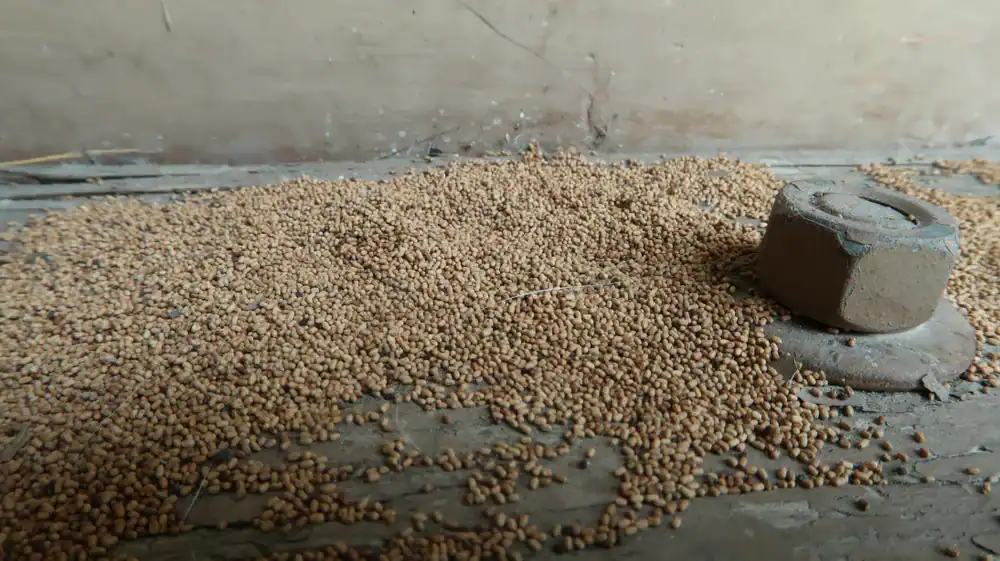
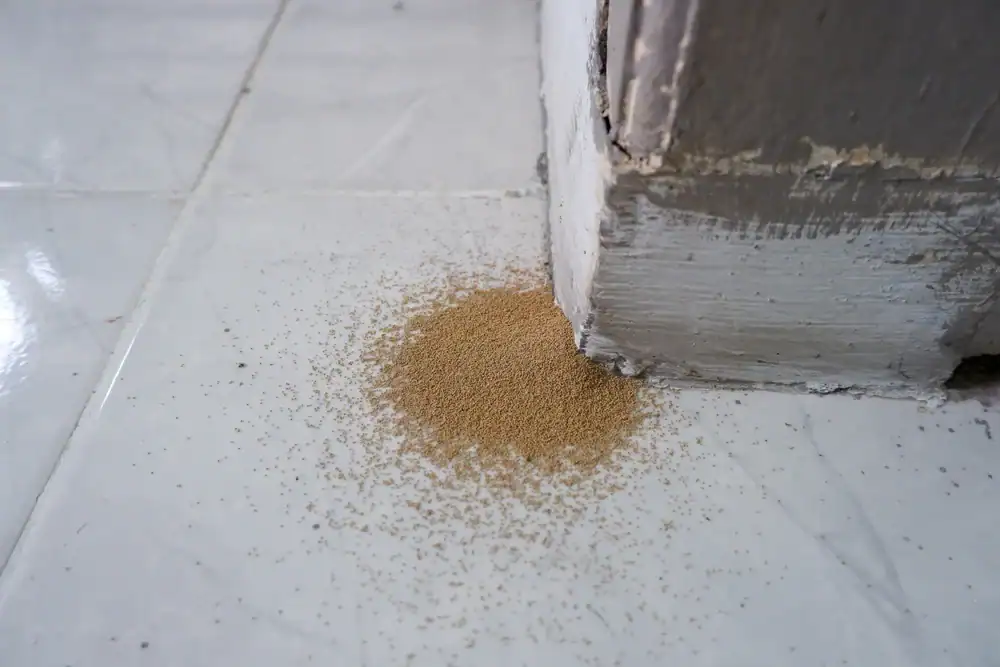
Termite droppings look like tiny grains of sand or coffee grounds. Technically called frass, these droppings are one of the most reliable signs of termite damage from drywood termites. Unlike subterranean termites that use their waste to build mud tubes, drywood termites push their droppings out of small holes in the wood to keep their tunnels clean.
Frass piles usually appear directly below these “kick-out holes.” You might find them on windowsills, along baseboards, near door frames, on furniture, or even on your bed if termites are feeding in the ceiling above. The pellets are uniform in size and shape—about one millimeter long, oval, with six concave sides. The color depends on the type of wood the termites are eating, ranging from light tan to dark brown or black.
It’s easy to mistake termite droppings for sawdust, dirt, or debris. But there are key differences. Sawdust is irregular and comes in different sizes. Termite frass is consistent. Each pellet looks almost identical to the next. If you’re not sure, look closely with a flashlight or even a magnifying glass. You’ll see the distinct shape.
Here’s the part that catches people off guard: if you sweep up the pile and it reappears in the same spot within a few days, that’s a strong indicator of active termite activity. Termites are constantly eating and constantly pushing out waste. The pile doesn’t just sit there from months ago. It grows.
Drywood termites live entirely inside the wood they’re consuming. They don’t need soil contact like subterranean termites. That means they can infest attic beams, furniture, window frames, and any dry wood in your home. They’re harder to detect because they don’t leave mud tubes. Frass is often the only visible clue until the damage becomes severe.
If you spot what looks like a small pile of pellets and you’re not sure what it is, don’t just vacuum it up and forget about it. Take a photo. Check back in a week. And if you’re in Hernando County and you see this more than once, it’s worth getting an inspection. Waiting only gives the colony more time to spread.
One of the most telling signs of termite damage is wood that sounds hollow when you tap on it. Termites eat wood from the inside out. They tunnel through the interior, consuming the cellulose they need, while leaving a thin outer shell intact. From the outside, everything looks fine. But underneath that surface, the wood is hollowed out and structurally compromised.
You can test for this yourself. Take a screwdriver handle or your knuckles and tap on wooden baseboards, door frames, window sills, or any exposed wood in your home. Solid wood produces a solid, dense sound. Hollow wood sounds papery or empty. If you hear that hollow sound, especially in multiple spots, termites have likely been feeding there for a while.
This is particularly common in Florida homes because our construction often includes wood framing, wood siding, and wooden trim—all of which are vulnerable to termite damage. Subterranean termites target floor joists, support beams, and subfloors. Drywood termites go after attic rafters, window frames, and furniture. Both types leave behind that telltale hollow sound.
Sometimes you’ll also notice that the wood feels soft or spongy when you press on it. Or you might see small holes in the surface where termites have broken through. These are advanced signs of termite damage, which means the infestation has been active for a long time. At that point, you’re not just dealing with pest control. You’re dealing with repairs.
The challenge is that most people don’t think to check for hollow wood until they’re already seeing other signs. But if you’re proactive—especially if you’re a new homeowner or you’ve just moved into an older home in Hernando County—taking a few minutes to tap on wood in vulnerable areas can give you early warning before the damage spreads.
If you do find hollow wood, don’t try to break it open to see how bad it is. That can make the damage worse and disturb the termites, causing them to relocate to another part of your home. Instead, note where the hollow spots are and call for an inspection. A trained technician can assess the extent of the damage and determine the best course of action.
When doors and windows start sticking, most people assume it’s humidity, settling, or just an old house doing what old houses do. And sometimes that’s true. But in Florida, where termites are active year-round, tight-fitting doors and windows are often one of the first signs of termite damage that homeowners notice—and dismiss.
Here’s what’s happening. As termites feed on the wood around door frames and window frames, they produce moisture. That moisture causes the wood to warp and swell. At the same time, the structural integrity of the frame weakens because termites are hollowing it out from the inside. The result? Doors that drag on the floor when you try to open them. Windows that won’t close all the way. Frames that look slightly off-center or uneven.
This is especially common with subterranean termites, which thrive in moist environments and often target areas where wood is already exposed to some level of moisture—like exterior door frames, sliding glass door tracks, or window sills that see a lot of rain. The moisture they introduce accelerates the warping process.
What makes this sign tricky is that it develops gradually. You don’t wake up one morning to a door that won’t open. It starts with a slight drag. Then it gets a little worse. Then you have to push harder. By the time it’s noticeably stuck, the termites have usually been there for months.
If you’re dealing with a single door or window that’s sticking and you can’t find any other explanation—no recent rain damage, no obvious leak, no major temperature swings—it’s worth checking for other signs of termites in house structures nearby. Look for mud tubes around the frame. Check for hollow-sounding wood. Inspect the area for frass or discarded wings.
And if you’re seeing multiple doors or windows sticking at the same time, especially in different parts of the house, that’s a stronger indicator that something more serious is going on. Termites don’t limit themselves to one area. If they’ve found a way into your home, they’ll spread to wherever the conditions are right.
We work with Hernando County homeowners who’ve called us about sticking doors only to discover an active termite infestation behind the frames. It’s one of those signs that seems minor until you realize what’s causing it. If you’re noticing this in your home and you’re not sure why, don’t wait for it to get worse. Get an inspection. We answer calls around the clock, even on weekends, because we know that when you spot a warning sign, you want answers fast—not a week from now.
Summary:
Article details:
Share: