
Fast, reliable pest control from Hernando County’s most trusted family-owned team—with most quotes given over the phone.
Contact Info
Fast, reliable pest control from Hernando County’s most trusted family-owned team—with most quotes given over the phone.
Contact Info

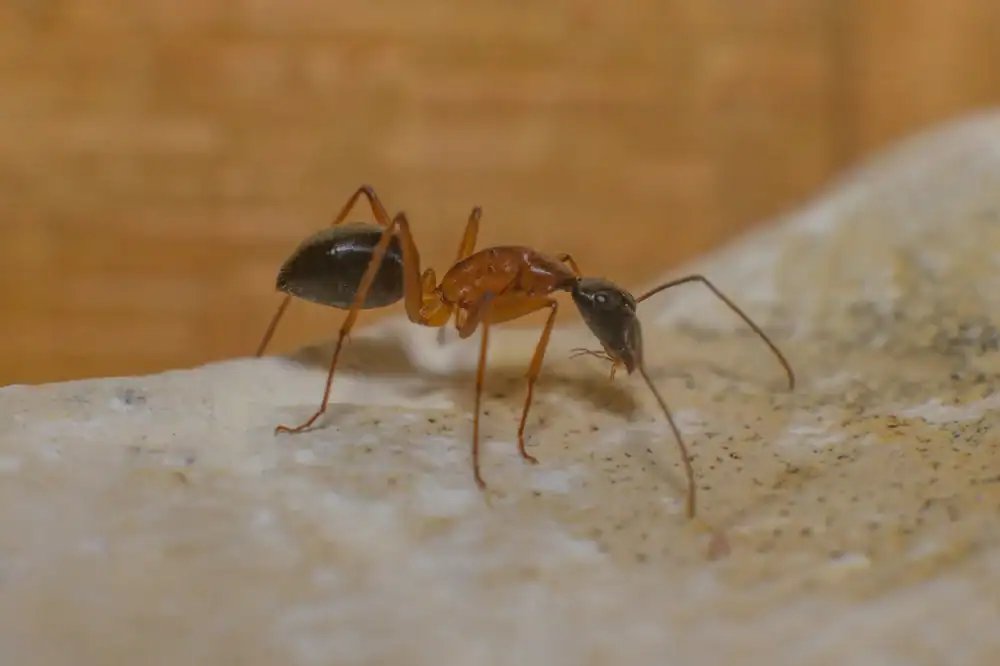
Most ant problems in Moon Lake don’t get solved — they get temporarily quieted. You spray, they disappear for a few days, and then they’re back in the kitchen or crawling across the bathroom floor again. That cycle isn’t bad luck. It’s what happens when the colony itself is never eliminated.
When the treatment actually works, the difference is noticeable fast. No more trails along the baseboards. No more ghost ants appearing out of nowhere on the countertop. No more fire ant mounds rebuilding themselves in the same corner of the yard after every heavy rain. You get your space back — and you stop bracing for the next wave.
Moon Lake’s environment makes this harder than it sounds. The wetland corridor running alongside the Serenova Preserve, just east of Moon Lake Road, means ant colonies here aren’t isolated. They replenish from surrounding natural land. Older homes in Moon Lake Estates — most built between the 1970s and 1990s — also have more entry points: aging caulk, foundation gaps, moisture-softened wood around fascia and frames. Solving the problem means addressing those realities, not just what’s visible on the surface.
Around The Clock Pest Service is a family-owned, owner-operated business serving Pasco and Hernando County — including Moon Lake and the surrounding 34654 zip code. When you call, the owner picks up. Not a dispatcher, not a call center. The person on the phone is the same person showing up at your door, doing the work, and standing behind it.
That matters in a community like Moon Lake Estates, where residents chose this neighborhood deliberately — for the quiet, the space, and the no-nonsense character of the place. We don’t rotate technicians or apply a one-size-fits-all service package that doesn’t fit your home. We understand what pest pressure actually looks like in this part of Pasco County and we give you a straight answer over the phone before anyone shows up.
With over 100 five-star Google reviews from real Pasco and Hernando County residents, FDACS licensing valid through 2027, and a BBB A+ rating, our track record speaks for itself. Special discounts are available for military families and new homeowners — because this community earns that.

It starts with a phone call. Most quotes are handled right there — no in-home sales visit, no pressure, no surprise charges after the fact. You describe what you’re seeing, where it’s happening, and how long it’s been going on. From there, a response is scheduled within 24 hours, including weekends.
When our technician arrives, the first step is identifying what you’re actually dealing with. This is where most DIY attempts fall apart. Ghost ants and pharaoh ants — two of the most common species inside Moon Lake homes — will split their colonies and spread to new areas when hit with a repellent spray. That’s not a fluke; it’s a documented behavior called budding, and it’s why the problem often gets worse after a store-bought treatment. The right approach for those species is a non-repellent bait system that worker ants carry back to the colony, queens included. Fire ants require direct mound treatment. Carpenter ants require locating the nest itself, which in older Moon Lake Estates homes often means tracing moisture damage in wood around windows, fascia, or crawl spaces beneath manufactured homes.
After treatment, you’ll know what was found, what was used, and what to watch for. If the problem comes back within the service window, we return — no argument, no extra charge.

Ready to get started?
There’s no single product that handles every ant species found in Moon Lake homes and yards — and any company telling you otherwise is cutting corners. Ghost ant extermination in Moon Lake requires non-repellent baiting because of how multi-queen colonies behave. Fire ant mound treatment in Moon Lake calls for direct colony elimination, especially critical for families with children or pets using the yard. Carpenter ant removal in Moon Lake means finding the moisture source, not just the visible ants — because the gallery they’re building inside your wall is the real problem.
For homes along Moon Lake Road and throughout Moon Lake Estates, the mix of single-family homes and manufactured housing adds another layer. Manufactured homes sit on piers rather than slabs, which creates open crawl space access that ants exploit through plumbing lines and flooring gaps. Treatment that doesn’t account for your specific structure type will miss the access points that matter most.
We provide perimeter ant defense and indoor ant baiting depending on where the pressure is coming from. Sugar ant prevention in Moon Lake kitchens typically involves baiting along foraging trails and sealing entry points around plumbing and cabinetry. Quarterly prevention plans are available for homeowners who want to stay ahead of the problem year-round — particularly relevant given Moon Lake’s proximity to natural wetlands that continuously reintroduce pressure from outside the property line.

Moon Lake’s position near the Serenova Preserve wetland corridor and the low-lying areas around the lake means that heavy summer rain forces ant colonies upward and outward. Fire ants in particular are built for this — they originated in South American flood plains and respond to rising water by moving fast, forming new mounds in lawns, under driveways, and around utility equipment within hours of a major storm.
Ghost ants and sugar ants move indoors for a different reason. When ground-level nesting areas flood or become too saturated, they push through any available gap in the structure — caulk cracks, plumbing penetrations, gaps around window frames — to reach the dry, air-conditioned interior. In older Moon Lake Estates homes, those entry points are more numerous and harder to seal completely without a professional inspection. The short answer is that the rain doesn’t create the colony — it just reveals how close it already was to your home.
This is one of the most common frustrations we hear from Moon Lake homeowners, and it has a specific explanation. Ghost ants and pharaoh ants — both extremely common in Pasco County homes — respond to repellent products by budding. That means the colony doesn’t die. It splits. One group stays near the original location, and satellite groups move deeper into the wall voids or to completely new areas of the home, sometimes rooms you hadn’t seen ants in before.
Repellent sprays are designed to push insects away from a treated surface, which works fine for some species. But for ghost ants and pharaoh ants, pushing them away just relocates the problem. The only effective approach for these species is a non-repellent bait system — a product the ants don’t detect as a threat, carry back to the colony themselves, and share with the queens. Without eliminating the queens, the colony rebuilds regardless of what you spray on the surface.
The clearest sign of carpenter ants — beyond seeing the ants themselves, which are notably larger than most household species — is the presence of frass. Frass looks like coarse sawdust or pencil shavings and collects near the areas where carpenter ants are excavating. Unlike termites, carpenter ants don’t eat wood. They tunnel through it to build galleries, and they target wood that’s already been softened by moisture first.
In Moon Lake Estates homes built in the 1970s through 1990s, the most common carpenter ant entry points are around window frames, fascia boards, and any wood that’s been exposed to decades of Florida humidity. If you’re seeing large black or reddish-black ants inside the home — especially in spring when winged reproductives swarm — that’s a strong indicator of an established colony somewhere in or near the structure. The longer a carpenter ant infestation goes untreated, the more structural damage accumulates, which is why it’s worth getting an inspection rather than waiting to see if the problem resolves on its own.
Yes — and this is a question worth asking any pest control company before they treat your property. We use EPA-registered products applied by FDACS-certified technicians, which means both the product selection and the application method meet state and federal safety standards. That matters in a community like Moon Lake where families use their yards, kids play in the grass, and pets roam the property.
For fire ant mound treatment specifically, the product and application method are chosen based on the location of the mound, proximity to play areas or pet runs, and whether the treatment is a mound drench or a broadcast bait. Broadcast baits used for fire ant control are typically applied at very low rates and are formulated to be minimally hazardous to non-target animals. After treatment, re-entry times vary by product, and we tell you exactly when it’s safe to use the yard again. No guessing, no vague answers — just a straight timeline before we leave your property.
A one-time treatment eliminates the active infestation — the colony or colonies currently causing the problem. For many homeowners, that’s enough to get things under control. But in Moon Lake, a one-time treatment has a real limitation: the natural landscape surrounding the community continuously reintroduces ant pressure from outside your property line. The Serenova Preserve corridor and the wetland areas adjacent to Moon Lake Road mean that new colonies can move onto your property from surrounding undeveloped land, particularly after heavy rain events or seasonal changes in temperature.
A quarterly prevention plan addresses that ongoing pressure. It involves scheduled perimeter treatments that create a consistent barrier around the structure, reducing the likelihood of new colonies establishing before they reach the interior. For homeowners in Moon Lake Estates who have dealt with recurring ghost ant or fire ant problems year after year, quarterly service is typically the more cost-effective option over time — because it prevents the larger, more urgent infestations that require more intensive treatment to resolve.
Yes — we offer discounts for military families and new homeowners, and both are genuinely relevant to the Moon Lake community. Pasco County has a meaningful military-connected population, and Moon Lake’s affordability and rural character have made it a natural landing spot for veterans and active-duty families looking for space and value outside of more densely developed areas.
The new homeowner discount reflects something straightforward: when you’ve just bought a home in Moon Lake Estates, you’re already managing a long list of priorities and expenses. Getting ahead of the pest landscape before an infestation establishes itself is one of the smarter early investments you can make — especially in a community where older housing stock and proximity to natural wetlands mean the pressure is real from day one. Both discounts are applied at the time of service. Mention it when you call and it’s taken care of.