
Fast, reliable pest control from Hernando County’s most trusted family-owned team—with most quotes given over the phone.
Contact Info
Fast, reliable pest control from Hernando County’s most trusted family-owned team—with most quotes given over the phone.
Contact Info
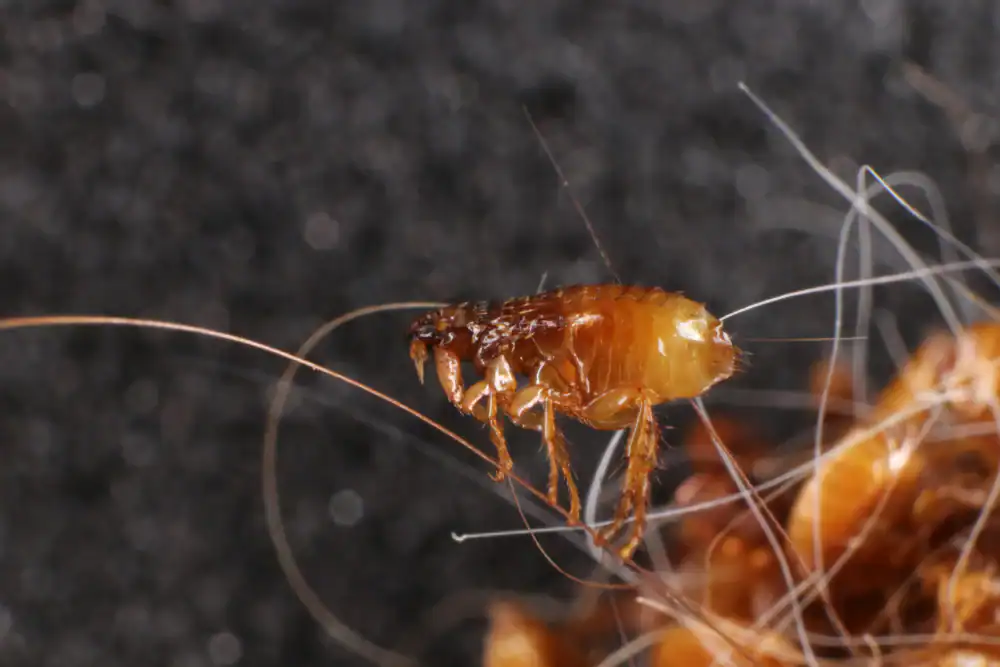
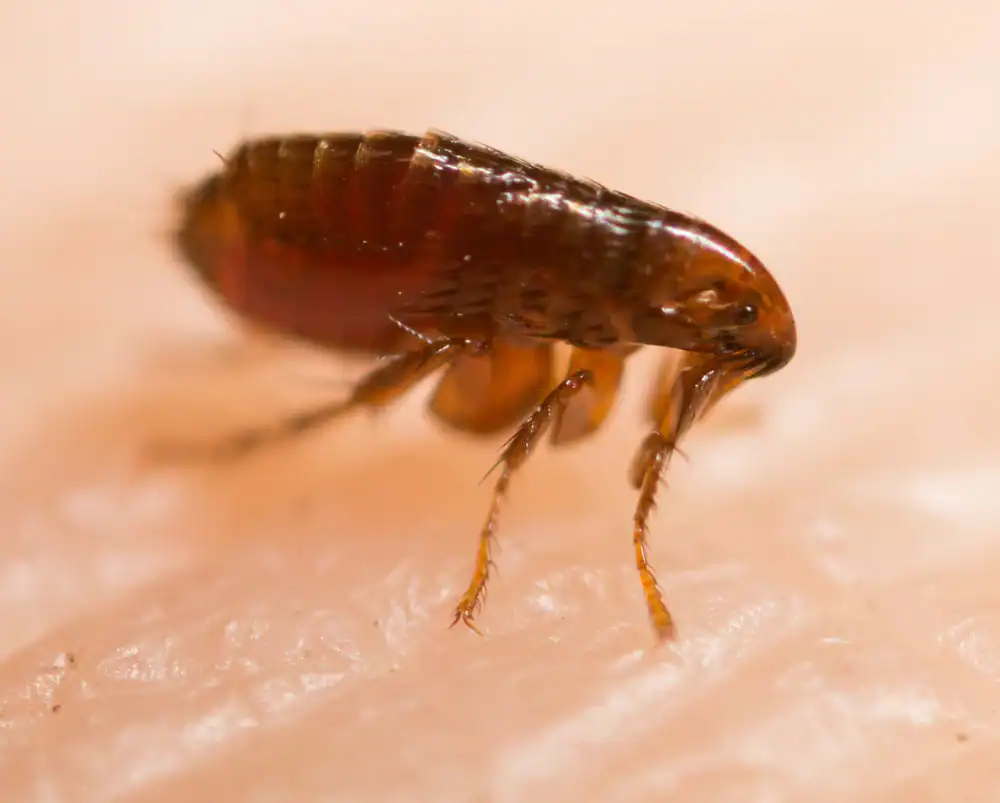
If your dogs are still scratching after flea collars, baths, and two rounds of store-bought spray, the problem isn’t your effort — it’s what those products can’t reach. Up to 95% of fleas in an infested home aren’t on your pet. They’re in your carpet, your furniture, your pet’s bedding, and the shaded spots under your porch where your dogs rest after a morning in the yard. That’s where the eggs, larvae, and pupae are living, and that’s exactly what over-the-counter products miss.
For Blanton residents with multi-acre properties, the challenge goes beyond the house. Deer, raccoons, and opossums move through rural Pasco County land every night, dropping flea eggs along fence lines, under trees, and in the tall grass at the edge of your pasture. Even if you treat the inside of your home perfectly, your yard is being re-seeded constantly. That’s why outdoor flea and tick yard treatment in Blanton isn’t optional — it’s the part that actually stops the cycle from restarting.
When treatment is done right — indoors and out, targeting every life stage — the difference is immediate and lasting. Your animals stop suffering. Your family stops getting bitten. You stop spending money on products that buy you a week of relief before the fleas are back. That’s the outcome. That’s what this is actually about.
We’ve been serving Hernando and Pasco County families for over 14 years. When you call, you’re talking to George — the owner, the licensed technician, and the person responsible for the work. No call centers. No subcontractors. No one passing your job down the line to someone who doesn’t know your property.
That matters a lot when you’re on a rural property off Blanton Road and you’re dealing with flea pressure that a suburban pest company wouldn’t know how to handle. George holds multiple FDACS licenses — JB297432, JE115388, JF293208, and LF286842, all valid through 2027 — and we’re BBB Accredited. Over 100 five-star Google reviews from verified Hernando and Pasco County residents back that up.
Most quotes are given right over the phone. No waiting for a sales visit just to get a number. If you’re a new homeowner or a military family in the Blanton area, ask about the discounts available to you.

It starts with a phone call. George will ask about your property — how many acres, how many animals, whether you’ve noticed activity indoors or primarily outside, and what you’ve already tried. That conversation shapes the treatment plan, and in most cases you’ll have a quote before you hang up. No waiting, no scheduling a separate estimate visit.
On treatment day, the indoor work focuses on the areas where fleas actually live and breed — carpet fibers, baseboards, furniture, pet bedding zones, and any cracks or crevices where larvae can develop undisturbed. We apply professional-grade products at the correct concentrations, including insect growth regulators that prevent eggs and larvae from maturing into breeding adults. This is the chemistry that breaks the life cycle — it’s not available in stores, and it’s what makes the difference between temporary relief and a real solution.
For Blanton properties with significant outdoor acreage, the yard treatment is just as important as the interior work. Shaded areas under mature trees, resting spots along fence lines, the margins of pastures — these are the zones where fleas live between hosts, and where wildlife re-introduces them after indoor treatment. Florida’s year-round subtropical climate means there’s no cold season to slow things down, so treating the outdoor environment isn’t a seasonal add-on. It’s part of the job. After treatment, you’ll get clear, straightforward guidance on re-entry timing for your family and every animal on your property.
Ready to get started?
Flea infestation treatment for a home in Blanton looks different than it does in a suburban neighborhood. When your property includes dogs, cats, chickens, and cattle — and when your land backs up to the kind of wooded corridors that run through northeastern Pasco County — the treatment has to account for all of it. Pet-safe flea removal in Blanton means using professionally applied, state-certified products at the right concentrations, in the right locations, with honest re-entry guidance for every animal on your land. You’ll know exactly what was applied, where, and when it’s safe.
Indoors, we focus on carpet, soft furnishings, baseboards, and pet resting areas — the places where flea eggs and larvae concentrate. Outdoors, we target the shaded zones, resting areas, and yard margins where fleas survive between hosts and where wildlife like deer and raccoons continuously re-introduce them to your property. For larger Blanton acreage, the scope of outdoor treatment is scaled accordingly — this isn’t a suburban perimeter spray.
We also offer flea prevention services in Blanton on a recurring basis for property owners who want to stay ahead of the problem rather than react to it. Given that Pasco County’s climate sustains flea activity 365 days a year, ongoing quarterly protection is the most reliable way to keep your property and your animals clear through every season.

The most common reason fleas return after treatment — whether DIY or professional — is that the outdoor environment was never addressed. On rural Blanton properties, deer, raccoons, opossums, and feral cats move through your land regularly, and every one of them can deposit flea eggs in your yard. If the outdoor zones aren’t treated alongside the interior, you’re solving half the problem and leaving the other half wide open.
The second reason is the pupal stage. Flea cocoons are resistant to every insecticide available — nothing kills them while they’re sealed inside. They can remain dormant for up to five or six months, then hatch all at once when they detect warmth, vibration, and carbon dioxide. That’s why infestations seem to “come back” two to three weeks after treatment — it’s not a treatment failure, it’s dormant pupae hatching on schedule. A complete treatment plan accounts for this by using products that kill emerging adults as they hatch, while insect growth regulators stop the next generation from developing. When both the indoor and outdoor environments are treated correctly, the cycle breaks.
Yes — when it’s applied correctly by a licensed technician who knows what they’re using and why. The concern about chemical safety is completely valid, especially on a rural Blanton property where you’re not just thinking about a dog and a cat but potentially chickens, cattle, and other animals that share your land. That’s a different conversation than the one most suburban pest companies are used to having.
When we treat your property, you’ll be told exactly what products are going down, where they’re being applied, and the specific re-entry window for each type of animal on your property. There’s no guessing involved. If there are areas where animals need to be kept clear for a set period, that will be communicated clearly before the work begins — not handed to you on a sheet of paper after the fact.
No — and this catches a lot of people off guard, especially those who moved to the Blanton area from northern states where a hard freeze kills off flea populations every year. Pasco County’s climate doesn’t work that way. The average January temperature in this part of Florida hovers around 59°F, which is well above the threshold needed to sustain flea breeding activity. Add in the humidity that comes with a humid subtropical climate, and you have conditions that keep fleas active and reproducing year-round.
What this means practically is that a single treatment in the spring or summer doesn’t carry you through the year. Flea populations don’t die back in October and give you a few months of breathing room. They keep cycling. For Blanton property owners — especially those with outdoor dogs or animals that have regular contact with the surrounding wildlife habitat — ongoing flea prevention services are the only reliable way to maintain control. A quarterly schedule keeps a consistent barrier in place rather than leaving your property unprotected for months between reactive treatments.
Flea bombs — also called foggers — are one of the most purchased and least effective flea treatments on the market, and understanding why helps explain what actually works. Foggers release product into the air, which means they reach adult fleas that are exposed in open spaces. What they don’t reach is the 95% of the flea population that isn’t an adult yet. Flea larvae live deep in carpet fibers, pressed against the base of the pile where light doesn’t reach and where a fogger’s dispersed product never penetrates. Flea eggs fall off your pet and settle into the same places.
The best way to kill fleas in carpet isn’t to fill the room with airborne product — it’s to apply targeted treatments directly into the carpet fibers and along baseboards, combined with insect growth regulators that prevent developing larvae and eggs from ever reaching adulthood. IGRs aren’t available in consumer foggers. They’re the component that actually interrupts the life cycle rather than just knocking down the adults that are visible. Without them, you’re reducing the adult population temporarily while the next generation continues developing underneath your feet.
Preparation makes a real difference in how effective the treatment is, and it’s not complicated. Inside the home, vacuum all carpeted areas thoroughly before the appointment — this stimulates dormant pupae to hatch, bringing them into the active stage where treatment products can reach them. Wash all pet bedding. Pick up items from the floor in rooms being treated so the technician can access baseboards and carpet edges without obstacles. After vacuuming, empty or seal the vacuum bag and dispose of it outside.
For Blanton properties with outdoor animals, make sure dogs and cats are secured away from the treatment areas — both indoors and in the yard zones being treated — and plan for them to stay clear for the re-entry period George will specify based on what’s being applied. If you have chickens or other livestock in areas adjacent to the treatment zone, let us know before the appointment so the outdoor treatment plan accounts for them. After treatment, continue vacuuming daily for the first week or two. This isn’t because the treatment failed — it’s because vacuuming keeps triggering pupae to hatch into the treated environment, which is exactly how the remaining population gets eliminated.
Yes — and for new Blanton property owners specifically, it’s worth knowing why that discount exists and why the timing matters. When a rural property in northeastern Pasco County sits vacant — even for a few months between owners — flea pupae can accumulate in the carpet and flooring undisturbed. The moment new residents move in, their warmth, movement, and carbon dioxide signal to those dormant pupae that a host has arrived, and they can hatch in large numbers within days. It’s one of the more unpleasant surprises a new homeowner can walk into, and it happens more often than people expect on properties that previously had animals.
Getting ahead of that before it becomes a full infestation is significantly easier and less expensive than treating an established problem. The new homeowner discount is a straightforward way to make that first treatment more accessible. Military families are also eligible for a discount — just mention it when you call. George handles every call personally, so there’s no form to fill out or department to navigate. You call, you explain your situation, and you get a real answer and a real quote.