
Fast, reliable pest control from Hernando County’s most trusted family-owned team—with most quotes given over the phone.
Contact Info
Fast, reliable pest control from Hernando County’s most trusted family-owned team—with most quotes given over the phone.
Contact Info
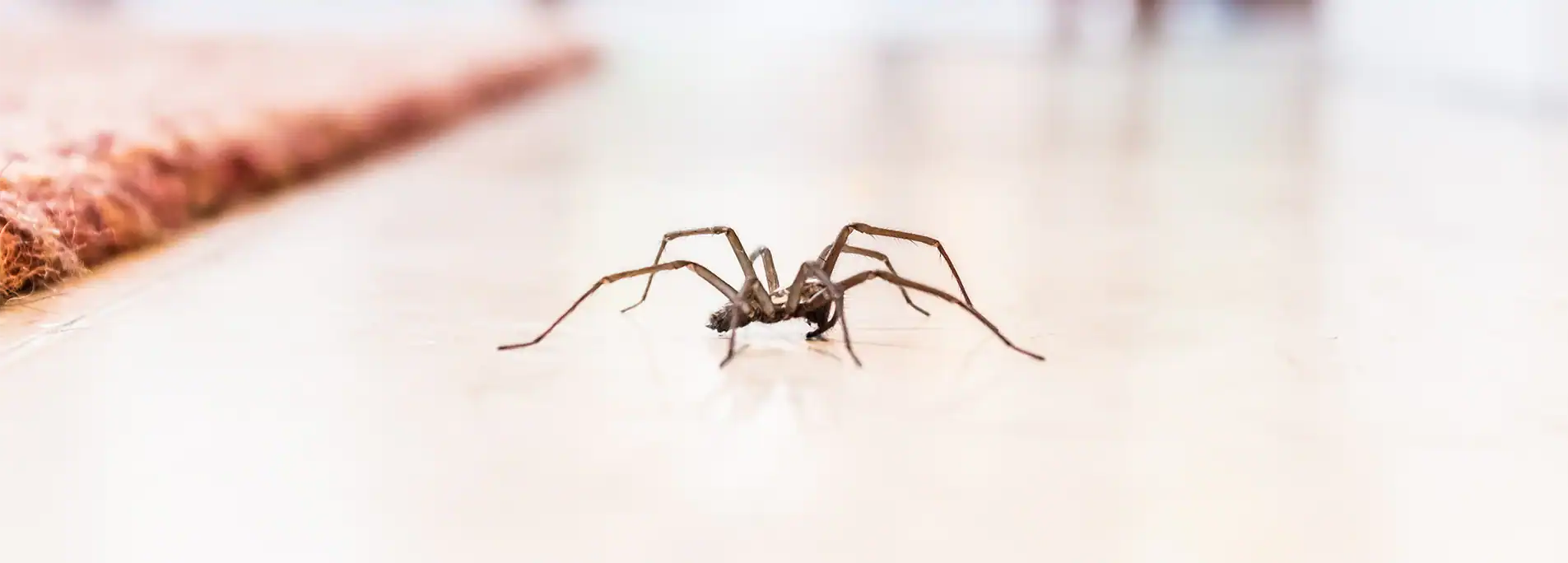
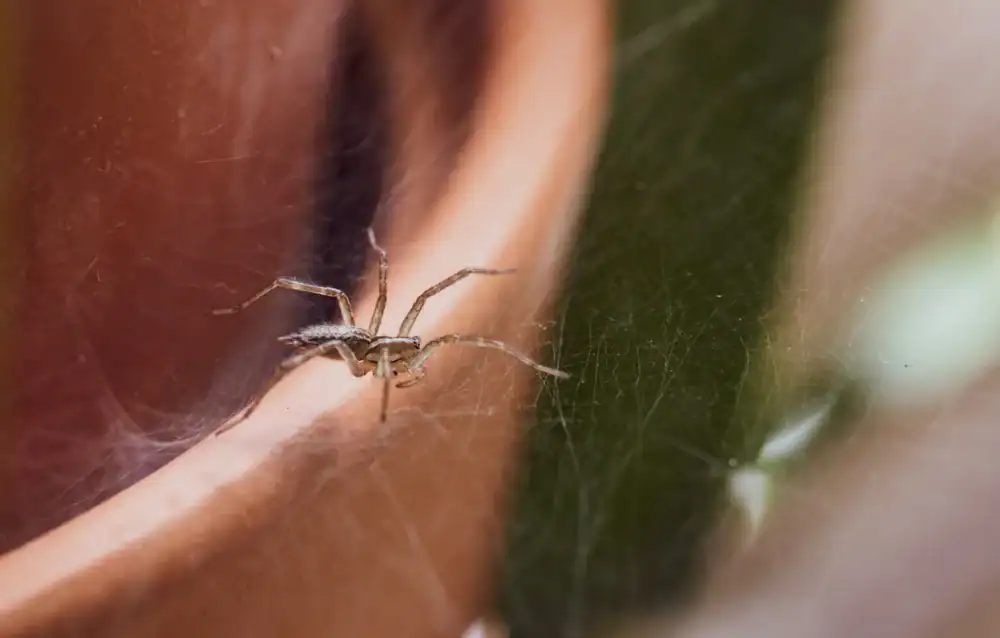
The biggest frustration most homeowners describe isn’t the spider they saw — it’s not knowing what’s behind the walls, under the eaves, or in the garage corner they haven’t checked in a while. That uncertainty is its own kind of stress. Good spider control removes both the spiders and the guesswork.
For homes along the Ayers Road corridor, that matters more than it might somewhere else. The land east of the Suncoast Parkway and along County Line Road was undeveloped pine flatwoods and wetland edge not long ago. When that habitat gets cleared for new subdivisions, the wolf spiders, black widows, and orb weavers that called it home don’t disappear — they relocate to the nearest structure. If you moved into a newer home in Ayers and noticed more spider activity than you expected, that’s exactly why.
A properly applied outdoor spider barrier, combined with de-webbing of your eaves, entry points, and outdoor structures, breaks that cycle. You stop reacting to what shows up and start preventing it from getting in. That’s what changes the experience from frustrating to manageable — and eventually, to forgettable in the best way possible.
Around The Clock Pest Service is a family-owned, owner-operated business serving Hernando County and neighboring Florida counties. When you call about a spider problem on Ayers Road, you’re not reaching a call center or a dispatcher. You’re talking to the licensed professional who will actually show up — someone who knows what lives in the scrub edges off County Line Road and understands why homes near Ayers see the pest activity they do.
We hold FDACS license LF286842, active through June 2027, and have been BBB Accredited since October 2022. Across 109 Google reviews, our rating is a perfect 5.0. That’s not luck — it’s what happens when someone answers every call personally, gives honest phone quotes without a sales visit, and actually follows through. If you’ve had a bad experience with a pest control company that was hard to reach or sent a different technician every time, this is a different setup entirely.

It starts with a phone call — and most of the time, a quote happens right there. No in-home sales visit, no pressure, no waiting for someone to call you back Monday morning. You describe what you’re seeing, where you’re seeing it, and what’s been tried before. From there, the right approach gets mapped out based on your specific situation.
When the service visit happens, the first priority is a full exterior inspection — eaves, foundation perimeter, window frames, door frames, outdoor lighting fixtures, and any structures adjacent to your home. Along the Ayers Road corridor, that often includes areas where the yard backs up to undeveloped land or wetland edge, which are consistent entry points for ground-dwelling species like wolf spiders. Any active webs and egg sacs get physically removed during the de-webbing phase. Then a professional-grade barrier treatment is applied around the foundation and all entry points — products that aren’t available in consumer retail stores and that work differently than what you’ll find at a hardware store.
After the initial treatment, we recommend a quarterly prevention program. There’s no true off-season for spiders in Hernando County — the average January low here barely dips below 50°F, which isn’t cold enough to suppress populations. Staying ahead of it on a regular schedule is what keeps the problem from cycling back.

Ready to get started?
Spider control in Ayers, FL covers more than just treating what’s visible. Our service includes physical spider de-webbing of all accessible exterior areas — eaves, porch ceilings, outdoor light fixtures, window frames, and structural corners where webs accumulate fastest in Florida’s humidity. Egg sacs are removed during this phase, which matters because a single female black widow can produce multiple egg sacs, each containing hundreds of eggs. Getting ahead of that before they hatch is the difference between a manageable situation and a significant infestation.
The outdoor spider barrier treatment is applied along the foundation perimeter and all entry points using EPA-registered, professional-grade products. These aren’t the same formulations you find in a consumer spray bottle — they’re designed to create a residual barrier that keeps working between visits, not just knock down what’s present on the day of service. For homes near the wetland edges and pine flatwoods common to the Ayers Road area, that sustained perimeter protection is especially important because spider pressure from surrounding habitat doesn’t stop.
Venomous spider removal is handled with the same process, with additional attention to harborage areas — woodpiles, utility boxes, low-clearance structures, and the spaces between new construction framing that black widows and brown widows favor. Brown recluse spiders, for what it’s worth, are not native to Florida and don’t have established populations in Hernando County — so if you’ve been told you have a brown recluse problem here, a second opinion is worth getting.
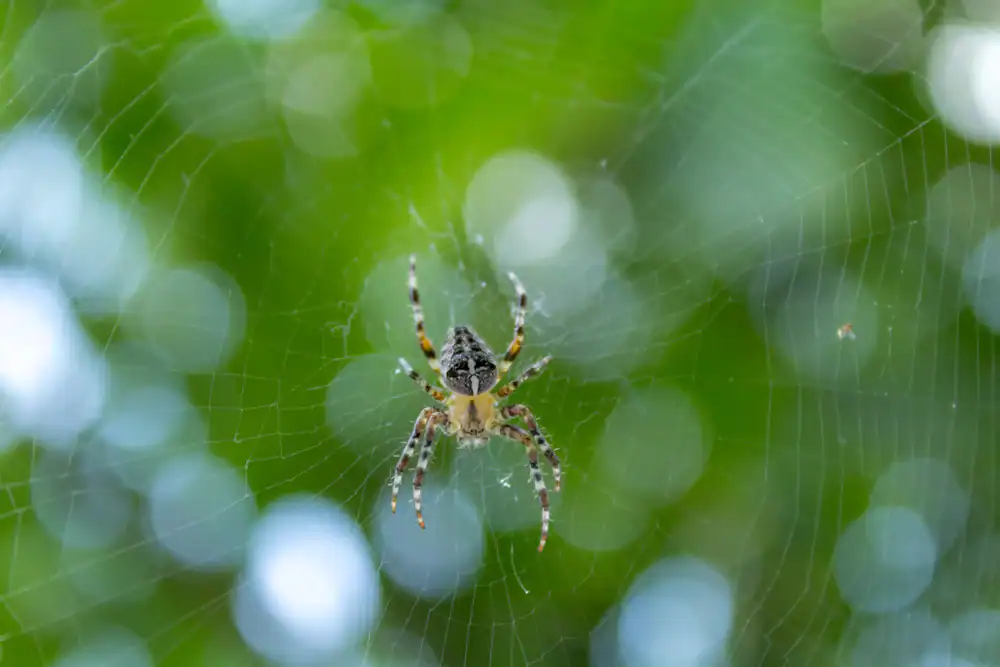
The two species that warrant real attention in the Ayers area are the black widow and the brown widow. Both are present in Hernando County and both carry venom that can cause serious symptoms, particularly in children, elderly adults, or anyone with underlying health conditions. Black widows tend to favor dark, undisturbed harborage — think woodpiles, garage corners, utility boxes, and the underside of outdoor furniture. Brown widows are more adaptable and show up in a wider range of locations, including eaves, porch railings, and the crevices of outdoor structures.
Wolf spiders are the ones that cause the most alarm because of their size — they’re large, fast-moving, and show up inside homes more often than people expect. They’re not venomous in a medically significant way, but finding one in your bedroom at night is unsettling regardless. Orb weavers are common along the Ayers Road corridor’s outdoor spaces and build the large, circular webs you’ll see strung between plants, fences, and eaves. They’re generally harmless but a sign that insect activity around your home is high enough to support a spider population worth addressing.
This is one of the most common questions from homeowners who moved into the subdivisions built along the Ayers Road corridor after the extension opened. The short answer is that your home was built on land that was recently undeveloped pine scrub and wetland edge — habitat that supported established spider populations before the first foundation was poured. When that land gets cleared, those spiders don’t relocate far. They move into the nearest available structure, which is your new home.
New construction also tends to have more gaps, unsealed penetrations, and fresh landscaping disturbance than established homes — all of which make it easier for spiders to find entry points. The good news is that getting a barrier treatment and de-webbing program in place early, before populations have time to establish inside the structure, is significantly more effective than treating an existing infestation. We offer a new homeowner discount specifically because this situation is common in Hernando County’s active development corridors, and early prevention is always the better approach.
Consumer-grade spider sprays are formulated at lower concentrations than what licensed pest control operators are permitted to use. That’s a regulatory reality. The practical result is that store-bought sprays often function more as repellents than lethal agents, which means they push spiders deeper into wall voids and structural cavities rather than eliminating them. You might see fewer spiders on the surface for a few days, but the population hasn’t been addressed.
Professional-grade products create a residual barrier that continues working between visits — not just on contact. The application method also matters. Our licensed technicians know where to apply treatment to intercept spider movement, not just where spiders happen to be visible. For homes along the Ayers Road corridor, where spider pressure from adjacent natural habitat is ongoing, a one-time retail spray applied to visible webs isn’t going to hold. A professionally applied perimeter barrier, refreshed on a quarterly schedule, is what actually interrupts the cycle.
This is a reasonable concern and one worth asking directly. The professional-grade products we use for spider barrier treatments are EPA-registered, which means they’ve gone through federal safety evaluation for residential use. When applied correctly by a licensed operator — which Florida law requires for any commercial pest control service — they’re designed to be effective against insects and arachnids while posing minimal risk to mammals at normal exposure levels.
Standard practice is to keep children and pets away from treated surfaces until the application has dried, which typically takes 30 to 60 minutes depending on conditions. In Florida’s humidity, our technician will give you a specific window based on the day’s weather. After that, the treated surfaces are safe for normal activity. If you have specific concerns about a particular product, ask — the owner answers every call personally and will walk you through exactly what’s being used and why. There’s no reason to accept a vague answer on something this important.
For most homes in Hernando County, a one-time treatment is a starting point — not a solution. The reason comes down to climate. Hernando County’s average January low temperature is around 49°F, which isn’t cold enough to suppress spider populations the way a true winter would. There’s no seasonal die-off that gives your home a natural reset. Spider activity in the Ayers area is a 12-month reality, not a spring-through-fall issue.
Beyond climate, the Ayers Road corridor’s proximity to wetland edges and pine flatwoods means spider pressure from surrounding habitat is continuous. A barrier treatment has a residual lifespan — it doesn’t last indefinitely. By the time three months have passed, the perimeter protection has degraded enough that new activity can establish. A quarterly program keeps the barrier active, catches new harborage before it becomes an infestation, and costs significantly less over time than addressing a recurring problem reactively. Most homeowners who try a single treatment and skip the follow-up end up calling back within six months.
Yes — we offer two discounts that are directly relevant to a lot of Ayers-area homeowners. The first is a new homeowner discount. Given how much new residential construction has gone up along the Ayers Road corridor since the extension opened, there’s a significant population of people who recently moved into homes built on previously undeveloped land. That situation comes with a higher-than-average spider pressure from the start, and getting professional prevention in place early is genuinely the smarter move. The discount makes that easier to do right away rather than waiting until the problem is larger.
The second is a military discount. Hernando County has a meaningful veteran and active-duty population, and this is a straightforward acknowledgment of that. Both discounts are applied honestly — no strings attached, no upsell required to qualify. If you call to ask about pricing, the owner will give you a straight answer over the phone, including any discounts that apply to your situation. Most quotes don’t require an in-home visit, so you’ll know what you’re looking at before anyone shows up at your door.