
Fast, reliable pest control from Hernando County’s most trusted family-owned team—with most quotes given over the phone.
Contact Info
Fast, reliable pest control from Hernando County’s most trusted family-owned team—with most quotes given over the phone.
Contact Info
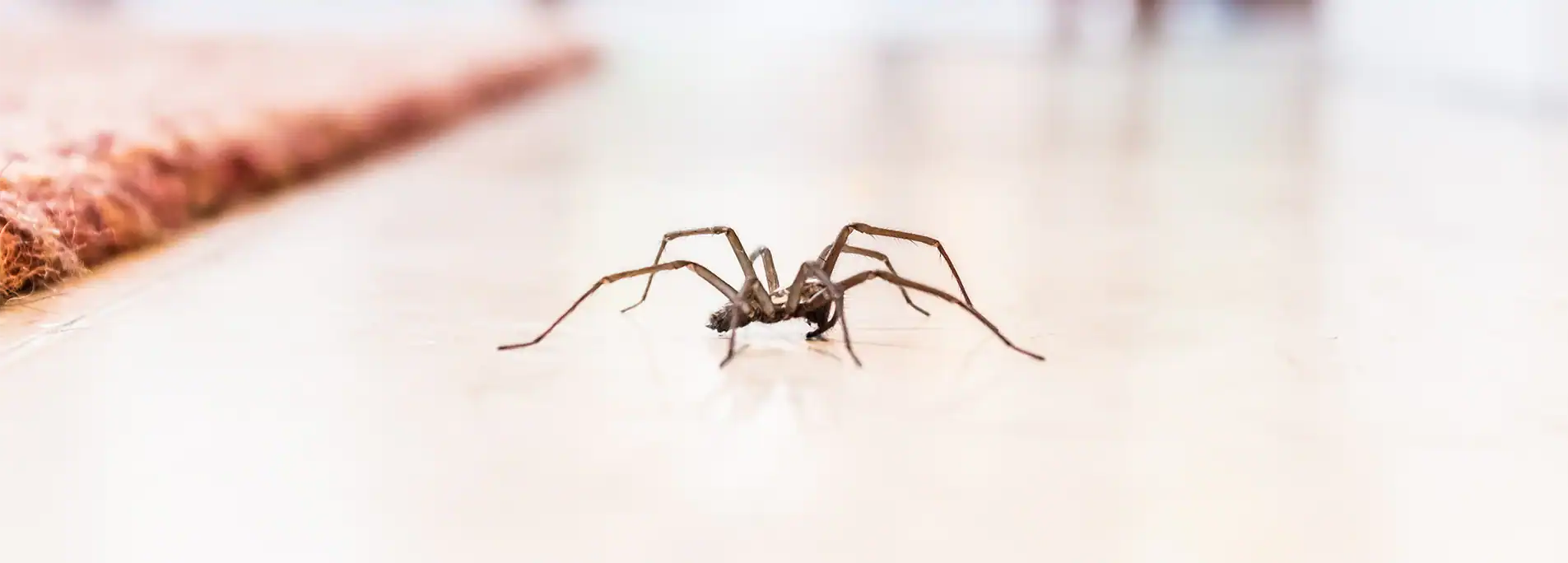
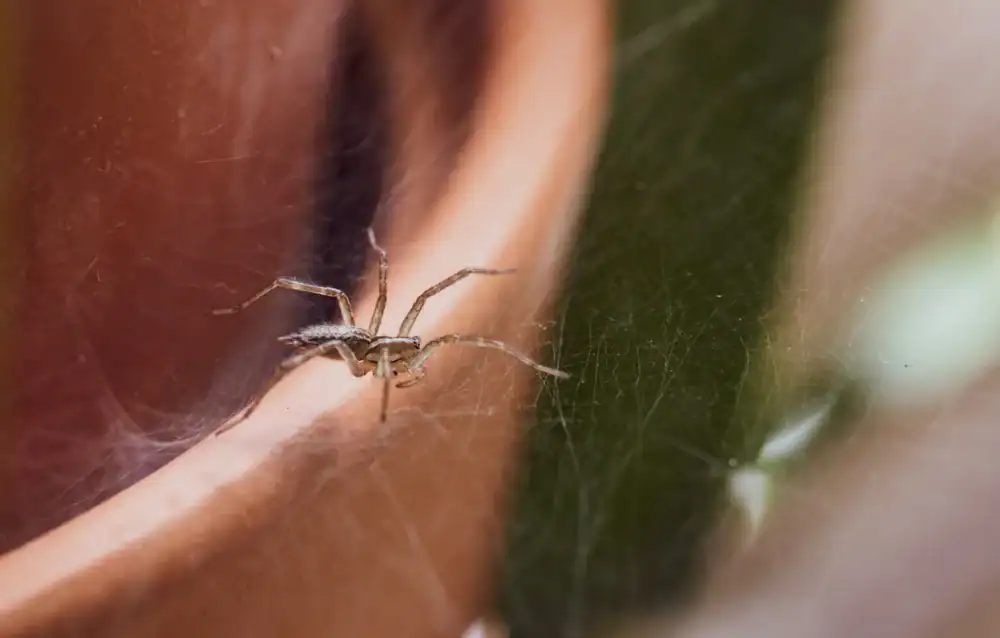
If you live in one of Hudson’s canal communities — Driftwood Isles, Sea Pines, Cape Cay, Signal Cove — you already know what hides under dock planks and inside boat lift corners. Black widows and brown widows don’t build webs in open spaces. They settle into the quiet, undisturbed spots you reach into without thinking: dock storage, seawall crevices, the underside of outdoor furniture. That’s where the real risk lives.
After we handle professional spider control, those spaces get treated and cleared — not just sprayed around the perimeter and called done. The outdoor areas you actually use, from your screened lanai to your waterside patio, stop being places you have to check before you sit down.
Inland neighborhoods like Beacon Woods and Heritage Pines deal with a different version of the same problem. Decades of established landscaping, mature tree canopy, and accumulated ground debris create ideal conditions for wolf spiders and web-building species along eaves and entry points. When the Gulf brings moisture and the rainy season kicks insect populations into high gear, spider activity follows. Our barrier treatment and de-webbing service breaks that cycle instead of just knocking webs down until next week.
Around The Clock Pest Service is family-owned and operated, serving residential and commercial clients across Pasco and Hernando counties. When you call, you’re speaking directly to the owner — the same licensed professional who will show up, inspect, and treat your property. There’s no dispatch center, no rotating technicians, and no explaining your problem twice to someone who can’t actually help.
That matters in a community like Hudson, where a lot of homeowners have been around long enough to know the difference between a company that shows up and one that just talks well. Whether you’re in Heritage Pines, a canal home off Hudson Avenue, or an established neighborhood east of US-19, the service doesn’t change — and neither does the person delivering it.
Our FDACS license LF286842 is active through 2027, we’re BBB Accredited since 2022, and we’re backed by 109 five-star Google reviews. Most quotes are handled over the phone — no in-home sales visit, no pressure, just a straight answer.

It starts with a phone call. You describe what you’re seeing — webs on the eaves, a spider under the dock, activity around the garage — and you get a real quote on the spot. No appointment needed just to find out what something costs. For most Hudson homeowners, that alone is a relief.
When the visit happens, our inspection goes beyond what’s visible. In waterfront homes, that means checking dock structures, boat lifts, seawall corners, and the undersides of outdoor furniture — the harborage areas that standard perimeter sprays never reach. In inland neighborhoods, it means checking ground-level debris, garage corners, entry points, and the eave lines where webs accumulate season after season. Hudson’s Gulf-adjacent humidity and year-round insect activity mean spiders have a reliable food source, so our treatment has to address the conditions driving them in — not just the ones currently visible.
After treatment, you’ll know exactly what was found, what was applied, and what to expect over the following days. If you’re on a quarterly prevention plan — which is the honest recommendation for any Florida Gulf Coast home — each visit builds on the last. There’s no reset, no starting over, just consistent control that actually holds up in a climate that never gives pest pressure a season off.

Ready to get started?
Spider control in Hudson isn’t a one-size-fits-all service, and it shouldn’t be treated like one. Canal-side properties in communities like Port Hudson, Leisure Beach, and Gulf Island carry a different risk profile than a home in Barrington Woods or Beacon Woods. Our service reflects that. Dock structures, seawalls, boat lifts, and waterside storage get targeted inspection and treatment — because that’s where venomous spider removal in Hudson, FL is most urgent and most often overlooked.
Spider de-webbing services in Hudson, FL are included as part of our process, not offered as an add-on. Webs are physically removed from eaves, overhangs, entry points, outdoor structures, and dock areas — eliminating the harborage that keeps spiders cycling back. An outdoor spider barrier is then applied around the foundation, windows, doors, and exterior structures to create a treated perimeter that discourages re-entry.
For active adult communities like Heritage Pines, where residents are home more often and venomous spider bites carry a higher health risk for older adults, the prevention focus is especially relevant. Wolf spider extermination in Hudson, FL is also addressed — and it’s worth knowing that wolf spiders don’t build webs. If you’re seeing them inside, it means there’s a prey insect population feeding them. Our treatment accounts for that, not just the spiders you can see. Pasco County requires no additional local licensing beyond the state FDACS mandate, and all our treatments near Hudson’s canals and waterways follow Florida DEP guidelines for pesticide application near water bodies.
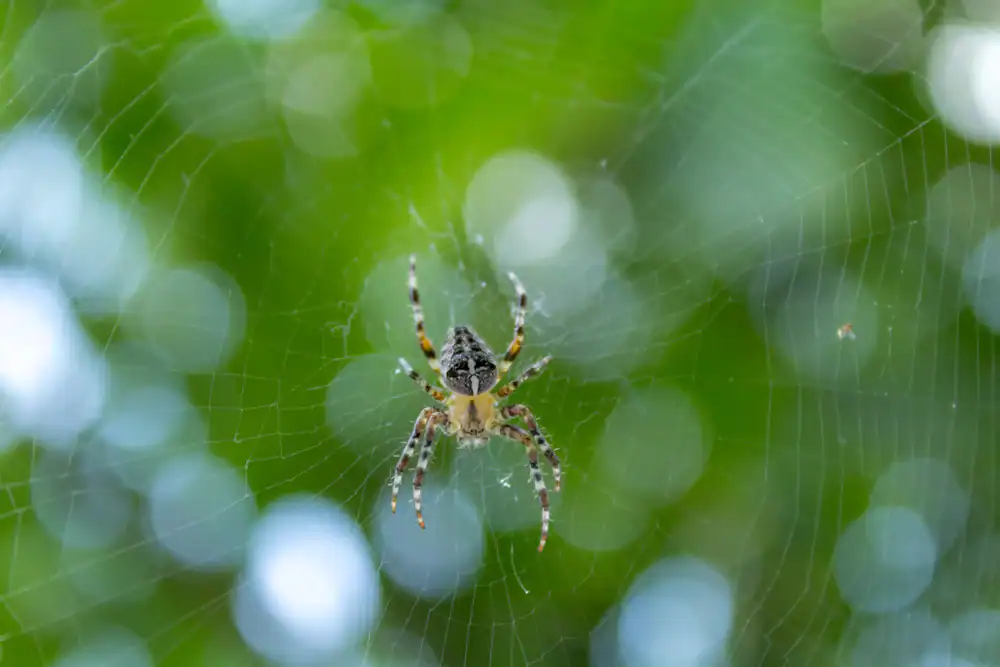
The two venomous species you’re most likely to encounter in Hudson’s waterfront communities are black widows and brown widows. Both favor the same type of environment: quiet, undisturbed, low-traffic spaces where they won’t be disturbed for long periods. Under dock planks, inside boat lift mechanisms, behind seawall crevices, beneath outdoor furniture cushions — these are exactly the spots they settle into in places like Driftwood Isles and Sea Pines.
Black widows are glossy black with the recognizable red hourglass marking on the underside of the abdomen. Brown widows are lighter in color, tan to brown, with an orange hourglass, and their egg sacs have a distinctive spiky appearance. Both species are medically significant. Black widow venom affects the nervous system and can cause severe muscle cramping, elevated blood pressure, and in older adults or those with cardiovascular conditions, more serious complications. If you spend time on your dock or around your boat lift in Hudson’s canal communities, a professional inspection of those structures is worth doing before a bite makes the decision for you.
For a one-time spider extermination service in Hudson, FL, the typical range runs from $100 to $500, with most residential jobs landing around $300 depending on the size of the property and the extent of the infestation. Waterfront properties with dock structures, boat lifts, and canal-side harborage tend to sit at the higher end of that range simply because there’s more ground to cover and more targeted work involved.
Quarterly prevention plans bring that per-visit cost down considerably and are the more cost-effective option for any home in Pasco County’s Gulf Coast climate, where spider activity doesn’t have an off-season. A one-time treatment handles what’s there now — a recurring plan keeps it from coming back. For new homeowners moving into an established Hudson property, especially a canal home or an older Beacon Woods house with mature landscaping, the initial service plus a quarterly plan is the approach that actually solves the problem long-term rather than just addressing it temporarily. Most quotes are provided over the phone, so you’ll know what you’re looking at before anyone sets foot on your property.
Brown recluses are not an established species in Florida. They don’t have a native population in Pasco County, and the conditions here don’t support the kind of colony development you’d see in the Midwest or Southeast states where they’re actually common. That said, the question comes up constantly — and it usually means someone has found a spider they can’t identify and are rightfully concerned.
Florida does have several species that get mistaken for brown recluses, including the long-legged sac spider and various wolf spider juveniles, both of which show up regularly in Hudson homes. The sac spider in particular can deliver a bite that causes localized tissue irritation, which adds to the confusion. If you’ve found a spider you can’t identify with confidence, a professional inspection is the right call — not because brown recluses are likely, but because accurate identification determines the correct treatment approach. Treating for the wrong species wastes time and money and doesn’t solve the actual problem.
This is one of the more common calls that comes in from Hudson’s waterfront neighborhoods after Gulf water pushes inland. When king tides or tropical weather events raise water levels in the canal communities — Sea Pines, Cape Cay, Port Hudson, and others — it displaces ground-dwelling species like wolf spiders from their normal harborage areas. They move up and inward, which often means into garages, screened porches, and occasionally living spaces.
The same pattern happens after heavy rainy season storms throughout Hudson’s inland neighborhoods. Saturated soil, flooded ground debris, and displaced vegetation push spiders toward drier, sheltered structures — which includes your home. This isn’t a sign of a new infestation so much as it’s a sign of a displaced population looking for stable ground. A barrier treatment applied ahead of storm season, or immediately after a displacement event, is the most effective way to intercept that movement before spiders establish inside. We answer seven days a week, so if you’re dealing with a post-storm surge on a Sunday, you’re not waiting until Monday to get help.
Spider de-webbing is the physical removal of webs from exterior surfaces — eaves, overhangs, entry door frames, garage corners, outdoor light fixtures, dock structures, screened porch frames, and anywhere else spiders build. It’s not the same as a spray treatment, and it’s not something that happens automatically when a technician does a perimeter application.
In Hudson specifically, de-webbing matters for a few reasons. Older homes in neighborhoods like Beacon Woods and Barrington Woods have accumulated years of harborage along their eave lines and in their landscaping. Web removal eliminates the existing structure that spiders return to — not just the spider currently occupying it. For waterfront properties, dock areas and outdoor furniture accumulate webs quickly because the moisture and insect activity near the water give spiders a reliable reason to keep coming back. Removing the webs physically, combined with a barrier treatment, breaks the cycle in a way that spray alone doesn’t. If you’ve been knocking webs down yourself and they’re back within a week, de-webbing as part of our professional service is why that stops happening.
Yes — we offer discounts for new homeowners and for military families. Hudson’s real estate market regularly brings people into established properties, including canal homes, older Beacon Woods houses, and Heritage Pines villas, many of whom are encountering Florida’s spider populations for the first time in a new home. The new homeowner discount is a straightforward way to get professional service established from the start, before a spider problem has a chance to get comfortable.
The military discount reflects something we genuinely value. Pasco County has a meaningful veteran and retired military population, and Hudson is no exception. These aren’t add-ons designed to generate clicks — they’re offers extended to people who either just took on a new property and need reliable service from day one, or who have earned a little consideration after years of service. If either applies to you, mention it when you call. The quote process is handled over the phone, so it’s easy to ask about pricing and discounts before committing to anything.