
Fast, reliable pest control from Hernando County’s most trusted family-owned team—with most quotes given over the phone.
Contact Info
Fast, reliable pest control from Hernando County’s most trusted family-owned team—with most quotes given over the phone.
Contact Info
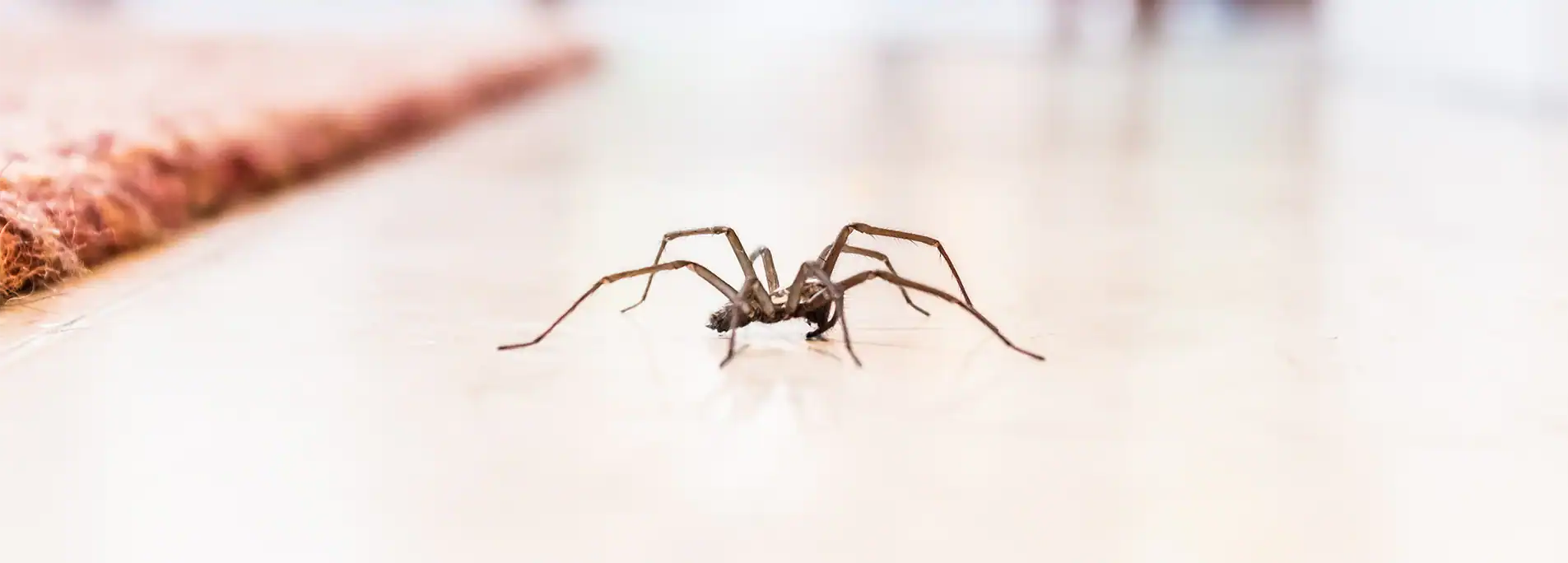
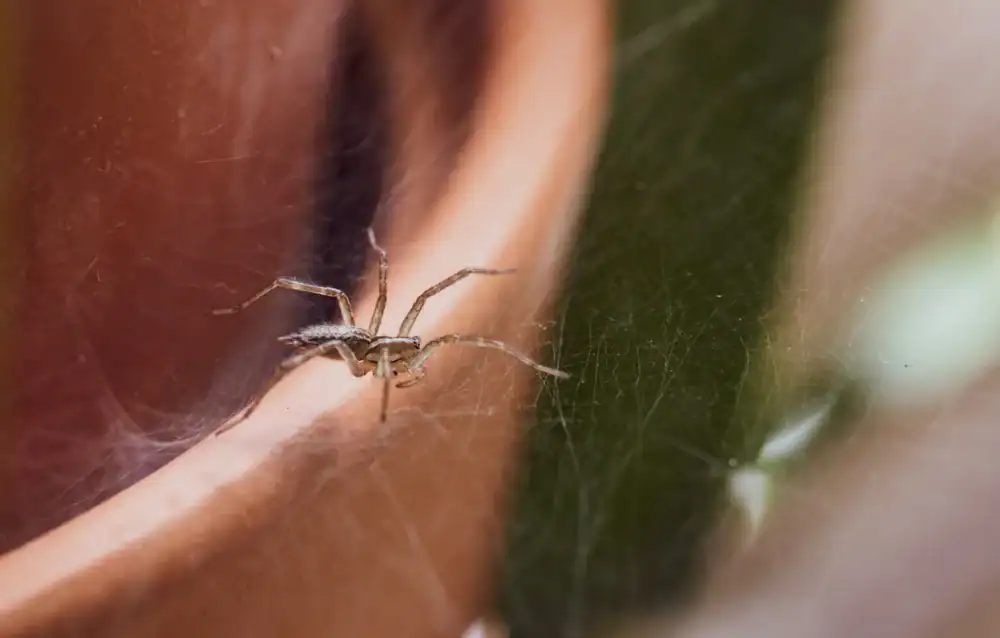
You stop finding webs across your dock lines every morning. You stop checking under the boat lift before you reach in. You stop wondering whether that spider tucked into the corner of your elevated deck is a brown widow or just another orb weaver. That distinction matters when you live on the water — because the underdeck environments, dock pilings, and outdoor storage spaces common to Pine Island properties are exactly where black widows and brown widows prefer to build.
The coastal conditions here are a perfect storm for spider activity. The Gulf humidity keeps insect prey populations elevated year-round, which means spiders always have a reason to stay close to your home. The proximity to the Chassahowitzka Wildlife Management Area adds another layer — thousands of acres of undisturbed natural habitat sit just beyond your property line, and spiders don’t respect that boundary. Add in the post-storm disruption from back-to-back surge events in 2023 and 2024, and many Pine Island homes are dealing with pest pressure that’s been compounding for two years.
Professional spider control eliminates the active population, removes the harborage and web structure that keeps drawing new spiders in, and puts a treated barrier between your home and the habitat surrounding it. The result isn’t just fewer spiders — it’s a home you can move through comfortably, inside and out, without the constant mental inventory of what might be hiding where.
Around The Clock Pest Service is a family-owned, owner-operated pest control company serving Hernando County, including the coastal Gulf communities of Pine Island, Bayport, and Weeki Wachee. When you call, the owner answers — not a dispatcher, not a call center, not a rotating technician who’s never been to your property before. The same licensed professional who takes your call is the one who shows up at your door.
That matters more than it might sound. When you’re on an island with one road in and one road out, you need a provider whose word actually means something. We hold an active FDACS pest control license (LF286842, valid through June 2027), have been BBB Accredited since October 2022, and carry 109 five-star Google reviews — a perfect 5.0 rating that Trustindex has independently recognized. Most quotes are handled over the phone, so you know exactly what you’re paying before anyone pulls into your driveway.

It starts with a phone call. The owner walks through your situation with you — what you’ve been seeing, where you’ve been seeing it, and what your property looks like. For Pine Island homes, that conversation almost always includes outdoor structures: docks, boat lifts, elevated decks, storage sheds, and the underdeck void spaces that are prime harborage for widow spiders. You get a clear quote before anything is scheduled, and there’s no in-home sales visit required to get one.
On the day of service, the treatment targets the specific locations where spiders actually live and enter — not just a generic perimeter spray around the foundation. That means treating the eaves, window frames, door frames, outdoor lighting fixtures, and the structural surfaces beneath elevated portions of the home. Spider de-webbing is part of the process: physically removing existing webs from accessible outdoor surfaces eliminates the harborage structure that keeps drawing new spiders back, even after the original population has been eliminated. For homes near the coastal marshes, that step isn’t optional — it’s what makes the treatment last.
After the initial service, the honest recommendation for any Pine Island home is a quarterly prevention program. There’s no cold season here to reset the population. The Gulf moderates temperatures year-round, insect prey is always available, and the natural habitat surrounding the island means spider pressure is continuous. Quarterly treatments maintain the barrier and prevent re-establishment before it becomes a visible problem again.

Ready to get started?
Spider control for a Pine Island waterfront property covers a different scope than what most pest control companies describe in their standard service. The interior of the home is part of it, but the real work happens outside — and specifically in the elevated, sheltered, low-traffic environments that define waterfront construction. Underdeck surfaces, dock structures, boat lift frames, outdoor storage areas, covered porches, and the structural voids beneath stilt-foundation homes are all treated directly, because that’s where the problem actually lives.
Venomous spider removal in Pine Island, FL focuses on black widow and brown widow harborage in exactly these environments. Both species are present in coastal Hernando County, both favor undisturbed outdoor structures, and both are genuinely dangerous — particularly for children and pets who spend time near docks and outdoor play areas. Wolf spider extermination in Pine Island, FL addresses the large, fast-moving hunters that patrol ground level and enter through gaps in doors, garage thresholds, and foundation vents. These aren’t web-builders, so de-webbing alone won’t stop them — targeted perimeter treatment does.
Black widow prevention in Pine Island, FL and the broader outdoor spider barrier service creates a treated zone between your home and the surrounding habitat. For a property bordered by tidal marshes or coastal scrub, that barrier is the difference between managing spiders reactively and keeping them out in the first place. Spider web removal from eaves in Pine Island, FL is included in every full-service visit — because webs left in place are open invitations, regardless of how effective the chemical treatment was.
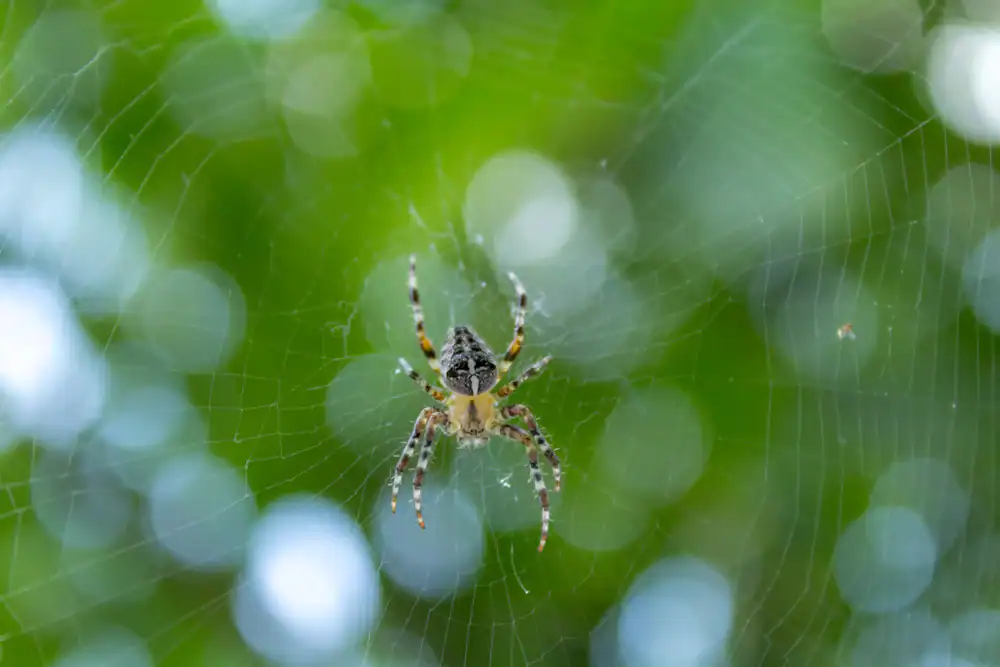
Yes — and more specifically, they’re common in the types of structures that define waterfront living on Pine Island. Black widows favor sheltered, undisturbed environments with low foot traffic and wooden or rough surfaces to anchor their webs. Dock pilings, the undersides of boat lifts, elevated deck framing, outdoor storage sheds, and the void spaces beneath stilt-foundation homes check every one of those boxes. Pine Island properties tend to have several of these environments in close proximity, which is why widow spider encounters are more frequent here than in a typical Spring Hill subdivision.
Brown widows are also present and are often found in similar locations — patio furniture, outdoor equipment stored under decks, and the corners of covered porches. Both species are venomous and should be treated by a licensed professional rather than approached with a store-bought spray. If you’ve found what looks like a widow spider — or an irregular, tangled web low to the ground near an outdoor structure — that’s worth a call before anyone reaches into that space again.
The most frequently encountered spiders in Pine Island and the surrounding coastal Hernando County communities fall into a few categories. Black widows and brown widows are the ones that matter most from a safety standpoint, and they’re genuinely present here — particularly in the outdoor and underdeck environments described above. Wolf spiders are extremely common in coastal Florida and are often the large, fast-moving spider people encounter on the floor of a garage or living room. They don’t build webs, they hunt actively, and they’re drawn toward structures when moisture levels attract the insects they feed on.
Orb weavers are the spiders responsible for the large, circular webs you’ll find stretched across your porch or between dock posts every morning. They’re not dangerous, but their webs are a constant nuisance in coastal environments where insect prey is abundant. Cellar spiders — the long-legged, fragile-looking spiders in corners and ceiling angles — are also common inside homes. A professional identification during a service visit can confirm exactly what you’re actually dealing with and whether the treatment plan needs to be adjusted.
It does, and Pine Island residents have experienced this firsthand after both Hurricane Idalia in 2023 and Hurricane Helene in 2024. When storm surge moves through a coastal property, it displaces established spider and pest populations from their natural ground-level habitats — pushing them upward and inward, toward structures. Spiders that would normally stay in the marsh grasses or coastal scrub end up inside homes, garages, and elevated deck spaces as the water forces them out of their usual environment.
Beyond the immediate displacement, the repair and remediation work that follows a surge event creates new problems. Removing and replacing insulation, opening wall cavities, and repairing structural elements disturbs established harborage and creates new entry points that weren’t there before the storm. Homes on Pine Island that went through remediation after Idalia or Helene may be dealing with spider pressure from both directions — displaced outdoor populations moving in, and new interior access points that weren’t sealed during the rebuild. A post-storm spider treatment that addresses both the exterior barrier and the newly created entry points is a different job than a standard annual service.
For most homes in Florida, one treatment is a starting point — not a solution. For a Pine Island home specifically, the honest answer is that a single treatment without follow-up will lose its effectiveness within a few months, and the conditions here mean that spider pressure doesn’t pause to give you time to catch up. There’s no meaningful cold season on the Gulf Coast. The Chassahowitzka Wildlife Management Area and the surrounding tidal marshes are a continuous source of spider and insect activity. The Gulf’s thermal effect keeps nighttime temperatures warmer than inland Hernando County even in January, which means the population never resets the way it would in a northern climate.
Quarterly prevention is the professional standard for coastal Florida homes, and it’s what we recommend for Pine Island properties. It keeps the exterior barrier active before spiders re-establish rather than after, which is both more effective and less disruptive than treating a visible infestation every time it builds back up. The cost of quarterly prevention is also significantly lower than the cost of repeated reactive treatments — and far less stressful than finding widow spiders under your dock every summer.
Almost certainly not — and this is one of the most common misconceptions in Florida pest control. Brown recluse spiders are not native to Florida and do not have established populations in Hernando County or anywhere else in the state. They’re native to the central and south-central United States, and while an occasional specimen may arrive in shipped goods or furniture, they don’t survive and reproduce here under normal conditions. If you’ve found a brown spider in your home and you’re concerned it might be a recluse, the far more likely candidate is one of several native Florida species that are similar in appearance but far less dangerous.
That said, “it’s probably not a recluse” is not the same as “don’t worry about it.” Several Florida spiders can cause a painful bite, and proper identification matters. If you’re finding spiders you can’t identify — especially medium-sized brown spiders in closets, under furniture, or in low-traffic areas — a professional inspection is the right call. We can identify what you’re actually dealing with and give you an honest answer about whether treatment is warranted, rather than defaulting to the worst-case scenario.
Yes — we offer a new homeowner discount, and it’s genuinely relevant for anyone who’s recently purchased a waterfront property on or near Pine Island. Buying a Gulf-front home in coastal Hernando County often means inheriting pest conditions you didn’t create: a previous owner’s unmaintained dock, years of undisturbed widow spider harborage under an elevated deck, or a home that went through storm remediation and was never properly re-treated afterward. Starting fresh with a professional inspection and initial treatment — at a reduced cost — makes practical sense when you’re already managing the transition into a new property.
A military discount is also available. Hernando County has a meaningful veteran and active-duty population, and if that applies to your household, it applies here too. Both discounts are straightforward — just mention it when you call. The owner handles the call personally, so there’s no form to fill out or account to create before you can ask a simple question.
Other Services we provide in Pine Island