
Fast, reliable pest control from Hernando County’s most trusted family-owned team—with most quotes given over the phone.
Contact Info
Fast, reliable pest control from Hernando County’s most trusted family-owned team—with most quotes given over the phone.
Contact Info
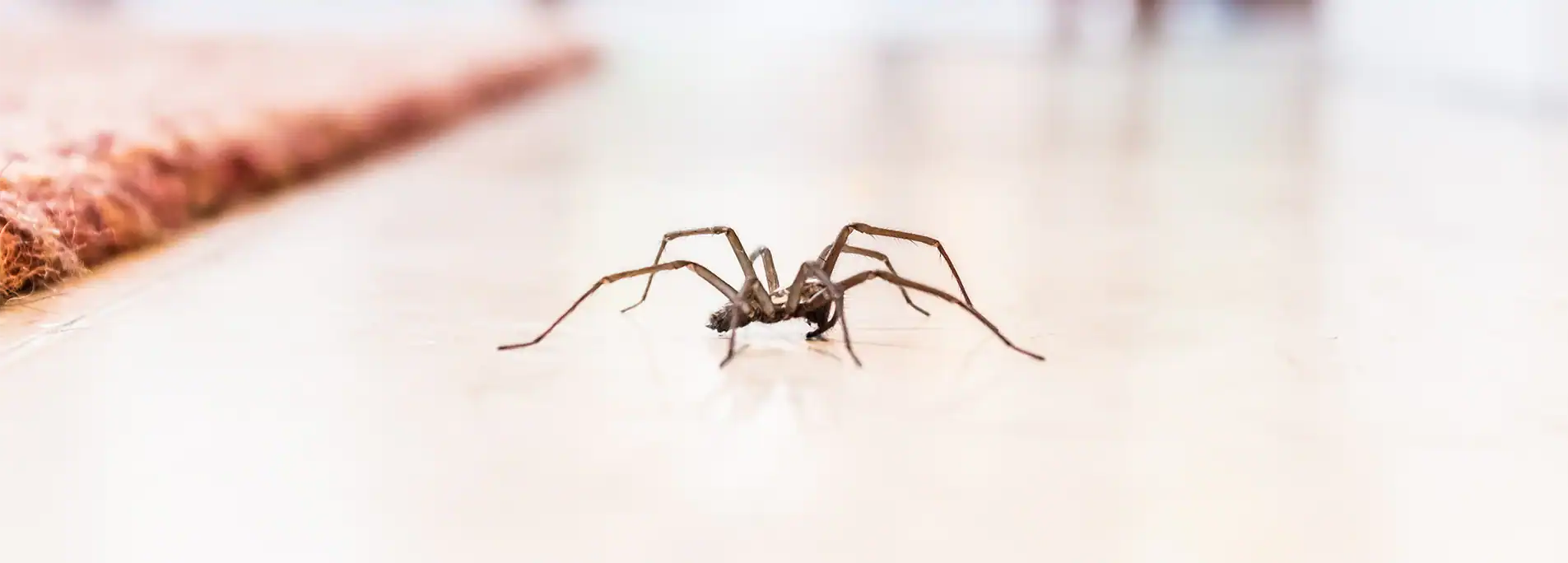
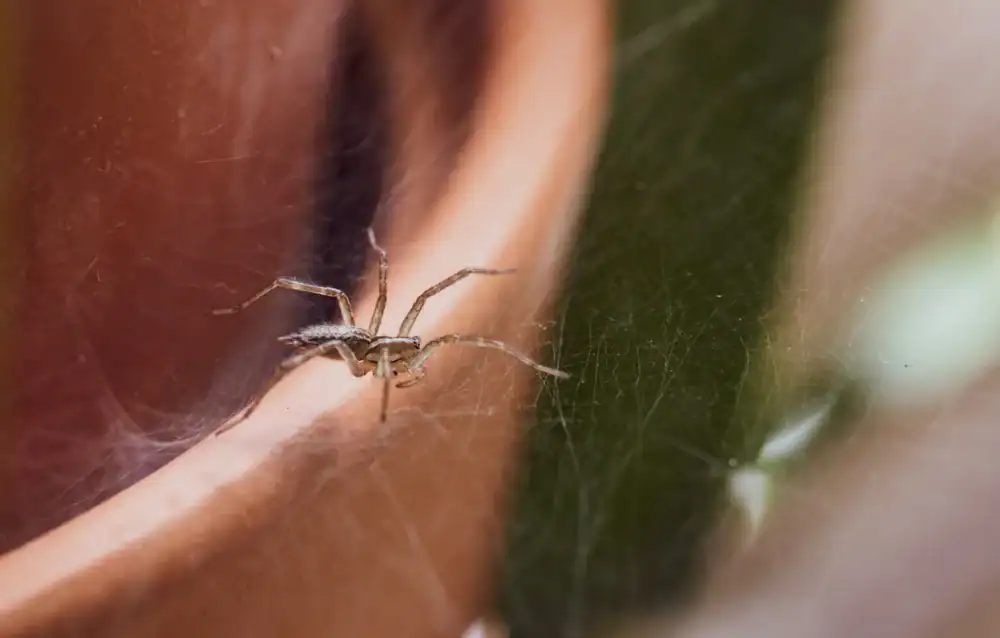
Living on a larger rural lot in Pasco means you’re dealing with a pest environment that a new construction home in Wesley Chapel simply doesn’t face. Wooded perimeters, older siding, crawl spaces, and nearby agricultural land all feed a steady spider population — and that population doesn’t slow down in December the way it would up north. Florida’s subtropical climate keeps spiders active all twelve months of the year, which means a one-time spray is not a real solution.
When spider control is done right, you stop finding webs on your eaves every other week. You stop second-guessing whether the spider in the shed is something your kids or dog should be near. Black widows and brown widows are present throughout Pasco County — and rural properties with outbuildings, stored equipment, and woodpiles are exactly the kind of environment they prefer. Effective treatment addresses those harborage areas specifically, not just the interior of the home.
The goal isn’t just fewer spiders. It’s knowing the outdoor barrier is holding, the high-risk areas have been inspected and treated, and you’re not starting from scratch every season. That kind of ongoing protection is what actually keeps a rural Pasco property manageable — and what separates a real pest control plan from a temporary fix.
Around The Clock Pest Service is a family-owned business serving Hernando County and neighboring Pasco County — including the rural communities along the US 301 corridor near Dade City. When you call us about spider control in Pasco, FL, you’re talking directly to the owner. Not a dispatcher, not a rotating technician. The same licensed professional who answers your call is the one who comes to your property, does the inspection, and handles the treatment.
That matters in a rural area where your options are limited and you need someone who’s actually going to show up when they say they will. With over 109 five-star Google reviews, a perfect 5.0 rating, BBB Accreditation since October 2022, and FDACS license LF286842 active through June 2027, the track record is verifiable. We offer special discounts for new homeowners and military families — both well-represented in this part of northeast Pasco County.

It starts with a phone call. Most quotes are handled over the phone, so you know what you’re committing to before anyone sets foot on your property. No in-home sales visit required, no pressure, no mystery pricing. If you’re calling about a specific sighting — a black widow in the shed, wolf spiders in the garage, webs building up on the eaves — that information helps us determine the right approach before the visit even happens.
On-site, the first step is a thorough inspection of the areas most likely to harbor spiders on a rural Pasco property: outbuildings, garage interiors, crawl spaces, shed rafters, under exterior stairs, around utility penetrations, and along the foundation. Older homes common in this part of northeast Pasco County tend to have more entry points and harborage areas than newer construction, so the inspection doesn’t skip corners. Species identification matters here — knowing whether you’re dealing with a black widow, a brown widow, or a wolf spider changes how the treatment is targeted.
From there, spider de-webbing removes existing webs and egg sacs from the structure, and we apply an outdoor spider barrier treatment around the foundation, eaves, windows, and entry points. This barrier is what prevents the surrounding environment — the wooded lots, pasture edges, and agricultural land that define the Pasco area — from continuously reintroducing spiders into your home. For most properties, quarterly prevention is what keeps the barrier effective year-round.

Ready to get started?
Spider control in Pasco, FL isn’t a single product sprayed around the perimeter and called done. On a rural property in northeast Pasco County, effective treatment covers the full picture — starting with venomous spider removal and targeted treatment of black widow and brown widow harborage areas. These species favor the exact conditions common here: dark corners in sheds, under shelving in outbuildings, behind stored equipment, and around pump houses or carports. Those areas get direct attention.
Spider de-webbing services are included as a functional part of the process, not just a cosmetic one. Webs left in place — even after the spider has moved on — continue to attract new spiders to the same location. We remove them from eaves, porch ceilings, garage interiors, and window frames to eliminate the harborage signal and make the barrier treatment more effective. Wolf spider extermination is also addressed through entry point identification and treatment of the ground-level harborage areas these hunting spiders prefer.
The outdoor spider barrier is applied using professional-grade, EPA-registered products at concentrations that store-bought options don’t match. For Pasco homeowners surrounded by wooded lots and agricultural land, this barrier is the line between the outdoor spider population and your living space. All service is performed under FDACS license LF286842 — no unlicensed operators, no shortcuts. We offer quarterly prevention plans for properties where surrounding habitat keeps pressure high throughout the year.
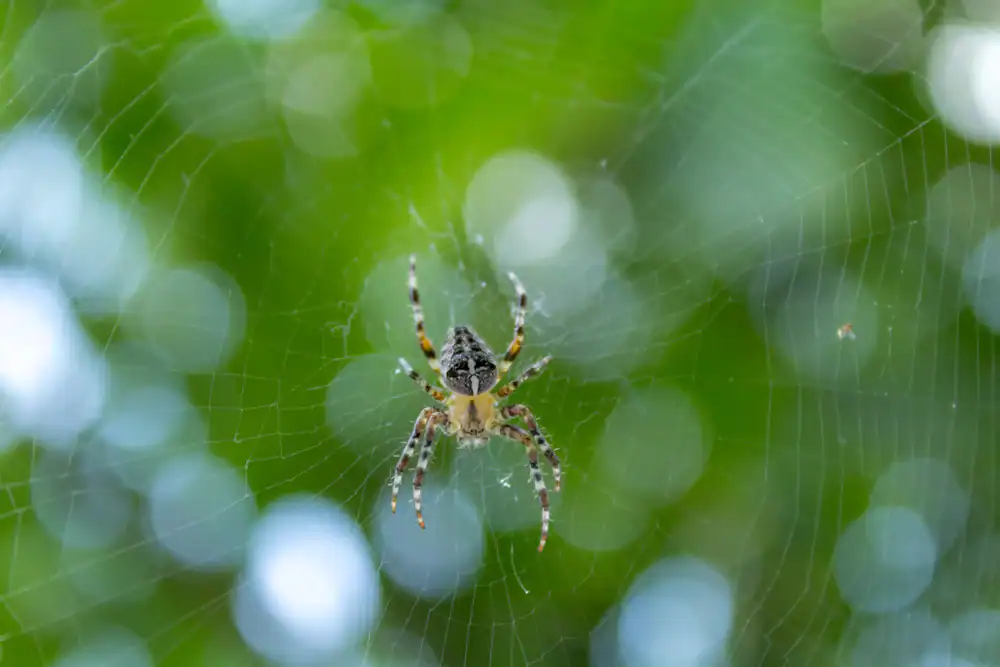
Yes — and rural properties in Pasco are among the higher-risk environments in Pasco County for black widow encounters. Black widows prefer dark, undisturbed spaces: shed corners, under exterior stairs, behind stored tools, around pump houses, and inside carports. These are exactly the kinds of structures common on larger rural lots in northeast Pasco County. They’re not aggressive spiders — they won’t chase you — but they will bite if disturbed, and their venom is medically significant, particularly for children, elderly individuals, and people with compromised immune systems.
Brown widows are also present throughout Pasco County and are actually more widespread than black widows in many residential areas. They tend to build webs in similar locations and produce egg sacs that are distinctive — spiky, almost spherical — which makes them identifiable if you know what to look for. If you’re finding webs with irregular, tangled structure in low-traffic areas of your property, it’s worth having a licensed professional take a look rather than assuming it’s a harmless species.
Wolf spiders are large, fast, and genuinely alarming to find in your home — but they’re not medically dangerous to healthy adults in the way that black widows or brown widows are. They don’t build webs. Instead, they hunt actively, which is why they show up roaming across garage floors, bathroom tiles, and living room walls in a way that web-building spiders don’t. Their size and speed make them one of the most common reasons homeowners in Pasco, FL call a pest control company.
The practical concern with wolf spiders isn’t venom — it’s the insect population sustaining them. Wolf spiders follow their food source, and if they’re inside your home in numbers, it usually means there’s a significant insect population nearby supporting them. Treating the wolf spider problem effectively means addressing that underlying prey population and sealing the entry points they’re using to get inside. A thorough inspection will identify where they’re coming in and what’s drawing them there — which on a rural Pasco property often traces back to the wooded perimeter or ground-level debris near the foundation.
A single professional spider control treatment in Pasco, FL typically runs in the range of $100 to $500 depending on the size of the property, the severity of the infestation, and what’s included in the service. Most quotes from us are provided over the phone, so you have a clear number before anyone comes out — no in-home sales visit, no surprise bill at the end of the job.
For rural properties in northeast Pasco County — older homes on larger lots with outbuildings and wooded perimeters — the more relevant cost consideration is usually the ongoing prevention plan versus the cost of repeated one-time treatments. Because the surrounding environment continuously reintroduces spiders, a quarterly prevention plan tends to be more cost-effective over time than treating the same problem every few months from scratch. Pricing for recurring service reflects the property size and treatment scope, and it’s worth asking about the new homeowner discount if you’ve recently purchased a property in the Pasco area — older rural homes often come with established spider populations that the prior owner simply lived with.
Probably not — and this is one of the most common misidentifications in Florida pest control. Brown recluse spiders are not native to Florida and do not maintain established populations here. They occasionally arrive in shipments of goods from states where they do live, but they don’t survive and reproduce in Florida’s climate the way they do in the Midwest or South-Central United States. If you’re finding large, brown spiders in your Pasco home, they are almost certainly wolf spiders, huntsman spiders, or another native Florida species — not brown recluses.
This matters because the treatment approach differs. Wolf spiders and huntsman spiders require a different strategy than the targeted crack-and-crevice treatment associated with recluse control. A licensed professional can identify the species on-site and confirm what you’re actually dealing with — which is the only way to make sure the treatment is matched to the actual problem. Misidentification leads to mismatched treatment, which is one of the main reasons DIY spider control in rural Pasco County properties tends to underperform.
For most rural properties in the Pasco area, quarterly treatment is the standard recommendation — and the reasoning is straightforward. Florida’s subtropical climate means spider populations are active year-round. There’s no winter die-off to do the work for you. On top of that, properties in northeast Pasco County are typically surrounded by the kind of habitat — wooded lots, pasture edges, agricultural land, ground debris — that continuously generates spider pressure from the outside in.
A single annual treatment might hold for a few months, but by the time the outdoor barrier breaks down and the surrounding environment reintroduces spiders, you’re back where you started. Quarterly service keeps the barrier active, allows for inspection of high-risk harborage areas before populations establish, and catches new activity — like a black widow egg sac in the shed — before it becomes a larger problem. Spring and early summer are particularly important timing windows in Pasco County, when rising temperatures and the onset of rainy season drive spider population growth rapidly. Getting ahead of that cycle is much easier than catching up to it.
Yes — and it’s directly relevant to what new homeowners in the Pasco area tend to walk into. Older rural properties in northeast Pasco County often have spider populations that have been building undisturbed for years. Previous owners may have managed it informally, ignored it, or simply not noticed what was living in the shed or under the back stairs. When you purchase a property like that, you’re inheriting whatever pest history came with it — and spiders, particularly black widows and brown widows in outbuildings, can establish quickly in the conditions these properties provide.
We offer the new homeowner discount to help you get a professional assessment and initial treatment done early, before the population has more time to grow. It also applies to military families, who are well-represented in Pasco County and often relocating into properties they haven’t had the chance to fully evaluate before moving in. The best time to establish a baseline treatment and start a prevention plan is before you’ve had a venomous spider encounter — not after. A phone call is all it takes to get a quote and understand what your specific property actually needs.