
Fast, reliable pest control from Hernando County’s most trusted family-owned team—with most quotes given over the phone.
Contact Info
Fast, reliable pest control from Hernando County’s most trusted family-owned team—with most quotes given over the phone.
Contact Info
You stop second-guessing every cabinet you open. You stop finding droppings behind the refrigerator or along the baseboards near the bathroom. The kitchen feels like yours again — not something you’re sharing with a colony that’s been living rent-free in your walls.
That matters more in Moon Lake than most people realize. A lot of homes here — especially in Moon Lake Estates — are manufactured or older single-family builds with aging plumbing connections, worn underpinning, and gaps around utility lines that give German roaches exactly what they need: warmth, moisture, and a way in. One treatment that targets the colony at its source changes the entire dynamic inside your home.
And for properties near the lake or the canal systems, Palmetto bug intrusions are a separate issue entirely — one that spikes after heavy rains push them indoors and again during dry stretches when they’re hunting for water. Getting both problems handled correctly, by someone who understands the difference between the two, means you’re not retreating the same problem every few months.
We’re a family-run, owner-operated business serving Hernando and neighboring Pasco County communities, including Moon Lake. When you call, you speak with George — the licensed owner, the one who shows up, and the one accountable for the result. There’s no crew rotation, no dispatcher in the middle, and no wondering who’s coming to your door.
George has spent over 14 years treating Florida homes across this regional corridor, including the specific conditions that come with western Pasco County living — older manufactured homes, lakefront moisture, wooded lots that push Palmetto bugs toward the house, and the year-round German roach pressure that doesn’t let up just because the season changes. If you’re in Moon Lake Estates or anywhere along Moon Lake Road, that experience is directly relevant to what’s happening in your home right now.
We hold four active FDACS licenses under Florida Chapter 482, carry a BBB A+ rating, and have earned over 100 five-star reviews from real families across Hernando and Pasco County.

It starts with a phone call — and most of the time, you’ll have a quote before you hang up. No scheduling a separate estimate visit, no waiting days to find out what it costs. George asks the right questions about what you’re seeing, where you’re seeing it, and what you’ve already tried. That conversation matters because German roaches and Palmetto bugs are two completely different problems that require different approaches — and misidentifying one for the other is one of the main reasons DIY treatments fail.
Once you book, George comes out and does a thorough inspection — looking at the areas that actually matter in a Moon Lake home: under and around kitchen appliances, inside cabinet hinges and drawer slides, along plumbing penetrations, and beneath the structure if you’re in a manufactured home with skirting. Those are the real harborage zones, not just the spots that are easy to see.
Treatment is built around professional-grade baiting systems and insect growth regulators — products that work from inside the colony outward, targeting eggs and nymphs that no spray ever touches. After treatment, George walks you through what to expect over the following days and what a quarterly prevention program looks like if you want to keep the pressure off going forward. No guesswork, no generic aftercare sheet — just a straight conversation about your home.

Ready to get started?
Our roach control in Moon Lake, FL covers the full picture — not just a spray-and-leave visit. Every service starts with an inspection that accounts for the specific vulnerabilities common in this area: gaps around utility penetrations in older manufactured homes, moisture accumulation beneath flooring, aging cabinetry in kitchens and bathrooms, and outdoor harborage sites near the lake or wooded lot lines that feed Palmetto bug pressure inside the home.
Treatment uses professional-grade baiting and insect growth regulators — the same tools used in commercial cockroach infestation cleanouts — applied in the locations where roaches actually live, not just where they’re visible. For German roach infestations, that means targeting the colony at its harborage points inside appliances, wall voids, and plumbing areas. For Palmetto bug intrusions, it means addressing both the interior entry points and the outdoor conditions drawing them in.
Because Moon Lake Estates has no HOA and no community pest management, your home doesn’t benefit from any buffer of neighboring treatments. That’s exactly why we also offer a quarterly prevention program — scheduled maintenance that keeps the pressure managed through every season, including the summer rainy season when lakefront displacement spikes and the dry months when roaches move indoors looking for water. New homeowners in Moon Lake also qualify for a specific discount, which matters when you’ve just purchased an older property and inherited someone else’s pest problem.

The short answer is that most consumer sprays are repellents — they don’t kill the colony, they scatter it. When you spray a German roach harborage site under the sink or behind the refrigerator, the surviving roaches retreat deeper into wall voids, appliance motors, and cabinet hinges where the spray never reaches. Within a few weeks, the population rebounds from the eggs and nymphs that were never touched, and you’re right back where you started.
This is especially common in older manufactured and mobile homes in Moon Lake Estates, where there are more structural gaps, more aging plumbing connections, and more heat-producing appliances that create ideal harborage conditions. Professional treatment uses baiting systems that roaches actively carry back to the colony, combined with insect growth regulators that disrupt the reproductive cycle. That’s a fundamentally different mechanism than a repellent spray — and it’s why the results hold.
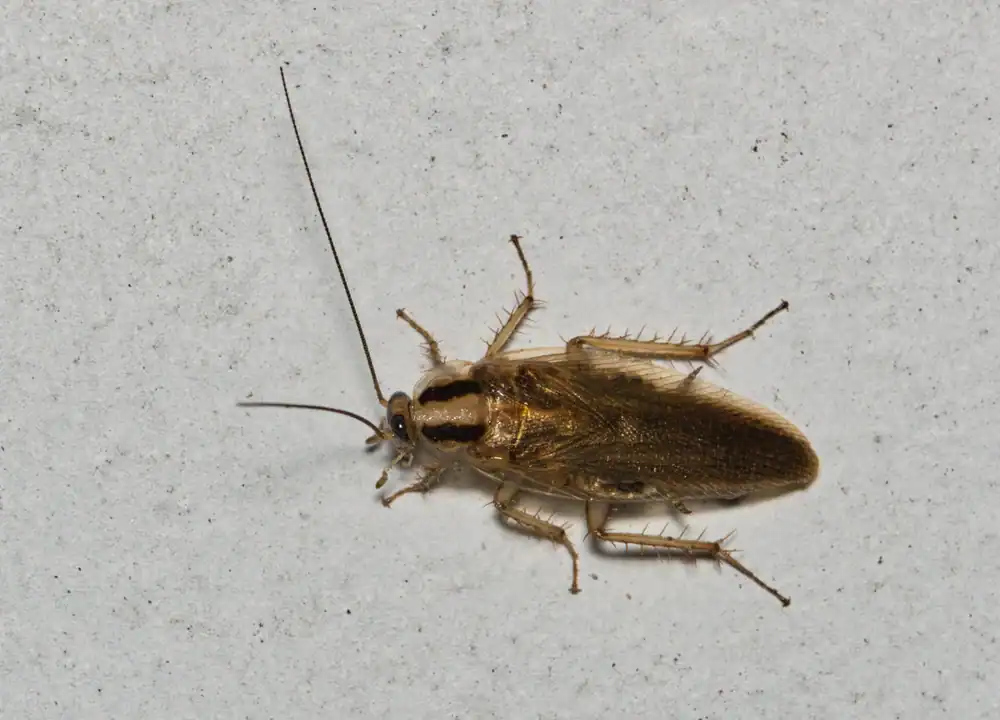
German cockroaches are small — about half an inch — tan or light brown, and almost exclusively an indoor species. They don’t come in from outside; they hitchhike in on grocery bags, used appliances, or secondhand furniture, and once inside, they establish a colony fast. A single female can produce hundreds of offspring in her lifetime, and because they stay hidden in warm, dark, humid harborage sites like kitchen appliances and cabinet hinges, most people don’t realize how large the infestation is until it’s well established.
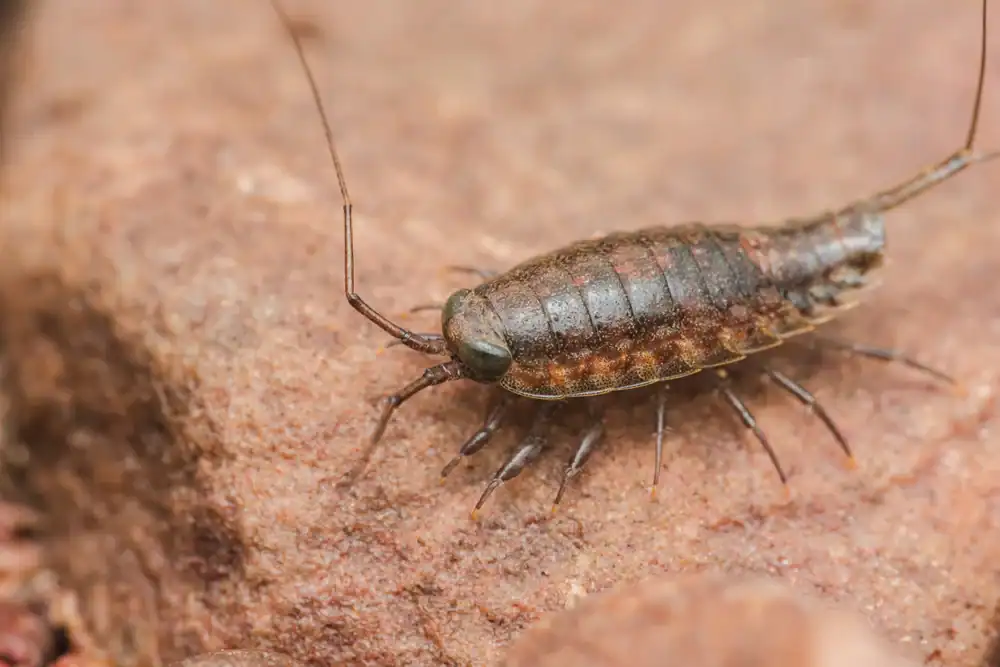
Palmetto bugs — the common name for American cockroaches in Florida — are a different story. They’re much larger, reddish-brown, and primarily an outdoor species that comes inside when conditions push them: heavy rain during Moon Lake’s summer rainy season, dry spells when they’re looking for water, or temperature drops in cooler months. Homes near the lake or on wooded lots along Moon Lake Road tend to see more Palmetto bug pressure because the surrounding environment gives them abundant outdoor harborage. The treatment approach for each is different, which is why correctly identifying which one you’re dealing with matters before anything gets applied.
Yes — when it’s done correctly. Professional baiting systems are applied in targeted locations: inside cabinet hinges, behind appliance kickplates, along wall voids, and in other harborage areas that children and pets don’t typically access. The bait itself is formulated to attract roaches specifically, and the quantities used in a residential treatment are a fraction of what consumer products apply broadly across surfaces. Insect growth regulators, which disrupt the roach reproductive cycle, have an extremely low toxicity profile for mammals.
That said, preparation matters. George will walk you through exactly what to do before and after treatment — which typically includes clearing under sinks, pulling appliances slightly away from walls, and keeping pets out of treated areas for a short window while products dry or cure. For manufactured homes in Moon Lake Estates specifically, the treatment is also applied with the structure’s layout in mind, including any underpinning or crawl space access points, so nothing is missed and nothing is applied carelessly. You’ll know what was used, where it was applied, and what to expect — no guessing.
For a moderate German roach infestation, most households see a significant reduction within one to two weeks of professional treatment. The baiting process works progressively — roaches consume the bait, return to the harborage site, and the active ingredients spread through the colony via contact and secondary ingestion. It’s not instant, and that’s actually by design. A treatment that kills every visible roach immediately but leaves eggs and nymphs intact will result in a full rebound within weeks.
The timeline can vary depending on how established the infestation is and the structural conditions of the home. In older manufactured homes — which are common throughout Moon Lake Estates — German roach colonies sometimes establish in areas that are harder to access, like behind wall panels or inside the cavity beneath older cabinetry. In those cases, a follow-up application may be warranted to reach harborage zones that weren’t fully accessible on the first visit. George will give you a realistic expectation upfront based on what he finds during the inspection — not a blanket guarantee that sets you up for disappointment.
Yes, and it’s one of the most predictable pest patterns in this part of Pasco County. When Florida’s summer rainy season hits — typically June through September — heavy rainfall saturates the outdoor harborage sites that American cockroaches rely on: leaf litter, mulch beds, palmetto plants, wood piles, and the moist soil near the lake and canal systems that run through Moon Lake. When those areas flood or become too saturated, Palmetto bugs move toward higher, drier ground — which often means your home.
The second spike happens during dry stretches, usually in the fall and winter months, when outdoor moisture drops and roaches start searching for water sources inside. Homes near the lake or on larger wooded lots along Moon Lake Road tend to feel both patterns more acutely than properties in denser, less vegetated neighborhoods. Sealing entry points — gaps around utility lines, worn door sweeps, aging skirting on manufactured homes — reduces the intrusion significantly, and a quarterly prevention program timed around these seasonal shifts keeps the pressure managed before it becomes a full-scale problem.
Yes — and in Moon Lake specifically, it’s something that comes up often. Moon Lake Estates has active real estate turnover, with buyers regularly purchasing older manufactured homes, lakefront lots, and larger rural properties that have changed hands multiple times. It’s not unusual to move into a home and discover a roach problem that was there long before you were — hidden in the kitchen appliances, behind aging cabinetry, or in the structural gaps common in homes built between the 1970s and 1990s.
We offer a new homeowner discount for customers who have recently purchased a property in Moon Lake or the surrounding area and are dealing with a pest issue that predates their ownership. It’s a straightforward way to get professional treatment in place without absorbing the full cost of someone else’s neglect on top of everything else that comes with moving in. Military families also qualify for a separate discount. When you call, just mention your situation — George will confirm eligibility and work it into your quote directly.