
Fast, reliable pest control from Hernando County’s most trusted family-owned team—with most quotes given over the phone.
Contact Info
Fast, reliable pest control from Hernando County’s most trusted family-owned team—with most quotes given over the phone.
Contact Info
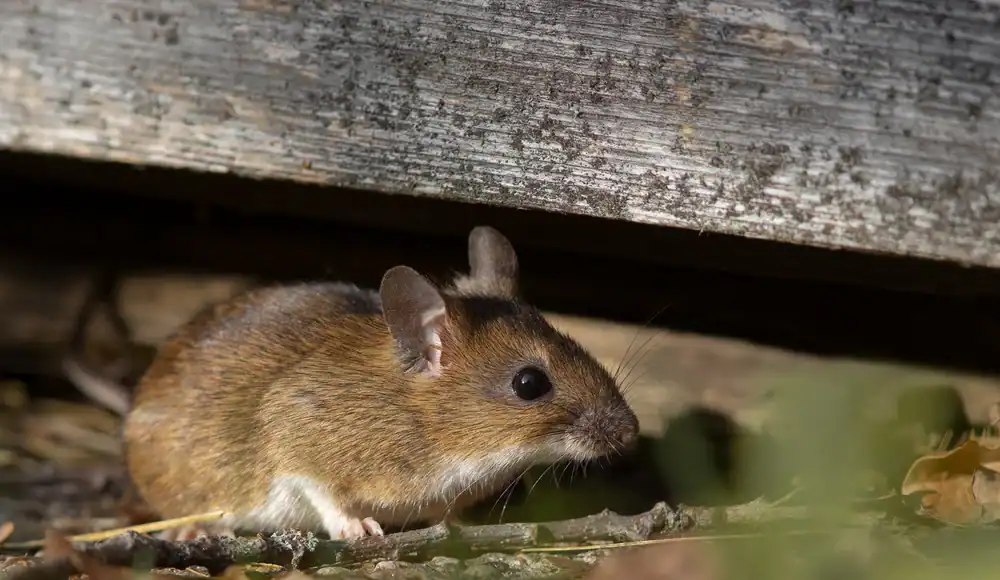
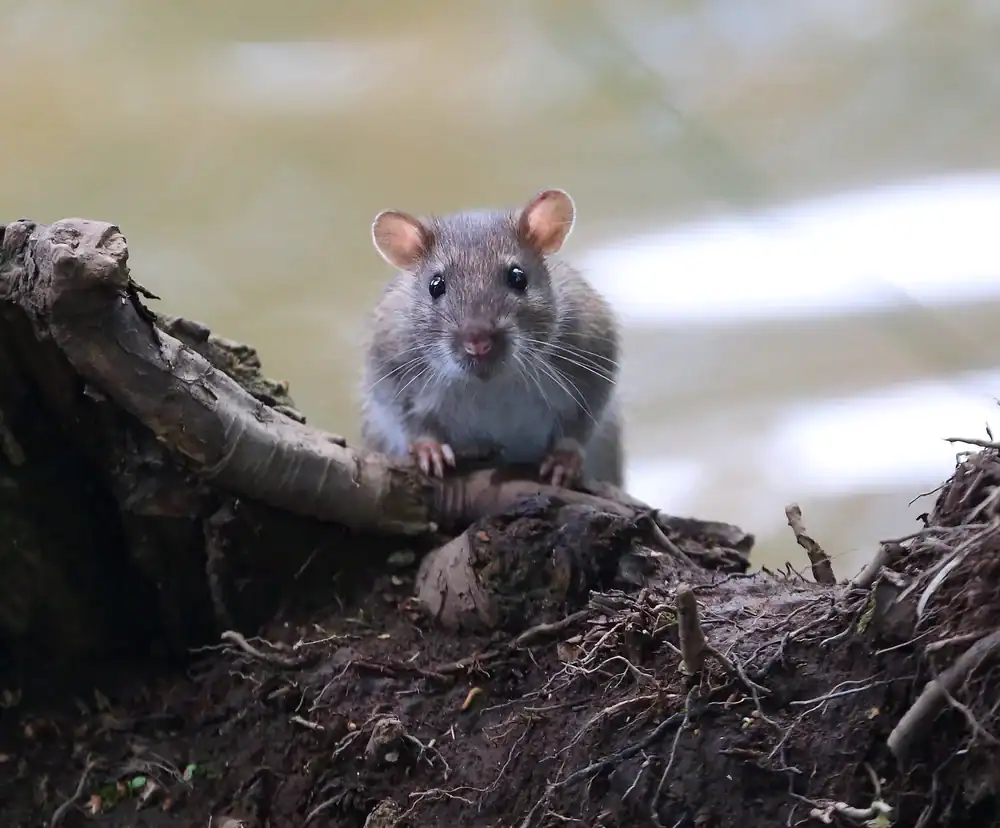
No more scratching at 2 AM. No mystery odors pulling through your vents on a hot July afternoon. No second-guessing whether that chewed wire in the attic is a fire risk or just cosmetic damage. When we handle rodent control in Trinity, FL properly — not just traps tossed in an attic and forgotten — the difference is immediate and it lasts.
Trinity sits right at the edge of the 18,000-acre Jay B. Starkey Wilderness Preserve, and communities like Longleaf, Nature’s Hideaway, and Starkey Ranch deal with consistent wildlife pressure because of it. Roof rats, mice, and other rodents move freely between the preserve’s dense vegetation and the warm attic spaces of nearby homes. That’s just the reality of living adjacent to one of the largest wilderness areas in Pasco County.
On top of that, Trinity is one of the fastest-growing communities in the region. Longleaf Phase 4 alone added nearly 400 new homes in 2024, and every cleared lot pushes displaced rodent colonies toward existing structures nearby. If you’re in an established neighborhood like Trinity Oaks, Wyndtree, or Fox Wood, that construction activity directly affects your rodent pressure — whether you’ve noticed it yet or not. Getting ahead of it, or getting it handled properly once it starts, protects your home and keeps the problem from cycling back.
Around The Clock Pest Service is a family-owned business serving Hernando and Pasco County, with Trinity as a core part of our service area. There’s no call center here, no rotating technicians, no voicemail box that gets checked on Monday. When you call about rats in your Champions Club attic or scratching sounds above your Heritage Springs bedroom, the owner picks up — personally, the same day, including weekends.
That kind of direct accountability is rare in this industry, and it shows up in the results. We have over 100 five-star Google reviews from real customers across Pasco County, along with an A+ rating from the Better Business Bureau and state licenses through the Florida Department of Agriculture and Consumer Services valid through 2027. These aren’t self-reported claims — they’re independently verifiable.
Trinity’s location at the edge of the Starkey Preserve, combined with the newer construction and the golf course communities with their dense tree canopies, creates specific rodent pressures that we understand from years of working in this area. That local knowledge is part of what makes our service work.
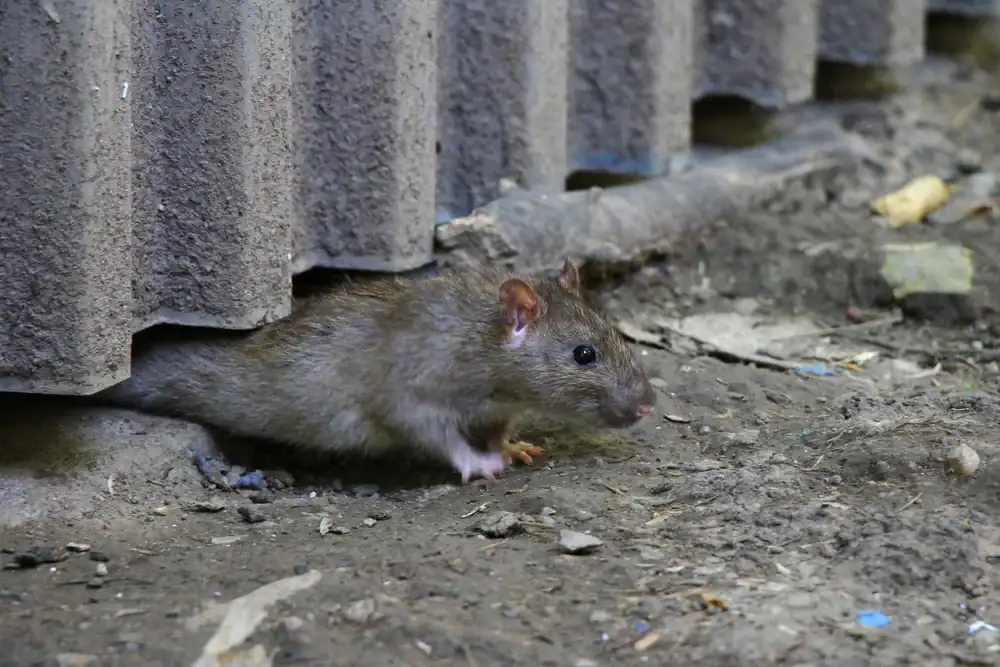
It starts with a thorough inspection — not a quick walkthrough, but a real look at the full structure. Attic, crawl spaces, wall voids, roofline, utility penetrations, soffits. Trinity’s newer homes with tile roofs have specific entry point patterns that aren’t always obvious to the untrained eye. Gaps where tile meets fascia, open roof vents, and utility line penetrations are among the most common access points, and we check them all.
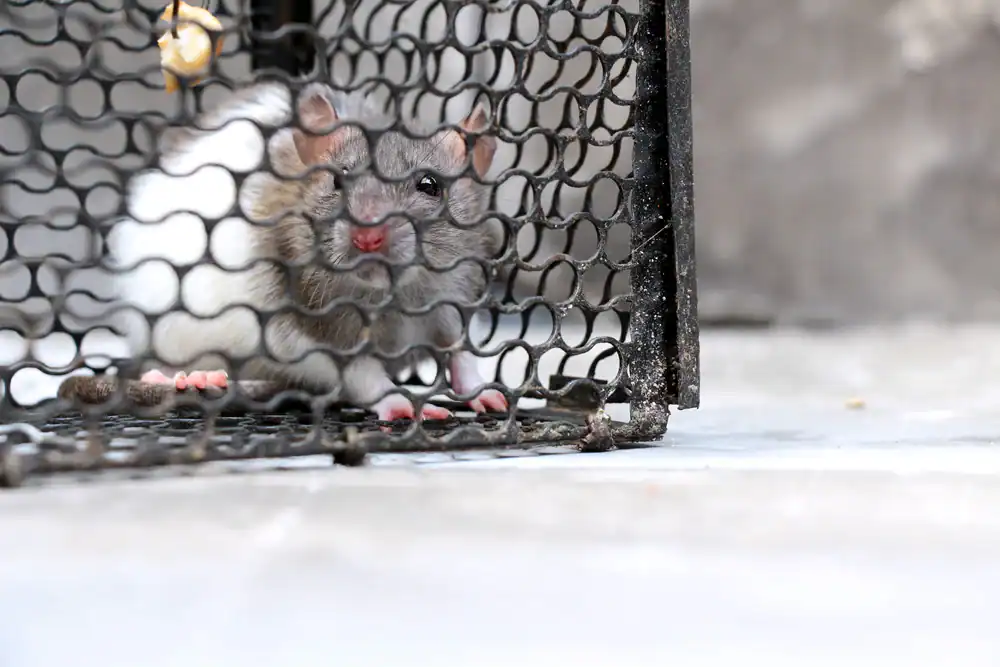
From there, we place mechanical traps in the areas where activity is confirmed. We do not rely on rodenticide poison as the primary removal method — and that’s intentional. Poison bait creates two problems that nobody wants: a dead rodent decomposing inside a wall cavity and creating a weeks-long odor problem in your home, and a secondary poisoning risk to pets or children who encounter a poisoned rodent. Mechanical traps eliminate both of those outcomes entirely.
Once the rodents are removed, the work doesn’t stop there. We perform scent trail sanitization to clear the chemical pathways that rodents leave behind — the same pathways that guide new rodents back into a structure even after the original colony is gone. Attic rodent decontamination in Trinity, FL addresses contaminated insulation and nesting material, and every identified entry point is documented so you know exactly what needs to be sealed. The process is built to solve the problem completely, not just reduce it temporarily.
Ready to get started?
Our rodent control in Trinity, FL covers the full scope of the problem — not just the visible part. The inspection maps out every entry point in the structure. Trap placement targets active areas in attics, wall voids, and crawl spaces. Scent trail sanitization removes the chemical markers that keep drawing rodents back. And attic decontamination addresses the contaminated insulation and nesting debris that, in Trinity’s summer heat, can pull odors directly into your living space through the HVAC system.
For homeowners near the Starkey Wilderness Preserve or in communities like Longleaf and Nature’s Hideaway where wildlife corridor pressure is ongoing, the entry point documentation piece is especially important. Knowing exactly where rodents are getting in — and having that written down — gives you a clear, actionable list for sealing work and helps prevent recurrence. No poison is used in the process, which matters in a family-oriented community where kids and pets are part of the household.
We offer special pricing for new homeowners and military families. Trinity is adding hundreds of new residents every year, and many of them don’t know their property’s pest history yet. An early professional inspection is far less expensive than discovering an established infestation six months down the road — and it gives you a clean baseline on a home you’ve just invested in.
The Jay B. Starkey Wilderness Preserve covers 18,000 acres and borders the Starkey Ranch and Longleaf communities directly to the north and east. That kind of large, undisturbed wildlife habitat sustains significant rodent populations — and those populations don’t stop at the property line. Roof rats, mice, and other wildlife move freely between the preserve’s dense vegetation and the residential neighborhoods built adjacent to it, looking for shelter, warmth, and food sources.
Homes along that preserve boundary experience what’s called wildlife corridor pressure — a persistent, year-round flow of animals from habitat into structures. It’s not a sign that anything is wrong with your home specifically. It’s a geographic reality of living next to one of the largest wilderness areas in Pasco County. The practical response is a combination of thorough exclusion work to seal entry points and professional removal when an active infestation is confirmed — not a one-time fix, but a managed approach that accounts for the ongoing pressure from the preserve.
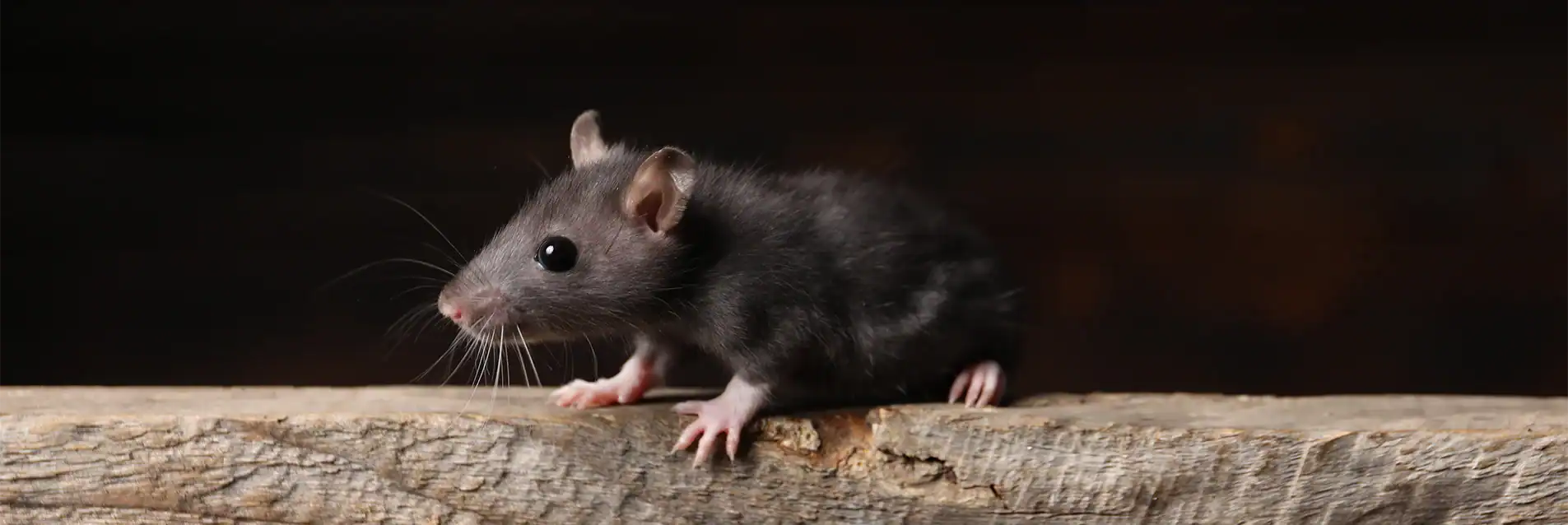
The signs overlap more than most people expect. Both rats and mice leave droppings, both create gnaw marks, and both make noise in attics and wall voids — though the timing and sound profile differ. Roof rats, which are by far the most common rodent in Trinity and the broader Pasco County area, are nocturnal and tend to be most active in the two to three hours after dark. If the scratching in your attic peaks around 10 or 11 PM, roof rats are the most likely culprit. Mice tend to be lighter, faster, and more erratic in their movement patterns.
The treatment approach does shift based on what’s present. Roof rats are climbers — they access homes from above, through rooflines, soffits, and elevated entry points. Mice more commonly enter at ground level through gaps in the foundation, utility penetrations, and door sweeps. The inspection process identifies which species is active and where, which determines exactly where we place traps and what entry points need priority attention. Getting that identification right upfront means the treatment is targeted, not generic.
This is one of the most common questions, and the honest answer is that rodenticide bait carries real risks in a home with pets or children — risks that most homeowners don’t fully understand until something goes wrong. The primary concern is secondary poisoning: a pet or child encounters a poisoned rodent, either alive or dead, and ingests enough of the toxin to cause serious harm. In a family-oriented community like Trinity, where most households have kids, dogs, or both, that’s a documented risk.
The second problem with poison bait is that a rodent that ingests it doesn’t die immediately. It typically retreats into a wall cavity or deep attic space and dies there. In Trinity’s summer heat, a decomposing rodent inside a wall can create an odor problem that lasts weeks and is extremely difficult to locate and remediate without opening the wall. We use mechanical traps as the primary removal method specifically to avoid both of these outcomes. No poison in the home, no dead animals in inaccessible spaces, no secondary exposure risk.
Not always, but more often than homeowners expect. The determining factor is the extent of the contamination — specifically, how much rodent urine, droppings, and nesting material has accumulated in the insulation. Rodent urine soaks into blown insulation and doesn’t simply dry out and become inert. In Trinity’s climate, where attic temperatures can reach 140°F or higher in summer, contaminated insulation releases odors that get drawn through the HVAC system into living spaces. If you’ve noticed a musty or ammonia-like smell in your home that gets worse in summer, contaminated attic insulation is a likely source.
The inspection process includes an assessment of insulation condition and contamination level. If replacement is warranted, that will be documented clearly so you understand what’s involved and why. Attic rodent decontamination in Trinity, FL — including removal of contaminated material and sanitization of the space — is part of our service when the situation calls for it. The goal is to leave the attic in a condition where the health and odor issues are fully resolved, not just the active infestation.
This surprises a lot of Trinity homeowners, especially those in newer communities who assume that a recently built home wouldn’t have these vulnerabilities. The reality is that construction quality doesn’t eliminate the entry points — it just makes them less obvious. Tile roofs, which are standard in most Trinity communities, create specific gap patterns at the intersection of tile and fascia, at ridge vents, and at the edges of the roofline that roof rats exploit regularly. Utility line penetrations — where electrical, plumbing, and HVAC lines enter the structure — are another common access point that often goes unsealed or develops gaps over time.
Roof rats need a gap roughly the size of a quarter to enter a structure. That’s a small target that requires a trained eye to find consistently. The other factor specific to Trinity is the tree canopy in communities like Champions Club and Fox Wood — mature trees and dense ornamental plantings provide elevated travel corridors that give roof rats easy access to rooflines. A professional inspection maps all of these entry points specifically, not just the obvious ones, so the exclusion work actually closes the problem rather than just reducing it.
Yes — and in Trinity specifically, it’s a discount that gets used frequently. The community is growing faster than almost anywhere else in Pasco County, with hundreds of new residents arriving every year across developments like Longleaf, Starkey Ranch, and the newer phases of established neighborhoods. When you move into a home, you’re inheriting its full history — including any pest activity that the previous owners may or may not have addressed. A professional rodent inspection early gives you a clear picture of what you’re working with before a small issue becomes an established colony.
The new homeowner discount is a straightforward reduction in service cost, applied at the time of booking. It’s available because new homeowners represent a specific situation — unfamiliar with the property’s history, often not yet aware of the local wildlife pressure from the Starkey Preserve corridor, and in the best possible position to get ahead of problems before they take hold. Military families in the area also qualify for a separate discount. When you call, just mention your situation and it gets applied — no paperwork, no process.