
Fast, reliable pest control from Hernando County’s most trusted family-owned team—with most quotes given over the phone.
Contact Info
Fast, reliable pest control from Hernando County’s most trusted family-owned team—with most quotes given over the phone.
Contact Info
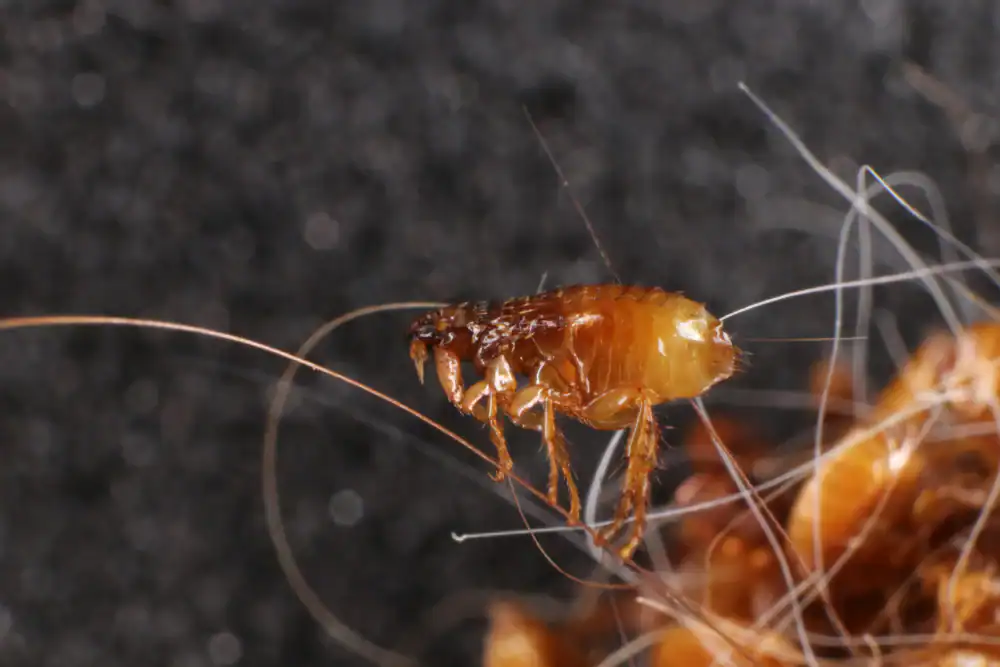
You’ve stood in the pest control aisle, staring at flea foggers and wondering if this time will be different. Maybe you’ve already tried one—evacuated your home for hours, came back to that chemical smell, waited hopefully, and then watched the fleas return like nothing happened.
Here’s the truth most people discover too late: those foggers only touch about 5% of your flea problem. The other 95%—eggs buried in carpet fibers, larvae hiding in furniture crevices, pupae waiting in protective cocoons—remain untouched and ready to restart the cycle.
Florida’s year-round warmth makes this worse. No winter freeze gives you a break. That’s why homeowners across Pasco County and Hernando County, FL are moving past outdated methods and choosing a href=”https://aroundtheclockpests.com/services/flea-control/”>professional flea control approaches that target how fleas actually live and reproduce. Let’s talk about what’s working.
Flea bombs look effective on the package. Set one off, watch the mist fill your room, assume every flea is finished. Consumer Reports tested this assumption. They built a simulated living room, placed a fogger on a coffee table, and activated it. When researchers returned, they found live fleas directly underneath that same table.
Physics explains the failure. Fogger droplets shoot straight up and fall straight down. They don’t curve around furniture legs, penetrate deep carpet fibers, or reach cracks along baseboards where flea larvae actually develop. You’re treating the air and whatever surfaces the mist randomly lands on—not where fleas live.
Even when foggers reach adult fleas and kill them, you’ve only eliminated the smallest part of your infestation. Adult fleas represent roughly 5% of the total flea population in your home. The remaining 95%—eggs, larvae, pupae—scatter throughout your environment, completely untouched. Within two to four weeks, those immature stages mature into biting adults. You’re back where you started, minus the money you spent.

Understanding why foggers don’t work requires knowing what you’re fighting. Fleas progress through four distinct life stages: egg, larva, pupa, and adult. Each stage lives in a different location and requires a different flea control approach.
Adult fleas live on your pets—feeding, mating, and laying 40 to 50 eggs daily per female. Those eggs don’t stay put. Smooth and slippery, they fall into your carpet, pet bedding, furniture, and anywhere else your pet spends time. In Florida’s warm, humid climate, eggs hatch in as little as two days.
Newly emerged larvae aren’t interested in blood yet. These tiny, worm-like creatures burrow deep into carpet fibers, under furniture, and into floor cracks. They feed on organic debris and flea dirt—digested blood that adult fleas excrete. They spend one to two weeks developing here, completely hidden from any surface treatment a fogger might deliver.
Then comes the pupal stage. This is where flea control gets frustrating. Larvae spin silk cocoons and transform into pupae. These cocoons are incredibly resilient—no insecticide penetrates them. Not foggers. Not sprays. Nothing. Pupae sit dormant for weeks or months, waiting. When they detect vibration, warmth, or carbon dioxide—signs a host is nearby—they emerge as adults ready to feed and reproduce immediately.
This explains why you treat your home, think you’ve won, then two weeks later find yourself covered in flea bites. Those pupae were waiting. In Pasco County and Hernando County, FL, where it never gets cold enough to kill flea populations, this cycle runs continuously. Year-round. You’re not dealing with a seasonal problem—you’re fighting a pest perfectly adapted to our climate.
Beyond ineffectiveness, flea foggers carry risks most people don’t consider until after they’ve used one. The Environmental Protection Agency issues specific warnings about total-release foggers. Those warnings exist for good reasons.
Start with flammability. These products release fine mists of flammable chemicals throughout your home. If that mist encounters a pilot light, a spark from a cycling refrigerator, or any ignition source, you’re looking at potential fire or explosion. The EPA recommends placing foggers six feet from ignition sources and never using them in closets or small spaces. In real homes with real appliances, that’s not always controllable.
Chemical exposure comes next. You evacuate for hours while the fogger works. When you return, chemical residue coats everything—countertops, dishes you forgot to cover, children’s toys, pet food bowls. You’re supposed to wipe down all food prep surfaces, but how thoroughly do most people actually do that? What about the carpet where kids play or the couch where pets sleep?
Health effects from fogger misuse are well-documented. About 80% of cases are low severity—headaches, dizziness, nausea, respiratory irritation. But 18% are moderate severity, and 2% are high. People with asthma face particular vulnerability. Most incidents happen from misuse: not leaving during treatment, returning too early, using too many foggers, or inadequate ventilation afterward.
After all that risk and hassle, you still haven’t solved anything. You’ve created temporary reduction in adult flea numbers while leaving eggs, larvae, and pupae completely unaffected. Some flea populations have developed resistance to pyrethroids commonly used in foggers, making them even less effective. You’re exposing your family to chemicals, risking safety, and getting no lasting results. That’s why we rarely recommend them.
Want live answers?
Connect with a Around The Clock Pest Service expert for fast, friendly support.
Professional flea control in Pasco County and Hernando County, FL looks nothing like outdated spray-and-pray methods. The most effective flea treatment now combines insect growth regulators to prevent reproduction, targeted adulticides to kill existing adults, and strategic application reaching where fleas actually live.
Insect growth regulators—IGRs—changed everything. These products mimic hormones controlling insect development. When flea eggs and larvae encounter IGRs, they can’t complete transformation into adults. They either die during development or emerge as sterile adults incapable of reproducing. Products containing methoprene or pyriproxifen provide six to seven months of protection from a single professional treatment.
IGRs offer exceptional safety profiles. They target insect-specific hormones that don’t exist in mammals, birds, or reptiles, posing minimal risk to pets and families. No strong pesticide odors. No carpet staining. Far less likely to create resistance issues plaguing conventional insecticides. Effective pest control without the trade-offs.
IGRs alone won’t give immediate relief—they don’t kill adult fleas currently biting you. That’s why modern flea control pairs them with fast-acting adulticides. This combination delivers both worlds: quick knockdown of fleas biting right now, plus long-term prevention of future generations. It’s the difference between temporary relief and actual solution.
The most effective flea control programs don’t rely on chemicals alone. We use integrated pest management combining treatment with sanitation, exclusion, and environmental modification. This separates professional service from DIY attempts that keep failing.
Sanitation builds the foundation. Frequent vacuuming removes flea eggs, larvae, and the organic debris larvae feed on. Research shows vacuuming removes 15 to 27% of flea larvae and 32 to 59% of eggs from carpets. That might not sound dramatic, but when you’re dealing with thousands of eggs, that reduction matters significantly. The key is vacuuming in crisscross patterns to work carpet fibers thoroughly, then immediately disposing of vacuum bags outside so fleas can’t escape back into living spaces.
Washing pet bedding, blankets, and fabrics your pets contact regularly in hot water kills fleas at all life stages. Steam cleaning carpets and upholstered furniture proves even more effective—destroying eggs, larvae, pupae, and adults on contact. Some research suggests steam cleaning matches conventional pesticide effectiveness for flea treatment, without any chemical exposure whatsoever.
Environmental modification makes your home and yard less hospitable to fleas. Indoors, reduce humidity where possible and ensure good air circulation. Outdoors, keep lawns mowed, remove leaf litter and debris, trim overgrown vegetation reducing shaded areas where fleas thrive, and treat specific zones where pets spend time—under decks, along fence lines, near pet doors.
Wildlife management gets overlooked but proves critical in Florida. Opossums, raccoons, and rodents all carry fleas and reintroduce them to your property even after successful treatment. Securing trash cans, not leaving pet food outside, sealing crawl space entry points, and working with animal control for persistent wildlife visitors all help break that reintroduction cycle. We understand these connections and provide property-specific guidance for homeowners throughout Hernando County and Pasco County, FL.
Flea infestations rank among the most common reasons people call professional pest control—even after trying multiple DIY solutions. The difference comes down to expertise, access to commercial-grade products, and understanding Florida’s specific climate challenges.
We have access to formulations and concentrations unavailable over the counter. Commercial-grade IGRs have longer residual activity and better coverage than consumer products. We can combine multiple active ingredients maximizing effectiveness while minimizing product amounts needed. We know exactly which products work best in Florida’s humidity, which formulations won’t stain your specific carpet type, and how to mix and apply them for optimal flea control results.
Application technique matters more than most realize. It’s not random spraying. We target baseboards, carpet edges, under furniture, pet resting areas, and all the micro-environments where flea larvae develop. We understand treating both pet environments and outdoor areas where reinfestation originates. We calculate the right product amount for your square footage and achieve coverage density actually reaching developing fleas.
Timing is critical. Because no treatment kills pupae, we schedule follow-up visits based on flea life cycles—typically two to four weeks after initial treatment, timed to catch newly emerged adults before they reproduce. We monitor for signs the infestation is resolving and adjust approaches if needed. You can’t get that from a fogger can or hardware store spray bottle.
Perhaps most importantly, we identify your infestation source. Are fleas coming from your yard? From wildlife? From a specific outdoor pet? Is there a moisture issue creating ideal conditions for larvae? Our trained eyes spot these factors and address them—rather than just treating symptoms repeatedly. For Florida homeowners dealing with year-round flea pressure, that expertise makes the difference between managing the problem and actually solving it permanently.
Flea foggers had their moment. That moment has passed. The science is clear—they don’t reach where fleas develop, don’t affect the majority of flea populations, and carry risks modern flea control methods simply don’t require. Florida’s climate demands a more sophisticated approach.
Modern professional flea control works because it targets the entire life cycle, treats both indoor and outdoor environments, and uses products specifically designed to prevent reproduction for months at a time. Combine that with professional expertise—knowing where to look, what to treat with, and when to follow up—and you get results that actually last instead of recurring every few weeks.
If you’re in Pasco County or Hernando County, FL and you’re exhausted from fighting the same flea battle repeatedly, it’s time to try a different approach. We understand Florida’s unique pest control challenges and use integrated methods addressing root causes, not just symptoms. You can reach us directly, get quotes over the phone, and work with someone who treats your home like their own. Sometimes the best solution is the simplest: call someone who knows exactly what they’re doing.
Summary:
Article details:
Share: