
Fast, reliable pest control from Hernando County’s most trusted family-owned team—with most quotes given over the phone.
Contact Info
Fast, reliable pest control from Hernando County’s most trusted family-owned team—with most quotes given over the phone.
Contact Info
If you've been spraying ants and watching them come back, there's a reason. Florida's ant species don't behave like the ones you dealt with up north.
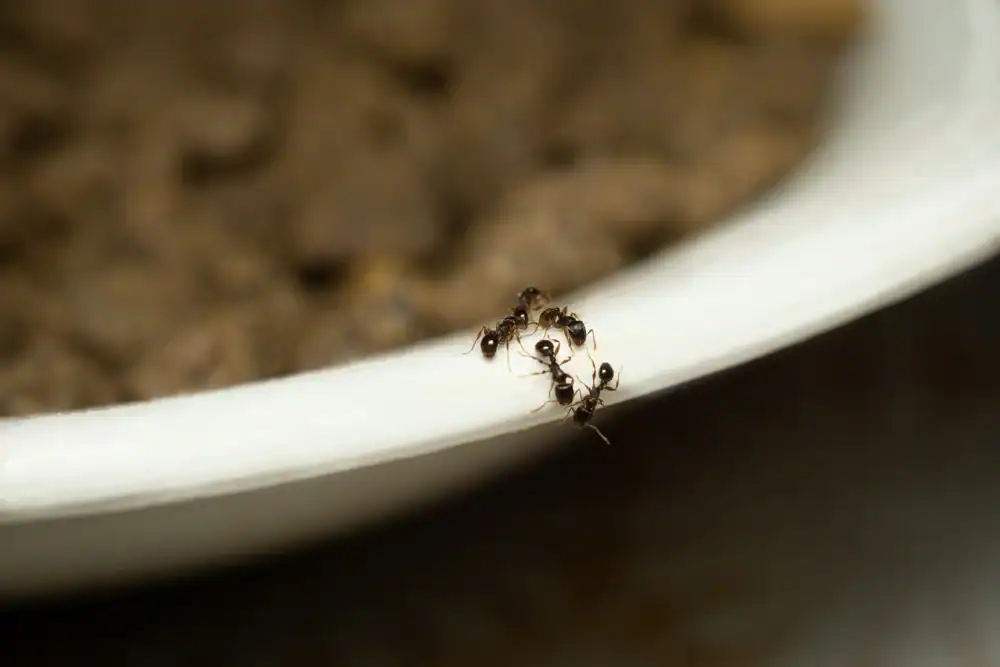
You sprayed them last week. They’re back again today. If that sounds familiar, you’re not doing anything wrong — you’re just dealing with Florida ants, which behave very differently from what most people expect. Whether you’re in a newer subdivision off SR-56 in Wesley Chapel, a long-established neighborhood in Spring Hill, or somewhere in between, the ant pressure here doesn’t let up the way it does in other states. There’s no cold snap that resets the clock. No month where you can finally exhale. Understanding why that’s the case — and what actually stops it — is the first step toward not having this conversation with yourself every few weeks.
In most of the country, pest activity slows down in winter. Colonies go dormant, foraging stops, and homeowners get a natural break. That’s not how it works here.
Pasco County and Hernando County sit in Florida’s west-central subtropical zone, where January looks a lot like October from an ant colony’s perspective — slightly slower, but not stopped. Queens keep reproducing. Foragers keep searching. The colony keeps growing.
Heavy rainfall accelerates things further. After a good storm rolls through, underground fire ant colonies get flooded out and those mounds that “appeared overnight” in your yard aren’t new colonies — they’re displaced ones. They’re not going away on their own, and waiting them out isn’t a strategy that works in this climate.

Ghost ants are the ones most Pasco County and Hernando County homeowners are dealing with when they describe tiny ants appearing on the kitchen counter or bathroom sink seemingly out of nowhere. They’re almost invisible — translucent bodies, dark heads, barely bigger than a pinhead — and they move fast. By the time you notice them, there are already far more you haven’t seen.
What makes ghost ants genuinely difficult to control is their colony structure. A single ghost ant colony can have multiple queens and span multiple structures at once. That means the ants on your counter aren’t necessarily coming from a single nest you could locate and eliminate. They’re part of a distributed network, and treating one access point doesn’t address the others.
Here’s the part that catches most homeowners off guard: ghost ants and pharaoh ants — two of the most common species in this area — respond to repellent sprays by budding. When a repellent product is applied, the colony doesn’t die. It splits. The queen sends out satellite groups to establish new colonies away from the threat. So the spray you used last Tuesday didn’t fix the problem. It likely created two or three smaller versions of it in different spots around your home.
This is the core reason why DIY ant control in Florida so often ends in frustration. It’s not that the products are weak — it’s that repellent sprays are the wrong tool for the species most commonly found here. What actually works is slow-acting bait that foragers carry back to the colony, reaching the queens and the reproductive core. That requires knowing which species you’re dealing with before you treat, because different ants respond to different bait formulations and different placement strategies. Applying the wrong product confidently is still the wrong product.
Pasco County has grown by more than 15% in the last five years — one of the fastest growth rates in Florida. New master-planned communities have gone up quickly across the county, and a significant portion of the people moving into those homes are relocating from northern states. They’ve dealt with ants before, but not Florida ants, and not in a climate where the colonies never fully shut down.
New construction adds its own layer of pressure. When land gets cleared for a subdivision, the ant colonies living in that soil don’t disappear — they get displaced. They move to the nearest available structure, which is often the fresh construction going up right next to where they were. New homes also come with incomplete caulking, fresh landscaping mulch that makes excellent nesting material, and the kind of tiny structural gaps that ghost ants can navigate without effort. The first year or two in a new Pasco County home tends to be the most intense period for ant activity, and most new residents aren’t expecting it.
The same dynamic plays out in Hernando County, particularly in the growing areas around Spring Hill. Newer developments like Wellington at Seven Hills and Villages at Avalon were built on land that was previously wooded or agricultural. That clearing activity pushes fire ants, carpenter ants, and ghost ants directly toward fresh construction. Meanwhile, in the older, more established neighborhoods of Historic Spring Hill — the areas with bigger lots, mature tree canopy, and aging wood framing — carpenter ants are the bigger concern. They tunnel through moist or damaged wood inside walls, attics, and around window frames, and they can do it quietly for a long time before a homeowner notices anything.
If you’ve recently moved to either county and you’re encountering ant species you’ve never seen before, that’s not unusual. It’s the nature of this specific region, and it’s exactly the kind of thing that benefits from a local, experienced eye rather than a generic treatment plan.
Want live answers?
Connect with a Around The Clock Pest Service expert for fast, friendly support.
Professional ant control isn’t just a stronger version of what you’d buy at the hardware store. The process starts with species identification, because the treatment that works on ghost ants is different from what handles fire ants in the yard, which is different again from what’s needed for carpenter ants in a wall void. Applying the right product in the wrong way — or the wrong product confidently — produces the same result: ants that keep coming back.
Once the species is identified, treatment targets the colony itself, not just the visible foragers. For ghost ants and carpenter ants, that typically means slow-acting bait applied where foragers are actively trailing. For fire ants around the perimeter and in the lawn, granular treatments reach the colony at the soil level. For carpenter ants suspected inside wall voids, void treatment is necessary — a surface spray won’t reach a gallery that’s three inches inside a wall.
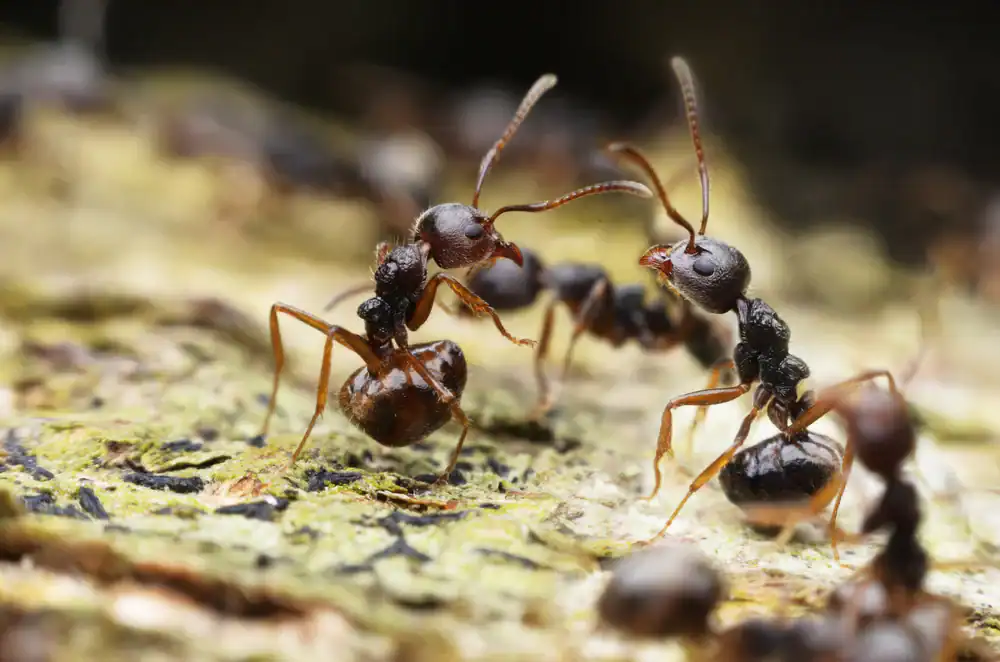
This is the question most homeowners ask at some point, usually after the third or fourth time they’ve treated the same ant problem. The honest answer is that in Florida’s climate, reactive treatment is almost always more expensive and more disruptive than ongoing prevention — not because pest control companies want recurring revenue, but because of how ant colonies actually work.
By the time ants are visible in large numbers inside your home, the colony is well-established. Multiple queens may already be present. Satellite colonies may have already formed. Getting to that point requires a more intensive treatment effort than maintaining a treated perimeter that prevents new colonies from establishing in the first place.
Think about what ongoing prevention actually does. It keeps the treated zone around your home’s foundation charged so that when a displaced fire ant colony moves toward your slab after a heavy rain — which happens regularly in both Pasco County and Hernando County — it hits a barrier before it hits your home. It means the ghost ant colony that’s been working its way through the mulch bed along your front walk doesn’t make it inside. The alternative is waiting until you see them on the counter, treating reactively, and repeating the cycle.
For homeowners who relocated from states with genuine winters, this is often a mindset shift. The idea of pest control as a year-round service feels different when you’re used to a climate that resets the pest population every December. In Pasco County and Hernando County, that reset doesn’t happen. The biology of it is straightforward: no dormancy means no natural die-off, which means the only consistent control is consistent prevention.
Not every pest control company operating in Pasco County and Hernando County approaches ant control the same way, and the differences matter. A few things worth knowing before you call anyone.
Florida has some of the most stringent pest control licensing requirements in the country, managed by the Florida Department of Agriculture and Consumer Services (FDACS). Any company treating your home should be able to provide their license number without hesitation. You can verify any company’s license status directly through the FDACS website. If a company is vague about credentials or claims they don’t need licensing for certain services, that’s a problem.
Beyond licensing, the quality of treatment depends heavily on whether the technician identifies the species before treating. A company that shows up, sprays the perimeter, and leaves without asking what you’ve been seeing is not doing species-specific work. That matters enormously for ghost ants and pharaoh ants, where the wrong product actively worsens the infestation.
Local knowledge also counts for more than it might seem. The ant pressure in a newer Wesley Chapel subdivision is different from what a homeowner in an older Brooksville neighborhood is dealing with. A company that serves Pasco County and Hernando County specifically — not just the broader Tampa Bay market — understands those distinctions and treats accordingly. You want someone who knows that fire ant mounds in Spring Hill yards tend to spike after summer storms, that ghost ants in new construction homes are often coming in through mulch beds and foundation gaps, and that carpenter ants in Hernando County’s older wooded neighborhoods require a different approach than what’s needed in a slab-built subdivision.
We’re a family-run operation based in Spring Hill. When you call Around The Clock Pest Service, you’re talking directly to the owner — not a call center, not a scheduling system. We give most quotes over the phone, we respond within 24 hours including weekends, and we hold multiple FDACS licenses with an A+ rating from the BBB. We also offer special discounts for new homeowners and military families, because a lot of the people we hear from are just getting settled here and encountering Florida’s pest realities for the first time. We know what that’s like, and we’re straightforward about what it takes to actually fix it.
The short version: Florida ants don’t follow a season, store-bought repellent sprays often make the most common species worse, and the fastest-growing counties in the state are also some of the highest-pressure environments for ant activity. If you’ve been treating the same problem on repeat, the issue probably isn’t effort — it’s approach.
Year-round prevention isn’t a luxury in this climate. It’s the practical response to a biology that doesn’t pause. Getting ahead of it is almost always easier and less disruptive than catching up to a well-established colony inside your walls or under your slab.
If you’re dealing with ants in your Pasco County or Hernando County home and want a straight answer about what’s actually going on and what it would take to fix it, reach out to Around The Clock Pest Service . We’ll tell you what we’re seeing, what we’d do about it, and what to expect — no surprises.
Summary:
Article details:
Share: