
Fast, reliable pest control from Hernando County’s most trusted family-owned team—with most quotes given over the phone.
Contact Info
Fast, reliable pest control from Hernando County’s most trusted family-owned team—with most quotes given over the phone.
Contact Info
Not sure if your ant problem needs professional help? Discover the warning signs that it's time to call an exterminator in Pasco and Hernando County, FL.

You’re wiping down the counter for the third time today. The ants are back. Again. You’ve tried the sprays, the traps, even that trick your neighbor swore by. But here they come, marching in a perfect line like they own the place. At some point, you start wondering if this is normal or if you’re fighting a losing battle. The truth is, ants in Florida are persistent, and not every situation calls for the same solution. Some ant problems clear up with a little effort. Others need a different approach entirely. If you’re questioning whether it’s time to bring in help, you’re asking the right question. Let’s walk through what actually matters when it comes to ant control.
A couple of ants near the sink? That’s Florida. But when you start seeing the same trail every morning, or you’re finding them in places they shouldn’t be, that’s when things shift.
You’re dealing with more than a few stragglers if you’re seeing consistent trails leading to and from food sources. Ants leave scent markers for the rest of the colony, so that line you keep wiping away isn’t random. It’s intentional. They’re communicating.
Look for small piles of dirt or debris near walls, especially around windows or doors. If you’re spotting tiny mounds of what looks like sawdust near wood, that’s not dust. That’s frass, and it means carpenter ants might be tunneling into your home’s structure. You’ll also want to pay attention to where the ants are going, not just where they are. If they’re heading into wall voids, under appliances, or behind cabinets, there’s likely a nest nearby that you can’t see.
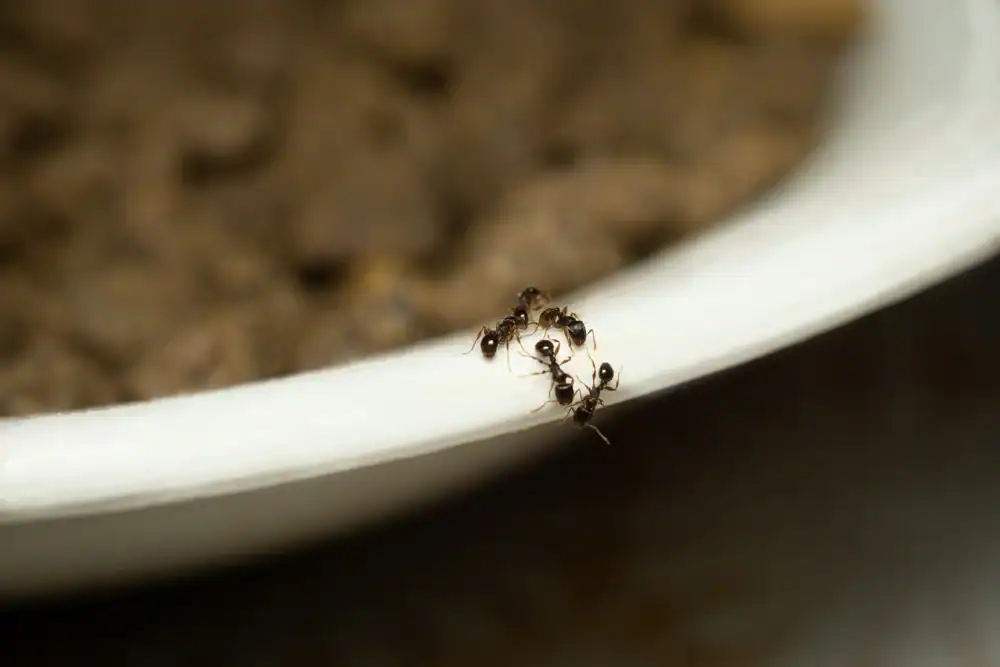
You sprayed. They disappeared. Two days later, they’re back. Sound familiar?
Here’s what’s happening. Most store-bought sprays kill the ants you see, but they don’t touch the colony. The queen is still laying eggs somewhere hidden. The nest is still active. And the workers you just killed? They’re being replaced faster than you can keep up.
Ants don’t live where you see them. They live in hidden nests, sometimes in your walls, under your foundation, or even outside in the yard. The ants crossing your kitchen counter are just workers out gathering food. Killing them doesn’t solve the problem because the source is still thriving somewhere you can’t reach.
That’s why DIY methods feel like a loop. You’re treating the symptom, not the cause. Professional ant control targets the colony itself using baits that workers carry back to the nest. It’s slower, but it’s the only way to eliminate the infestation at the source. Sprays might give you a few days of relief, but if the queen and the nest are still intact, you’re just buying time.
Florida’s warm climate doesn’t help either. Ants here don’t hibernate. They don’t slow down in winter. They breed year-round, which means a small problem can turn into a major infestation faster than you’d expect. The same climate that keeps termites active and brings rodents looking for shelter also creates perfect conditions for ant colonies to thrive. If you’re stuck in that cycle of spray-and-repeat, it’s not because you’re doing it wrong. It’s because the method itself has limits.
Not all ants are the same, and knowing what you’re dealing with makes a difference in how you handle them.
Ghost ants are some of the most common indoor invaders in Florida. They’re tiny, almost translucent, and they love moisture. You’ll find them in kitchens and bathrooms, trailing along counters and sinks. They’re attracted to sweets and can infest pantries quickly if they find a food source.
Carpenter ants are larger, usually black or reddish, and they don’t eat wood, but they tunnel through it to build nests. If you’re seeing big ants near wooden structures, windowsills, or door frames, especially in areas that have moisture damage, you might be looking at carpenter ants. They can cause real structural damage over time, so they’re not something to ignore.
Fire ants build mounds outside, usually in yards or near driveways. They’re aggressive, and their stings are painful. If you’ve got kids or pets, fire ant mounds are a safety concern, not just a nuisance. They’ll swarm if the mound is disturbed, and they don’t back down.
Then there are sugar ants, pharaoh ants, and pavement ants, all of which show up in Florida homes looking for food and water. Each species behaves a little differently, which is why identification matters. What works for ghost ants might not work for carpenter ants. A professional exterminator can tell the difference and treat accordingly, which is why guessing doesn’t usually end well. The same expertise that goes into termite inspections and spider control applies here—knowing exactly what pest you’re facing changes everything.
Want live answers?
Connect with a Around The Clock Pest Service expert for fast, friendly support.
There’s no shame in trying to handle an ant problem yourself first. But there’s also a point where DIY stops making sense.
If you’ve been treating the problem for a few weeks and nothing’s changed, that’s a sign. If the ants keep coming back to the same spot no matter what you do, that’s another one. And if you’re seeing ants in multiple rooms or finding evidence of nests, you’re past the point where a can of spray is going to cut it.
Certain situations call for professional help right away. If you’re seeing carpenter ants, you’re looking at potential structural damage. If you’ve got fire ants in the yard and someone’s already been stung, that’s a safety issue. If the infestation is spreading or getting worse despite your efforts, it’s time to bring in someone who knows how to eliminate the colony, not just the scouts.

Professional ant control isn’t about spraying more chemicals. It’s about strategy.
The first step is identifying the species. Different ants require different treatments, and a trained exterminator can tell what you’re dealing with just by looking. Once we know the species, we locate the nest. That might mean inspecting wall voids, checking under the house, or tracing trails back to outdoor colonies. It’s similar to how we approach termite prevention or flea control—find the source, then eliminate it.
Treatment usually involves baiting, not spraying. Baits are designed to be carried back to the nest by worker ants. The poison is slow-acting, which gives the workers time to share it with the colony, including the queen. Once the queen is eliminated, the colony collapses. It’s not instant, but it’s permanent.
We also treat entry points and create barriers to prevent future infestations. We’ll seal cracks, treat the perimeter of your home, and give you advice on what’s attracting the ants in the first place. It’s not just about killing what’s there. It’s about making sure they don’t come back.
In Florida, where ants are active all year, many homeowners benefit from quarterly pest control. It’s preventative, which means you’re staying ahead of the problem instead of reacting to it. One treatment might solve an active infestation, but ongoing service keeps your home protected long-term. The same quarterly approach that works for rodent control and general pest prevention works just as well for ants.
Cost is always a factor, and it’s fair to want to know what you’re looking at before you call.
One-time ant treatments in Florida typically run between $150 and $400, depending on the size of your home and the severity of the infestation. If you’re dealing with carpenter ants or fire ants, the cost might be on the higher end because those species require more intensive treatment.
Quarterly pest control services usually cost between $75 and $120 per visit. That works out to around $300 to $480 per year, and it covers more than just ants. Most quarterly plans include spiders, roaches, and other common pests, so you’re getting year-round protection for a predictable price.
Some companies offer monthly plans, which run around $40 to $75 per month. That’s a good fit for homes in high-pressure areas or properties with a history of recurring infestations. The more frequent the service, the less chance pests have to establish a foothold.
When you’re comparing costs, think about what you’re actually paying for. A one-time treatment might seem cheaper upfront, but if the ants come back in a few months, you’re paying again. Quarterly service spreads the cost out and keeps the problem from returning, which usually saves money in the long run. You’re also getting expertise. A professional knows which products work, where to apply them, and how to prevent future issues. That’s worth something, especially when DIY methods keep falling short.
At the end of the day, you know your home better than anyone. If the ants are manageable and a few simple fixes take care of the problem, great. But if you’re stuck in a cycle of seeing them, treating them, and seeing them again, it’s time to try something different.
Professional ant control isn’t about admitting defeat. It’s about getting results that last. You’re not just paying for someone to spray. You’re paying for someone who knows how to find the nest, eliminate the colony, and keep them from coming back.
If you’re in Pasco County, FL or Hernando County, FL and you’re ready to stop fighting the same battle, we’re here to help. You’ll work directly with the owner, get a response within 24 hours, and have access to someone who actually answers. No call centers. No runaround. Just honest service from people who care about solving your problem for good.
Summary:
Article details:
Share: