
Fast, reliable pest control from Hernando County’s most trusted family-owned team—with most quotes given over the phone.
Contact Info
Fast, reliable pest control from Hernando County’s most trusted family-owned team—with most quotes given over the phone.
Contact Info
You’re tapping on your baseboards and hearing a hollow sound. Or maybe you spotted some wings near your window this morning and wondered if they’re from termites. Either way, you’re here because you want answers without the runaround.
Here’s the reality: termites in your house don’t announce themselves with obvious damage until they’ve been feeding for years. But there are signs—real, visible clues—that can help you catch the problem early. This guide breaks down what to look for, what it means, and when it’s time to bring in someone who knows how to handle it. No fluff, just the information you need to protect your home in Hernando County, FL.
Termites don’t leave calling cards, but they do leave evidence. The problem is that most of that evidence stays hidden behind walls, under floors, or inside the wooden framing of your home until the damage is already extensive.
In Hernando County, where humidity stays high most of the year and we have roughly 13 termite colonies per acre, the question isn’t if termites will try to get into your home—it’s when. Catching them early comes down to knowing what to look for and where to look. The signs aren’t always dramatic, but they’re there if you know what you’re seeing.
Let’s start with what you’re most likely to notice first: the visible signs that something’s not right.
Mud tubes are one of the clearest indicators. These pencil-width tunnels show up along foundation walls, in crawl spaces, or even climbing up exterior brick or concrete. Subterranean termites build them to travel between their underground colonies and the wood in your home while staying protected from light and air. If you break off a section of the tube and it gets rebuilt within a few days, you’ve got active termites.
Discarded wings near windowsills, doors, or light fixtures are another giveaway. When termite swarmers (the reproductive members of a colony) find a good spot to start a new colony, they shed their wings. You’ll usually see these in spring, though Florida’s warm climate means swarming can happen almost year-round. The wings are small, translucent, and often mistaken for flying ant wings—but termite wings are equal in size, while ant wings are not.
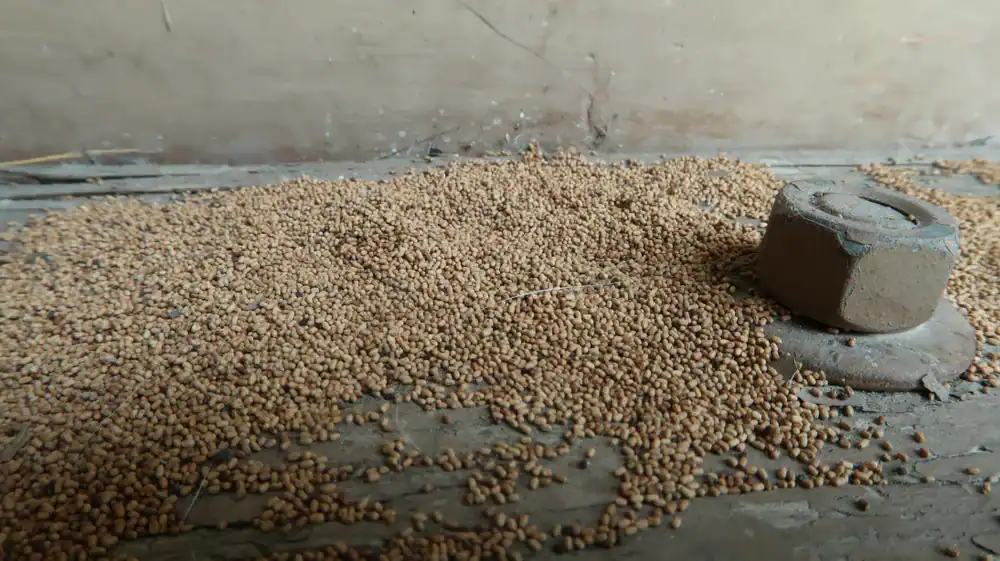
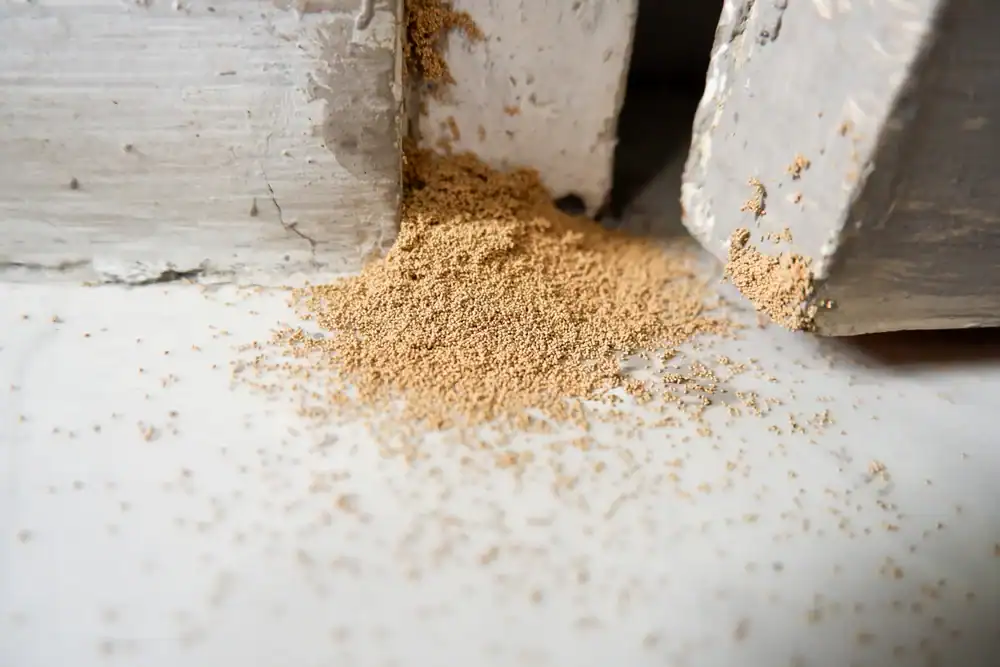
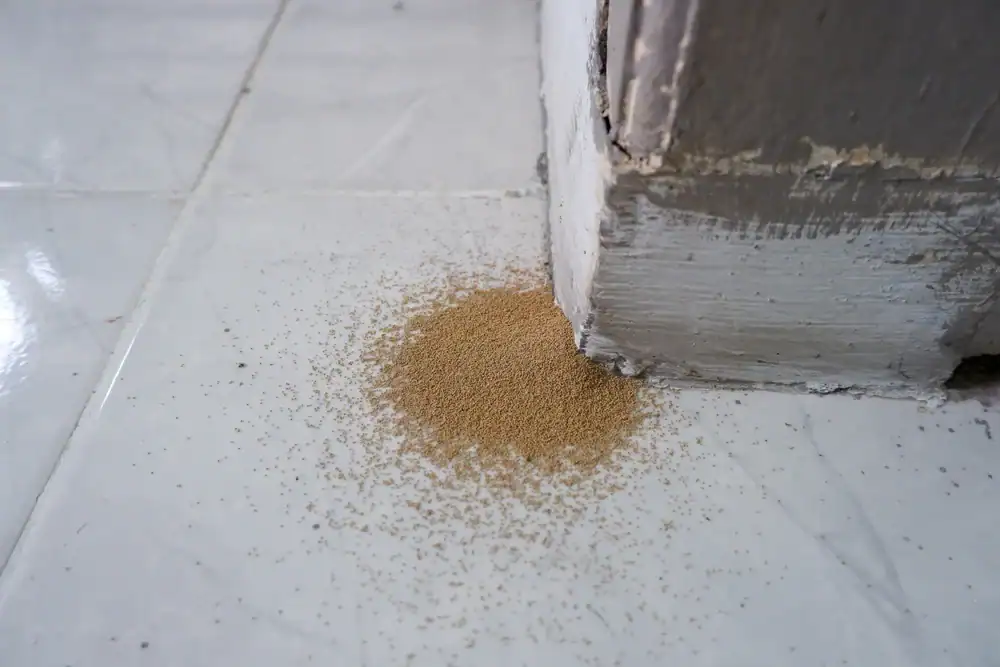
Then there’s frass. If you’ve got drywood termites, you’ll find tiny piles of what looks like sawdust or coffee grounds near wooden furniture, baseboards, or window frames. This is termite droppings, and it’s a sign they’re actively feeding inside the wood. Subterranean termites don’t leave frass because they use their waste to build those mud tubes, so if you’re seeing pellet-like droppings, you’re dealing with drywood termites.
Hollow-sounding wood is harder to catch unless you’re specifically checking for it. Tap on baseboards, door frames, or wooden trim with your knuckle. If it sounds hollow or feels soft when you press on it, termites may have been eating away the interior while leaving just a thin veneer on the surface. This kind of damage doesn’t happen overnight—it takes months or years of feeding—but once you hear that hollow sound, the damage is already done.
Warped doors and windows that suddenly stick or won’t close properly can also point to termites. As they tunnel through wood and produce moisture, the framing around doors and windows can swell or warp. Most people assume it’s just the Florida humidity, and sometimes it is. But if it’s isolated to one door or window and you’re noticing other signs, termites could be the cause.
Bubbling or peeling paint on wood surfaces is another subtle clue. Termites create moisture as they feed, and that moisture can cause paint to bubble, crack, or peel in ways that look similar to water damage. If you’re seeing this and there’s no obvious leak or water source, it’s worth a closer look.
Most homeowners never see the termites themselves—just the damage they leave behind. But if you do spot them, here’s what you’re looking at.
Worker termites are small, soft-bodied, and pale cream or white in color. They’re about the size of a grain of rice and rarely come out into the open. If you break open a piece of damaged wood or a mud tube, these are the termites you’ll see. They make up the bulk of the colony and do all the feeding.
Soldier termites have larger, darker heads with visible mandibles. Their job is to protect the colony, so you’ll usually see them if you disturb a mud tube or infested wood. They look more intimidating than workers, but they’re not dangerous to people—they’re just defending their food source.
Swarmers are the winged termites you’re most likely to encounter. They’re darker in color (brown or black) and about a quarter to half an inch long. They emerge in large groups during swarming season to mate and establish new colonies. If you see swarmers inside your home, it’s a strong sign that a mature colony is nearby or already inside your walls.
One thing people often get wrong: termites are not white ants. Ants have pinched waists, bent antennae, and wings of different sizes. Termites have straight bodies, straight antennae, and wings that are equal in length. If you’re seeing what looks like a white ant, it’s a termite.
In Hernando County, the two main species you’ll deal with are subterranean termites and drywood termites. Subterranean termites are more common and more destructive. They live in the soil and need moisture to survive, which is why you’ll see those mud tubes. Drywood termites live entirely inside the wood they’re eating, so they don’t need soil contact and don’t build mud tubes. Both can cause serious damage, but they require different treatment approaches.
The reality is that by the time you’re seeing termites, the infestation has likely been there for a while. Termites can feed on a structure for three to five years before homeowners even realize there’s a problem. That’s why regular termite inspections matter, especially in a state where termites are active all year long.
Want live answers?
Connect with a Around The Clock Pest Service expert for fast, friendly support.
Spotting the signs early is one thing. Knowing what they mean and how serious the problem is—that’s where things get tricky.
Termite damage doesn’t happen overnight. It’s a slow, progressive process that can take years to reach the point where it threatens your home’s structure. But once it does, the costs add up fast. The average repair bill for termite damage in Florida runs between $3,000 and $8,000, and severe cases can hit $20,000 or more. Homeowners insurance won’t cover it because insurers classify termite damage as preventable maintenance, not an accident.
Not all termite damage is created equal. Cosmetic damage—things like surface scarring on baseboards or minor damage to trim—might only cost a few hundred dollars to fix. It’s annoying, but it’s not a structural threat.
Structural damage is a different story. This is when termites have compromised load-bearing components like floor joists, support beams, wall studs, or roof framing. These are the parts of your home that hold everything up, and when termites hollow them out from the inside, you’re looking at serious repair work that involves not just replacing wood but potentially reinforcing entire sections of your home.
The tricky part is that structural damage often goes unnoticed until it’s advanced. Termites eat wood from the inside out, leaving a thin shell on the surface that looks normal until you press on it or it collapses. By that point, the damage has been building for months or even years.
In Florida, the warm, humid climate accelerates this process. Termites here stay active year-round and can consume wood up to seven times faster than in cooler regions. That means an infestation that might take five years to cause major damage in a northern state can do the same damage in two or three years here.
Subterranean termites are the bigger threat when it comes to structural damage. They live in massive underground colonies—sometimes with millions of members—and they’re relentless. A single colony can consume more than a pound of wood per day. If they’ve found their way into your floor joists or wall studs, the damage can spread quickly.
Drywood termites are slower and usually affect smaller, isolated areas like furniture, attic beams, or window frames. But if left unchecked, they can still cause significant damage, especially in older homes where the wood has been in place for decades.
One of the most frustrating things about termite damage is that it’s often discovered during a home sale. A buyer orders a WDO inspection, the inspector finds evidence of termites, and suddenly you’re dealing with repair costs, renegotiations, or even a deal that falls through. That’s why proactive inspections matter—not just for peace of mind, but to avoid surprises when you’re trying to sell.
Termite damage can look a lot like water damage, wood rot, or even normal wear and tear. Here’s how to tell them apart.
Water damage usually shows visible staining, discoloration, or a musty smell. The wood may feel damp or spongy. Termite damage, on the other hand, often looks dry on the surface even though termites produce moisture as they feed. If you see bubbling paint or warped wood but there’s no obvious water source and no smell, termites are a possibility.
Wood rot caused by fungus needs consistent moisture to develop. It typically affects wood that’s in direct contact with soil or exposed to leaks. The wood breaks down and becomes soft, crumbly, or stringy. Termite-damaged wood, by contrast, has hollow galleries inside with a thin outer shell that may still look intact. When you tap on it, it sounds hollow rather than solid.
Carpenter ants are another pest that gets confused with termites. Carpenter ants excavate wood to build nests, but they don’t eat it. You’ll see smooth, clean galleries and piles of sawdust-like material called frass near the nest. Termite galleries are rougher, filled with mud or fecal material, and the frass from drywood termites looks like tiny pellets, not sawdust.
If you’re seeing damage and you’re not sure what’s causing it, the safest move is to get a professional inspection. Trying to diagnose it yourself can waste time, and with termites, time matters. The longer they feed, the more damage they do, and the more expensive the repairs become.
In Hernando County, where termite pressure is high year-round, annual inspections are a smart investment. We offer inspections that can catch an infestation in the early stages and save you thousands compared to waiting until the damage is obvious.
Termites are a fact of life in Florida. With 13 colonies per acre and a climate that keeps them active all year, the odds are high that they’ll try to get into your home at some point. But catching them early—before they cause thousands of dollars in damage—is entirely possible if you know what to look for.
Check your foundation for mud tubes. Look for discarded wings near windows and doors in the spring. Tap on baseboards and door frames to listen for hollow spots. If you see small piles of pellet-like droppings near wood, don’t ignore them. These are the signs that give you a head start.
When you do find something that doesn’t look right, don’t wait. Termites don’t take breaks, and the longer they’re left alone, the worse the damage gets. We’re available 24/7 to answer your questions, provide honest advice, and schedule inspections when you need them—even on weekends. Because when it comes to termites in your house, catching the problem early isn’t just smart. It’s the difference between a minor fix and a major financial hit.
Summary:
Article details:
Share: