
Fast, reliable pest control from Hernando County’s most trusted family-owned team—with most quotes given over the phone.
Contact Info
Fast, reliable pest control from Hernando County’s most trusted family-owned team—with most quotes given over the phone.
Contact Info
Florida termite treatment costs more than the national average — and there are real reasons why. Here's what to expect in Hernando County, FL.
You searched “termite treatment cost” and got a national average somewhere around $621. Then you called a local company and the number was very different. That gap is frustrating — and it’s also completely normal, especially in Hernando County, FL.
Florida’s termite situation is genuinely not like other states. The climate, the species, the age of the housing stock in Spring Hill and throughout Hernando County — all of it affects what treatment costs and what kind of treatment you actually need. This guide is built around what homeowners in Hernando County are actually dealing with, not a national average that was never meant to apply here.
Before any price makes sense, it helps to understand what you’re actually paying for. Termite treatment isn’t one thing — it’s several very different approaches, and which one applies to your home depends on the species involved, the extent of the infestation, and your home’s construction.
A proper treatment starts with an inspection. A certified technician identifies the species, locates the activity, and assesses how far it’s spread. From there, the recommendation should follow the evidence — not a one-size-fits-all upsell. The method matters because subterranean termites and drywood termites require completely different treatments, and confusing the two wastes money without solving the problem.
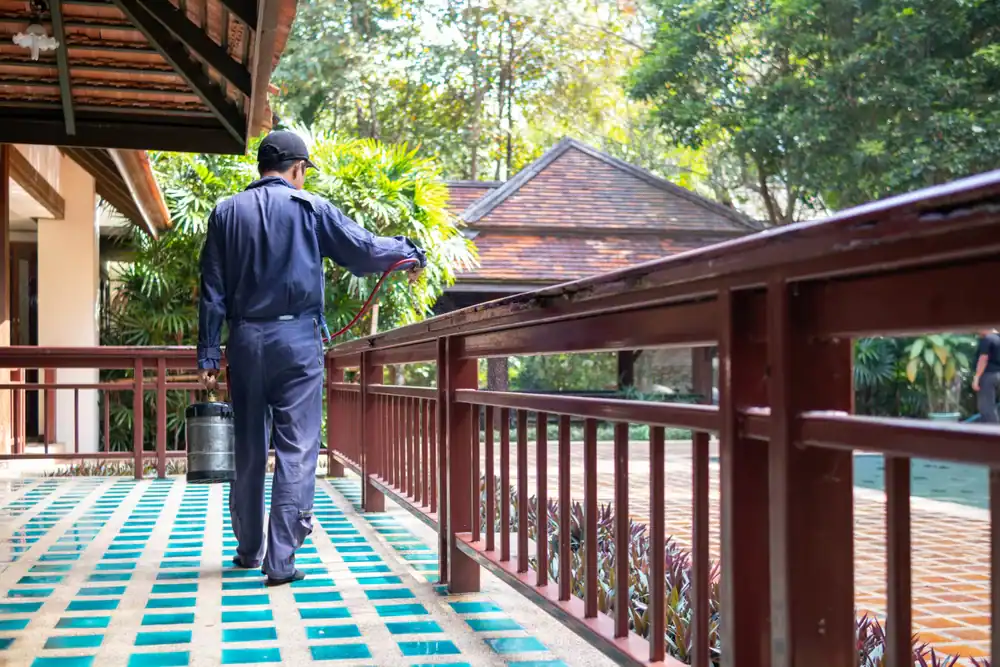
Liquid barrier treatments — sometimes called soil treatments — involve injecting a termiticide into the soil around your home’s foundation. The goal is to create a continuous chemical barrier that either repels termites or kills them as they pass through it on the way to your structure. This is the most common treatment for subterranean termites, which travel through the soil and enter homes through cracks in the slab or foundation walls.
Pricing for liquid barrier treatments is typically calculated by the linear foot of your home’s perimeter. Nationally, that runs $3 to $20 per linear foot depending on the product used and the depth of treatment required. For a home with 200 linear feet of perimeter — common in Spring Hill’s older single-family neighborhoods — you’re looking at $1,000 to $3,200 for initial treatment, with annual renewal costs running $100 to $300.
Bait systems work differently. Stations are installed around the perimeter of the property, and termites carry the bait back to the colony, eventually eliminating it from the inside out. Systems like Sentricon are well-suited to situations where a liquid barrier isn’t practical or where ongoing colony elimination is the priority. Installation typically runs $1,000 to $2,500, with annual monitoring fees of $200 to $400 per year. The upfront cost is higher, but so is the long-term protection — particularly in Hernando County, where termite pressure doesn’t let up between seasons.
Neither method is universally better. Liquid barriers work fast and are cost-effective for initial treatment. Bait systems are slower but provide continuous monitoring and colony-level control. A good technician will explain which makes sense for your specific situation rather than defaulting to whatever’s easiest to quote.
One thing worth knowing: neither liquid barriers nor bait systems require you to leave your home. That’s a common misconception — and it only applies to fumigation, which is a separate treatment for a different type of termite entirely.
Termite tenting — or structural fumigation — is the treatment that gets the most attention, probably because it’s the most dramatic. A tent goes over your entire home, a gas called Vikane (sulfuryl fluoride) is pumped in, and you stay somewhere else for 24 to 72 hours while it works. It’s effective. It’s also the most expensive option, and it’s not always the right one.
Fumigation is specifically for drywood termites — the species that live inside the wood itself rather than in the soil. If your home has a drywood infestation that’s spread through multiple areas of the structure, tenting may be the most thorough solution. But if you have subterranean termites, tenting does nothing for them. The species matters. A company that recommends tenting without confirming the species first is worth questioning.
For Florida homes, tenting costs vary significantly by size. Smaller homes under 1,500 square feet typically run $1,000 to $1,500. Mid-size homes between 1,500 and 2,500 square feet fall in the $2,000 to $3,000 range. Larger homes over 2,500 square feet can run $4,000 to $8,000 or more. These are Florida-specific figures — the national averages you’ll find on most cost guides tend to run lower because they’re pulled from markets with less drywood termite activity.
For localized drywood infestations — a single piece of furniture, a window frame, one section of framing — spot treatments are often a reasonable alternative. Spot treatment costs typically run $300 to $800 per treated area, which is considerably less than whole-home fumigation. The tradeoff is that spot treatment only addresses the area you can identify and access. If the infestation is widespread or hidden inside walls, it may not be sufficient.
In Hernando County, both subterranean and drywood termites are present throughout Spring Hill and the surrounding communities. That’s not the case everywhere in Florida — some markets deal primarily with one species. Here, a thorough inspection that identifies which species you’re dealing with isn’t optional. It’s the only way to know which treatment actually applies.
Want live answers?
Connect with a Around The Clock Pest Service expert for fast, friendly support.
The national average for termite treatment is around $621, with a typical range of $264 to $1,032. Those numbers are real — but they reflect an average across every home size, every termite species, every region of the country, including places that have one termite species and a shorter active season than Florida does.
In Spring Hill and throughout Hernando County, local project data from 69 completed termite control jobs puts the average cost at $238 to $347. That lower figure likely reflects a mix of preventive treatments, maintenance visits, and smaller-scope jobs rather than full active-infestation remediation. If you’re dealing with an established colony or need whole-home treatment, expect to land somewhere above that range.
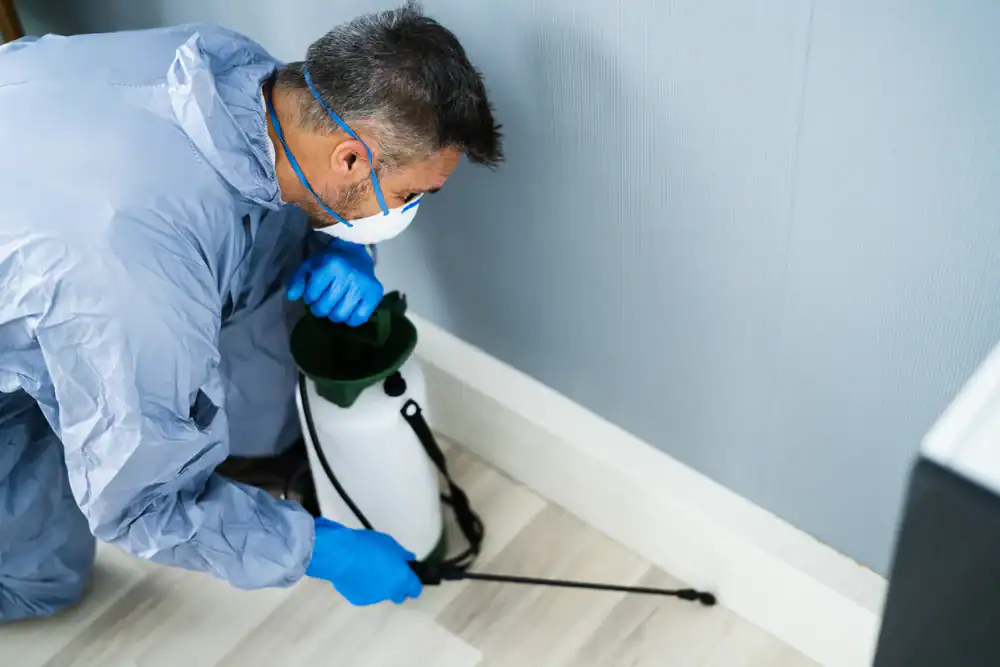
Several factors push Florida termite treatment costs above what you’d see quoted in a national guide, and most of them are specific to this state’s climate and biology.
Florida has four known termite species: dampwood, drywood, subterranean, and conehead. The conehead termite is an invasive species that FDACS specifically flags for its ability to infest structures rapidly. Having multiple active species in the same market means inspections have to be more thorough, and treatment plans sometimes have to address more than one threat at once. That adds complexity — and cost.
Year-round activity is the other major factor. In northern states, termite colonies slow down in winter. In Hernando County, they don’t. Twelve months of active feeding means twelve months of potential damage, and it means treatment has to account for ongoing pressure rather than a seasonal window. Annual monitoring and re-inspection aren’t optional extras here — they’re how you actually maintain protection over time.
The age of the housing stock matters too. Spring Hill was developed starting in 1967, which means a significant portion of Hernando County’s single-family homes are now 40 to 55 years old. Wood framing that’s been exposed to Florida humidity for that long is more vulnerable. Slab-on-grade construction — common throughout the area — can develop cracks over time that give subterranean termites direct access to the structure. Older homes in Timber Pines, Sterling Hill, Woodland Waters, and similar communities often require more thorough treatment than a newer build would.
And then there’s the insurance issue. Homeowners insurance does not cover termite damage — not in Florida, not anywhere in the U.S. FDACS states this plainly, and it matters when you’re weighing the cost of treatment against the alternative. The average structural repair bill from termite damage can run into the tens of thousands. At a median home value of $276,000 to $314,000 in Hernando County, that’s not a small percentage of what your home is worth.
**Do I need a termite inspection before treatment?** Yes — and any company that skips it should raise a flag. The inspection determines which species are present, where the activity is concentrated, and which treatment method is appropriate. Without that information, a quote is essentially a guess. WDO (Wood-Destroying Organism) inspections in Hernando County typically cost $75 to $300 depending on the size and accessibility of the property. If you’re in the middle of a real estate transaction, this inspection is often required by the lender — and the results directly affect what treatment, if any, needs to happen before closing.
**Can I get a price without scheduling an in-person visit first?** Yes. We provide quotes over the phone for most situations — no sales appointment required, no waiting for someone to come out before you can get a number. If you can describe your home, your concerns, and what you’ve seen, we can usually give you a real starting point on the call. That’s not the norm in this industry, but it’s how we operate.
**How long does termite treatment last?** It depends on the method. Liquid barrier treatments are highly effective but do degrade over time — typically somewhere between five and ten years depending on soil conditions and the product used. Annual inspections help catch any gaps before they become problems. Bait systems provide ongoing protection as long as monitoring continues. Fumigation eliminates the existing drywood colony but doesn’t prevent a new one from establishing — which is why follow-up inspections matter even after tenting.
**Is termite treatment worth it if I’m not sure I have an active infestation?** In Hernando County, preventive treatment is often worth having a conversation about — especially if your home is more than 20 years old and hasn’t been treated recently. Florida averages 13 termite colonies per acre. Subterranean termites can cause significant structural damage for years before you see a single visible sign. By the time you notice mud tubes, discarded wings, or soft spots in the wood, the colony has usually been there for a while. Preventive liquid barriers or bait station installation are considerably less expensive than remediation after an established infestation — and far less expensive than structural repairs.
**What if I get a quote that’s much lower than everyone else?** Price differences in pest control usually reflect real differences — in the product used, how thoroughly it’s applied, what warranty or re-treatment guarantee is included, and whether the technician is properly licensed. In Florida, termite control performed for compensation requires FDACS certification under Chapter 482, Florida Statutes. It’s worth asking any company you’re considering for their license numbers and verifying them directly with FDACS. A significantly lower quote without a clear explanation of what’s included deserves a closer look before you sign anything.
Termite treatment costs in Florida vary — by species, by home size, by method, and by how long the problem has been developing. The national averages give you a starting point, but they don’t account for what homeowners in Hernando County are actually dealing with: multiple active species, year-round pressure, aging housing stock, and zero coverage from homeowners insurance if something goes wrong.
The most useful thing you can do right now is get a real number for your specific situation. Not a range pulled from a national guide — an actual quote based on your home, your property, and what’s actually going on.
Around The Clock Pest Service is a family-owned, FDACS-certified company based in Spring Hill, serving all of Hernando County. We answer every call personally, provide most quotes over the phone, and are available 24/7 — including weekends. If you have questions or want to talk through what you’re seeing, give us a call. No appointment required to get started.
Summary:
Article details:
Share: