
Fast, reliable pest control from Hernando County’s most trusted family-owned team—with most quotes given over the phone.
Contact Info
Fast, reliable pest control from Hernando County’s most trusted family-owned team—with most quotes given over the phone.
Contact Info
Termite swarms in Florida don't follow a simple calendar. Here's what Hernando County homeowners need to know about timing, species, and next steps.
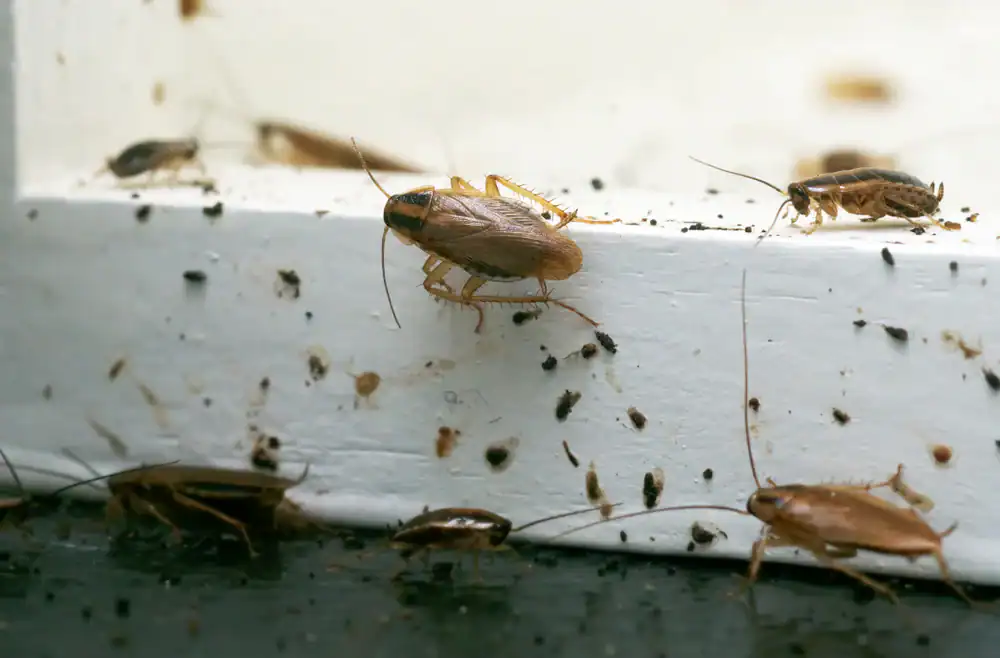
You’re sitting in your Spring Hill living room on a warm evening in April when you notice a cloud of winged insects hovering near the light fixture. Your first instinct is probably to grab a can of spray. Your second is to wonder if those are termites — and if so, how bad is this?
That moment of uncertainty is exactly where most homeowners make their first mistake. We’ve put together this page to walk you through what’s actually happening, what it means for your home, and what your next move should be. No scare tactics. Just the information you need.
Most people picture termite season as a brief window in the spring — a few weeks, maybe a month, and then it’s over. In Florida, that’s not how it works. Termite swarms have been reported every month of the year here except December, and in Hernando County specifically, the warm temperatures and high humidity mean colonies stay active and feeding twelve months a year.
Florida is classified as TIP Zone #1 by the International Residential Code — the highest termite pressure designation in the country. The Florida Department of Agriculture has stated that termites cause more structural damage in this state than fires, floods, and storms combined. That’s not a marketing line. That’s the agency that licenses pest control companies telling you plainly how serious this is.
The reason Florida’s season stretches so long comes down to climate. Termites don’t go dormant when it’s warm, and it’s almost always warm here. Add in Hernando County’s proximity to the Weeki Wachee River corridor and the wetlands along the Nature Coast, and you have elevated soil moisture year-round — which is exactly what subterranean termites need to thrive.
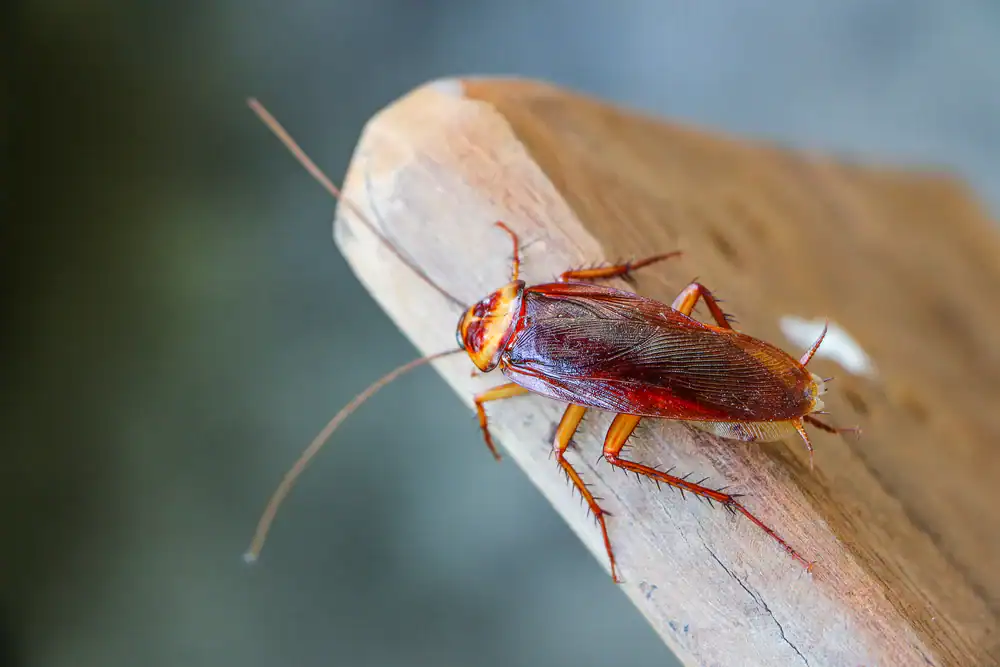
Here’s where it gets specific — and why “termite season” as a single event is a misleading concept in Florida. There are multiple termite species active in this state, and they swarm at different times, under different conditions, and at different times of day. Understanding the overlap matters because the species determines the treatment.
Eastern subterranean termites are the most common in Hernando County. They typically swarm in daylight, often on warm days following a heavy rain, and their window runs from roughly October through February — the opposite of what most people expect from a “warm weather pest.” If you’ve ever noticed a swarm of small, dark-winged insects near a door frame or window on a sunny winter afternoon right after rainfall, that’s likely what you were seeing.
Formosan subterranean termites are a different story. They swarm at night, typically from late April through early June, and they’re drawn to light sources — which is why you might find them clustered around porch lights or inside near lamps. A single Formosan colony can contain millions of individuals, and unlike Eastern subterranean termites, which can take years to cause significant damage, a Formosan infestation can compromise structural wood within months. They also build above-ground carton nests inside wall voids, which makes them harder to detect without a professional inspection.
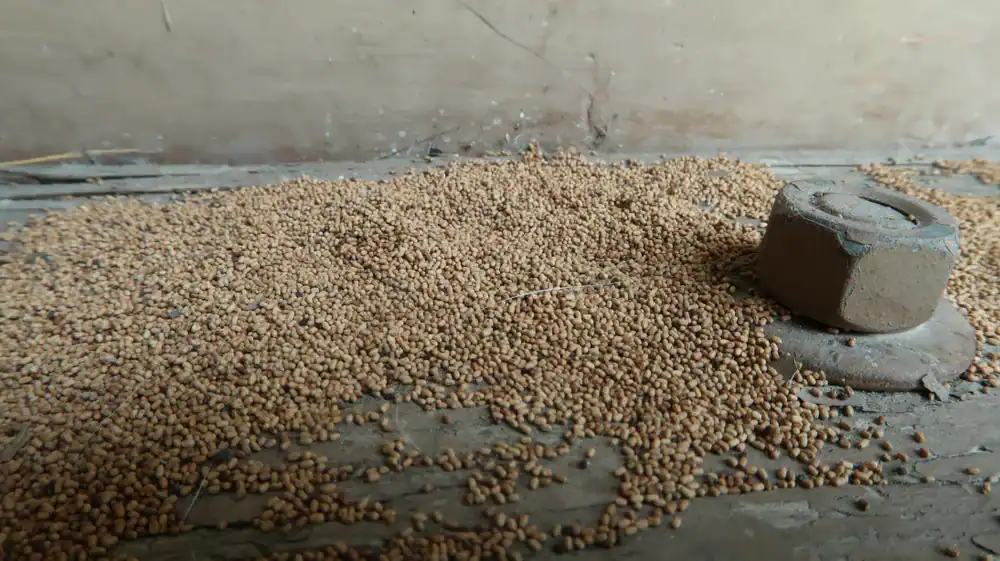
Asian subterranean termites overlap with Formosans in timing, generally swarming from March through May. Drywood termites — a different category entirely, since they don’t need soil contact — swarm from late spring through fall, peaking around May and June, and they enter homes through attic vents, roof edges, and small gaps around windows. They leave behind a telltale sign: small piles of pellet-shaped droppings called frass near baseboards or windowsills.
The practical takeaway is this: there is no safe window in Florida. By the time one species finishes swarming, another is starting. If you’re in Spring Hill or anywhere else in Hernando County and you think you missed termite season, you didn’t.
This is one of the most important distinctions that rarely gets explained clearly, and it changes everything about how urgent your situation is.
When you see termite swarmers — the winged reproductive termites — outside your home, it means a colony is nearby. Subterranean termite swarmers typically don’t travel more than a few hundred feet from their colony. So if you’re watching them fly around your yard or driveway, there’s a colony somewhere close, possibly in a neighbor’s yard, a wood pile, or a tree stump. That’s worth paying attention to, but it doesn’t automatically mean your house is infested.
When you see swarmers inside your home — near a window, around a light, or emerging from a crack in the baseboard — the situation is different. Swarmers don’t eat wood. They can’t survive long indoors. The only reason they’re inside is because they came from inside. That’s a strong indicator that a colony is already established somewhere within your home’s structure, and it’s been there long enough to produce reproductives.
Here’s the part that catches most homeowners off guard: termites can be actively feeding on a structure for three to five years before any visible sign appears. The swarm you’re seeing isn’t the beginning of the problem. It’s a sign that the problem has been developing for years. That’s why waiting to “see if it gets worse” isn’t a neutral choice — the colony doesn’t pause while you decide.
One more thing worth knowing: do not spray the swarmers with consumer bug spray. It’s a natural instinct, but it does nothing to the colony, and it can scatter the termites into different areas of your home, making professional treatment harder to execute. If you can, collect four or five of the insects in a sealed bag. A pest control professional can use those to identify the species, which determines the right treatment approach. If you can’t collect them, take a clear photo. Either way, call a professional before you do anything else.
Want live answers?
Connect with a Around The Clock Pest Service expert for fast, friendly support.
Hernando County has a specific set of conditions that make termite pressure here higher than in many other parts of the country. The housing stock in Spring Hill was developed largely between the late 1960s and the 1990s — meaning a significant portion of homes in the area are now between 30 and 60 years old. Aging wood-frame construction, older crawl spaces, and decades of accumulated moisture exposure create exactly the kind of environment that termite colonies look for.
Add in the Nature Coast’s wetland proximity and the area’s average of 50 to 55 inches of rainfall per year, and you have a market where annual termite inspections aren’t an abundance of caution — they’re a reasonable baseline for any homeowner who wants to stay ahead of a problem that homeowners insurance won’t cover.
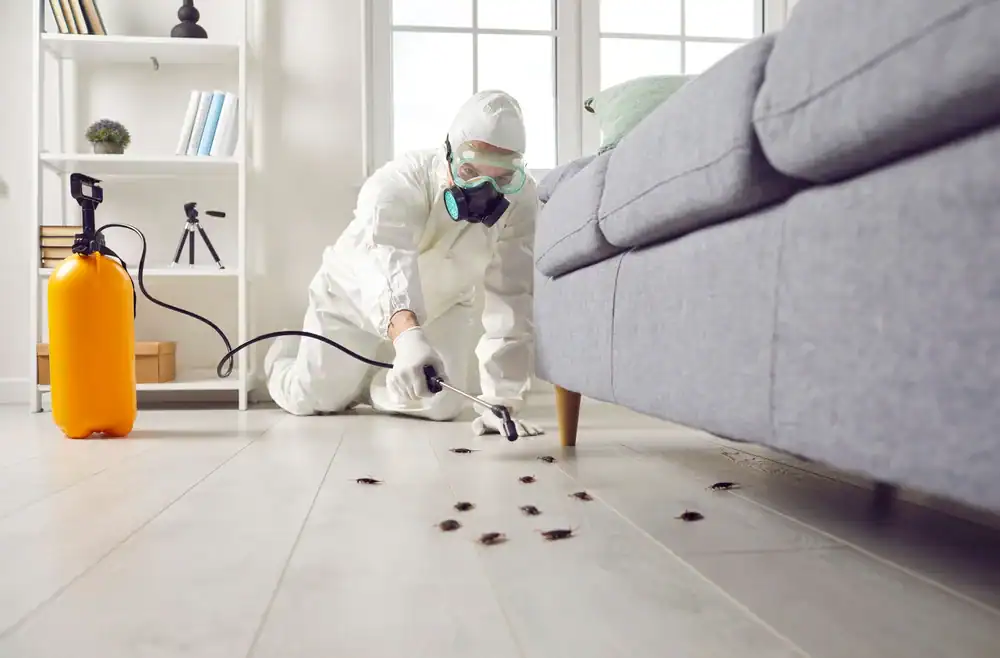
This question comes up constantly, and it’s worth answering properly because the identification changes everything. Flying ants and termite swarmers look similar at a glance, but there are three physical differences you can check without any special equipment.
Start with the antennae. Termites have straight, bead-like antennae. Flying ants have antennae that bend at a distinct angle — like an elbow. Next, look at the wings. Termite swarmers have four wings that are all roughly the same length, extending well past the body. Flying ants have two larger wings in front and two noticeably smaller wings in back. Finally, look at the waist. Ants have a pinched, narrow waist — the kind you’d recognize immediately. Termites have a thick, uniform body with no visible waist at all.
If you’re looking at something small and fast-moving and you genuinely can’t tell, collect a few in a sealed plastic bag or take a close-up photo and call a professional. A licensed pest control company can identify the species from a specimen or a clear image and give you an honest answer about what you’re dealing with.
Even if what you saw turns out to be flying ants, the fact that you have a swarm of them inside your home is still worth investigating. Flying ant colonies near or inside a structure often indicate moisture damage, which is the same condition that attracts subterranean termites. You may not have a termite problem today, but you may have the conditions that create one.
The cost of a professional inspection is far lower than the cost of discovering structural damage after the fact. In Florida, where termites cause more than $500 million in homeowner losses every year, and where standard homeowners insurance policies explicitly exclude termite damage, early identification is the only financial protection you actually have.
The window between seeing a swarm and getting a professional inspection matters more than most people realize. Research comparing treatment timelines suggests that a six-month delay between swarm detection and professional treatment can mean the difference between a relatively straightforward spot treatment and a whole-structure intervention that costs several times more. Acting quickly isn’t about panic — it’s about keeping your options open.
Here’s a practical sequence of steps for the moment after a swarm.
First, don’t spray anything. Put the can down. Consumer-grade insecticides applied to swarmers do not reach the colony, and they can cause the termites to disperse into other parts of your home, which complicates treatment significantly.
Second, try to collect a few of the insects — four or five is enough — in a sealed plastic bag or small container with a lid. If you can’t collect them, take a clear photo. Species identification is the first step in determining the right treatment, and a professional needs something to work with.
Third, look around the area where you saw them. Check for discarded wings near windowsills or door frames — swarmers shed their wings quickly after landing. Look for mud tubes along your foundation, baseboards, or where wood meets concrete. Check for wood that sounds hollow when tapped, or that feels soft or crumbles under light pressure. These are the primary physical signs of subterranean termite activity. For drywood termites, look for small piles of frass — tiny, pellet-shaped droppings — near baseboards, window frames, or furniture.
Fourth, call a licensed pest control company that day. Not tomorrow. The swarm itself lasts only 30 to 60 minutes, but what it signals has been developing for years. In Hernando County, where the combination of aging homes, subtropical humidity, and year-round termite activity creates persistent pressure, waiting a few days to “keep an eye on it” is how small problems become expensive ones.
When you call, a professional should be able to ask you a few questions and give you a clear sense of what you’re likely dealing with — including whether an inspection is the right next step or whether the situation calls for something more immediate. If a company can’t give you a straight answer on the phone, that tells you something too.
Florida’s termite season doesn’t fit neatly into a calendar, and Hernando County’s climate, wetland proximity, and older housing stock make this one of the higher-risk areas in an already high-risk state. The good news is that termite damage is almost always preventable when it’s caught early — and early detection starts with knowing what to look for and who to call.
If you saw a swarm recently, or you’ve noticed wings on a windowsill, hollow-sounding wood, or mud tubes near your foundation, don’t wait on it. The colony didn’t start last week. And your homeowners insurance won’t cover what happens if you let it continue.
Around The Clock Pest Service is a family-owned, state-certified pest control company based in Spring Hill, serving all of Hernando County. When you call, you speak directly with the owner — not a call center — and most situations can be assessed and quoted over the phone. Same-day service is available when you call before noon. If you’re not sure what you saw or whether it’s serious, call anyway. That’s what we’re here for.
]
Summary:
Article details:
Share: