
Fast, reliable pest control from Hernando County’s most trusted family-owned team—with most quotes given over the phone.
Contact Info
Fast, reliable pest control from Hernando County’s most trusted family-owned team—with most quotes given over the phone.
Contact Info
Termite treatment quotes in Hernando County can range from a few hundred to several thousand dollars. Here's what actually drives that gap — and what local homeowners need to know.
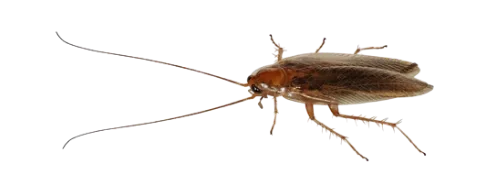
Getting a termite quote can feel like ordering off a menu where nothing has prices. One company says $400. Another says $2,800. A third wants to tent the whole house. And you’re standing there wondering if any of them are being straight with you.
The frustrating part is that all three quotes could technically be correct — because termite treatment cost depends on factors most companies don’t bother explaining. Species, treatment method, home size, and how long the infestation has been active all push the number in different directions. Here’s what’s actually behind the range, what’s typical for homes in Hernando County, and how to know whether a quote makes sense before you commit to anything.
The word “termite treatment” gets used as if it describes one thing. It doesn’t. Liquid barrier treatments, bait station systems, spot treatments, heat treatments, and full fumigation are all technically termite treatment — and they carry very different price tags, timelines, and use cases.
What you end up paying for is determined first by the species. Subterranean termites live in the soil and travel up into your home through mud tubes. Drywood termites live entirely inside the wood — no soil contact needed. Formosan termites are a subtype of subterranean termite, but their colonies are dramatically larger and more destructive. Each species responds to different treatment methods, and misidentifying the species doesn’t just waste money — it can leave the colony intact while you think the problem is solved.
The second major factor is how far the infestation has spread. Termites can feed on a structure for three to five years before a homeowner sees any visible sign. By the time you notice mud tubes along your foundation or catch a swarm in your living room, the damage may already be significant — and the treatment scope larger than it would have been with an earlier catch.
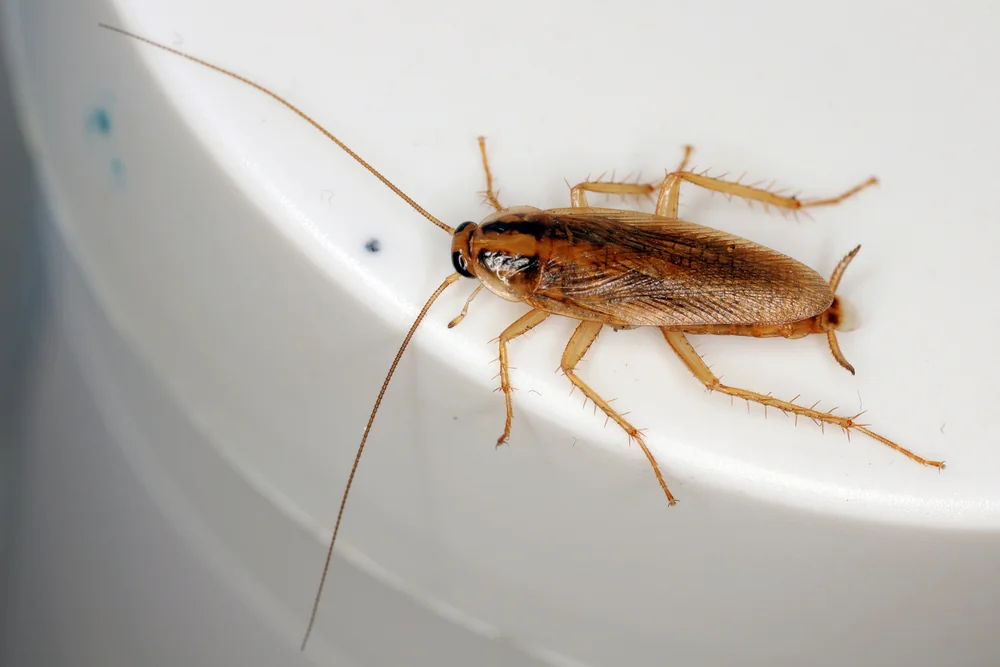
National cost guides put the average termite treatment somewhere between $264 and $1,032, with a midpoint around $621. Those numbers aren’t wrong — they’re just not particularly useful if you own a home in Hernando County.
Florida’s climate means termite pressure is active year-round. There’s no winter slowdown. And the state supports approximately 13 subterranean termite colonies per acre, which means the average Florida yard isn’t hosting one colony — it’s hosting several. That changes the risk profile significantly compared to homes in cooler states where termite activity slows for months at a time.
Florida also has a more complex species landscape. Drywood termites are common here and often require fumigation — the most expensive treatment type — because they live entirely within the wood and can’t be addressed with soil treatments. Formosan termites, which have been spreading through the Tampa Bay area and into surrounding counties like Hernando, form colonies of one to ten million individuals. That’s ten to one hundred times the size of a native subterranean colony. Formosan treatment typically runs $2,500 to $8,000, compared to $250 to $2,000 for standard subterranean treatment. If a quote seems high and you’ve been told you’re dealing with Formosans, the number may be entirely justified.
For Spring Hill and the broader Hernando County area, local project data puts the average termite control cost between $238 and $347, with a range of $74 to $727 for standard treatments. Fumigation for drywood termites locally runs approximately $1,200 to $2,500. Those figures reflect the actual work being done in this market — not a national median that includes regions with lower termite pressure and different species profiles.
One more thing worth knowing: a large portion of Hernando County’s housing stock dates back to the 1980s and 1990s, built during the original Deltona Corporation development era that created Spring Hill as a planned community starting in 1967. Homes that are 30 to 50 years old carry elevated termite risk simply due to age — older wood framing, aging construction materials, and decades of potential exposure without documented treatment history. If you’re in one of those homes, the inspection matters as much as the treatment.
Tenting — or fumigation — is the treatment people dread most, and for understandable reasons. It requires vacating your home for two to three days, bagging or removing food and medications, and coordinating pets and plants. It’s disruptive. It’s also the most expensive option, typically running $1 to $4 per square foot, which translates to roughly $2,000 to $8,000 for a whole-home treatment.
But here’s what’s important to understand: fumigation is not the default. It’s not what we should be recommending for every situation. Tenting is specifically indicated for drywood termite infestations — particularly when they’ve spread to multiple areas of the structure and localized spot treatments won’t reach the full extent of the colony. For subterranean termites, which travel through the soil, liquid barrier treatments or bait station systems are the standard approach, and neither requires you to leave your home for days.
The confusion happens because some homeowners hear “termites” and assume the worst, and some companies don’t do a thorough job of explaining which species they’re dealing with and why a particular treatment method is being recommended. When we identify a species, we explain it clearly. If someone is pushing fumigation without clearly explaining what species is present and why localized treatment won’t work, that’s worth questioning.
Bait station systems are another option worth understanding. They work by placing bait stations around the perimeter of your home, which termites find and carry back to the colony. The delayed action is intentional — the goal is to reach the queen and collapse the colony, not just kill the workers you can see. Installation typically runs $1,000 to $2,500, with annual monitoring costs of $200 to $400. They’re slower than liquid treatments but effective for long-term colony elimination without chemical injection into the soil.
Liquid soil barrier treatments — the most common subterranean termite treatment — involve applying termiticide around and beneath the foundation to create a treated zone termites can’t cross. Cost typically runs $3 to $20 per linear foot, or $500 to $2,000 for a whole-home treatment. It’s faster than bait systems and well-suited to the sandy soil conditions common throughout Hernando County.
Want live answers?
Connect with a Around The Clock Pest Service expert for fast, friendly support.
The question most homeowners are really asking isn’t “how much does treatment cost?” It’s “do I actually need to spend this money right now?” That’s a fair question. And the honest answer is that the cost of waiting is almost always higher than the cost of treating.
Termite damage repair in Florida averages $8,000 to $12,000 per incident. Severe cases exceed $20,000. And standard homeowner’s insurance — regardless of your provider — does not cover termite damage. It’s classified as a maintenance issue, which means if termites have been working through your floor joists or wall framing for three years before you discovered them, the repair bill is entirely yours.
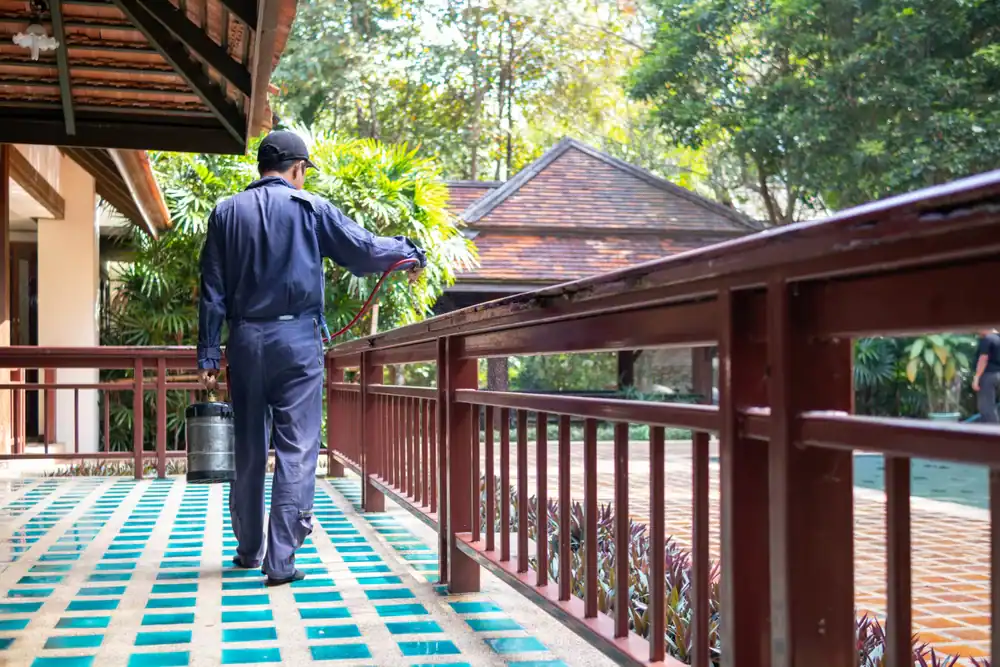
This is one of the most common questions we hear, and the answer is no — not under any standard policy. HO-3 and HO-5 homeowner’s policies, which cover the vast majority of Florida homeowners, explicitly exclude termite damage. The reasoning from insurers is that termite damage is preventable through regular inspection and maintenance, which puts it in a different category from sudden, accidental damage like a burst pipe or a lightning strike.
The only consumer-side financial protection against future termite damage is a termite bond — an annual warranty contract that typically covers retreatment if termites return, and in some cases covers structural damage repair as well. Whether a termite bond makes sense for your home depends on your property’s history, the treatment method used, and what the bond actually covers. Not all bonds are equal, and the fine print matters.
For Hernando County homeowners, this is especially relevant given the region’s year-round termite pressure. Florida’s warm climate doesn’t give termites an off-season. Subterranean termite swarm season runs February through June, but active colonies are feeding on structures throughout the year. An annual inspection isn’t just a formality — it’s the only way to catch activity before it becomes structural damage.
If you’re buying or selling a home in communities like Timber Pines, Sterling Hill, Silverthorn, or Woodland Waters, a WDO inspection is likely required before closing. WDO stands for Wood Destroying Organism, and the inspection covers termites along with other wood-destroying organisms. FHA, VA, and most conventional mortgage lenders require a WDO report from an FDACS-licensed inspector before funding a loan in Florida. It’s not optional, and it’s not the same as a general home inspection — it’s a separate document with specific legal requirements.
Getting multiple quotes is always reasonable, but knowing what to compare is the harder part. Price alone tells you almost nothing without understanding what’s included.
A legitimate termite quote should tell you the species identified, the treatment method being recommended and why, the area being treated, what the warranty covers, and whether annual monitoring is included or priced separately. If a quote doesn’t address all of those things, it’s incomplete — and an incomplete quote is impossible to compare fairly against one that does.
Watch for a few specific patterns. A company recommending fumigation for a localized subterranean infestation is either misidentifying the species or overselling the scope. A quote that’s significantly lower than others without explanation may reflect a shorter treatment zone, a diluted product concentration, or a warranty that covers very little. Any company that can’t tell you clearly which species is present shouldn’t be recommending a treatment at all — species identification is step one.
For Hernando County homeowners specifically, the presence of Formosan termites in the broader Tampa Bay region is worth asking about directly. If a company is treating for subterranean termites and the quote seems low, it’s worth confirming whether they’ve ruled out Formosan activity. Formosan colonies are dramatically larger and more destructive — one foot of 2×4 lumber in 25 days, according to entomological research — and require more aggressive treatment. The cost difference between treating a standard subterranean infestation and a Formosan one is significant, and you want to know which situation you’re actually in before agreeing to anything.
We provide most quotes over the phone. You don’t have to schedule an in-person estimate just to get a realistic number. Call before noon and we can typically get to you the same day if the situation warrants it. George answers every call directly — not a voicemail, not a call center — so you’ll get a straight answer about what you’re dealing with and what it’s likely to cost before you commit to anything.
Termite treatment cost in Florida isn’t a fixed number — it’s the result of species, method, scope, and timing. The earlier a problem is caught, the more options you have and the lower the cost tends to be. The longer it goes undetected, the more the treatment scope expands and the more structural damage accumulates behind the walls.
For homeowners in Spring Hill, Brooksville, Hernando Beach, and the surrounding Hernando County communities, the combination of aging housing stock, year-round termite pressure, and an active real estate market makes this a topic worth understanding before you’re in the middle of a crisis. Knowing what a fair quote looks like, what treatment method fits your situation, and what your insurance won’t cover puts you in a much better position to make a decision you won’t regret.
If you have questions about what termite treatment might cost for your specific home, or if you need a WDO inspection before a closing, reach out to Around The Clock Pest Service. You’ll get a straight answer from someone who actually knows Hernando County — and the problem.
Summary:
Article details:
Share: