
Fast, reliable pest control from Hernando County’s most trusted family-owned team—with most quotes given over the phone.
Contact Info
Fast, reliable pest control from Hernando County’s most trusted family-owned team—with most quotes given over the phone.
Contact Info
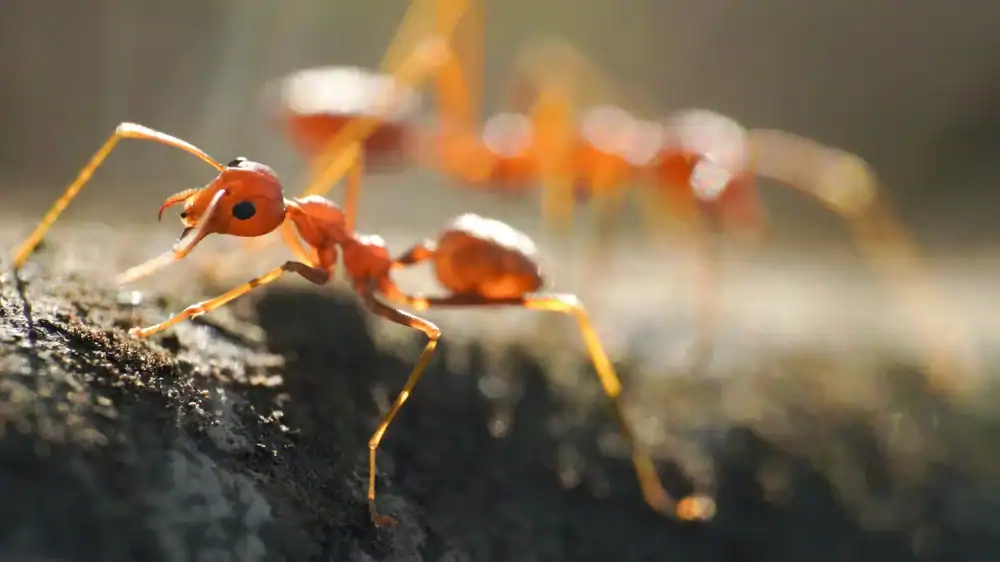
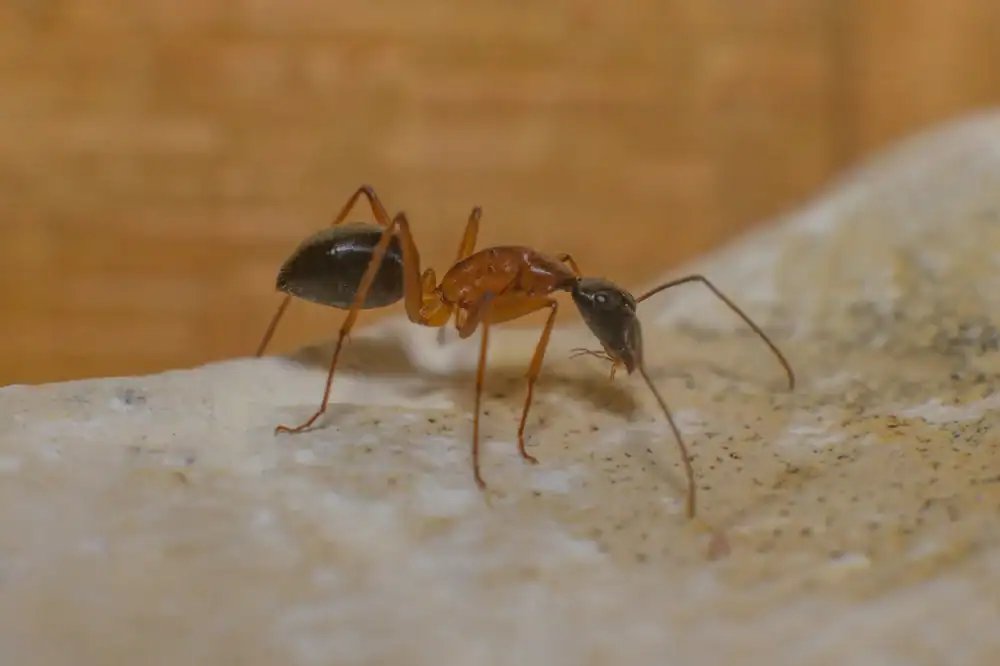
Most ant treatments handle what you can see. The ants on your counter disappear for a week or two, and then they’re back — because the colony is still alive, still nesting somewhere in your walls, your landscaping, or the moist soil along your seawall. Real ant control eliminates the source. That’s the difference between a temporary fix and an actual solution.
In Gulf Harbors, the conditions that drive ant pressure don’t go away. The canal network keeps soil moisture high even during dry spells. Salt air weathers wood faster than inland neighborhoods, which means more soft spots, more gaps, and more ways for carpenter ants to get into your home’s structure without you knowing. Ghost ants — one of the most frustrating species in coastal Florida — thrive in exactly this kind of environment, nesting in the damp mulch along your seawall, in potted plants on the lanai, and in wall voids you can’t see.
When the colony is eliminated and the perimeter is properly treated, the difference is noticeable. Your kitchen stays clear. Your outdoor spaces — the yard, the dock, the areas near the water where your family actually spends time — stop being a minefield of fire ant mounds. Because our ant control in Gulf Harbors, FL includes prevention, not just elimination, the results hold.
We’re a family-owned, owner-operated business serving Hernando County and neighboring Pasco County — which means Gulf Harbors is very much home territory. When you call, the owner answers. Not a dispatcher, not a call center, not someone reading from a script. The person who picks up is the same person who shows up, identifies the species, explains exactly what’s being done and why, and stands behind the result.
That matters in a community like Gulf Harbors, where homes along Marine Parkway and throughout the Gulf Harbors Woodlands area represent real investments — financially and in terms of lifestyle. Over 100 verified five-star Google reviews from real Pasco and Hernando County homeowners back that up. So does an A+ rating with the Better Business Bureau. We offer special discounts for new homeowners and military families, and most quotes are handled right over the phone — no in-home sales visit required.
It starts with a phone call. We walk you through what you’re seeing, ask the right questions, and give you a straight quote — no appointment needed just to get a number. For most Gulf Harbors homeowners, that alone is a relief after dealing with companies that require a full sales visit before they’ll tell you anything.
When service begins, the first step is species identification. This isn’t optional — it’s the foundation of everything else. Ghost ants, carpenter ants, fire ants, and pharaoh ants all require different treatment approaches. Applying the wrong product to the wrong species can split a colony and spread the problem. In a waterfront community like Gulf Harbors, where multiple species often coexist in the same yard, getting this right upfront saves you from a second or third call.
From there, treatment targets the colony and the entry points — not just the visible trail. Interior baiting, perimeter defense, and mound treatment are applied based on what’s actually present. For canal-side homes with wood structures exposed to Gulf Coast humidity, that often includes a closer look at dock framing, fascia, and any areas where moisture has softened the wood. After service, you’ll know what was found, what was treated, and what to watch for — and if anything comes back, you have direct access to us, not a call queue.

Ready to get started?
Ant control in Gulf Harbors, FL covers a range of species and situations — and our service is built around what’s actually happening at your property, not a one-size-fits-all checklist. Ghost ant extermination in Gulf Harbors uses slow-acting, non-repellent bait systems that workers carry back to the colony, reaching the queens rather than just killing the foragers you can see. Carpenter ant removal in Gulf Harbors focuses on locating the nest — often in moisture-damaged wood near the canal, in dock structures, or in aging fascia boards — and eliminating it at the source rather than treating the surface.
Fire ant mound treatment in Gulf Harbors targets the queen directly, using mound drenching or broadcast bait depending on the situation. This matters especially after Gulf storms, when saturated ground displaces fire ant colonies and consolidates them near driveways, seawalls, and outdoor living areas. Sugar ant prevention in Gulf Harbors addresses both the entry points and the attractant sources that keep drawing ants back inside.
All treatments use EPA-approved products applied by FDACS-certified technicians — which is relevant not just for your family’s safety, but for the canal-adjacent environment you live on. For ongoing protection, we offer quarterly prevention plans that are genuinely recommended for Gulf Harbors properties. Florida’s Gulf Coast climate keeps ant colonies active in every month of the year — there’s no cold season to interrupt them — and a quarterly perimeter defense is the most reliable way to stay ahead of reinfestation year-round.
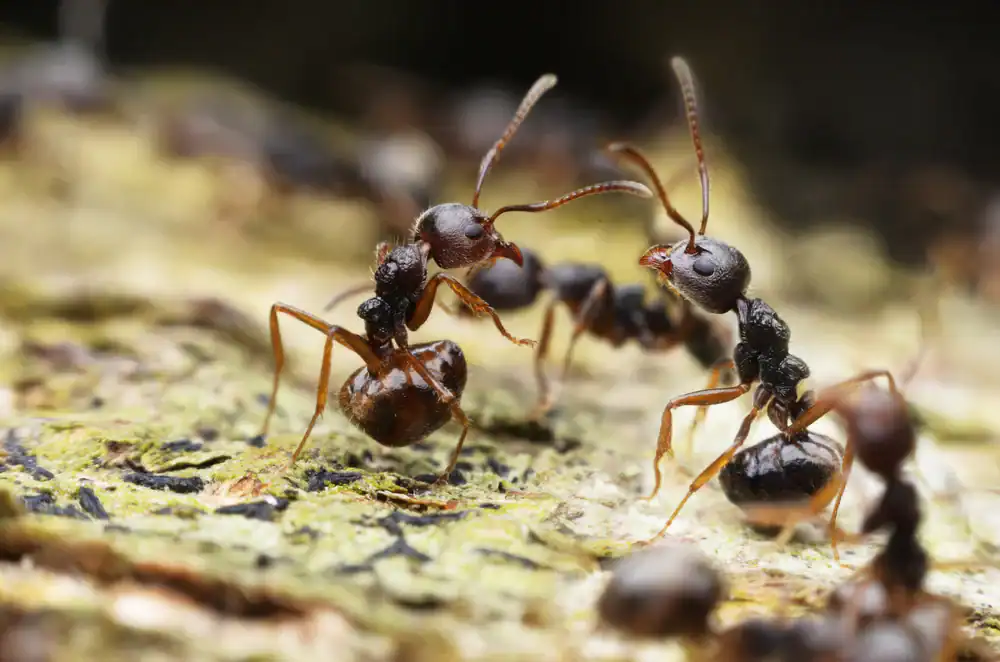
The most common reason ants keep returning is that the colony was never actually eliminated — only the foragers you could see were killed. Most store-bought sprays and even some professional treatments use repellent products that push ants away from one area without reaching the queens. In a Gulf Harbors waterfront home, where ghost ant colonies can have multiple queens and multiple satellite nests spread across your landscaping, wall voids, and canal-side vegetation, this approach doesn’t just fail — it can split the colony and cause it to spread to new areas of your home.
The fix is a non-repellent bait system that workers carry back to the nest, combined with a proper perimeter treatment that addresses the entry points. Sealing gaps around utility penetrations, weep holes, and aging window frames — common in Gulf Harbors homes built from the 1960s onward — is part of a complete solution. Once the colony is gone and the perimeter is maintained, the return visits stop.
It’s a fair question, and the distinction matters because the treatment is completely different. Carpenter ants excavate wood to build galleries — they push out coarse, sawdust-like frass that often looks like small piles of wood shavings near baseboards or window frames. Termites consume wood from the inside and leave behind fine, pellet-like droppings or mud tubes along foundation walls. Both are serious, but they require different approaches.
In Gulf Harbors, carpenter ants are a particular concern because of the moisture environment. Canal-adjacent homes with wood dock structures, aging fascia boards, or any wood that’s been exposed to years of Gulf Coast humidity and salt air are prime targets. Carpenter ants don’t eat the wood — they excavate soft, moisture-damaged areas to nest in, which means they’re often a sign of an underlying moisture problem as much as a pest problem. If you’re seeing large black ants — especially near water sources, window frames, or wood structures close to the canal — a professional inspection is the right call before assuming it’s termites.
Yes — and this is a question that comes up often in Gulf Harbors, where families are spending time outdoors near the water, on docks, and in yards that sit right alongside the canal system. All products we use are EPA-approved and applied by FDACS-licensed technicians, which means they’ve been evaluated for safety in residential environments, including those near water.
Application timing and product selection are handled with your family and the surrounding environment in mind. For canal-adjacent properties, that means choosing products that are appropriate for use near water and applying them in a way that minimizes any runoff risk. After treatment, you’ll be given specific guidance on re-entry timing — typically a short window while products dry — and everything we apply outdoors is selected with the understanding that Gulf Harbors homes sit on a living waterway. If you have specific concerns about a pet with sensitivities or a child with allergies, mention it when you call. That conversation happens before anything is scheduled.
This is one of the most predictable patterns in Gulf Coast pest control, and Gulf Harbors homeowners see it regularly. Fire ants nest in soil, and when that soil becomes saturated — after a tropical storm, a heavy Gulf rain event, or even a sustained period of high tide and canal overflow — the colony moves. They consolidate into tighter, more visible mounds near any elevated or dry surface they can find: driveways, seawalls, the base of landscaping beds, and the areas immediately around your home’s foundation.
The mounds that appear after heavy rain aren’t new colonies — they’re existing colonies that relocated to survive the flooding. They’re also more agitated than usual, which makes them more dangerous to anyone who disturbs them accidentally. Fire ant stings cause immediate burning pain, and for individuals with allergies, the reaction can be severe. Treating mounds after a storm requires reaching the queen, not just the surface workers — broadcast bait or direct mound drenching, depending on the situation. A quarterly fire ant mound treatment schedule keeps populations managed so post-storm consolidation doesn’t turn your yard into a hazard.
It matters quite a bit. “Sugar ants” is a catch-all term most homeowners use for any small ant that shows up in the kitchen — but in Gulf Harbors, what you’re likely dealing with is ghost ants, odorous house ants, or Argentine ants, each of which behaves differently and responds to different treatments.
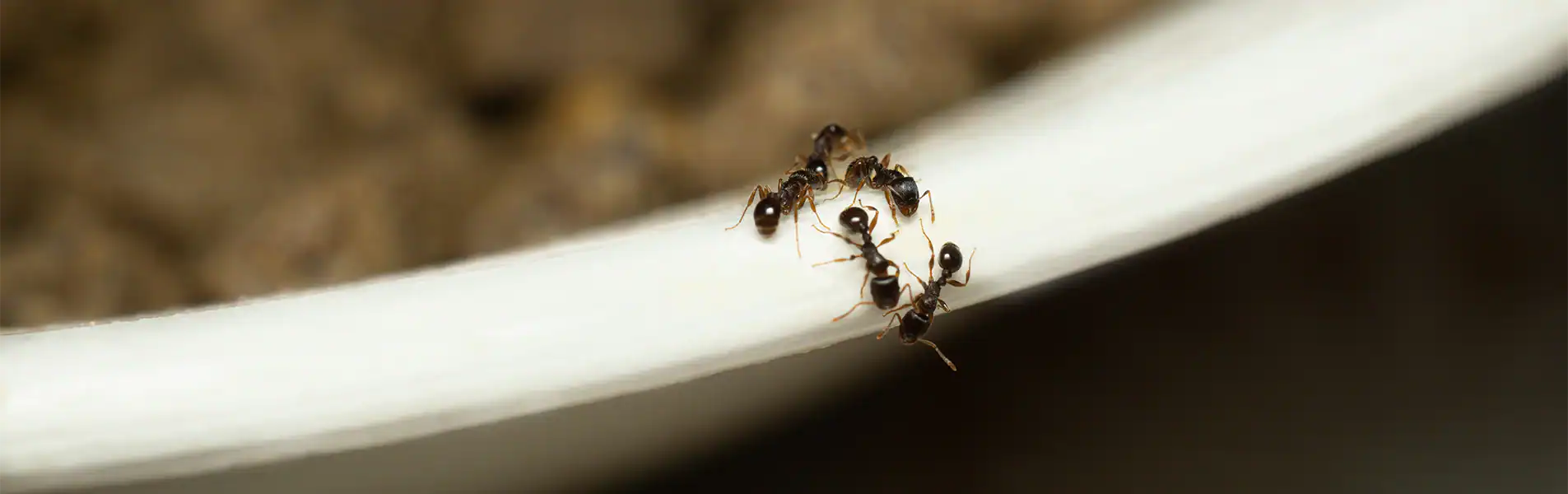
Ghost ants are the most common in coastal waterfront homes like those in Gulf Harbors. They’re tiny, pale, nearly translucent, and almost impossible to eliminate with a repellent spray — because they have multiple queens and multiple satellite nests, and a repellent product just causes the colony to scatter and regroup in a new location. The correct treatment is a slow-acting, non-repellent bait that workers carry back to the nest. Odorous house ants and Argentine ants are more responsive to perimeter treatments but still require colony-level elimination rather than surface spraying. Getting the species right before treating isn’t a minor detail — it’s the difference between solving the problem and spreading it.
If you’ve recently purchased a home in Gulf Harbors — especially a canal-front property — professional ant control is worth addressing early rather than waiting for a visible problem. Many buyers relocating from northern states aren’t accustomed to year-round pest pressure, and Florida’s Gulf Coast climate doesn’t give ants a slow season. Colonies that were present before closing don’t disappear on their own, and the moisture environment along the Gulf Harbors canal network means new activity can establish quickly in landscaping, under slabs, and in any wood that’s absorbed years of coastal humidity.
We offer a discount specifically for new homeowners, partly because starting a quarterly prevention plan early is genuinely more effective than treating an established infestation later. A first-year homeowner who sets up perimeter ant defense before the summer storm season — when saturated soil drives ant colonies toward structures — is in a much better position than one who waits until ghost ants are trailing across the kitchen counter or fire ant mounds are appearing along the seawall. Starting early in Gulf Harbors isn’t overcautious. It’s just practical.
Other Services we provide in Gulf Harbors