
Fast, reliable pest control from Hernando County’s most trusted family-owned team—with most quotes given over the phone.
Contact Info
Fast, reliable pest control from Hernando County’s most trusted family-owned team—with most quotes given over the phone.
Contact Info
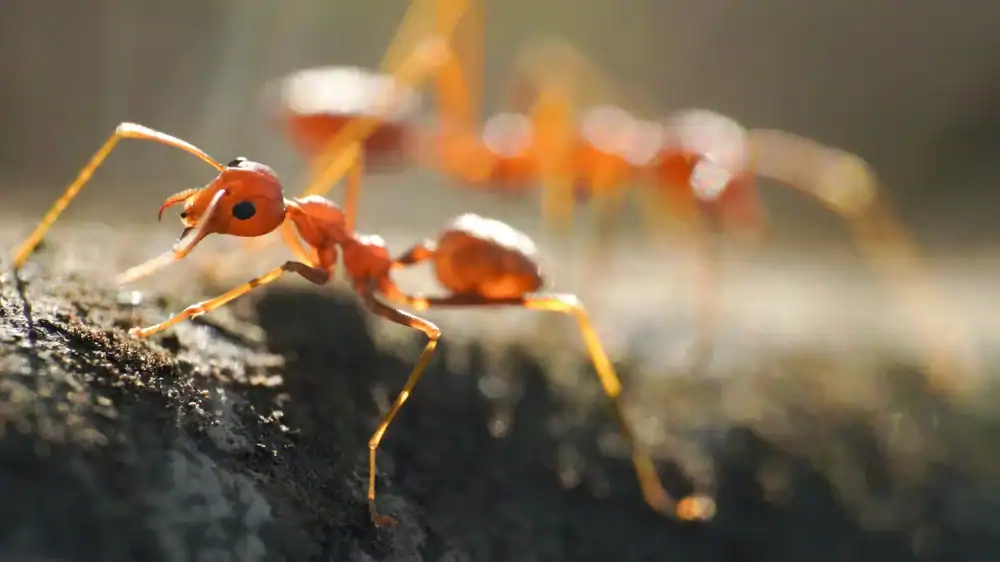
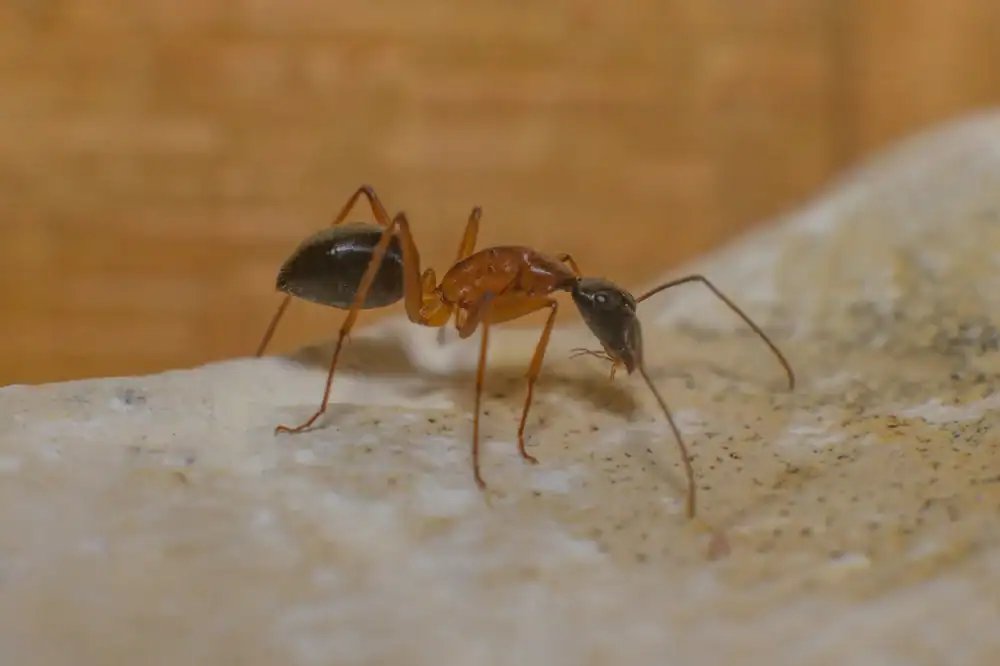
Most ant treatments fail because they target what you can see — the trail across your counter, the mound in the yard — and leave the colony completely intact. A few days later, they’re back. That’s not a pest problem, that’s a treatment problem. The right approach eliminates the colony, not just the workers.
In Port Richey, the conditions that drive ant pressure indoors are constant. Homes along the Cotee River and Miller’s Bayou sit on moisture-rich soil year-round, which is exactly the environment ghost ants and carpenter ants thrive in. Add the fact that nearly the entire city sits in a FEMA flood zone — and that flooding events like Hurricane Idalia push ground-nesting colonies out of saturated soil and straight toward your foundation — and you’re dealing with a pest environment that doesn’t let up between seasons.
Port Richey’s older housing stock adds another layer. Mid-century homes with settled foundations, aging wood framing, and decades of Gulf Coast humidity exposure give carpenter ants plenty to work with. When you address the colony, the moisture, and the entry points together, the results hold. That’s what ant control in Port Richey actually requires — and that’s what we deliver.
We’re a family-owned, owner-operated business serving Hernando and Pasco County — including Port Richey — with no subcontractors, no call centers, and no rotating technicians who don’t know your property. When you call, the owner picks up. When you need a quote, you get one over the phone — no in-home sales visit, no pressure, no surprises on the invoice.
That model matters in a community like Port Richey. This isn’t a high-volume suburb where you’re one of thousands of accounts. It’s a small, tight-knit city where reputation is everything. Over 100 five-star Google reviews from real homeowners across this region back that up — not because of marketing, but because our service consistently does what it promises.
State certifications through the Florida Department of Agriculture, an A+ BBB rating, and a 24-hour response guarantee — including weekends — mean you’re working with someone who takes the job seriously. We offer special discounts for new homeowners and military families.

It starts with a phone call. You describe what you’re seeing — where the ants are, how long it’s been going on, whether you’ve already tried treating it yourself — and the owner walks you through what’s likely happening and what it will take to fix it. Most quotes are given right there on the call. No appointment needed just to find out the price.
When the technician arrives, the first step is species identification. This isn’t a formality — it determines everything about how the treatment works. Ghost ants, which are extremely common in Port Richey’s waterfront and canal-adjacent homes, require non-repellent bait systems. Applying a repellent spray to a ghost ant colony causes it to split and spread, which is the last thing you want. Fire ants in the yard need broadcast bait combined with targeted mound treatment — not just a can of spray on the visible mound. Carpenter ants in an older Port Richey home require locating the primary nest, not just treating the ants you can see walking across the floor.
After treatment, you’ll know what was done, why, and what to watch for. If you’re on a quarterly prevention plan — which is the only approach that actually keeps up with Port Richey’s year-round subtropical pest pressure — the follow-through is built in. No chasing anyone down for a callback.

Ready to get started?
Port Richey is home to several of Florida’s most persistent ant species, and each one behaves differently enough that treating them the same way is a guaranteed path to a repeat infestation. Ghost ants — the tiny, pale-legged ants that show up in kitchens and bathrooms — are one of the most mishandled species in the area. They have multiple queens, build satellite colonies in wall voids and moist soil, and will spread aggressively if a repellent product is applied. The correct approach is slow-acting, non-repellent bait that workers carry back to the colony and share with the queens.
Fire ant mound treatment in Port Richey requires a yard-wide strategy, not just a single mound drench. Fire ant colonies can reach over 250,000 individuals, and a single treated mound doesn’t account for the satellite colonies scattered across the property. After flooding events — which Port Richey experiences at above-average frequency — fire ant colonies relocate to higher ground, sometimes re-establishing directly against your foundation or inside landscaping beds adjacent to the home.
Carpenter ant removal in Port Richey is treated as a structural issue, not just a bug issue. In older homes along the waterfront, moisture-damaged wood is a primary nesting site. Perimeter ant defense, indoor ant baiting, and sugar ant prevention are all part of the same integrated approach — built around your specific home, your specific species, and the specific conditions that Pasco County’s coastal environment creates.
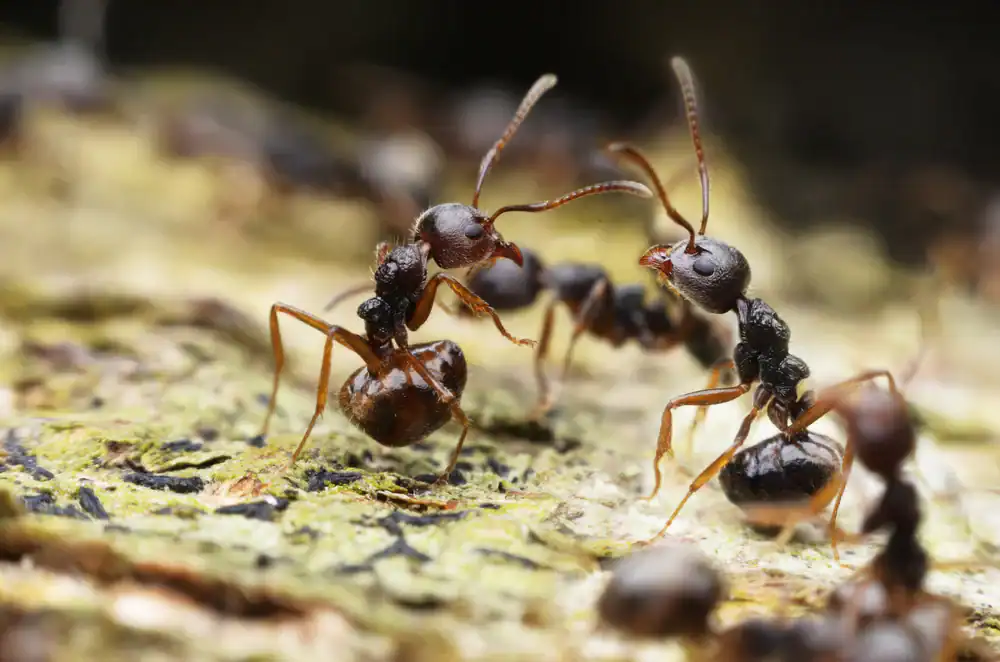
Port Richey’s flood zone environment is the direct cause of this pattern, and it’s more pronounced here than in most surrounding communities. When heavy rain saturates the ground — or when storm surge from a tropical event pushes water across the low-lying areas near the Cotee River — ground-nesting ant colonies lose their habitat. Fire ants form living rafts and relocate to the nearest elevated surface. Bigheaded ants abandon flooded mounds and re-establish under slabs, inside wall voids, or in the landscaping directly against your home’s foundation.
This isn’t a new infestation from outside the area — it’s an existing colony that’s been displaced and found your home to be the best available option. The spike typically shows up within days to a few weeks after a significant rain event. Treating the visible ants with a surface spray at that point only kills the foragers and leaves the relocated colony intact. What’s needed is a treatment approach that reaches the colony itself — baiting systems that workers carry back, combined with perimeter treatment that intercepts future movement.
It matters a lot, and this is one of the most common points of confusion for homeowners dealing with small ants in the kitchen. “Sugar ant” is a catch-all term that most people use to describe any small ant trailing toward food or moisture — but in Port Richey homes, the species you’re most likely dealing with is the ghost ant, which requires a completely different treatment approach than the products marketed for general sugar ant control.
Ghost ants have multiple queens and build satellite colonies in wall voids, under cabinets, and in the moist soil beneath slabs — all environments that are common in Port Richey’s older, waterfront-adjacent homes. Applying a repellent spray to a ghost ant colony causes it to split and relocate, spreading the problem to new areas of the house. The correct treatment is a non-repellent bait that worker ants carry back to the colony and share with the queens. It takes longer to see results than a spray, but it’s the only approach that actually eliminates the colony rather than just moving it around.
This is one of the most common questions — and one of the most important ones to get a straight answer on. The short version is that professional-grade products, applied correctly by a licensed technician, are designed to be targeted and effective without requiring you to keep your family out of the home for extended periods. The technician will tell you exactly what was applied, where, and what the re-entry time is so there’s no guesswork.
The products we use for indoor ant baiting are formulated to be attractive to ants and largely ignored by mammals — meaning they’re placed in locations where ants forage, not broadcast across surfaces where children or pets spend time. Perimeter treatments applied to the exterior foundation are a different category and are selected based on the specific ant species being targeted. We hold multiple Florida Department of Agriculture certifications, which require ongoing training in product safety, application methods, and environmental compliance — not just a license number on a website.
Carpenter ants are one of the more serious ant problems in Port Richey specifically, because of the age and condition of a significant portion of the city’s housing stock. Unlike termites, carpenter ants don’t eat wood — they excavate it to build galleries for nesting. But the structural damage they cause over time is real, and in an older home with wood that has absorbed decades of Gulf Coast humidity, the combination of moisture damage and carpenter ant activity can compromise structural integrity faster than most homeowners expect.
The signs to look for include large black ants — noticeably bigger than the ghost ants or fire ants most people are used to seeing — appearing inside the home, particularly near windows, door frames, or areas with plumbing. You may also find frass, which looks like coarse sawdust or wood shavings, near baseboards or in crawl spaces. In Port Richey, where the city’s floodplain management regulations require a substantial damage review for structural repairs that exceed 50% of a home’s pre-damage value, catching carpenter ant damage early isn’t just about pest control — it’s about protecting your home from a regulatory and financial standpoint.
For most Port Richey homes, a one-time treatment handles the immediate infestation — but it doesn’t address the conditions that caused it. Port Richey sits in a humid subtropical climate zone with no meaningful cold season to interrupt ant colony cycles. The colonies that pressure your home in January are the same ones active in July. There’s no off-season here the way there is in most of the country.
Quarterly prevention is the approach that actually keeps pace with that reality. It maintains a treated perimeter around your home’s foundation so that foraging ants are intercepted before they find an entry point, and it allows our technician to catch early signs of new activity — a fresh mound near the foundation, frass near a window frame, a new trail appearing in the kitchen — before it becomes a full infestation again. For homes along the Cotee River waterfront or in any of Port Richey’s canal-adjacent neighborhoods, where moisture levels and ant pressure are elevated year-round, quarterly service is less of an upgrade and more of a baseline.
Yes — we offer discounts for new homeowners and military families. Port Richey has a notable population of long-term residents, retirees, and families on fixed incomes, and our pricing structure reflects that reality. Most quotes are given over the phone before anyone steps foot in your home, so you know the cost upfront without sitting through an in-home sales appointment first.
The new homeowner discount is particularly relevant in Port Richey, where older homes along the waterfront frequently come with pre-existing pest pressure that the previous owner may not have disclosed or addressed. Moving into a mid-century home near the Cotee River and discovering a ghost ant colony in the walls or a carpenter ant problem in the wood framing is a common scenario — and getting ahead of it early, at a reduced first-service cost, is a straightforward way to start fresh in a new property without inheriting someone else’s pest problem.
Other Services we provide in Port Richey