
Fast, reliable pest control from Hernando County’s most trusted family-owned team—with most quotes given over the phone.
Contact Info
Fast, reliable pest control from Hernando County’s most trusted family-owned team—with most quotes given over the phone.
Contact Info
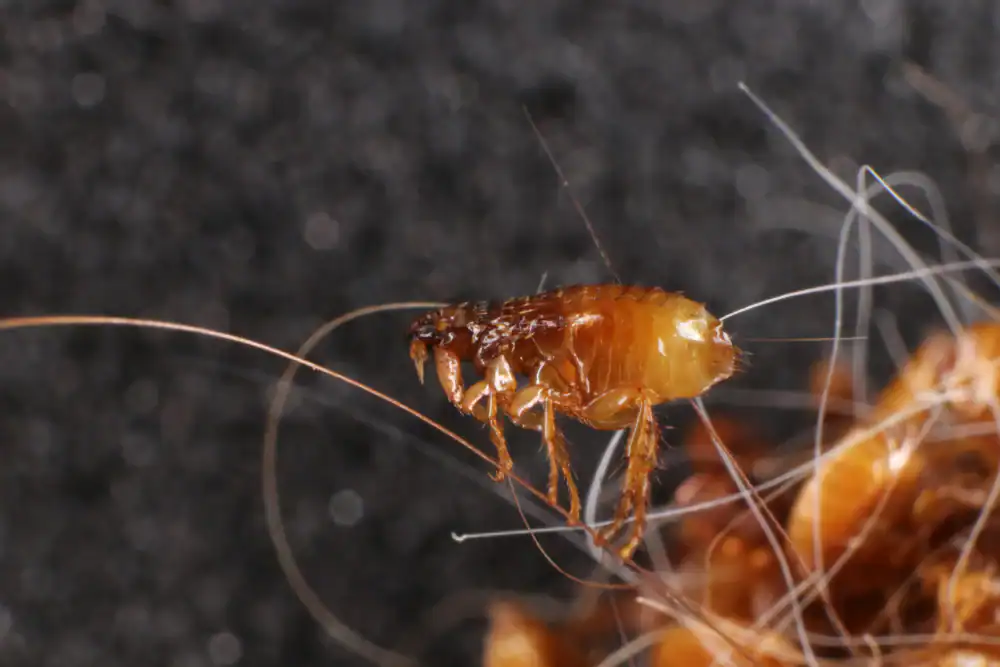
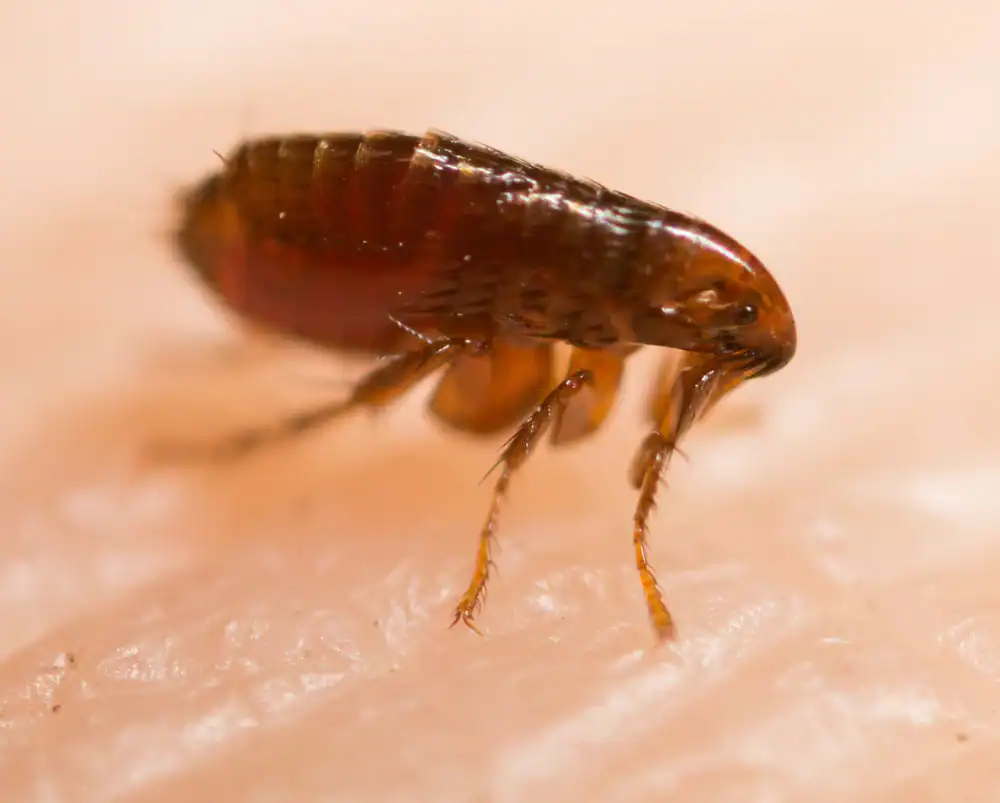
You stop finding bites on your ankles every morning. Your dog stops scratching. You walk through your own living room without watching where you step. That’s what effective flea control in Camps, FL actually looks like — and it’s a bigger deal than most people realize until they’ve been dealing with it for a few months.
Here’s the part most people don’t know going in: only about 5% of the fleas in your home are living on your pet at any given time. The other 95% are in your carpet, your furniture, your baseboards, and — on rural Hernando County properties — under your crawl space, in the grass along your tree line, and in the shaded areas where wildlife cuts through your yard. Cat fleas don’t need your pet to survive. They need your environment. That’s why treating your dog or cat alone never solves it.
In Camps, the outdoor pressure is constant. Deer, raccoons, opossums, and feral cats move through rural properties here on a daily basis, dropping flea eggs across your lawn every time they pass. Unlike suburban neighborhoods with manicured lots and sealed slab foundations, properties in this part of Hernando County have more exposure, more harborage, and more reinfestation risk. A treatment plan that doesn’t account for that isn’t a real plan — it’s a temporary fix.
We’re a family-owned business based in Spring Hill — the largest community in Hernando County and the nearest major hub to Camps. George, our owner, has been treating pest problems across Hernando County for over 14 years. When you call, you’re talking to him directly. Not a dispatcher. Not a call center. The person answering your question is the same person coming to your property.
That matters in a rural area like Camps. George knows the difference between treating a suburban slab home in Spring Hill and treating an older property on a larger lot near the Croom Wildlife Management Area corridor. He knows what wildlife pressure looks like in Camps, what crawl spaces and pier-and-beam foundations mean for flea harborage, and why indoor-only treatment consistently fails on rural Hernando County properties.
Over 100 verified five-star Google reviews from Hernando and Pasco County customers back that up — not reviews from a different state or a different climate, but from neighbors dealing with the same environment you’re in.

It starts with a call. George will talk through what you’re seeing, ask a few questions about your home and pets, and give you a quote in most cases right there on the phone. No sales visit required. No waiting for someone to call you back during business hours. You get a real number and a real answer before anyone ever steps foot on your property.
When treatment day comes, the focus is on every life stage — not just the adult fleas you can see. Professional-grade adulticides handle the active population, while insect growth regulators, or IGRs, are applied to break the breeding cycle at the egg and larval stage. IGRs are what separate a professional flea treatment from anything you can buy at a hardware store. They prevent eggs and larvae from ever developing into biting adults, which is what actually stops the cycle instead of just knocking it back temporarily.
For properties in Camps, outdoor treatment is not optional — it’s part of the job. Your yard, the perimeter of your home, shaded areas under decks or outbuildings, and any crawl space access points all get addressed. Florida’s humid subtropical climate means flea eggs in your grass survive year-round, and in a rural area with consistent wildlife activity, skipping the yard treatment just means you’re starting the clock on your next infestation. We hold multiple FDACS licenses covering the full scope of this work, and all credentials are verifiable through the Florida Department of Agriculture and Consumer Services.
Ready to get started?
Flea control in Camps, FL covers both the inside and outside of your home — because in rural Hernando County, you genuinely need both. Interior treatment targets carpets, rugs, upholstered furniture, baseboards, and any dark or humid areas where flea larvae develop. If your home has a crawl space, that gets treated too. Flea larvae thrive in exactly those conditions — low light, high humidity, undisturbed — and leaving that space untreated is one of the most common reasons infestations come back after treatment.
Outdoors, the flea and tick yard treatment in Camps, FL focuses on the areas where your pets spend time and where wildlife activity is highest: along fence lines, under decks and porches, around outbuildings, and at the edges of wooded areas. These are the reinfestation zones. Treating your lawn without addressing those perimeter areas leaves the cycle open.
Pet safety is taken seriously throughout. You’ll know exactly what products we’re using, when to keep pets out of treated areas, and when it’s safe to bring them back in. For households with dogs, cats, or livestock — which is common on rural Hernando County properties — that clarity matters. We also offer special discounts for new homeowners and military families, both of which represent a significant portion of Hernando County’s growing residential population.

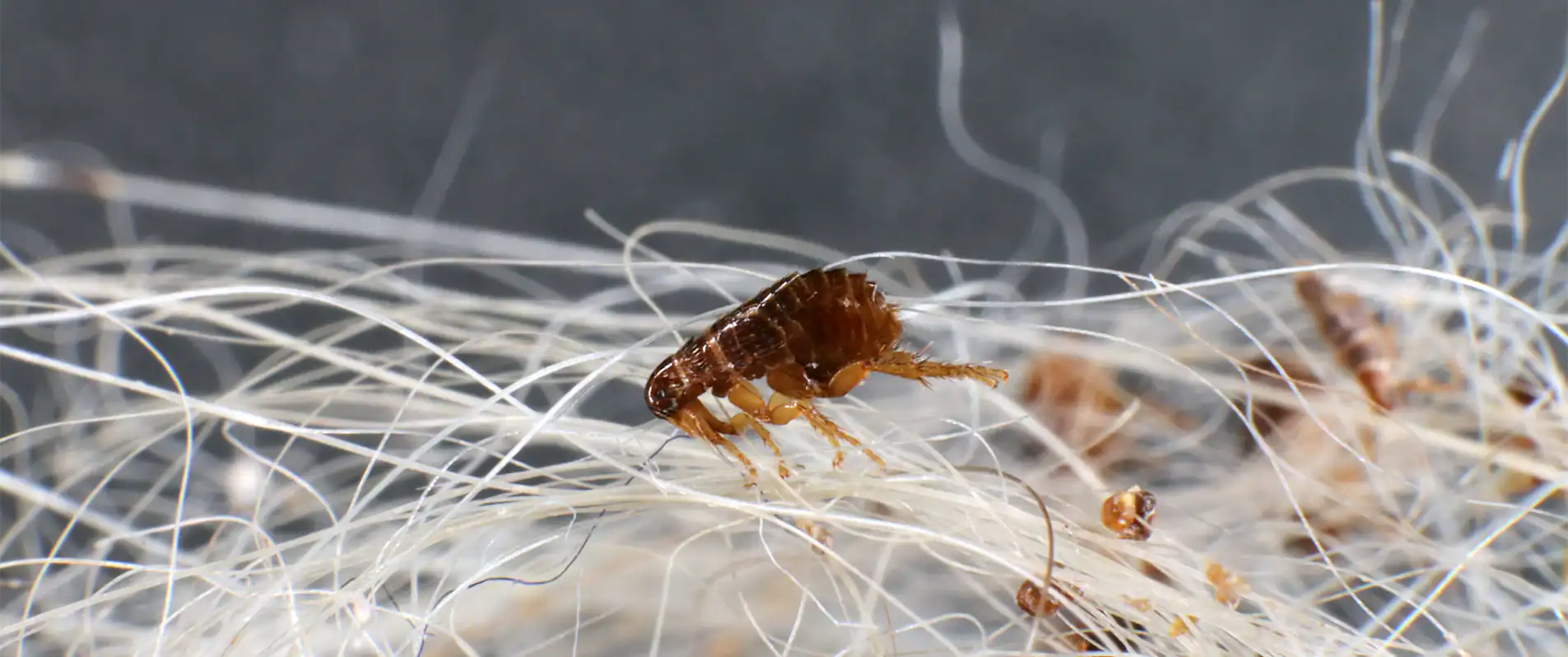
This is the most common frustration people have when dealing with a flea infestation, and the answer comes down to where fleas actually live. Only about 5% of the flea population in your home is on your pet at any given time. The rest — eggs, larvae, and pupae — are living in your carpet fibers, under your furniture, in your baseboards, and in any dark, humid space they can find. Treating your pet eliminates the adults on the animal, but it does nothing for the 95% developing in your home environment.
On top of that, flea pupae are completely resistant to insecticides and can remain dormant for up to 140 to 170 days before hatching. When you see fleas appear a week or two after treatment, those are dormant pupae hatching — not evidence that the treatment failed. Professional treatment addresses this by combining adulticides with insect growth regulators that prevent eggs and larvae from ever reaching the biting adult stage. That’s the part the pet shampoo and the flea collar can’t do.
Flea season in Hernando County doesn’t really end — that’s the honest answer. Florida’s humid subtropical climate keeps temperatures well above the threshold fleas need to stay active through every month of the year. The peak is April through September, when populations build through multiple generations in quick succession, but October through March still carries active flea pressure. There’s no winter kill, no natural dormant period, no months where you can let your guard down the way homeowners in northern states can.
For properties in Camps specifically, the rural environment adds another layer. Wildlife activity doesn’t slow down in cooler months — deer, raccoons, and feral cats are moving through your yard year-round, and every pass deposits flea eggs in your grass and landscaping. The practical answer to when you should treat is: as soon as you notice the problem. Waiting for a seasonal window doesn’t apply here. The longer a flea population has to cycle through generations, the harder it is to knock back.
Flea bombs and foggers are widely available and widely disappointing for anyone dealing with a real infestation. The core problem is that foggers release product into open air, and flea larvae don’t live in open air — they live deep in carpet fibers, under furniture, and in the dark, protected spaces where fogger mist simply doesn’t reach. Studies have consistently shown that total-release foggers fail to penetrate carpet pile effectively, which is exactly where the bulk of the developing flea population is hiding.
There’s also the life cycle issue. Even if a fogger kills some adult fleas, it has no effect on flea pupae, which are encased in a sticky cocoon that makes them resistant to all insecticides. Those pupae will hatch into new adults within days or weeks, and you’re right back where you started — often after the false reassurance that you “treated” the problem. Professional flea extermination uses a combination of professional-grade adulticides and insect growth regulators applied directly to harborage areas, which is a fundamentally different approach than anything available in a hardware store aisle.
Yes — but the details matter, and you should expect a clear answer from any company you hire. Professional flea control products are applied by state-licensed technicians who are trained in correct product selection, concentration, and application method. When done properly, the treated areas are safe for pets and people once the product has dried, which typically takes a few hours. You’ll be given specific re-entry instructions before the treatment begins so you know exactly when it’s safe to bring your animals back inside.
For households in Camps with dogs, cats, livestock, or chickens — which is common on rural Hernando County properties — this conversation should happen before the technician ever arrives. When you call us, George will walk you through exactly what products we’re using and what the re-entry timing looks like for your specific situation. There are no surprises on treatment day. If you have animals that require special consideration, that gets factored in from the start, not addressed as an afterthought when the truck is already in your driveway.
The best way to kill fleas in carpet is a combination of thorough vacuuming before treatment and a professional application that includes both an adulticide and an insect growth regulator applied directly into the carpet fibers and along the baseboards. Vacuuming before treatment matters more than most people realize — it stimulates dormant pupae to hatch, bringing them into the active stage where they’re vulnerable to the adulticide. It also removes flea eggs and debris that can interfere with product contact.
What doesn’t work reliably is carpet powder or spray from a store shelf. These products rarely carry the IGR component needed to break the breeding cycle, and they don’t penetrate deeply enough into carpet pile to reach larvae in their protected harborage zones. In older homes — which are common in rural Hernando County — carpet that’s been down for years can harbor significant larval populations in the base layer that surface-level consumer products simply can’t reach. A professional application gets product where it needs to go and uses residual chemistry that keeps working after the initial treatment.
Yes — we offer discounts for new homeowners and military families. Hernando County has seen consistent residential growth as part of the broader Tampa Bay area expansion, and a lot of people coming into the Camps area are relocating from states where flea pressure is seasonal and manageable. Florida’s year-round flea environment catches many new residents off guard, especially on rural properties where wildlife activity adds reinfestation pressure that suburban neighborhoods don’t face to the same degree.
If you’ve recently moved to a property in Camps and you’re dealing with a flea problem — whether it came with the house or developed after you moved in — the new homeowner discount is a straightforward way to get professional treatment at a reduced cost while you’re still getting settled. The same applies to military families in the area. Call George directly, mention your situation, and he’ll walk you through what’s available. The quote comes over the phone in most cases, so you’ll know what you’re looking at before anyone schedules anything.