
Fast, reliable pest control from Hernando County’s most trusted family-owned team—with most quotes given over the phone.
Contact Info
Fast, reliable pest control from Hernando County’s most trusted family-owned team—with most quotes given over the phone.
Contact Info
You stop finding webs across your porch every other morning. You stop hesitating before reaching into the shed or moving the woodpile. That might sound like a small thing, but if you’ve been living around a serious spider population on a rural Hernando County property, you know it isn’t small at all.
Dixie sits in the elevated, wooded interior of southern Hernando County — the kind of landscape where wolf spiders hunt across your floors, orb weavers rebuild overnight, and black widows settle into exactly the spots you reach into most. The natural vegetation surrounding most properties here isn’t going anywhere, which means the spider pressure from adjacent wooded land is constant. Our treatment plan accounts for that. It doesn’t just knock down what’s visible today — it builds a barrier that keeps the next wave out.
For properties along the Spring Lake Highway corridor, with older construction, outbuildings, and large lots that back up to natural areas near the Croom Wildlife Management Area, that perimeter matters more than it would in a tighter suburban neighborhood. Once it’s established and maintained, you get your property back — your porch, your shed, your yard — without the second-guessing.
We’re a family-owned, FDACS-licensed pest control company serving Dixie and the broader Hernando County area. Our license LF286842 is active, verifiable, and current through June 2027. We’re also BBB Accredited and hold a 5.0 out of 5 Google rating across 109 verified reviews — a score that doesn’t stay perfect at that volume without consistent follow-through.
What actually separates us from most options in the area is straightforward: when you call, you reach the owner directly. Not a dispatcher, not a call center — the licensed professional who will come to your property. That means your questions get real answers, your quote comes over the phone without a sales visit, and someone who knows rural Hernando County properties is the one making decisions about your treatment.
Dixie homeowners dealing with spider pressure from the surrounding wooded terrain deserve that level of accountability. That’s what you get here — every time.

It starts with a phone call — and unlike most companies, that call goes directly to the owner. You describe what you’re seeing, where you’re seeing it, and what’s been tried before. From there, a quote is typically provided right on the call. No in-home sales visit required, no pressure to commit before you’re ready.
When treatment day arrives, the process begins with a full exterior assessment of your property. For rural Dixie homes, that means checking the specific harborage points that matter most here — eaves, outbuildings, woodpiles, screened porches, foundation gaps, and the perimeter edges where your yard meets natural vegetation. These are the zones where Florida’s venomous spider species, including black widows and brown widows, actually nest. Identifying those points first is what separates a thorough treatment from a surface-level spray.
From there, spider de-webbing clears existing webs from eaves, corners, and structure surfaces — removing the harborage signals that attract new spiders to the same spots. Then we apply an outdoor spider barrier around the foundation, entry points, and key exterior surfaces using professional-grade, EPA-registered products. Because Dixie properties sit adjacent to continuous natural spider habitat, maintaining that barrier on a quarterly schedule is what keeps results lasting beyond the first treatment. The subtropical climate in Hernando County means there’s no winter slowdown — spiders are active every month of the year, and the barrier needs to stay ahead of that.

Ready to get started?
Spider control for a rural Dixie property covers more ground — literally — than what a standard suburban treatment involves. Our service includes spider de-webbing from eaves, porch structures, outbuildings, and exterior corners, followed by a targeted outdoor spider barrier applied around the foundation, windows, doors, and key entry points. For properties with larger lots or multiple structures, the perimeter treatment is scaled to match what’s actually there, not a one-size template.
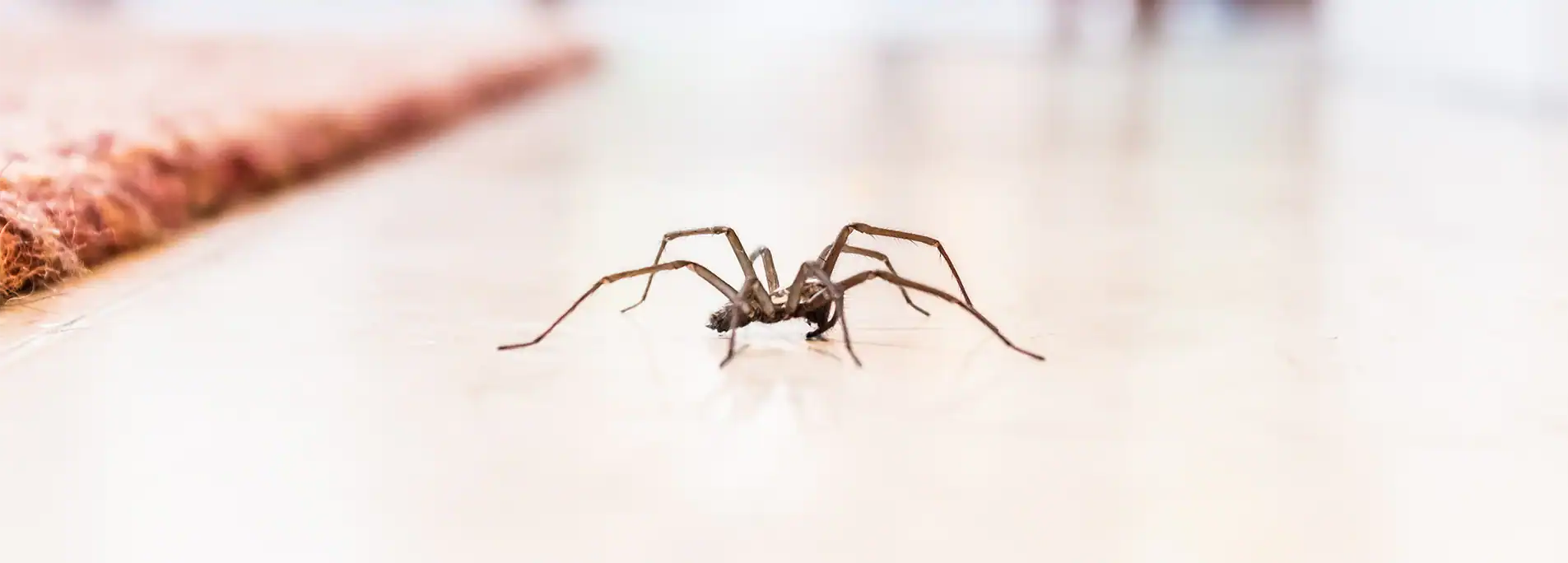
Venomous spider removal is part of the process when active nesting is found — particularly black widow and brown widow harborage in sheltered areas like woodpiles, storage sheds, and the undersides of outdoor furniture. Wolf spider extermination is addressed through the same perimeter barrier, since wolf spiders don’t build webs — they roam, and a strong exterior barrier is the most effective way to stop them from moving inside.
One thing worth knowing: brown recluse spiders are not an established species in Hernando County. If you’ve seen something that looks like one, it’s worth a closer look, but it’s almost certainly a native species. We’ll give you a straight answer on what you’re actually dealing with — no upsell, no manufactured urgency. Special discounts are available for new homeowners moving into rural Hernando County properties and for military families, both of which represent a meaningful part of the Dixie-area community.
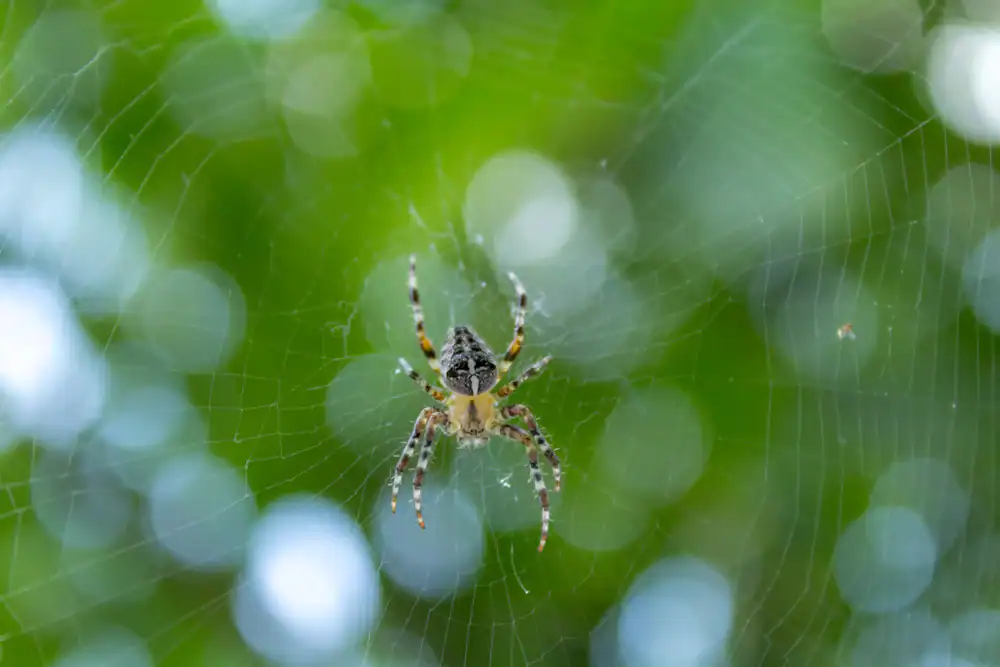
In Dixie and the surrounding Hernando County area, the two species worth taking seriously are the black widow and the brown widow. Both are present here, and both prefer the kind of sheltered, low-traffic harborage that rural properties provide in abundance — woodpiles, storage sheds, the undersides of outdoor furniture, gaps in older foundation construction, and debris piles near natural vegetation.
Black widows are typically found in darker, more protected spots and are identified by the red hourglass marking on the underside of the abdomen. Brown widows are more variable in color but produce a distinctively spiky egg sac that’s easy to recognize once you know what to look for. Both species are capable of delivering a medically significant bite, particularly to children, elderly residents, or anyone with compromised health. If you’re regularly working around your property — moving firewood, opening outbuildings, doing yard maintenance — the risk of accidental contact is real and worth addressing proactively rather than reactively.
This is one of the most common frustrations for homeowners on rural Hernando County properties, and the answer usually comes down to two things: continuous exterior pressure and entry points that haven’t been sealed or treated.
When your property is surrounded by natural vegetation — pine flatwoods, wooded buffers, scrub — the spider population immediately outside your home is large and persistent. Spiders follow their prey, and the insect diversity in the Dixie area provides year-round food sources that sustain high spider populations. Store-bought sprays applied inside the home treat the symptom, not the source. What actually works is an outdoor spider barrier that intercepts spiders at the perimeter before they get inside, combined with de-webbing that removes the harborage signals that keep drawing new spiders to the same exterior spots. Older rural construction — which is common in the Dixie area — also tends to have more gaps around foundations and window frames that give spiders easy access. A thorough exterior assessment identifies those points and addresses them as part of the treatment.
In Florida’s subtropical climate, spider activity doesn’t have an off season. Hernando County doesn’t get the hard freezes that suppress insect and spider populations further north, which means the pressure on your property is consistent across all twelve months. A single treatment will reduce populations significantly and provide real short-term relief, but the outdoor barrier products we use break down over time — typically within 60 to 90 days under Florida’s heat, humidity, and rain.
For rural properties in the Dixie area that sit adjacent to natural vegetation and wooded land, a quarterly maintenance schedule is the most effective approach. It keeps the barrier active before it degrades, which means you’re preventing re-infestation rather than responding to it after the fact. Homeowners who try to stretch treatments to twice a year often find they’re dealing with a full resurgence before the next service arrives. Quarterly service isn’t an upsell — for a property with the kind of continuous exterior pressure that Dixie lots experience, it’s the honest answer.
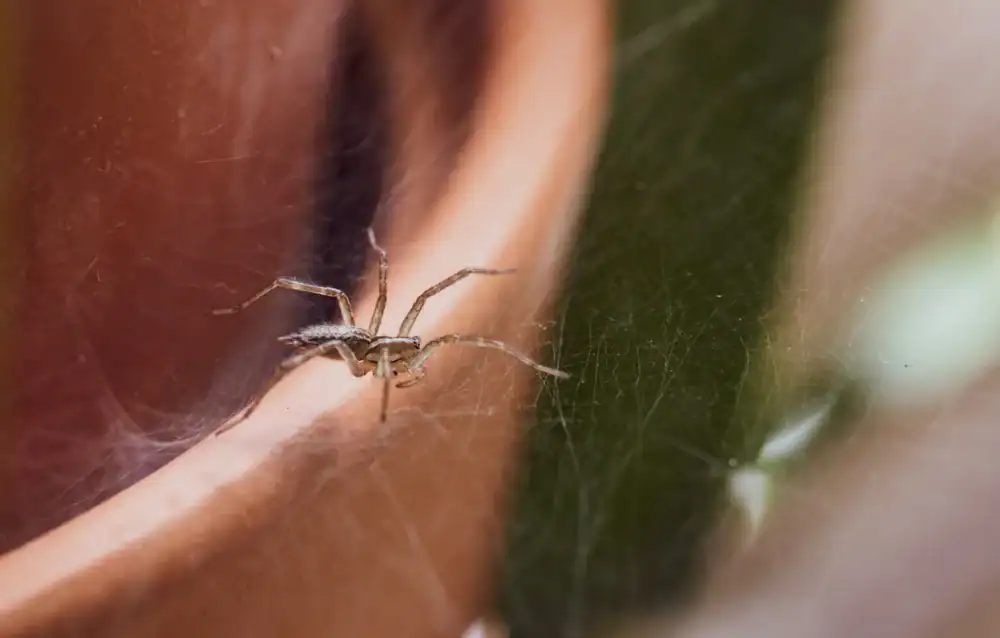
Brown recluse spiders are not an established species in Florida. They don’t have a native population in Hernando County, and the climate here isn’t well-suited to them. If you’ve spotted something that looks like a brown recluse — a small, tan-to-brown spider with a violin-shaped marking — it’s worth having it identified, but the odds are high that it’s a native species like the southern house spider or a grass spider, both of which are common in the Dixie area and can look similar at a glance.
That said, occasional brown recluse sightings do happen in Florida — typically from spiders that arrived in shipped goods, furniture, or boxes from states where they’re native. If you have a genuine concern, the right move is to have the spider identified rather than assume. We’ll give you a straight answer on what you’re actually dealing with, and if treatment is warranted, it will be specific to what’s actually present on your property — not a precautionary treatment sold on fear.
Spider de-webbing is the physical removal of existing webs from eaves, porch structures, outbuilding exteriors, corners, and other surfaces on your property. It’s an important step, but it’s one part of a complete treatment — not the whole thing. Removing webs eliminates the visible harborage and the prey-trapping structures that sustain spider populations in specific spots, but it doesn’t stop new spiders from arriving and rebuilding.
A full spider control treatment combines de-webbing with an outdoor spider barrier — a professional-grade perimeter application that deters spiders from crossing into your home or re-establishing on treated surfaces. For rural Dixie properties where the surrounding natural environment continuously pushes new spiders toward your structure, the barrier is what makes the results last. De-webbing without a barrier is like clearing the weeds without treating the soil — you’ll be back in the same position within weeks. The two work together, and for properties in the Dixie area with large lots, outbuildings, and wooded surroundings, both are standard parts of what a thorough treatment includes.
Yes — and it’s a discount that genuinely makes sense for the Dixie area specifically. A meaningful number of buyers moving into rural Hernando County properties are coming from more suburban or urban backgrounds, and the spider population on a wooded rural lot in the Spring Lake Highway corridor can be a real surprise if you’re not used to it. Large lots, outbuildings, natural vegetation buffers, older construction — these are features that define a lot of Dixie-area properties, and they create spider pressure that’s easy to underestimate when you’re new to the area.
The new homeowner discount is available to anyone who has recently purchased a property in the Dixie area and is establishing pest control service for the first time. Military family discounts are also available, and Hernando County has a notable veteran population that we’re glad to recognize in a concrete way. Both discounts apply to real service — same treatment, same thoroughness, same direct access to the owner — just at a reduced starting cost for the people who’ve earned it or who are just getting established in the area.