
Fast, reliable pest control from Hernando County’s most trusted family-owned team—with most quotes given over the phone.
Contact Info
Fast, reliable pest control from Hernando County’s most trusted family-owned team—with most quotes given over the phone.
Contact Info
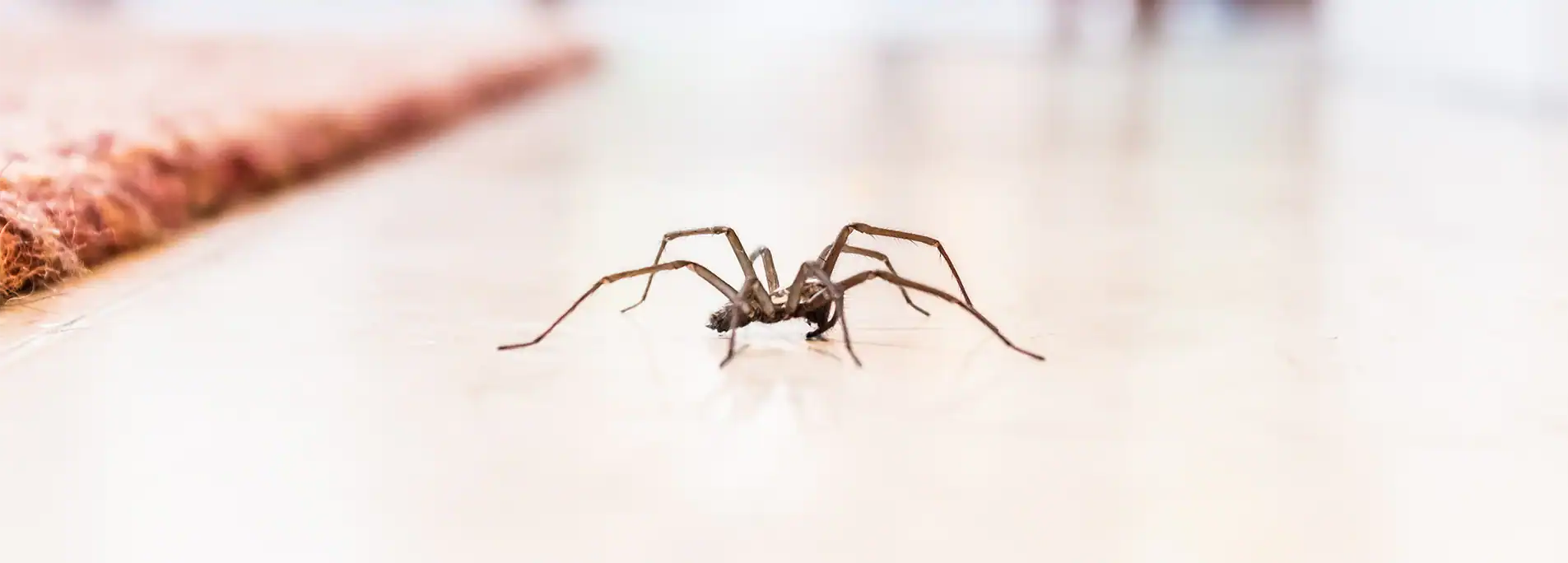
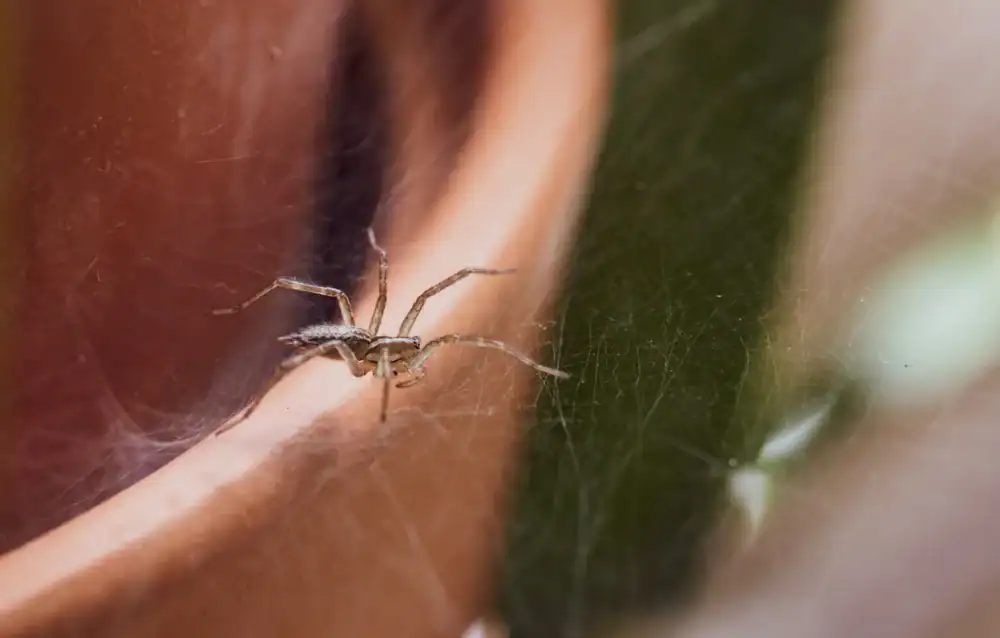
You stop finding webs across your dock railings every morning. You stop hesitating before reaching into the boat lift or the covered slip. You stop wondering whether that dark corner under the outdoor furniture is hiding something venomous. That’s what effective spider control in Gulf Harbors, FL actually looks like — not just fewer spiders, but a home and property you can move through without second-guessing every shadow.
Gulf Harbors is genuinely different from the inland communities in Pasco County. The canal water keeps ambient humidity elevated year-round, which means the insects spiders feed on never really thin out. More prey equals more spiders, and that cycle doesn’t pause in January the way it might somewhere with a real winter. Homes in the Flor-A-Mar section — many built in the 1960s and 70s — have decades of weathered gaps and entry points that newer construction simply doesn’t have. That older housing stock combined with the waterfront environment creates conditions where spider pressure is consistent, not seasonal.
When spider control is done right here, the results are visible. Eaves are clear. Outdoor living spaces feel like outdoor living spaces again. And the dock — the place where Gulf Harbors life actually happens — stops being a place where you have to check before you grab anything.
We’re a family-owned, owner-operated pest control company serving Gulf Harbors and the surrounding Pasco County region. When you call, you reach the owner directly. Not a call center. Not a dispatcher routing your request to whoever is available that week. The same licensed professional who answers your call is the one who shows up, inspects your property, and applies the treatment.
That matters in a community like Gulf Harbors, where your home represents a serious investment and you need someone who understands the specific environment — the canal-side structures, the coastal humidity, the outdoor living spaces that stay in use every month of the year. We hold FDACS license LF286842, have been BBB Accredited since 2022, and carry a 5.0 rating across 109 verified Google reviews. Those aren’t numbers we manufactured — they’re publicly searchable and verifiable.
If you’re a new homeowner who just purchased along Westshore Drive or Southshore Drive and you’re getting your first real look at Florida’s spider population, we offer discounts for new homeowners and military families. Call us. We’ll give you a straight answer and most quotes over the phone.

It starts with a phone call. Most quotes for spider control in Gulf Harbors, FL are handled right there — no in-home sales visit designed to find “additional problems” and inflate the bill. You describe what you’re dealing with, where you’re seeing activity, and what your property looks like. From there, we schedule a time that works for you, including weekends, because that’s when most Gulf Harbors residents are actually home and available.
When we arrive, the inspection covers the full property — not just the interior. For waterfront homes, that means the dock structures, the boat lift, the covered slip, the eaves, the outdoor furniture, the screened lanai, and the foundation perimeter. These are the areas where black widows and brown widows are most commonly found in coastal Pasco County, and skipping them would mean missing the actual source of the problem. We identify what species are present, assess where they’re coming from, and apply treatment accordingly.
The spider de-webbing service is part of the process — webs are physically removed from every harborage area before treatment is applied, which eliminates the structure spiders return to and makes the barrier treatment more effective. After the visit, we walk you through what was found, what was treated, and what a quarterly prevention schedule would look like to keep Gulf Harbors’ year-round pest pressure from rebuilding. No pressure — just a clear picture of what it takes to stay ahead of it.

Ready to get started?
Spider control in Gulf Harbors, FL is not a single spray applied to the baseboards and called done. For a waterfront property, the service has to account for the full range of environments where spiders actually live — and in this community, that extends well beyond the interior of the home. Our outdoor spider barrier treatment targets the foundation perimeter, eaves, window and door frames, dock structures, and any covered outdoor spaces where spiders are establishing harborage adjacent to your living areas.
Venomous spider removal is handled with identification first. Florida has two widow species — the black widow and the brown widow — and both are present in Pasco County. They’re commonly found under dock cleats, inside boat lift housings, beneath outdoor furniture, and in the sheltered corners of covered patios. If you’ve found something and you’re not sure what it is, that’s a normal part of the call — we’ll talk through it before anyone comes out. One thing worth knowing: the brown recluse is not native to Florida and does not have established populations here. If a pest control company is selling you brown recluse treatment in Gulf Harbors, that’s a red flag.
Wolf spider extermination is also a common request in this area, particularly in homes along the canal where ground moisture drives these large spiders toward interior spaces during Florida’s rainy season. The spider web removal from eaves and dock areas is included in every service visit — because without physically clearing the existing web structure, treatment alone won’t stop spiders from returning to the same spots. For Gulf Harbors homeowners who want consistent protection, a quarterly prevention program is the most effective way to maintain results in a coastal environment where pest pressure doesn’t take a seasonal break.
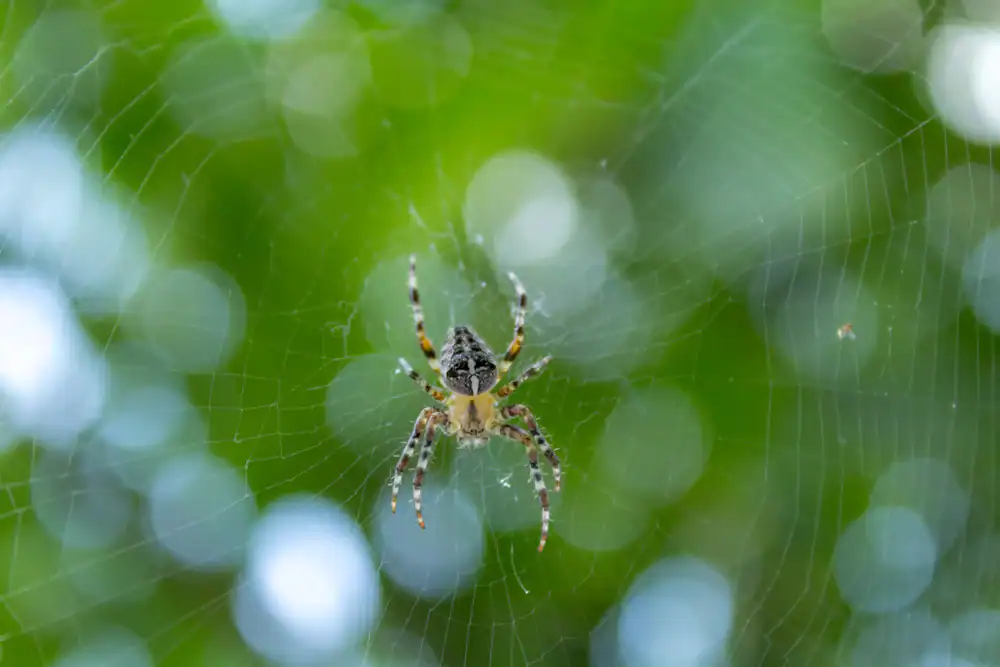
Yes — and more commonly than most Gulf Harbors homeowners expect when they first move here. Black widows are strongly associated with sheltered, low-traffic structures, and boat docks check every one of those boxes. The underside of dock boards, the space around dock cleats and pilings, covered boat slip housings, and the interior of dock storage boxes are all prime black widow habitat. They’re not aggressive spiders — they don’t chase you — but they will bite if they’re disturbed, and their venom is medically significant enough to require attention.
Brown widows are even more common than black widows in coastal Pasco County right now. They build messy, irregular webs in similar locations and produce distinctive spiky egg sacs that are easy to identify once you know what you’re looking for. If you’re spending time on your dock and you haven’t had a professional inspection of the structure in a while, it’s worth having someone take a look — particularly under the boards and around any covered or enclosed sections where you wouldn’t normally reach.
The two species that warrant real concern in Gulf Harbors are the black widow and the brown widow. Both are widow spiders, both carry venom that can cause significant symptoms, and both are present in Pasco County’s waterfront communities. Black widow bites can cause muscle pain, cramping, and in some cases require medical treatment. Brown widow venom is generally considered less potent, but it’s still not something to dismiss — especially if a child or elderly person is bitten.
Wolf spiders are the ones that tend to cause the most alarm because of their size. They’re large, fast, and they don’t build webs — they hunt. Finding a wolf spider inside your home feels like a bigger problem than it medically is, because wolf spiders are not considered dangerous to healthy adults. They can bite if handled, but the bite is comparable to a bee sting. That said, nobody wants a wolf spider the size of a half-dollar running across their kitchen floor, and their presence usually signals a broader insect population issue that’s worth addressing.
One important clarification: the brown recluse does not live in Gulf Harbors or anywhere else in Florida as an established population. If you’ve been told you have brown recluses, the identification is almost certainly wrong. Florida does have other brown spiders that can be mistaken for recluses, and we can help you figure out exactly what you’re dealing with.
For most Gulf Harbors properties — especially canal-front homes with dock structures and outdoor living spaces — quarterly treatment is the standard recommendation, and it’s not an upsell. It’s a reflection of how pest pressure actually works in a coastal subtropical environment. Pasco County doesn’t have a winter that suppresses spider populations the way northern states do. Spiders, and the insects they feed on, are active every month of the year here. A single annual treatment will produce results, but those results will degrade over time as the chemical barrier breaks down and new spiders move in from the surrounding environment.
Quarterly visits maintain the perimeter barrier, address any new web activity before it becomes established, and include de-webbing of eaves and outdoor structures so you’re not watching webs reappear on your dock railings within a few weeks of treatment. Florida’s rainy season — June through September — tends to drive increased spider activity as ground moisture pushes wolf spiders and other ground-dwellers toward elevated dry surfaces, including the interior of homes. Having a treatment scheduled going into that season makes a noticeable difference in what you see inside the house.
De-webbing matters more than most people realize, and here’s why. Spider webs are not just cosmetic. They’re functional structures — the spider returns to them, uses them to catch prey, and in the case of widow spiders, lays egg sacs in them. If you apply a chemical barrier without removing the existing web structure, the spider may not contact the treated surface because the web itself is insulating it from the treatment. You’ve sprayed, but the spider is still sitting in the same spot doing the same thing.
Physically removing the web before treatment forces the spider out of its established position and into direct contact with the treated surface. It also removes egg sacs, which is critical — a single brown widow egg sac can contain 120 to 150 eggs. Leaving egg sacs in place while treating around them is not effective spider control. For Gulf Harbors homes where webs accumulate on eaves, dock structures, and outdoor lighting, de-webbing also restores the appearance of the property — which matters when your home represents the kind of investment that waterfront properties in this community do.
The most common reason is that the treatment addressed the interior but not the exterior sources. In a waterfront community like Gulf Harbors, spiders aren’t primarily coming from inside your home — they’re coming from the outside environment and finding their way in. The canal-side landscaping, dock structures, outdoor furniture, and eaves are where they’re living. If those areas aren’t treated and de-webbed as part of the service, you’re managing the symptom rather than the source.
The second most common reason is timing. Florida’s rainy season runs June through September, and during that period, daily afternoon rain saturates the ground and drives ground-dwelling spiders — particularly wolf spiders — toward drier elevated spaces. If your last treatment was in the fall and it’s now July, the barrier has degraded and you’re seeing the result. Quarterly treatment is specifically designed to address this cycle. The third possibility is entry points — gaps around doors, windows, utility penetrations, and the older construction details common in Flor-A-Mar homes from the 1960s and 70s. A thorough inspection will identify where they’re getting in, and sealing those points is part of a complete approach.
Yes — and it’s straightforward. Gulf Harbors has an active real estate market, and a meaningful number of buyers coming into the community are relocating from out of state. If you’ve just purchased a canal-front home in Flor-A-Mar or a property in Gulf Harbors Sea Forest and you’re establishing service relationships for the first time, you’re also encountering Florida’s pest environment for the first time. That’s a different situation than a long-term resident who already knows what to expect, and the new homeowner discount reflects that.
The same applies to military families. We offer discounted pricing for active duty and veteran households as a straightforward acknowledgment of their service — no hoops, no fine print. If you qualify, mention it when you call. Most quotes are handled over the phone, so you’ll have a clear number before anyone comes out. There’s no in-home sales process and no pressure to commit on the spot. You call, you get a real answer from the owner, and you decide from there.
Other Services we provide in Gulf Harbors