
Fast, reliable pest control from Hernando County’s most trusted family-owned team—with most quotes given over the phone.
Contact Info
Fast, reliable pest control from Hernando County’s most trusted family-owned team—with most quotes given over the phone.
Contact Info
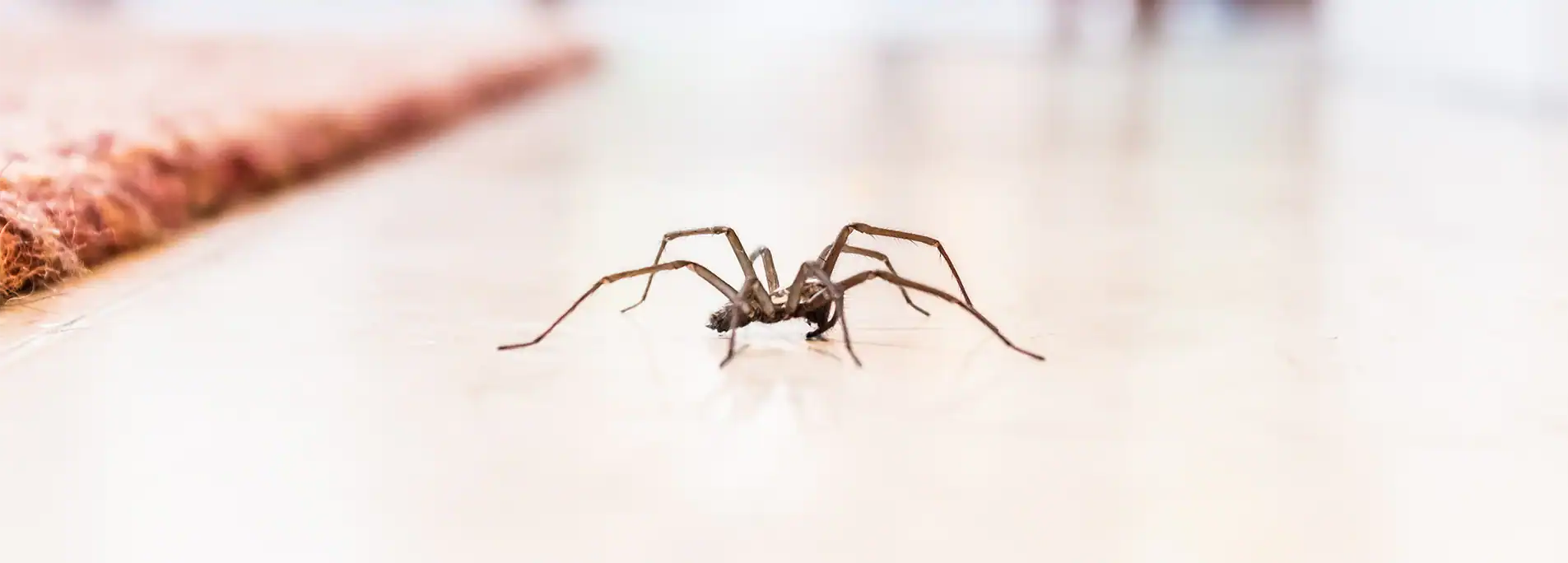
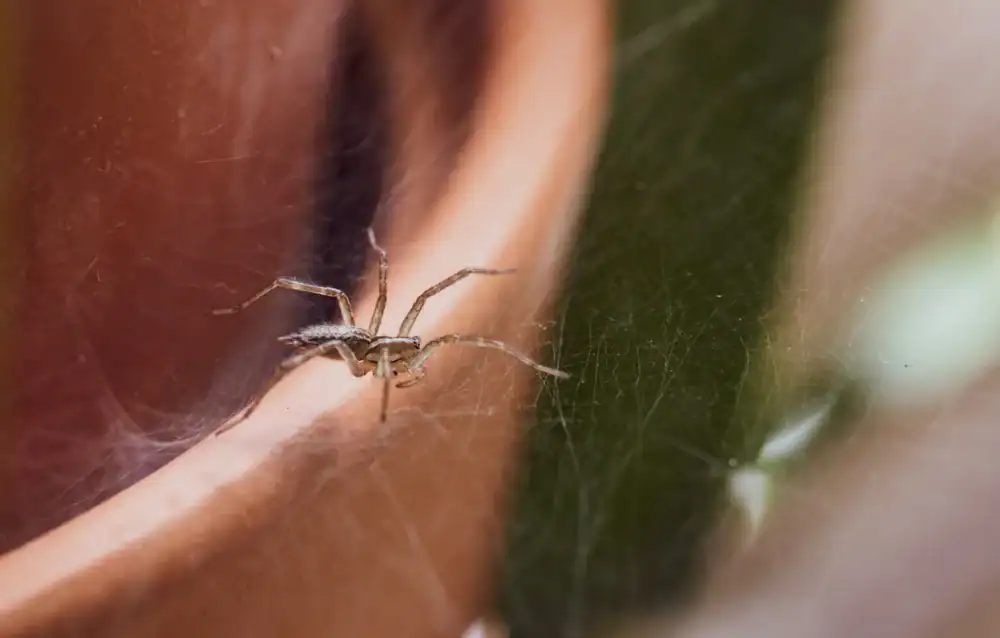
You stop finding webs every time you walk out to your porch. You stop wondering whether that spider in the garage corner is something your grandkids or your dog should stay away from. That’s what getting ahead of a spider problem actually feels like — and in South Brooksville, it takes more than a can of spray from the hardware store to get there.
South Brooksville’s housing stock is older. That means more gaps around door frames, more cracks along aging foundations, more places for spiders to move in and stay. The mature landscaping and live oak canopy that give this community its character are also exactly the kind of environment spiders thrive in — dense vegetation, leaf litter, and established trees right up against the structure. When the surrounding environment is that active, spiders don’t stop coming unless something stops them at the perimeter.
Florida doesn’t give you a cold winter to reset the clock. Spider populations here stay active in every month of the year. A one-time treatment might knock things back for a few weeks, but without a maintained barrier, you’re back to square one by the next season. Getting spider control right in South Brooksville means addressing the entry points, treating the perimeter, and keeping that protection consistent — not just reacting every time one shows up inside.
We’re a family-owned, owner-operated business serving Hernando County residents directly. When you call about a spider problem in your South Brooksville home, you’re not reaching a call center. You’re talking to the licensed professional who holds FDACS license LF286842 — the same person who will show up, inspect your property, and treat it. No rotating technicians, no dispatcher in the middle, no guessing who’s coming.
We carry a 5.0 Google rating across 109 verified reviews, BBB Accreditation since October 2022, and a Trustindex Top Rated Certificate built on a 96% review response rate. Those aren’t numbers we put together — they’re what real Hernando County homeowners left behind after their problems were actually solved.
South Brooksville is a community we know firsthand — the rolling terrain, the older residential streets, the kind of pest pressure that comes with mature landscaping and established homes near conservation areas. That local familiarity matters when the goal is a treatment plan that fits your actual property, not a generic protocol built for somewhere else.

It starts with a phone call. Most quotes are handled right there — no in-home sales visit required, no pressure, no appointment just to get a number. You describe what you’re dealing with, and you get an honest answer on what it will take and what it will cost. That’s the first thing that’s different about working with us.
When treatment begins, we focus on the full picture — not just the spiders you can see. That means a thorough inspection of the areas spiders actually use: eaves, entry points, garage edges, exterior corners, and the spaces along your foundation where spiders enter from the yard. In South Brooksville, where older homes often have more accumulated gaps and where the surrounding vegetation creates constant pressure from outside, that exterior inspection is where the real work starts. De-webbing is handled first — physically removing webs from eaves, overhangs, and outdoor structures so the barrier treatment has a clean surface to work on and there’s no existing harborage left in place.
From there, we apply a professional-grade perimeter barrier around the foundation, windows, doors, and other entry points using EPA-registered products that are formulated at concentrations consumer sprays simply don’t reach. The goal is to stop spiders before they get inside — not chase them around once they’re already in the wall voids. After treatment, you’ll know what was done, what to expect in the days following, and when the next service should happen to keep the barrier intact year-round.

Ready to get started?
Spider control in South Brooksville, FL covers more than just the spiders you can identify. Our service includes spider de-webbing from eaves, entry points, and outdoor structures — a step that matters especially in this area, where older home architecture with wider eaves and covered porches creates the kind of chronic web buildup that comes back every few days if the harborage isn’t physically removed first.
Venomous spider removal is part of the conversation from the start. Both black widows and brown widows are present in Hernando County, and they favor exactly the kind of spots that older South Brooksville homes offer — garage corners, storage sheds, under porch steps, and along block foundations. If you’ve found one or you’re not sure what you’re looking at, that gets addressed directly, not brushed aside. Wolf spider extermination is also common in this area — they don’t build webs, they hunt, which means they can show up anywhere in the home and often signal a broader pest population underneath the surface.
We apply outdoor spider barrier treatment as a preventive measure along the full perimeter of the structure, creating a treated zone that stops spiders from migrating in from the surrounding landscape. For South Brooksville homeowners dealing with ongoing pressure from the wooded areas and conservation land nearby, a quarterly prevention program is the most effective way to keep that barrier active and avoid the cycle of treating the same problem every few months from scratch. New homeowners and military families receive special pricing — a straightforward discount, not a gimmick, because those are the households most likely to be walking into an established pest history they didn’t create.
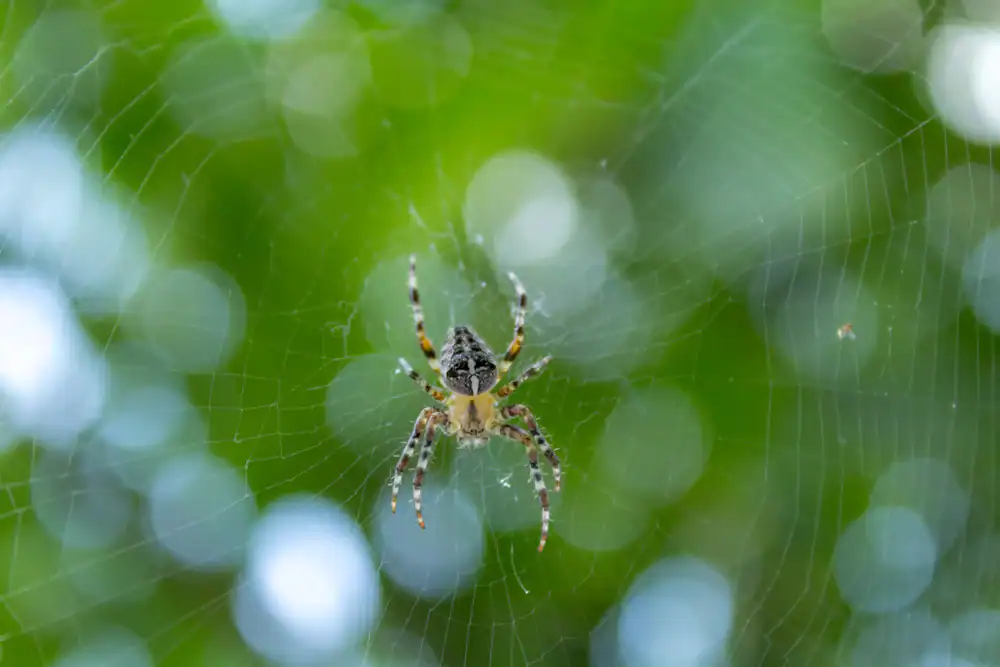
Yes — both black widows and brown widows are present in Hernando County, and South Brooksville’s older housing stock gives them plenty of places to establish. They favor dark, undisturbed spots: garage corners, storage sheds, under porch steps, along block foundations, and inside utility boxes. Homes with crawl spaces or detached outbuildings are especially common harborage sites.
The brown widow in particular has become increasingly widespread across Florida in recent years and is often overlooked because homeowners assume they’re looking at a juvenile black widow or an unrelated species. Both carry venom that warrants caution, especially in households with children, pets, or elderly family members. If you’ve found one or you’re not sure what you’re looking at, don’t handle it — call for a professional inspection. Identification matters before any treatment decision is made.
Consumer-grade spider sprays are formulated at lower concentrations than professional products, and many of them work as repellents rather than lethal agents. What that means in practice is that the spiders you spray don’t die — they move. They go deeper into wall voids, into crawl spaces, into the gaps behind baseboards. You stop seeing them for a week or two, and then they’re back, often in a different part of the house.
The other issue is coverage. DIY treatments tend to target the surfaces you can see — baseboards, corners, the spot where you last saw one. Professional treatment targets the places spiders actually travel and enter: foundation gaps, eave lines, window frames, door thresholds, and the exterior perimeter where spiders are coming in from the yard. In South Brooksville’s older homes, where there are more accumulated entry points than in newer construction, that exterior perimeter work is where the real difference gets made.
In most of the country, pest pressure drops significantly in winter, which gives homeowners a natural reset. That doesn’t happen in Hernando County. South Brooksville’s subtropical climate means spider populations stay active and reproductive in every month of the year — there’s no cold season to suppress them. A single treatment will reduce activity, but without a maintained barrier, pressure builds back up within a few months.
Quarterly service is the most practical approach for sustained control in this area. It keeps the perimeter barrier active, allows for early detection of new activity before it becomes an infestation, and accounts for the steady influx of spiders migrating in from the surrounding landscape and conservation areas near the community. For homeowners dealing with chronic web buildup or a history of venomous spider sightings, quarterly service isn’t an upsell — it’s just what the local environment requires to stay ahead of it.
Wolf spiders are one of the most common spiders encountered by South Brooksville homeowners, and their size and speed make them alarming. They’re large, fast, and they don’t build webs — they hunt actively, which means they can show up anywhere in the home at any time of day. The good news is that wolf spiders are not considered medically significant to healthy adults. A bite can cause localized pain and irritation, but wolf spiders are not in the same category as black widows or brown widows.
The spiders that warrant real concern in this area are the widow species. Black widows have a recognizable red hourglass marking on the underside of the abdomen. Brown widows are tan to brown with an orange or yellow hourglass and tend to build messier, irregular webs in sheltered outdoor spots. If you’re finding either of these — or you’re not sure which species you have — that’s when professional identification and targeted removal matters most. Don’t rely on a visual match from a phone search when venomous species are a possibility.
It does, and here’s why it’s not just cosmetic. Webs are harborage — they’re the physical structure spiders use to catch prey, lay egg sacs, and establish themselves in a location. If you remove the spider but leave the web, the space remains attractive to the next spider that comes along. The web itself signals to other spiders that the spot is viable. Removing it physically eliminates that signal and that habitat.
In South Brooksville specifically, de-webbing matters more than it might in a newer subdivision. Older homes with wider eaves, covered porches, complex rooflines, and established vegetation close to the structure create more surface area for web attachment and more sheltered spots where spiders can build undisturbed. De-webbing paired with a barrier treatment gives the treatment a clean surface to adhere to and removes the existing harborage in the same visit — which is why the combination produces better long-term results than either step done alone.
Yes. We hold Florida Department of Agriculture and Consumer Services pest control license LF286842, active through June 2027. Florida law requires all pest control operators to carry a valid FDACS license — it’s not optional, and operating without one is illegal. That license number is publicly verifiable through the FDACS website, and it’s something every South Brooksville homeowner should check before allowing any pest control company onto their property.
Beyond the standard pest control license, we also hold certification for Wood-Destroying Organism inspections — a separate FDACS credential that requires additional training and regulatory compliance. That level of credentialing signals a business that takes its professional standing seriously, not one that got licensed and stopped there. Combined with BBB Accreditation since October 2022 and a 5.0 Google rating across 109 reviews from real Hernando County customers, the credentials here aren’t just paperwork — they reflect a consistent standard of service that the local community has verified firsthand.
Other Services we provide in South Brooksville