
Fast, reliable pest control from Hernando County’s most trusted family-owned team—with most quotes given over the phone.
Contact Info
Fast, reliable pest control from Hernando County’s most trusted family-owned team—with most quotes given over the phone.
Contact Info
Summer termite season is coming fast. These five termite prevention tips help Pasco and Hernando County homeowners protect their biggest investment before swarmers arrive and colonies take hold.
Florida ranks among the highest-risk states for termite activity, which is the one “Top 10” list we’d all prefer to be left off of. Our warm, humid climate creates a 5-star resort environment for subterranean termites, drywood termites, and those aggressive Formosan termites that treat a 2×4 like a light snack. Unlike northern states where a “polar vortex” puts the bugs on ice, Florida termites never take a vacation; they just keep punching the clock 24/7.
Research shows there are roughly 13 subterranean termite colonies per acre in Florida. Essentially, your property is likely surrounded by a tiny, subterranean army that hasn’t found the “Open” sign on your foundation yet. These colonies can silently dismantle a structure for three to five years before a homeowner even suspects they have roommates who don’t pay rent.
The financial impact is sobering. Florida homeowners collectively spend over $500 million annually on termite damage—a stimulus package nobody wants to participate in. Individual repair costs typically range from $8,000 to $12,000, and standard homeowners insurance usually covers termite damage with the same enthusiasm they’d cover “wear and tear.” Since they classify it as a preventable maintenance issue, every dollar for repairs comes directly out of your “rainy day” (or “retirement”) fund.
Starting in early March and running through summer, Florida experiences peak termite swarm season—otherwise known as “The Great Dispersal” or “Why is my window screen vibrating?” Different species swarm at different times, but activity peaks after rain when the air is thick enough to drink.
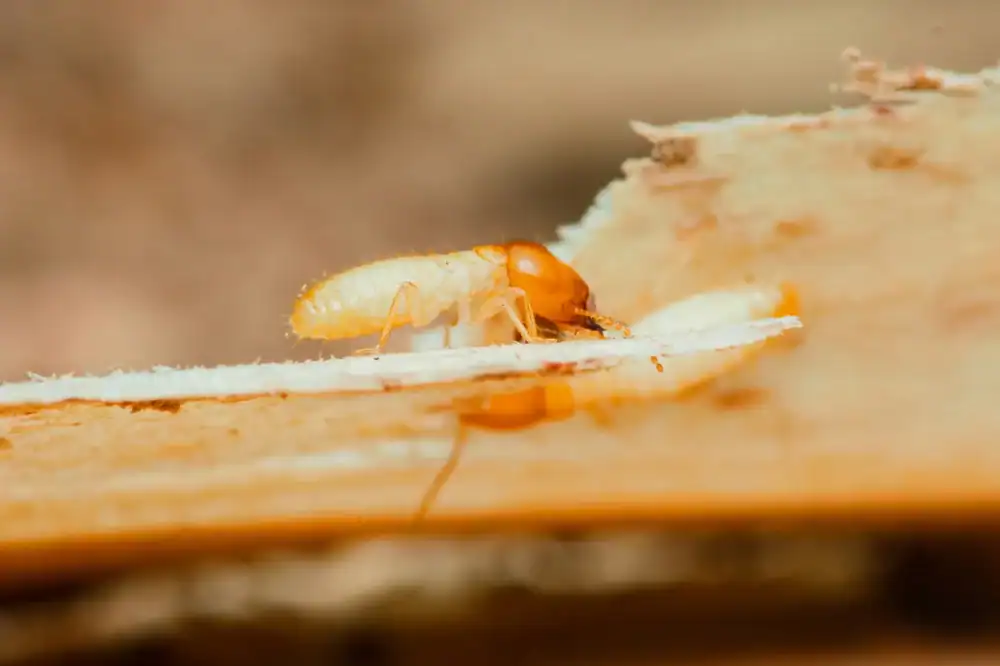
During this time, mature colonies produce “swarmers” (alates). These are the winged reproductives whose only job is to leave home, find a mate, and start a new dynasty in your crawl space. You’ll see them drawn to light fixtures like groupies at a rock concert. After a brief flight, they shed their wings—leaving behind what looks like tiny, translucent fish scales—and get down to the business of home-eating.
Finding swarmers inside is a major red flag. If they’re emerging from inside your house, it means a mature colony has been living in your walls for at least three to five years. It’s the termite equivalent of finding out the “ghost” in your attic has actually been a squatter living there since the mid-2020s.
Of course, many swarms happen outdoors while you’re at work, meaning they go unnoticed until the floor starts feeling a bit “spongy.” Regardless of if you see them or not, these swarms indicate that the local population is booming. The goal is to catch the activity before the swarmers show up to announce that the structural integrity of your kitchen is now “optional.”
Drywood termites usually wait for the heat of June through September, while subterranean types prefer the spring. Formosans, the “super-termites” of the group, swarm from late spring to early summer. Because the window of risk is longer than a Florida political campaign, year-round vigilance is the only way to stay protected.
Termites aren’t random; they’re highly motivated foragers looking for the “Big Three”: food (wood), moisture, and a place to hide from the sun. If your home offers all three, you’ve essentially posted a “Welcome” sign in termite-language.
Subterranean termites—the most common culprits in Pasco and Hernando—are the “commuters” of the bug world. They live in the soil and commute to your house via mud tubes. These pencil-width tunnels are made of soil and saliva (gross, but effective) and act as moisture-controlled highways that protect them from drying out. You’ll find these tubes running up foundations or along plumbing lines like tiny, dirt-colored elevators.
These pests can squeeze through cracks as narrow as 1/32nd of an inch. If you can slide a business card into a crack in your foundation, a termite can fit through it with room to spare. Once inside, they move through studs and joists with the stealth of a ninja, often leaving the exterior paint perfectly intact while the inside of the wood becomes a hollow shell.
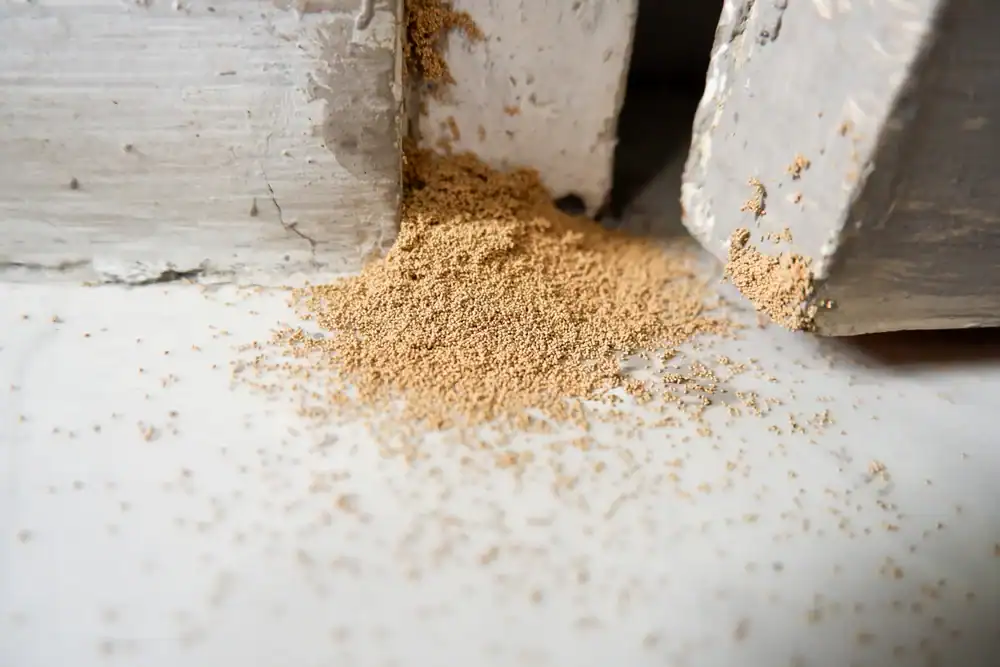
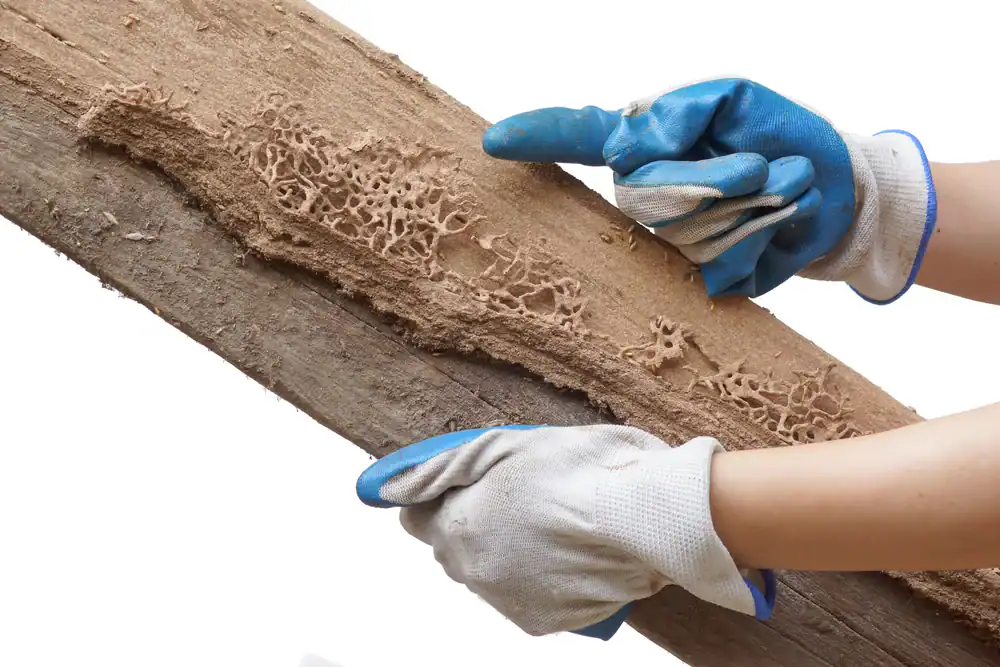
Drywood termites are the “paratroopers.” They don’t need soil contact; they simply fly in, find a nice piece of attic wood or a mahogany dresser, and move in. You might notice “frass”—which is a polite industry term for termite droppings—that looks like piles of sawdust or tiny pepper granules.
Both types are destructive, but subterranean colonies are the heavy hitters because their sheer numbers allow them to eat 24/7. Knowing how they get in is half the battle; the other half is making sure they find your neighbor’s house more attractive than yours (kidding… mostly).
Want live answers?
Connect with a Around The Clock Pest Service expert for fast, friendly support.
You don’t need a degree in entomology or a high-tech laser grid to keep termites at bay. Prevention is mostly about being a “bad host” by eliminating the amenities they love. These five strategies are the industry standard for keeping your Florida home from becoming a giant snack box.
Each of these tips targets a specific weakness. We want to dry them out, starve them out, and make it so they have nowhere to hide. By following these, you make your home significantly less “delicious” and make sure that if they do try to move in, they’ll be spotted long before they can do five figures’ worth of damage.
Termites love moisture more than a tourist loves an air-conditioned gift shop. Damp soil against your foundation is basically a spa day for subterranean termites. If you control the water, you control the pests.
Start with your gutters. Clogged gutters are essentially “water features” that dump gallons of liquid directly onto your foundation. This saturates the soil and creates a high-speed lane for termites. Clean those gutters and make sure downspouts move water at least a foot away from the house. If you have standing puddles, splash blocks are a cheap way to say “keep moving” to unwanted moisture.
Check your AC condensation lines and outdoor faucets. A “slow drip” isn’t just a minor annoyance; it’s a permanent watering hole for a colony. Fix those leaks quickly. In Florida, crawl spaces can also become humid swamps if not properly ventilated, making them a prime target for infestation.
Grading is also key. Your yard should slope away from the house like a gentle slide. If water pools against your walls after a summer afternoon thunderstorm, you’re basically inviting the termites to a pool party.
Watch those sprinklers, too. If your irrigation system is power-washing your siding every morning, you’re providing the termites with a consistent drink and a softened path into your wood. Inside, keep crawl space humidity low with vapor barriers and proper airflow. It’s simple: a dry home is a boring home to a termite, and in this case, boring is exactly what we want.
Direct wood-to-soil contact is the termite equivalent of a “Free Buffet” sign. It gives them a direct bridge from their underground home to your dinner table (which might literally be their dinner). Eliminating this bridge is one of the most important things you can do.
Inspect your property for any wood touching the dirt. Deck posts, wooden stairs, and fence panels are common offenders. Ideally, your siding should be at least six inches above the ground. If it’s buried in the dirt, you’re giving termites a “backdoor” entry that bypasses any soil treatments you might have.
Even pressure-treated wood isn’t a magical shield. While it’s less tasty, termites can still build mud tubes right over it to get to the “good stuff” inside your home. Don’t let your guard down just because the wood looks green.
Clear the debris! That stack of firewood leaning against the garage? That’s a termite Trojan Horse. Store firewood at least 20 feet away and keep it elevated. The same goes for old cardboard boxes, piles of newspapers, and that tree stump you’ve been “meaning to remove” for three years.
Mulch is another tricky one. We all love a landscaped look, but piling mulch directly against the foundation creates a moist, food-rich environment. Try to keep a barrier of gravel or bare dirt between your mulch beds and your house walls.
Lastly, keep your bushes trimmed. When vegetation is pressed against the house, it hides mud tubes and holds in moisture. Think of it as “clearing the perimeter”—it makes it much harder for a termite to sneak up on you without being spotted.
You might be a DIY superstar, but unless you have X-ray vision or enjoy crawling through spider-infested sub-floors, you need a professional termite inspection. Catching termites early is the difference between a minor localized treatment and a “we need to tent the whole house and move you to a hotel” situation.
In Florida, an inspection usually costs between $50 and $325. When you consider that repair bills can easily hit $12,000, that inspection fee is the best “insurance policy” you can buy. Many pros even offer free initial look-overs if you’re setting up a protection plan. A pro knows the “hiding spots.” We look for things you’d miss—like microscopic mud tubes behind an outdoor AC unit or the specific sound a screwdriver makes when it hits hollowed-out timber. We also identify “conducive conditions” (fancy talk for “things that are making your home look like a snack”) so you can fix them before a colony moves in.
Keep in mind that termite treatments aren’t eternal. Depending on the product, they last between five and thirteen years. If your home hasn’t been looked at since the previous Olympics, that chemical barrier might be thinner than a politician’s promise.
For those buying or selling in Hernando or Pasco County, a WDO (Wood-Destroying Organism) report is often a deal-breaker. Lenders for VA and FHA loans are particularly picky about this—they don’t want to mortgage a house that’s being eaten from the inside out.
Scheduling your inspection in the spring, before the summer swarms hit their peak, gives you the tactical advantage. It’s much easier to stop an invasion before the first “scouts” have even landed.
Summary:
Article details:
Share: