
Fast, reliable pest control from Hernando County’s most trusted family-owned team—with most quotes given over the phone.
Contact Info
Fast, reliable pest control from Hernando County’s most trusted family-owned team—with most quotes given over the phone.
Contact Info
You’ve seen them darting behind the fridge at night. You’ve tried the sprays, the baits, maybe even the foggers. And yet, weeks later, they’re back—sometimes in greater numbers than before. If you’re dealing with German roaches in Hernando County, FL, you’re not alone, and you’re definitely not doing anything wrong. These particular cockroaches are built differently. They reproduce faster, hide smarter, and resist treatments that work on other pests. That’s not a DIY problem—that’s a German roach problem. And it’s exactly why a specialized cockroach exterminator becomes necessary, not optional.
German roaches aren’t your typical Florida palmetto bugs that wander in from outside. They’re small, light brown, and have two dark stripes running down their backs. But size isn’t what makes them dangerous.
These roaches live indoors exclusively. They don’t come and go—they move in. And once they’re inside, they breed at a pace that’s hard to comprehend. A single female can produce up to 400 offspring in her lifetime. She carries her egg case until just before it hatches, giving her young a better survival rate than most other species. That means a small problem can become a severe infestation in a matter of weeks, not months.

German roaches don’t fly in through your window or crawl up from the yard. They hitch a ride. Grocery bags, cardboard boxes, used furniture, even your overnight bag from a hotel stay—any of these can introduce a pregnant female into your home. Once she’s in, she finds a warm, moist hiding spot close to food and water, and the infestation begins.
You won’t find them out in the open during the day unless the population has grown so large they’re running out of space. They prefer tight cracks and crevices. Behind your refrigerator. Inside the motor housing of your dishwasher. Under sinks. Inside wall voids near plumbing. They’re experts at staying out of sight, which is why most people don’t realize how bad the problem is until it’s already severe.
In Hernando County, the warm, humid climate only makes things worse. German roaches thrive in Florida’s year-round heat. There’s no winter die-off. No seasonal slowdown. Just continuous breeding cycles that multiply faster than most homeowners can keep up with using store-bought products.
And if you live in a multi-unit building or apartment, the problem compounds. German roaches travel between units through shared plumbing and electrical lines. You can treat your space perfectly and still have them return from a neighboring unit that hasn’t been addressed. That’s why professional roach control services often coordinate treatments across entire buildings, not just individual homes.
Walk into any hardware store in Spring Hill, and you’ll find an entire aisle dedicated to roach control. Sprays, baits, traps, foggers—all promising fast results. And some of them do kill roaches. The problem is, they’re killing the wrong ones.
When you spray a roach you see on the counter, you’re eliminating a scout. Maybe a few dozen if you’re persistent. But the colony—the real problem—is hidden deep inside your walls, under appliances, and inside spaces you can’t reach with a can of spray. Those roaches never make contact with your treatment. They keep breeding. And within days, you’re seeing new activity.
Foggers and bug bombs sound more powerful, but they come with their own issues. They spread pesticide throughout the air, which might kill exposed roaches, but they don’t penetrate the cracks and voids where German roaches actually live. Worse, they can scatter the infestation, pushing roaches into untreated areas and spreading the problem instead of solving it. The CDC has even documented health risks from improper fogger use, and the EPA requires strict safety precautions that many homeowners don’t follow.
Then there’s the resistance factor. German roaches have been exposed to so many over-the-counter insecticides over the years that many populations have developed resistance. The spray that worked on roaches a decade ago might not even slow them down today. Professional roach exterminators rotate products and use commercial-grade treatments that aren’t available to the public specifically because of this resistance issue.
Bait stations can be more effective than sprays, but only if placed correctly. German roaches are picky. They won’t travel far for food if there’s a closer source. If your bait isn’t positioned in their travel paths or near their harborage areas, they’ll ignore it. And if you contaminate the bait by placing it near cleaning chemicals or insecticide sprays, roaches will avoid it entirely.
The real issue with DIY methods isn’t that they don’t work at all—it’s that they don’t work completely. You might reduce visible activity for a while. But unless you’re targeting the breeding population, treating the life cycle at multiple stages, and addressing the conditions that attracted them in the first place, you’re just buying time. Not solving the problem.
Want live answers?
Connect with a Around The Clock Pest Service expert for fast, friendly support.
A specialized cockroach exterminator doesn’t start by spraying. We start by understanding the problem. That means a thorough inspection to identify the species, locate the harborage areas, and assess how severe the infestation has become.
German roaches leave signs. Fecal matter that looks like black pepper or coffee grounds. Shed skins from molting nymphs. A musty, oily odor that gets stronger as the population grows. Our trained technicians know where to look and what to look for. We’ll check behind appliances, inside cabinets, around plumbing fixtures, and in other high-risk areas that homeowners often miss.
Once the inspection is complete, the treatment plan is customized. Not every infestation is the same, and not every home requires the same approach. That’s where experience and specialized knowledge make the difference.
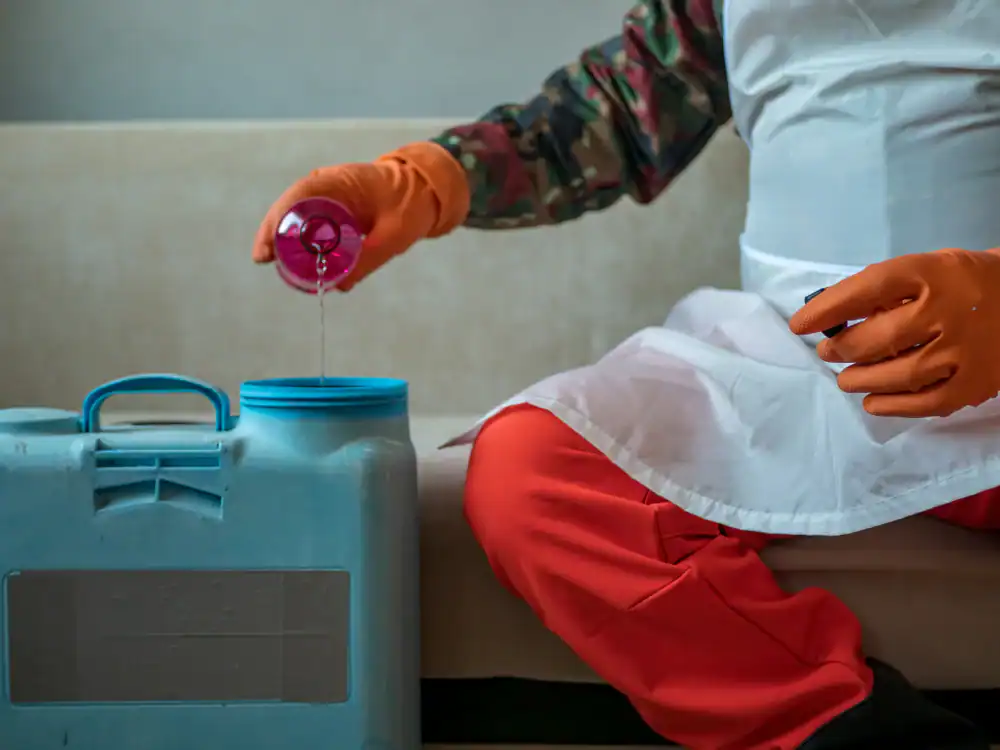
Professional roach control services rely on a combination of methods, not a single product. Gel baits are a primary tool. These aren’t the same baits you buy at the store. Professional-grade gel baits like Vendetta Plus are formulated to be highly attractive to German roaches and contain active ingredients that work even on resistant populations.
The key is placement. Our technicians apply small, pea-sized dots of gel in the cracks, crevices, and voids where roaches actually travel and feed. Behind the stove. Along the hinge side of cabinets. Inside electrical outlets. Under sinks near plumbing. The roaches consume the bait, return to their harborage, and die. But before they do, they spread the active ingredient to other roaches through their feces and by contact. It’s a delayed-action approach that targets the entire colony, not just individual roaches.
Insect Growth Regulators, or IGRs, are another critical component. These products don’t kill adult roaches directly. Instead, they disrupt the reproductive cycle. Nymphs can’t mature into breeding adults. Females become sterile. The population stops growing, and over time, it collapses. IGRs are especially important for German roaches because of how fast they reproduce. Without something to interrupt that cycle, even effective treatments can be overwhelmed by new generations hatching from eggs that weren’t affected by the initial application.
Dust applications are used in areas where gel baits and liquids can’t reach or won’t remain effective. Wall voids. Electrical conduits. Behind baseboards. These dusts remain active for months, providing long-term protection in areas where roaches travel but homeowners can’t easily treat.
And then there’s the follow-up. German roach eggs are protected inside a hard case that most insecticides can’t penetrate. That means even after a successful treatment, new roaches will hatch within a few weeks. We schedule follow-up visits timed to the roach life cycle—usually every two to three weeks—to eliminate those newly hatched nymphs before they reach breeding age. This is what breaks the cycle and delivers lasting results.
When you call Around The Clock Pest Service, you’re not routed to a call center. You speak directly with someone who understands the local pest pressures in Hernando County and can often provide a quote over the phone. That transparency matters, especially when you’re already frustrated by failed DIY attempts and worried about cost.
The first visit includes a detailed inspection. Our technician will ask about where you’ve seen activity, how long the problem has been going on, and what you’ve already tried. We’ll inspect the areas where German roaches are most likely to hide and identify entry points, moisture issues, or sanitation factors that might be contributing to the infestation.
Treatment begins the same day in most cases. Gel baits are applied in targeted locations. IGRs are used to disrupt breeding. Dust may be applied in wall voids or other hidden areas. Our technician will explain what’s being done, where, and why. You’ll also get guidance on what you can do to support the treatment—things like fixing leaky faucets, storing food in sealed containers, and reducing clutter that provides hiding spots.
Follow-up visits are scheduled based on the severity of the infestation and the roach life cycle. For most German roach problems, you’ll see a significant reduction in activity within the first two weeks. But complete elimination typically takes four to six weeks for moderate infestations, and up to two or three months for severe cases. That’s not a failure of the treatment—it’s the reality of dealing with a pest that reproduces this quickly and hides this effectively.
We operate 24/7, even on weekends, because roach problems don’t wait for business hours. If you’re seeing roaches during the day—a sign that the infestation is severe—you can get a same day exterminator response. That kind of availability is rare, but it’s also necessary when you’re dealing with a pest that can contaminate your food, trigger asthma in your kids, and spread bacteria like Salmonella and E. coli throughout your home.
The cost for professional roach exterminator services in Florida typically ranges from $125 to $275 per visit, depending on the size of your home and the severity of the infestation. For severe cases requiring fumigation or whole-home treatment, costs can be higher. But when you compare that to the money already spent on ineffective DIY products, the health risks of an untreated infestation, and the time wasted fighting a problem that keeps coming back, professional treatment is often the more cost-effective choice from the start.
German roaches aren’t a pest you can ignore or half-treat. They’re too resilient, too fast-breeding, and too good at hiding for anything less than a comprehensive, professional approach to work. DIY methods might reduce what you see, but they won’t eliminate what’s hiding. And in the weeks you spend trying, the problem only gets worse.
A specialized cockroach exterminator brings the knowledge, tools, and follow-through that German roach control actually requires. Targeted treatments. Life-cycle interruption. Follow-up visits. Prevention strategies. It’s not about spraying and hoping—it’s about understanding the pest and applying proven methods that deliver results.
If you’re in Hernando County, FL and dealing with German roaches that won’t go away, Around The Clock Pest Service offers the expertise and availability you need. State-certified technicians. Direct owner involvement. 24/7 response. And a track record backed by over 100 five-star reviews from local customers who’ve been exactly where you are now.
Summary:
Article details:
Share: