
Fast, reliable pest control from Hernando County’s most trusted family-owned team—with most quotes given over the phone.
Contact Info
Fast, reliable pest control from Hernando County’s most trusted family-owned team—with most quotes given over the phone.
Contact Info
A standard home inspection won't catch termites or wood rot. Here's what a WDO inspection actually covers — and why it matters before you close in Hernando County.
You’ve gone under contract on a home in Hernando County, FL. Your realtor mentions a WDO inspection. Maybe your lender requires one. Maybe you’ve never heard the term before. Either way, you’re now trying to figure out what it is, whether you actually need it, and who’s supposed to pay for it — all while managing a closing timeline.
That’s exactly what this page is for. We’ll walk you through what a wood destroying organism inspection covers in Florida, how it works, what the report means for your transaction, and why this particular inspection matters more in Hernando County than most buyers realize.
A WDO inspection is a formal examination of a property for evidence of organisms that damage wood — termites, wood-decaying fungi, wood-boring beetles, and carpenter ants. In Florida, the inspection must be performed by a licensed pest control operator, and if you’re charged a fee for it, the inspector is legally required to produce FDACS Form 13645, the official Wood-Destroying Organisms Inspection Report.
That last point matters more than most buyers realize. Some companies issue informal letters or verbal reports that don’t meet this standard. Those documents won’t satisfy your lender, and they won’t protect you legally. The form is the inspection, as far as Florida law is concerned.
This is probably the most common misconception we encounter. A standard home inspection covers the roof, plumbing, HVAC, electrical, and general structure. It does not cover termites. It does not cover wood rot. A general home inspector is not licensed to issue FDACS Form 13645, and their report will not satisfy a lender that requires WDO clearance.
The two inspections serve completely different purposes and require different licenses. Your home inspector may note visible damage to wood during their walkthrough, but identifying the cause — whether it’s a subterranean termite colony working up from the soil, drywood termites living inside the framing, or moisture-driven wood decay — requires a licensed pest control operator trained specifically in wood-destroying organisms.
Florida goes further than most states on this. While the majority of states only require reporting on wood-destroying insects, Florida’s inspection form mandates reporting on wood-destroying organisms — which includes fungi. That distinction exists because Florida’s climate creates moisture conditions that accelerate wood decay in ways that don’t show up in drier states. If you’re buying a home near Hernando Beach, Weeki Wachee, or anywhere else in Hernando County close to the Gulf, moisture-related wood damage is a real and common finding. A WDO inspection is the only way to document it officially before closing.
The practical takeaway: if your home inspector checked out fine, that’s good news — but it doesn’t mean you’re clear on termites or wood rot. Those require a separate inspection from a separate licensed professional.
The inspection covers four categories of organisms: termites (both subterranean and drywood), wood-decaying fungi, wood-boring beetles such as powderpost beetles and old house borers, and carpenter ants. Each one can compromise the structural integrity of a home in different ways, and each requires a trained eye to identify.
Subterranean termites are the most destructive. They live in the soil and tunnel up into the wood framing of a home, often through mud tubes along the foundation, block walls, or inside the garage. They’re responsible for roughly 95% of all termite damage in the U.S., and in Hernando County, the sandy soil throughout Spring Hill and Brooksville creates ideal tunneling conditions year-round. There’s no dormant season here.
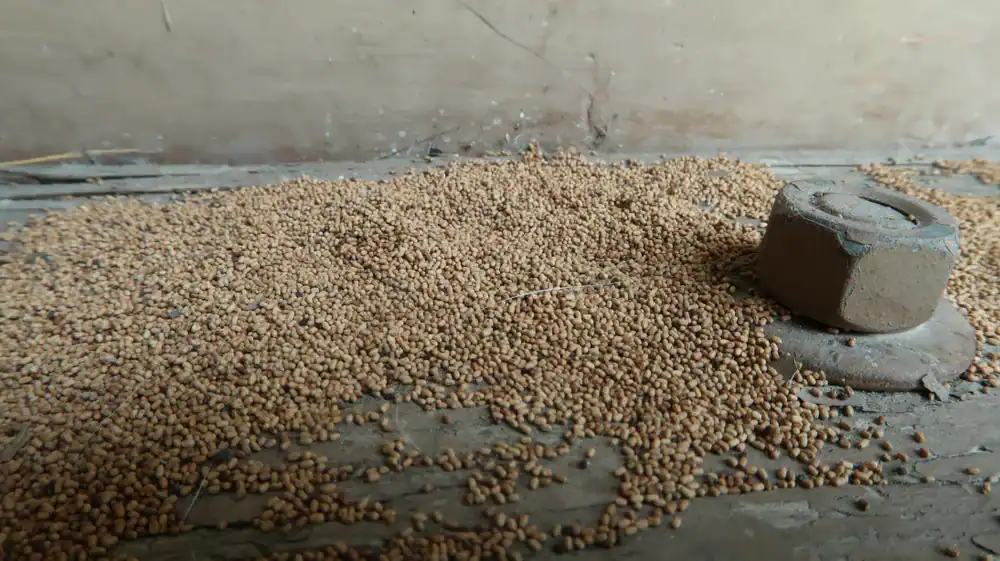
Drywood termites are different — they live entirely within the wood itself and don’t need soil contact. They’re often found in attics and are identified by small piles of pellet-like droppings called frass. Because they’re hidden inside the wood, they can go undetected for a long time without a proper inspection.
Wood-decaying fungi show up where moisture has gotten into wood and stayed there. Florida’s humidity accelerates this process, and homes near water — lakes, the Gulf, or even low-lying lots that hold rainwater — are more susceptible. Many Hernando County homes built during the 1980s and 1990s construction boom are now at the age where moisture intrusion from aging seals, roof penetrations, or crawlspace conditions starts to show up as wood rot.
We use probes and moisture meters to test wood firmness and moisture levels throughout the property — attic, crawlspace, garage, exterior wood, and anywhere else organisms are likely to establish. The findings go on the FDACS Form 13645, which becomes part of your closing documentation.
Want live answers?
Connect with a Around The Clock Pest Service expert for fast, friendly support.
For buyers financing with a VA loan, a WDO inspection is mandatory — no exceptions. And here’s something many VA buyers don’t know: the seller is typically required to pay for it. That’s not a negotiating tactic; it’s a VA loan guideline. If you’re using VA financing to buy in Hernando County, the inspection is happening, and it’s likely not coming out of your pocket.
FHA lenders often require one as well, and conventional lenders increasingly do too. Even if your lender doesn’t require it, skipping a WDO inspection in Florida is a significant financial risk. Termite damage is not covered by standard homeowners insurance. Neither is wood rot. Whatever a WDO inspection turns up after closing is yours to fix.
A positive finding doesn’t automatically kill your deal. That’s a fear a lot of buyers have, and it’s worth addressing directly. What a WDO inspection finding actually does is give you options — and leverage.
If the inspection turns up active termites, evidence of past infestation, wood rot, or other findings, you can use that report to negotiate with the seller. You can request that they pay for treatment, repair the damaged wood, or reduce the purchase price to account for the cost of remediation. Your real estate agent can walk you through how to structure that request, but the point is that the inspection report is a tool. It’s documentation of a condition that existed before you owned the property.
That’s why timing matters. A WDO inspection done before closing gives you options. The same inspection done after closing — or not at all — leaves you holding the bill. Hernando County’s real estate market has been active, with thousands of homes changing hands each year and new construction continuing across the county. In a market like this, buyers sometimes feel pressure to move fast and skip steps. A WDO inspection is not a step worth skipping.
Even if a finding is significant, most termite and WDO issues are treatable. The damage can be repaired. The organisms can be eliminated. What you’re really paying for with a WDO inspection is the knowledge to make a clear-eyed decision — before you sign the final paperwork.
This is where buyers need to pay attention, because not everyone who offers a “termite inspection” in Florida is legally authorized to produce the required FDACS Form 13645.
Florida law requires the inspector to hold a Wood-Destroying Organisms category license issued by the Florida Department of Agriculture and Consumer Services. Earning that license means passing a written exam covering pest identification, pesticide chemistry, application methods, safety, and Florida law. It’s a specific credential — not just a general pest control license.
The compliance problem is real. Some well-known companies offer inspections that look like WDO inspections but don’t produce the state-required form. That may be because they’re trying to limit liability, or because the person performing the inspection isn’t properly licensed for this category. Either way, if you paid for a WDO inspection and didn’t receive FDACS Form 13645, you may not have a legally valid inspection — and your lender will likely send you back to get one that is.
Before you schedule, ask directly: Are you licensed by FDACS to perform WDO inspections? Will you produce Form 13645? Can I see your license number? A legitimate, licensed inspector will answer all three questions without hesitation. Around The Clock Pest Service is licensed by the Florida Department of Agriculture with active certifications covering pest control, termite inspections , and WDO real estate inspections — and we’ll always provide the form your lender and closing agent require.
For buyers using VA financing specifically, the stakes are even higher. The VA also accepts the NPMA-33 form, which is a national Wood-Destroying Insects report accepted by HUD, FHA, VA, and most national lenders. A thorough WDO inspection in Florida will typically cover both, since the FDACS-13645 is more comprehensive and the NPMA-33 satisfies federal lending requirements.
Hernando County’s affordability keeps drawing buyers in — from Tampa, from out of state, from all over. Many of them are first-time buyers or relocators who’ve never dealt with Florida’s specific pest pressures before. The year-round termite activity, the Gulf-side moisture, the older housing stock in Spring Hill and Brooksville — these are real factors that make a properly conducted WDO inspection more than a formality.
Make sure the inspector is FDACS-licensed, make sure you receive Form 13645, and make sure the inspection happens before closing — not after. If you’re using a VA loan, ask your agent about the seller-pays rule before you assume it’s your expense.
If you have questions about scheduling a WDO inspection in Hernando County, FL, or want to know what the process looks like from start to finish, Around The Clock Pest Service is happy to walk you through it. Call before noon and we can often get you scheduled the same day.
Summary:
Article details:
Share: