
Fast, reliable pest control from Hernando County’s most trusted family-owned team—with most quotes given over the phone.
Contact Info
Fast, reliable pest control from Hernando County’s most trusted family-owned team—with most quotes given over the phone.
Contact Info
You’ve probably heard termites called “silent destroyers.” That’s not marketing talk. It’s the reality for thousands of Florida homeowners every year who discover damage that’s been happening for months or even years without a single visible sign.
Here’s what makes Florida different: your termites don’t slow down in winter. They don’t hibernate. They stay active 365 days a year, which means a one-time treatment or a spring-only inspection leaves you exposed the other eleven months.
This guide covers six termite prevention strategies that actually match how termites behave in Pasco County and Hernando County. You’ll see what works, what doesn’t, and why year-round protection is the only approach that makes sense when termites never take a break.
Walk outside right now. The temperature is probably somewhere between comfortable and hot. That’s termite weather.
In northern states, termites slow down when temperatures drop. Their activity decreases. Colonies go into a kind of maintenance mode. Florida doesn’t give you that break. Your warm, humid climate is exactly what subterranean and drywood termites need to stay active all year.
There are 13 subterranean termite colonies per acre in Florida. That’s not a typo. Your property is surrounded. And those colonies don’t care what month it is—they’re looking for food sources constantly, and your home is made of exactly what they eat.
This is why seasonal termite control doesn’t work here. You can’t treat in spring and assume you’re covered through fall. Termites are feeding on structures for three to five years before most people notice damage. By the time you see mud tubes or hollow-sounding wood, the problem isn’t new.
Florida’s climate doesn’t just keep termites active. It makes them more destructive.
The combination of heat and humidity means termites can consume wood up to seven times faster than they do in cooler regions. Your home isn’t just at risk—it’s at accelerated risk. What might take years to develop into serious damage in another state can happen in months here.
Moisture is the key factor. Subterranean termites need it to survive. They build mud tubes to travel between their underground colonies and your home’s wood, and those tubes help them maintain the moisture levels they require. Florida’s humidity makes this easy for them.
Drywood termites are different. They don’t need soil contact or external moisture sources. They live entirely inside the wood they’re eating, which means they can infest attics, window frames, and furniture without ever touching the ground. Florida’s mild winters mean these termites never face the cold stress that might slow them down elsewhere.
The practical reality is this: if you’re not actively preventing termites year-round, you’re giving them ideal conditions to establish colonies and cause damage. Your home is always vulnerable here, which means your termite prevention needs to be constant, not seasonal. Spring Hill, New Port Richey, and other communities throughout Pasco County and Hernando County all face this same pressure because the climate doesn’t change enough to give you a break.
Let’s talk numbers because the financial risk is significant.
Termite damage costs Florida homeowners over $500 million every year. The average repair bill for a single incident runs between $8,000 and $12,000. Severe cases can exceed $20,000. And here’s the part that catches people off guard: your homeowners insurance won’t cover it.
Insurance companies classify termite damage as preventable. That means every dollar of repair cost comes out of your pocket. You can’t file a claim. You can’t spread the cost. You pay it all, and you pay it when the damage is discovered—which is usually when it’s already extensive.
Compare that to prevention. Annual termite inspections combined with preventive treatment cost between $300 and $1,500 per year depending on your property and the protection plan you choose. Even if you spent $1,500 annually for 15 years straight, you’d still spend less than the cost of one major repair job.
The math is clear, but the emotional cost matters too. Finding termite damage is stressful. It disrupts your life. If you’re trying to sell your home, it can kill deals or force you to drop your asking price. Buyers want proof that a property has been maintained, and a history of termite protection is one of the strongest signals you can provide. That’s where WDO inspections come in during real estate transactions—they document whether your home has termite activity or damage, and having a clean report backed by years of prevention makes closings smoother.
Prevention isn’t just cheaper than repairs. It protects your property value, gives you peace of mind, and eliminates the surprise factor that makes termite damage so financially painful when it’s discovered.
Want live answers?
Connect with a Around The Clock Pest Service expert for fast, friendly support.
Prevention isn’t complicated, but it does require consistency. These six strategies address the specific conditions that attract termites to Florida homes. Some you can handle yourself. Others need professional pest control help. All of them matter.
The key is understanding that termites are looking for three things: moisture, food (wood and cellulose materials), and access points. Every termite prevention strategy you implement should eliminate at least one of those three factors. When you make your home less attractive and less accessible to termites, you dramatically reduce your risk.
Let’s break down what actually works in Pasco County and Hernando County, where termite pressure is constant and the climate works in their favor, not yours.
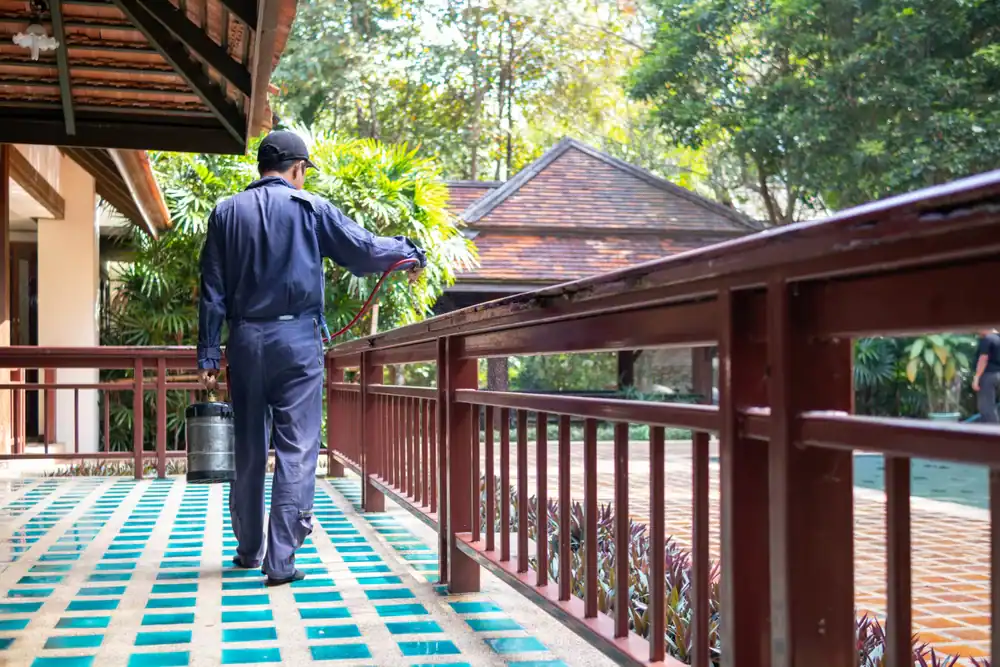
Moisture control is your first line of defense, especially against subterranean termites.
Start with your gutters. Clean them regularly and make sure downspouts direct water at least three feet away from your foundation. When water pools near your home, it creates the damp soil conditions that subterranean termites need to build their colonies and mud tubes.
Check for leaks everywhere. Dripping faucets, leaking pipes, AC condensation lines—fix them as soon as you notice them. Even small amounts of moisture can attract termites and create conditions where they thrive. Pay special attention to crawl spaces and areas under sinks where leaks might go unnoticed.
Your landscaping matters too. If you’re using mulch, keep it at least 15 inches away from your foundation. Mulch retains moisture, and when it’s piled against your home, it creates a perfect environment for termites right where you don’t want them. Consider alternatives like pine needles, pea gravel, or rubber mulch in areas close to your foundation.
Improve ventilation in crawl spaces and attics. Use dehumidifiers in basements or enclosed crawl spaces where humidity tends to build up. The goal is to keep these areas as dry as possible. Termites need moisture to survive, and when you eliminate it, you eliminate one of the primary factors that makes your property attractive to them.
Grade your yard so water flows away from your foundation, not toward it. This might require some landscaping work, but it’s worth it. Standing water or consistently damp soil near your home is an invitation that termites will accept. In areas like Spring Hill and Hudson where properties can have drainage challenges, this step becomes even more critical for effective termite prevention.
Termites need cellulose to survive, and wood is their primary source. The easier you make it for them to access wood, the more likely they are to target your property.
Walk around your home and look for any wood that touches the soil. Deck posts, fence sections, wooden steps, landscaping timbers—all of these create highways for subterranean termites to travel from the ground directly into wood without ever being exposed. Eliminate these contact points. Use concrete footings, metal brackets, or treated lumber rated for ground contact.
Move firewood storage away from your house. Keep it at least 20 feet from your foundation and elevate it off the ground. Firewood piles are termite magnets, and when they’re stacked against your home, you’re essentially providing both food and access.
Remove dead trees, stumps, and old lumber from your property. These are natural food sources that can support termite colonies, and once termites establish themselves in dead wood on your property, your home becomes the next logical target. The same goes for cardboard boxes, old newspapers, and other cellulose materials stored in garages or sheds.
Keep at least six inches of clearance between the bottom of your wall siding and the soil or mulch line. This creates an inspection gap that lets you spot mud tubes or other signs of termite activity before they reach your home’s structure. It also reduces the chance of moisture wicking up into your siding.
Trim back vegetation that touches your home. Shrubs and plants that grow against your exterior walls can hold moisture against your foundation and make it harder to spot termite activity. Maintain at least 12 inches of space between plants and your walls to improve airflow and make inspections easier. This also helps with general pest control since many insects use overgrown vegetation as shelter and entry points.
Here’s the truth about termite inspections: you can’t see what’s happening inside your walls, under your floors, or in your attic without the right tools and training. That’s why annual inspections by a licensed pest control professional are essential, not optional.
Termites only need a crack 1/32nd of an inch wide to enter your home. They can be actively feeding for three to five years before you notice any visible damage. By the time you see mud tubes, hollow wood, or small piles of what looks like sawdust (actually termite droppings called frass), the infestation is already established and causing damage.
A professional termite inspection catches problems early. An experienced exterminator knows exactly where to look—crawl spaces, attic rafters, around plumbing penetrations, near AC units, along foundation walls, and in other areas where termites typically enter or cause damage. We use moisture meters, probing tools, and thermal imaging in some cases to detect activity you’d never spot on your own.
Annual inspections also give you documentation. If you’re on a termite protection plan, those inspection records prove you’ve been proactive about prevention. When you sell your home, that history matters. Buyers want to know the property has been maintained, and a transferable termite plan with annual inspection records is one of the strongest signals you can provide.
In Florida, termite inspections are often required during real estate transactions, especially when loans are involved through VA or FHA. These WDO inspections (wood-destroying organism inspections) document whether there’s active termite activity, old damage, or conditions conducive to termites. Having a clean report makes closings faster and protects both buyers and sellers.
The cost of an annual inspection is minimal compared to the cost of repairs. Most inspections run between $75 and $150 if you’re not on a protection plan, and many pest control companies include them as part of ongoing prevention plans. That small annual investment catches problems when they’re small and manageable, not after they’ve caused thousands of dollars in structural damage.
Summary:
Article details:
Share: