
Fast, reliable pest control from Hernando County’s most trusted family-owned team—with most quotes given over the phone.
Contact Info
Fast, reliable pest control from Hernando County’s most trusted family-owned team—with most quotes given over the phone.
Contact Info
A termite swarm inside your home isn't a warning — it's a sign something has already been happening for years. Here's what you need to know.
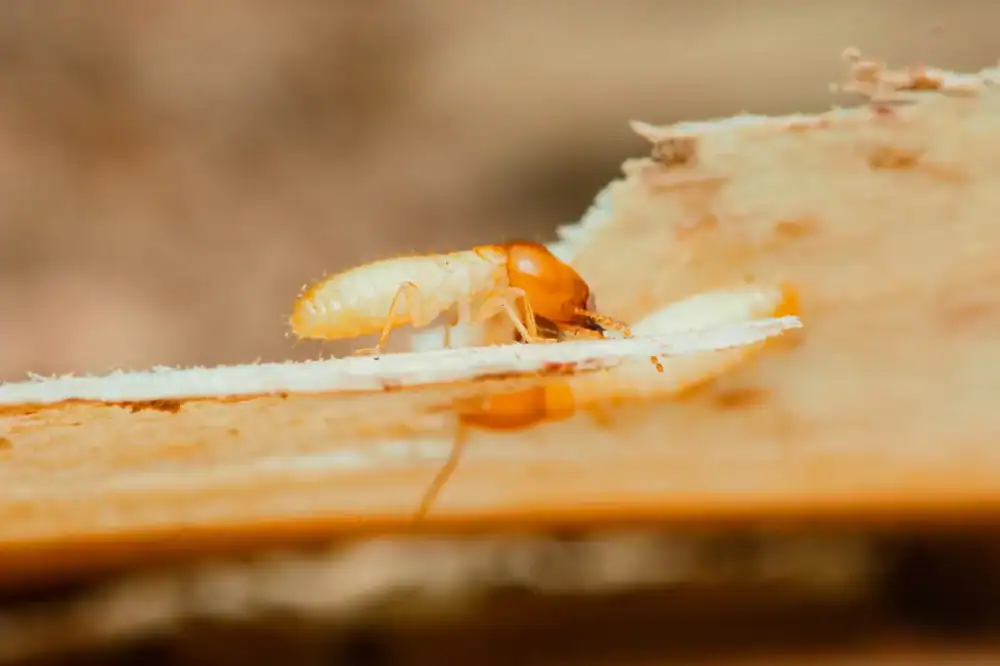
You’re sitting in your living room and suddenly there are winged insects everywhere — crawling up the window, circling a light fixture, piling up on the sill. Your first instinct might be relief when they disappear an hour later. The problem solved itself, right?
It didn’t. What you just witnessed was a termite swarm, and it’s not the beginning of your problem. It’s proof that a problem has been building inside your home for years. Here’s what’s actually happening, what Florida’s termite season looks like from start to finish, and what you need to know as a Hernando County homeowner before the next swarm season gets underway.
When people think of termite season, they usually picture a narrow window in spring — maybe a few warm weeks in April. In Florida, that mental model is dangerously incomplete. Termite swarming season here runs from late February all the way through November, and different species take turns throughout that stretch.
Hernando County sits squarely in the highest termite infestation probability zone in the country, according to the US Forest Service. The warm, humid climate and consistently moist soil — especially in the wooded areas around Spring Hill, Ridge Manor, and the Green Swamp corridor — create ideal conditions for termite colonies to stay active year-round. There is no true off-season here the way there is in colder states.
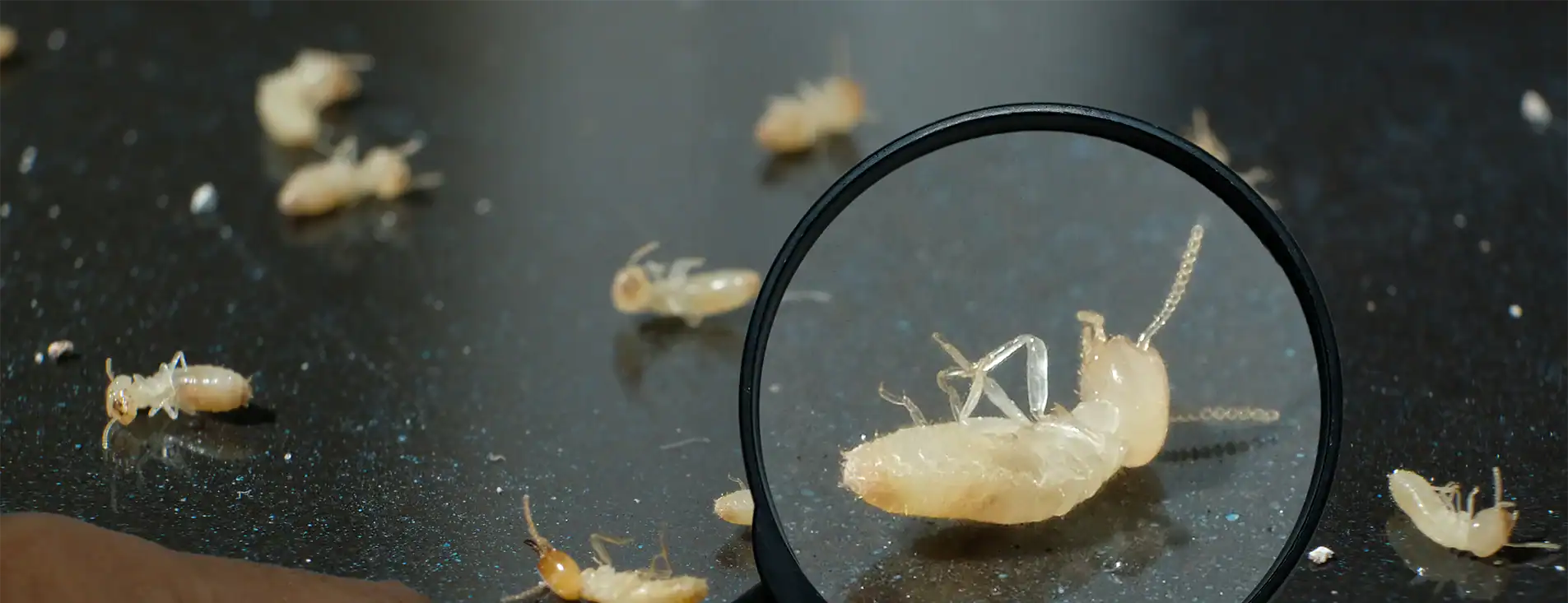
Florida has several termite species, and each one has its own swarming window. Eastern subterranean termites are the most common in Hernando County. They typically begin swarming in late February and continue through June, with the peak activity falling in March and April. These swarms usually happen in the afternoon after a warm, rainy day — which describes a significant portion of Hernando County’s spring weather.
Drywood termites operate on a completely different schedule. They swarm from June through September, meaning they hit their peak just as homeowners have mentally moved on from “termite season.” Drywood termites don’t need contact with soil — they infest attics, wall voids, and wooden furniture directly. One of the telltale signs is frass, which looks like tiny pellets or sawdust, appearing near windowsills or baseboards.
Formosan subterranean termites are an invasive species that has established itself in parts of Florida. They tend to swarm in the evening hours from March through May and are particularly aggressive — capable of forming aerial colonies inside walls and rooflines without any soil connection at all.
Understanding this staggered calendar matters because it means there’s no single month where you can declare your home safe. A homeowner who watches carefully in April and sees nothing has only cleared the first third of the subterranean window — and hasn’t even entered drywood season yet. Florida termite swarming season is a multi-chapter event, and treating it like a single spring occurrence leaves a lot of exposure unaddressed.
One more thing worth knowing: individual swarms only last about 30 to 40 minutes. If you weren’t home, you may have missed it entirely. The only evidence left behind is a pile of discarded wings near a window or door frame. Don’t ignore those wings — they’re the receipt for a swarm that already happened.
This is probably the most important thing on this page, and it’s the thing most homeowners never hear: termites don’t always swarm visibly. Researchers at the University of Florida have documented that termites can spread by crawling — not flying — to form new colonies. When that happens, no wings are left behind. No swarm to witness. No obvious warning at all.
That means the absence of a swarm is not the same as the absence of termites. A colony can be actively feeding on the wood framing in your walls right now and give you no outward sign for years. By the time you see mud tubes along your foundation, soft spots in your flooring, or doors and windows that suddenly don’t close right, the damage is already done.
This is especially relevant in Hernando County, where a large portion of the housing stock was built between the 1970s and 1990s. Homes in that age range may have had soil treatments applied decades ago that have long since degraded. The original barrier is gone, and if no follow-up treatment or inspection has been done, there’s nothing standing between the colony in your yard and the wood in your walls.
Florida averages 13 termite colonies per acre statewide. In Hernando County, surrounded by natural preserves, wetlands, and wooded lots, the pressure on residential structures is constant. The question isn’t really whether termites are present in the area — they are. The question is whether they’ve found a way into your home yet, and whether you’d know it if they had.
The honest answer for most homeowners is no. A professional inspection is the only way to know for certain, and it’s the only thing that gives you a real starting point.
Want live answers?
Connect with a Around The Clock Pest Service expert for fast, friendly support.
Here’s the reframe that changes everything: a termite swarm is not termites arriving. It’s termites announcing that they’ve been there long enough to reproduce.
Termite colonies produce swarmers — winged reproductive termites — only after the colony has matured. That process takes three to five years. So when you see a swarm inside your home, you’re not watching a new threat move in. You’re watching a colony that has been living in your structure for years reach the point where it’s large enough to expand.
The swarmers themselves are not the ones doing the damage. They’re not workers. They emerge, attempt to mate, and most of them die within hours if they can’t reach soil and establish a new colony. But the colony that produced them? That stays behind, still feeding, still growing.
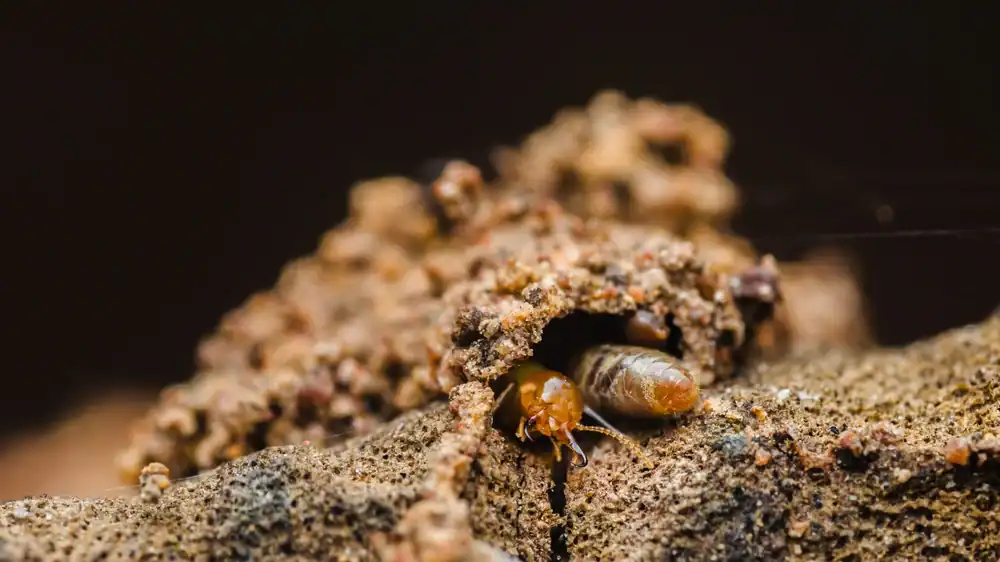
Yes, significantly. This distinction doesn’t get nearly enough attention, but it changes your response entirely.
If you see a termite swarm outside — in the yard, near a tree stump, around a woodpile — it means there’s an active colony somewhere in the vicinity. That’s worth monitoring closely, and it’s a reason to schedule an inspection, but it doesn’t automatically mean your home’s structure is infested. Swarmers from a yard colony are looking for a new place to establish, not necessarily your house.
If you see a swarm inside your home — emerging from walls, floors, window frames, or anywhere within the structure itself — that’s a different situation entirely. Swarmers inside almost always means the colony producing them is inside. They don’t fly in through a window and immediately start swarming from your baseboards. They emerge from where the colony is. And if the colony is producing swarmers, it has been established for years.
The practical takeaway: a swarm inside your home is not a maybe. It’s a confirmation. The question shifts from “do I have termites?” to “how much damage has already been done and where?” That’s not a question a store-bought product can answer. It requires a thorough inspection by someone who knows what to look for — mud tubes, damaged wood, moisture patterns, entry points — and who can assess the full scope before recommending a treatment approach.
In Hernando County, where many homes sit on wooded lots with soil that stays moist much of the year, subterranean termites have particularly favorable conditions. They travel through the soil and can reach a home’s foundation from a colony that started well into the tree line behind the house. A visible swarm inside is often the first sign a homeowner gets — years after the colony first made contact with the structure.
This is one of the most common questions we hear, and the answer is one that catches a lot of homeowners off guard: in most cases, no.
Standard homeowner’s insurance policies in Florida exclude termite damage. Insurers classify termite infestations as a preventable maintenance issue, not an unpredictable event like a fire or a storm. That means the cost of treatment and any structural repairs that follow comes entirely out of pocket. The average homeowner who discovers termite damage after the fact pays around $3,000 in repair costs — and that’s on the lower end. Structural beam replacement alone can run into the thousands.
This is why prevention and early detection matter so much more than most people realize. Waiting until you see a swarm — or worse, until you notice physical damage — puts you in a position where you’re managing the aftermath rather than avoiding it. A professional inspection and a proactive treatment program are genuinely less expensive than what comes next if you don’t act.
For homeowners buying or selling property in Hernando County, there’s another layer to this. Most real estate transactions in Florida require a WDO (Wood-Destroying Organism) inspection report before closing. VA loan buyers are required by law to have one. That report documents any evidence of termite activity, damage, or conditions that make a home vulnerable. It’s not the same as a standard pest inspection — it’s a state-regulated document that has to be issued by a licensed operator. If you’re in the middle of a real estate transaction and need a WDO report on a tight timeline, we handle those regularly and can turn around results without delaying your closing.
The broader point is this: termite control in Florida isn’t a reactive category. The homes that come out ahead are the ones where the owner didn’t wait for a swarm, didn’t assume insurance would cover it, and didn’t hand the problem to a hardware store shelf. They got ahead of it.
If you’ve made it this far, you already know more than most homeowners do when they finally call someone about termites — usually after the swarm, sometimes after the damage. That knowledge is worth something. Use it.
Florida’s termite season is long, the pressure in Hernando County is real, and the absence of a visible swarm is not a clean bill of health. If your home is more than a few years old and hasn’t had a professional inspection recently, that’s the most useful next step you can take.
Around The Clock Pest Service is based in Spring Hill and serves all of Hernando County. When you call, you reach the owner directly — not a call center, not an automated system. Most quotes are handled over the phone, and same-day service is available when you call before noon. If you’ve seen a swarm, found wings on a windowsill, or just want to know where things stand before termite season gets fully underway, give us a call. We’ll give you a straight answer.
Summary:
Article details:
Share: