
Fast, reliable pest control from Hernando County’s most trusted family-owned team—with most quotes given over the phone.
Contact Info
Fast, reliable pest control from Hernando County’s most trusted family-owned team—with most quotes given over the phone.
Contact Info
DIY flea treatments work temporarily, but most miss the eggs and larvae hiding in your carpets. Here's when to call a professional flea exterminator.
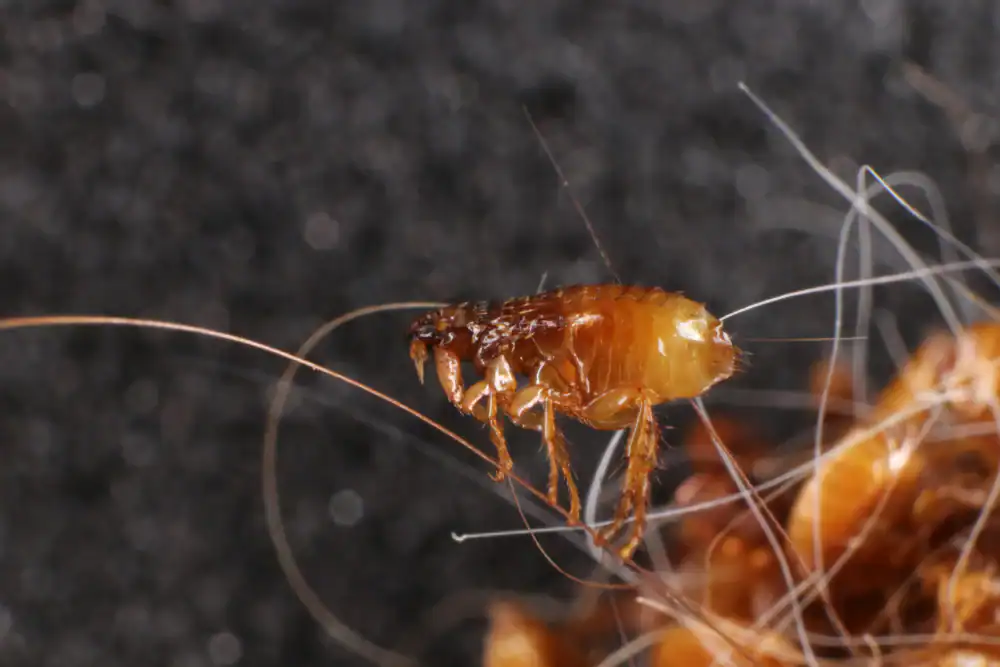
You’ve vacuumed three times this week. You’ve washed every piece of fabric in your house. You’ve sprayed, bombed, and treated your pets—and still, you’re finding fleas.
Here’s the frustrating truth: most DIY flea treatments only scratch the surface. They kill the adults you can see but miss the eggs and larvae buried in your carpets, furniture, and baseboards. Within two weeks, those eggs hatch, and you’re back where you started.
If you’re tired of the cycle and wondering whether your flea problem has outgrown what you can handle on your own, this guide will help you figure it out. Let’s start with understanding what makes fleas so hard to eliminate in the first place.
Walk into any hardware store in Spring Hill or Brooksville and you’ll find an entire aisle dedicated to flea control. Sprays, foggers, powders, traps—all promising to solve your problem fast. Some of them do work. For about two weeks.
Then the fleas come back. Not because you did something wrong, but because most over-the-counter products are designed to kill adult fleas. That sounds like it should be enough, but adult fleas represent only about 5% of a flea infestation. The other 95%—the flea eggs, larvae, and pupae—are living in your carpet fibers, under furniture, in cracks along baseboards, and anywhere else your pet spends time. Those life stages are incredibly resilient, and most DIY treatments don’t touch them.
Even if you vacuum obsessively and wash everything in hot water, flea eggs can remain dormant for weeks or even months. They’re waiting for the right conditions—warmth, humidity, vibrations that signal a host is nearby. Florida’s climate gives them those conditions year-round. There’s no winter freeze to kill them off. No off-season. Just continuous breeding cycles that can turn a small problem into a full-blown infestation in less than a month.

Understanding the flea life cycle explains why DIY solutions fall short. Adult fleas live on your pets, feeding on blood and laying eggs—sometimes up to 50 eggs per day in ideal conditions. Those eggs don’t stick to fur. They fall off onto carpets, pet bedding, furniture, and anywhere your dog or cat rests.
Within two to fourteen days, those eggs hatch into larvae. Flea larvae look like tiny worms and they’re nearly invisible to the naked eye. They don’t live on your pet. They burrow deep into carpet fibers, hide in cracks between floorboards, and nestle into the seams of upholstered furniture. They feed on organic debris—dead skin cells, pet dander, and something called “flea dirt,” which is actually digested blood excreted by adult fleas.
After five to eighteen days, larvae spin cocoons and enter the pupal stage. This is where things get really difficult. Flea pupae are encased in sticky silk cocoons that protect them from insecticides. They can remain dormant inside those cocoons for weeks or even months, waiting for the right environmental triggers before emerging as adults. When they do emerge, they immediately seek a host, and the flea life cycle starts all over again.
This is why you can spray your house, see results for a week or two, and then suddenly have fleas again. You killed the adults, but the eggs and pupae were never affected. Professional flea exterminators use products specifically designed to disrupt this life cycle at every stage—including insect growth regulators that prevent eggs and larvae from developing into biting adults. That’s something most store-bought treatments simply can’t do.
Florida’s warm, humid climate makes this cycle even worse. In colder states, winter temperatures naturally slow down or stop flea reproduction. Here in Hernando County, fleas breed continuously. There’s no break. No natural pause that gives you time to get ahead of the problem. That’s why professional treatment often becomes necessary—not because you failed, but because the conditions here make fleas exceptionally difficult to control without commercial-grade products and expertise.
So how do you know when it’s time to stop trying DIY methods and call a flea exterminator? There are a few clear signs that your infestation has grown beyond what over-the-counter products can handle.
First, if you’ve already tried multiple DIY treatments and you’re still seeing fleas after two or three weeks, that’s a strong indicator. One round of treatment might miss some eggs, but if you’ve been consistent with vacuuming, washing, and applying sprays and the problem persists, you’re likely dealing with a well-established infestation that’s reproducing faster than you can eliminate it.
Second, look at where you’re finding fleas. If they’re only on your pet, you might be able to manage the problem with veterinary flea prevention and thorough cleaning. But if you’re seeing fleas in multiple rooms, jumping from carpets and furniture, or biting people—especially around ankles and lower legs—the infestation has spread throughout your home. At that point, you need treatment that can reach every hiding spot, not just the visible surfaces.
Third, pay attention to your pets’ behavior and health. Excessive scratching is obvious, but watch for other signs too. Are they restless? Chewing at their skin? Losing patches of fur? Have you noticed small, dark specks in their bedding that look like pepper? That’s flea dirt—digested blood that fleas excrete. If you’re seeing flea dirt regularly despite treating your pets, it means they’re being reinfested constantly from the environment.
Another red flag is flea bites on humans. Fleas prefer animal hosts, but when populations get large enough, they’ll feed on people too. If family members are waking up with itchy, red bite marks—usually in clusters of two or three—your flea population has likely grown beyond what DIY methods can control.
Finally, consider how long you’ve been dealing with the problem. If you’ve been fighting fleas for more than a month with no real progress, you’re spending money on products that aren’t working and wasting time that allows the infestation to get worse. Professional exterminators have access to insect growth regulators and commercial-grade treatments that target all life stages simultaneously. We can often resolve in two or three visits what might take you months to handle on your own—if you can handle it at all.
The cost of professional flea extermination might seem like a lot upfront, but compare it to what you’ve already spent on sprays, foggers, and repeated pet treatments. Most homeowners in Spring Hill and the surrounding areas find that calling a professional earlier would have saved them both money and frustration.
Want live answers?
Connect with a Around The Clock Pest Service expert for fast, friendly support.
One of the biggest questions homeowners have when considering professional flea control is simple: what’s this going to cost me? And more importantly, is it worth it compared to continuing with DIY methods?
The honest answer is that flea exterminator costs vary based on several factors, but you’re typically looking at somewhere between $75 and $400 for a single treatment visit. The national average sits around $270, though prices in Florida tend to run slightly lower—often between $150 and $250 for most residential properties in Hernando County.
That might sound like a lot, especially if you’ve been buying $10 cans of spray at the hardware store. But here’s what you need to consider: professional treatment usually works where DIY fails, which means you’re not spending money month after month on products that only provide temporary relief. You’re solving the problem, not just managing symptoms.
Several factors influence how much you’ll pay for professional flea control, and understanding them helps you know what to expect when you call for a quote.
The size of your home matters. A 1,200-square-foot house requires less product and labor than a 3,000-square-foot home. Some companies charge flat rates based on square footage, while others assess the actual extent of the infestation and price accordingly. At Around The Clock Pest Service, we give most quotes over the phone after discussing your specific situation—square footage, number of pets, how long you’ve had the problem, and what you’ve already tried.
The severity of the infestation is probably the biggest cost factor. A minor problem caught early might only require one treatment. A severe infestation that’s been building for months will likely need multiple visits spaced about two weeks apart. This isn’t a money grab—it’s biology. Remember that flea pupae are resistant to insecticides? The first treatment kills adults and prevents eggs from developing, but pupae that are already in cocoons will eventually emerge. A second treatment catches those newly emerged adults before they can reproduce. Severe cases might need a third visit to fully break the cycle.
Whether you need both indoor and outdoor treatment affects the price too. If your pets spend a lot of time in the yard, fleas are likely living in shaded areas, under decks, in gardens, and anywhere grass stays moist. Treating only the interior of your home means your pets will keep bringing fleas back inside. Comprehensive treatment that includes yard application costs more upfront but prevents reinfestation.
The treatment method also plays a role. Basic spray applications are the most affordable. More intensive treatments using insect growth regulators, residual products that continue working for weeks, or specialized equipment for hard-to-reach areas will increase the cost. But these methods are also more effective, which means fewer follow-up visits and a faster resolution.
Some pest control companies charge extra for follow-up visits, while others include them in the initial price or offer guarantees. It’s worth asking about this upfront. A company that charges $150 for the first visit but adds $100 for each follow-up might end up costing more than a company that charges $250 upfront with free follow-ups if fleas return within 30 days.
Hidden fees are another consideration. Some companies charge separately for inspections, travel fees, or weekend service. At Around The Clock Pest Service, our family-run approach means you get transparent pricing from the start—no surprises, no hidden charges. You work directly with the owner, who understands that trust is built through honesty, not fine print.
Location can affect pricing too, though not as much as you might think. In Hernando County and surrounding areas like Spring Hill, FL and Brooksville, prices tend to be competitive because there are multiple providers. But you’re also dealing with Florida-specific challenges—year-round breeding, high humidity, and pest populations that never experience a winter die-off. A local flea exterminator who understands these conditions is worth the investment.
Let’s do some honest math. Say you’ve been fighting fleas for two months using DIY methods. You’ve spent $15 on spray, $20 on a fogger, $30 on carpet powder, $25 on pet shampoo, and another $40 on flea prevention from the pet store. You’ve also washed every piece of fabric in your house multiple times, which adds up in water and electricity costs. That’s already over $130, and you still have fleas.
Now add the time you’ve spent. Hours of vacuuming, washing, treating, and researching solutions online. The stress of watching your pets scratch constantly. The frustration of flea bites on your kids. The embarrassment of having guests over when you know there’s a pest problem. What’s that worth?
Professional flea extermination typically resolves the problem in one to three visits over the course of a month. The total cost might be $200 to $400 depending on your situation, but you’re done. No more endless cycles of treating and retreating. No more wondering if this week’s new product will be the one that finally works.
The value isn’t just in the immediate results—it’s in the expertise. A professional flea exterminator knows where fleas hide in your specific type of home. We know which products work best in Florida’s climate. We have access to commercial-grade insect growth regulators that aren’t available to consumers. We can treat areas you can’t easily reach, like wall voids, crawl spaces, and the undersides of furniture.
We also understand pet safety. This is huge for families who worry about chemical exposure. Professional exterminators use EPA-approved, pet-safe products and know how to apply them in ways that protect your animals while still being effective against fleas. We can advise you on how long to keep pets out of treated areas, which products are safest for homes with cats versus dogs, and what precautions to take if you have young children.
Another often-overlooked benefit is the guarantee. Many professional pest control companies offer warranties or free follow-up visits if fleas return within a certain timeframe. Around The Clock Pest Service, for example, stands behind our work because we’re a family-run business that relies on reputation and repeat customers, not one-time transactions. If you’re not satisfied, we’ll come back and make it right. You don’t get that guarantee with a can of spray from the store.
There’s also the prevention aspect. Once the infestation is eliminated, a good exterminator will give you practical advice on how to prevent future problems. We might recommend specific pet treatments, suggest yard maintenance strategies, or point out entry points where fleas are getting in. This knowledge helps you stay ahead of the problem instead of constantly reacting to it.
For some people, DIY flea control does work—usually when the problem is caught very early and the homeowner is extremely diligent about treatment. But for most people dealing with an established infestation in Florida’s year-round breeding conditions, professional help isn’t just worth the cost. It’s the only solution that actually works.
Flea infestations are frustrating, exhausting, and harder to eliminate than most people expect. If you’ve been fighting fleas for weeks with DIY methods and you’re not seeing lasting results, that’s not a failure on your part. It’s just the reality of dealing with a pest that reproduces rapidly, hides effectively, and thrives in Florida’s climate.
Professional flea extermination gives you access to commercial-grade products, expert knowledge, and treatment methods that target every stage of the flea life cycle—from eggs and larvae to pupae and adults. The cost is reasonable when you compare it to months of buying ineffective products and living with the stress of an ongoing infestation.
If you’re in Hernando County, FL or the surrounding areas and you’re ready to finally solve your flea problem, Around The Clock Pest Service offers the kind of personal, transparent service that’s hard to find. You’ll work directly with the owner, get honest pricing upfront, and benefit from 24/7 availability—even on weekends. No call centers, no rotating technicians who don’t know your property, just straightforward help from people who actually care about solving your problem.
Summary:
Article details:
Share: