
Fast, reliable pest control from Hernando County’s most trusted family-owned team—with most quotes given over the phone.
Contact Info
Fast, reliable pest control from Hernando County’s most trusted family-owned team—with most quotes given over the phone.
Contact Info
A termite inspection is more than a quick walkthrough. Here's exactly what happens, what inspectors look for, and what it means for your home.
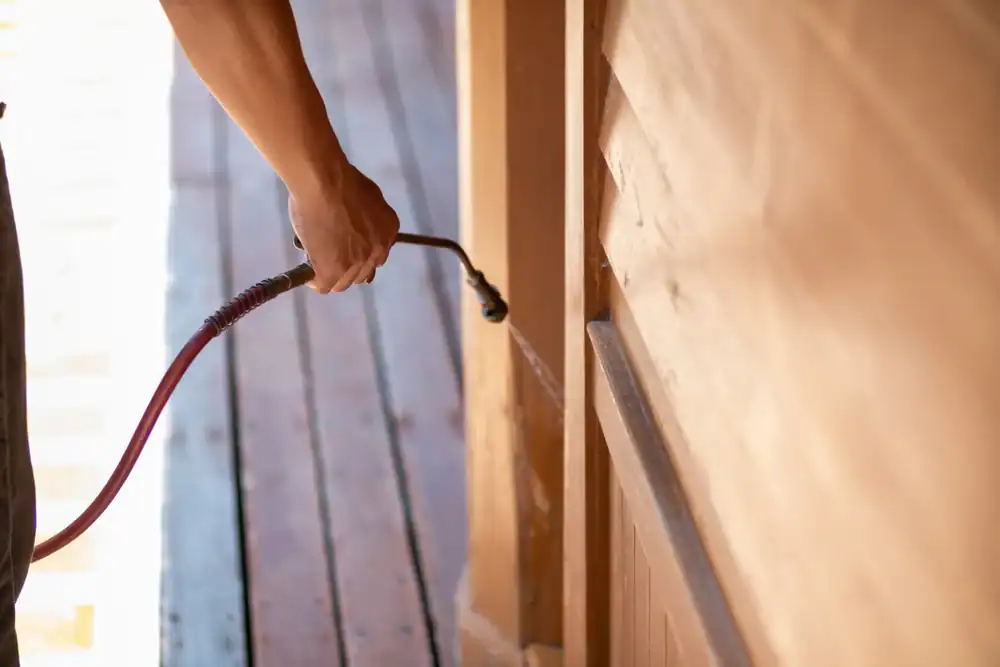
If you’ve never had a termite inspection n before, it’s easy to assume it’s just someone walking around your house for fifteen minutes and handing you a piece of paper. It’s not — or at least, it shouldn’t be. A proper inspection is methodical, takes time, and covers areas of your home most people never think about. Whether you’re buying a house in Spring Hill, you’ve spotted something that looked like a swarm near your roofline, or your lender is asking for a WDO report before closing, understanding what the process actually involves helps you know what you’re paying for — and whether the inspector you hired is doing the job right.
The short answer is: evidence. Termites rarely announce themselves. By the time you notice something obvious — a hollow-sounding baseboard, a pile of discarded wings near a window, a faint mud trail along your foundation — the colony has typically been active for years. We’re trained to find the early, subtle signs that most homeowners walk past every day without registering.
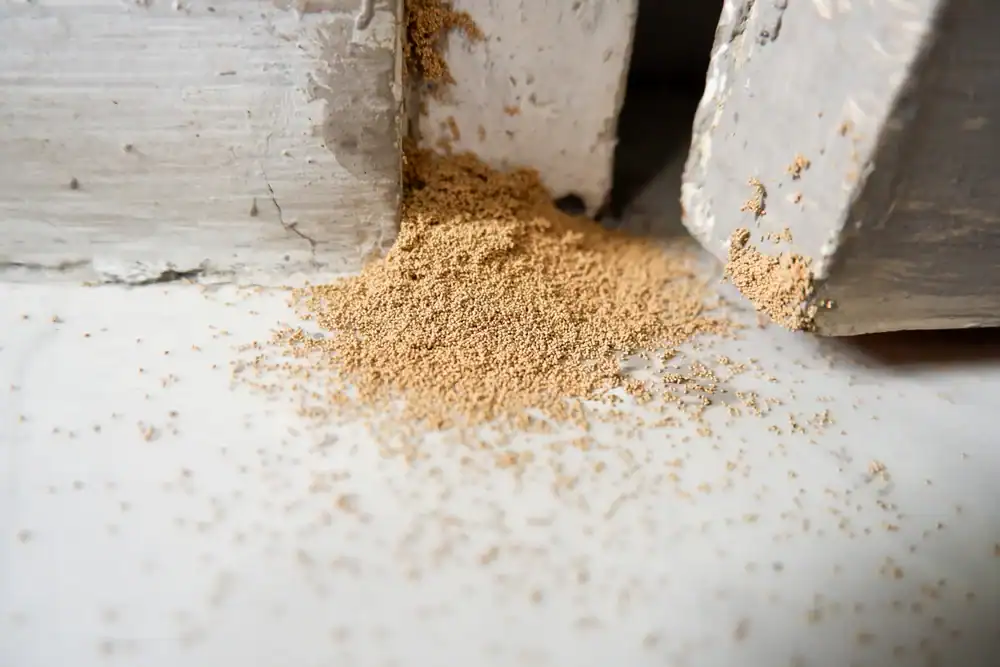
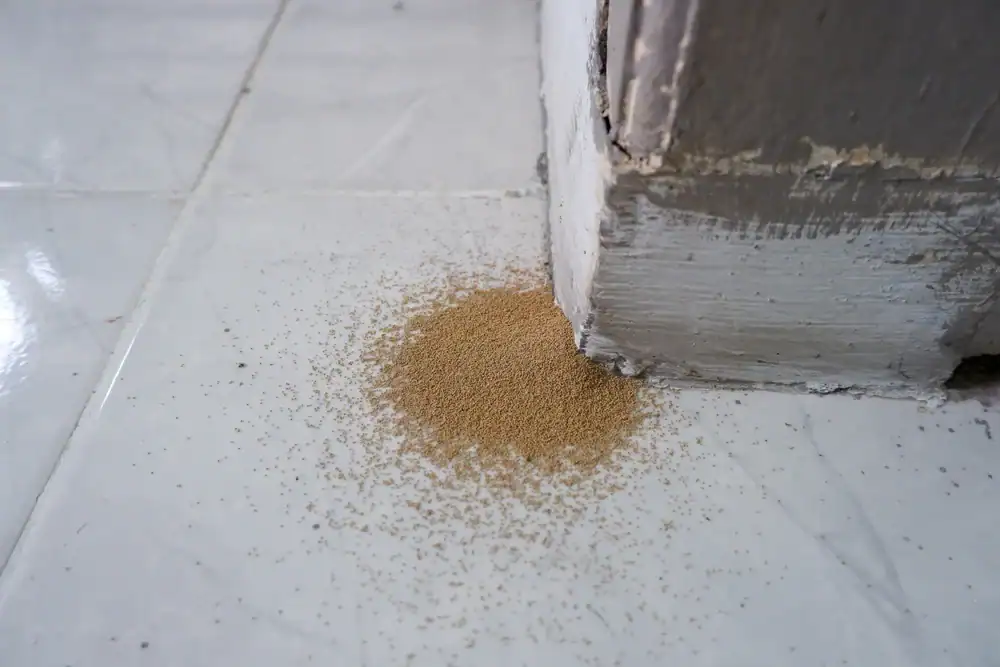
We look for mud tubes along your foundation walls, frass (which looks like fine sawdust or coffee grounds near wooden surfaces), exit holes in drywall or wood trim, and any wood that sounds hollow when tapped. We’re also checking for moisture damage, wood-to-soil contact around your home’s exterior, and conditions that make termite activity more likely — not just activity that’s already underway.
This is one of the most common points of confusion for homeowners in Hernando County, especially those relocating from other states. In Florida, the official inspection used for real estate transactions is called a Wood Destroying Organism inspection — a WDO inspection — and it’s broader than a basic termite check. It covers subterranean termites, drywood termites, wood-boring beetles, carpenter ants, and wood-decaying fungi. All of these fall under the category of organisms that can structurally compromise a home.
More importantly, a WDO inspection in Florida must be performed by a licensed pest professional — not a general home inspector. Home inspectors are not licensed under Florida law to diagnose WDO activity. That’s a separate credential, governed by Chapter 482 of the Florida Statutes and administered by the Florida Department of Agriculture and Consumer Services. If your home inspector offers to “check for termites” as part of their walkthrough, that’s not the same thing and it won’t satisfy your lender.
The official state document that results from a proper WDO inspection is the FDACS-13645 form — the Florida Statewide WDO Inspection Report. This is the form lenders, title companies, and realtors require. It notes active infestations, previous damage, and prior treatments. If the inspector you hired doesn’t issue this form, you haven’t received a compliant inspection, regardless of what they call it. That distinction matters a great deal when you’re trying to close on a home in Brooksville or Spring Hill and your lender is waiting on paperwork.
When we perform WDO inspections throughout Hernando County, we issue the official state form and work directly with your lender, realtor, or title company to make sure the documentation doesn’t hold up your closing. That’s not something every local company advertises, but it’s something that makes a real difference when timelines are tight.
Most people think of termite season as a spring thing. In a lot of the country, that’s roughly accurate. Hernando County is different. Our subtropical climate creates year-round termite activity, driven by overlapping swarming seasons from multiple species.
Eastern subterranean termites — the most common species in this area — typically swarm from November through May, with peak activity in the spring months. Drywood termites, which don’t need soil contact and can infest attic spaces, wall voids, and even furniture directly, swarm from late spring through early fall, with June through September being their most active window. When you add those two cycles together, there’s barely a month in Hernando County where at least one termite species isn’t actively swarming or establishing new colonies.
The conditions here make it worse than most places. The sandy, moisture-retaining soil common throughout Spring Hill creates ideal conditions for subterranean termites, which need consistent soil moisture to survive. The mature oak canopy in older neighborhoods — particularly in the areas developed during the Deltona Corporation era starting in the late 1960s — provides constant wood debris, mulch, and dead root systems that attract termite activity close to foundations. The Gulf of Mexico to the west keeps humidity levels elevated, which favors drywood termite pressure in coastal and near-coastal zones.
Florida is, by most measures, the most termite-active state in the country. It has both subterranean and drywood species operating simultaneously, which means an inspection here needs to account for both — not just the subterranean variety that most national content focuses on. A 15-minute walkthrough won’t cover that. A thorough inspection of an average-sized home should take at least 45 minutes, covering the foundation, all accessible crawlspaces, the attic, interior baseboards, garage framing, exterior siding, decks, and any wood-to-ground contact points around the property.
Want live answers?
Connect with a Around The Clock Pest Service expert for fast, friendly support.
Getting the inspection done is only part of the picture. What happens next depends entirely on what we find — and what you do with that information. A lot of homeowners assume that if they don’t see obvious signs of termites, they’re fine. That assumption is worth examining.
Termite colonies typically take more than five years to grow large enough to cause visible structural damage. That means an active infestation can be well underway long before you notice anything. The inspection isn’t just about what’s happening today — it’s about catching what’s been quietly developing for years before it becomes a structural repair bill.
This is one of the most important things Hernando County homeowners need to understand, and it’s one that catches people off guard. Standard homeowners insurance does not cover termite damage. Not under any major carrier — not Progressive, not Allstate, not State Farm, not USAA. There’s no endorsement you can add and no rider available to change that. Termite damage is considered a preventable maintenance issue, and insurance companies treat it accordingly.
That means every dollar of repair comes out of pocket. The average homeowner who discovers an active infestation spends around $3,000 on combined treatment and repairs. But that’s the average — structural beam replacement alone can run significantly higher, and full structural remediation on a heavily damaged home can reach into the tens of thousands.
The math on regular inspections is straightforward when you look at it that way. An annual professional inspection is a fraction of what even a modest repair costs. Catching an infestation early — when the colony is smaller and the damage is limited — means treatment is faster, less invasive, and considerably less expensive than addressing a long-established problem. For homeowners in Spring Hill’s older neighborhoods, where homes built in the 1970s and 1980s have had decades of potential exposure, that calculus is especially relevant.
If you’re buying a home in Hernando County and your lender isn’t requiring a WDO inspection, it’s still worth getting one independently. Sellers aren’t required to disclose termite history they’re unaware of, and a previous treatment that’s expired offers no ongoing protection. Knowing what you’re walking into before you close is far less stressful than discovering a problem after the fact.
Given how many military families live and buy homes in Hernando County — with MacDill Air Force Base being a major regional employer just south in Tampa — VA loan transactions make up a meaningful share of local home purchases. VA loans in Florida require Wood Destroying Organism documentation before closing. This isn’t optional, and it isn’t something your general home inspector can provide.
The WDO inspection for a VA loan has to be performed by a licensed pest professional who can issue the official FDACS-13645 form. As of 2022, VA borrowers are permitted to pay for their own inspections and any required repairs — a change that removed a previous restriction that had complicated some transactions. But the documentation requirement itself hasn’t changed, and lenders are strict about it.
Where buyers sometimes run into trouble is timing. They find a provider at the last minute, the inspector isn’t available quickly, or the report takes longer to process than expected — and suddenly the closing is in jeopardy. That’s why working with a local company that understands lender timelines matters as much as the inspection itself.
We’ve handled VA loan WDO inspections throughout Hernando County and work directly with lenders, realtors, and title companies to keep things moving. When you call us, you’re talking to the owner — not a call center — and we can usually give you a clear picture of availability and turnaround right on that first call. Same-day service is available when you reach us before noon, which matters when a closing date is already on the calendar and you’re working against the clock.
A termite inspection done properly is a thorough, methodical process — not a quick visual once-over. It covers both species active in this area, checks every accessible part of your home, and results in official state documentation that actually means something to lenders and title companies. In Hernando County, where the climate, soil conditions, and housing stock all create persistent termite pressure, it’s one of the more straightforward ways to protect what’s likely your largest asset.
If you have questions about what an inspection involves, what the WDO report covers, or what to expect if something is found, we’re happy to talk it through before you commit to anything. Around The Clock Pest Service serves all of Hernando County, and every call goes directly to the owner — no hold music, no call center, no runaround. Just a straight answer from someone who knows the area and will tell you honestly what you need.
Summary:
Article details:
Share: