
Fast, reliable pest control from Hernando County’s most trusted family-owned team—with most quotes given over the phone.
Contact Info
Fast, reliable pest control from Hernando County’s most trusted family-owned team—with most quotes given over the phone.
Contact Info
Most flea sprays only kill adult fleas—but eggs, larvae, and pupae hiding in your carpet are the real problem, especially in Florida's year-round humidity.

Fleas don’t just show up and bite. They go through four distinct life stages: egg, larva, pupa, and adult. Each stage behaves differently, hides in different places, and responds to treatment in different ways.
When you see a flea on your pet, that’s an adult. But adults only make up about 5% of the total flea population in your home. The other 95%? That’s eggs scattered across your carpet and furniture, larvae burrowed deep into fibers, and pupae wrapped in protective cocoons that can wait weeks—or even months—before hatching.
Female fleas lay their eggs directly on your pet, but those eggs don’t stay there. They’re smooth and round, so they roll off and drop into carpets, pet bedding, furniture, and any crack or crevice your pet spends time near. Within 12 days, those eggs hatch into larvae that avoid light and burrow deeper into your home. This is where Florida’s climate becomes a real problem.
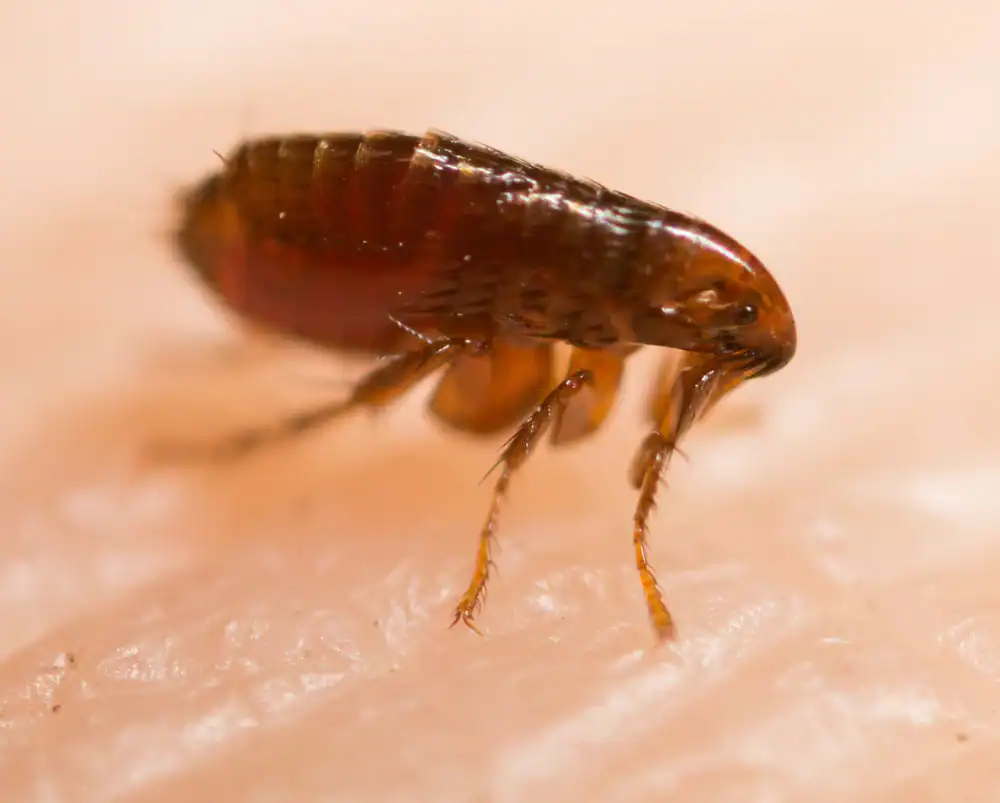
Fleas thrive in warm, humid environments. Ideal conditions? Temperatures between 70 and 85 degrees with humidity above 50%. Sound familiar? That’s Florida for most of the year.
In other parts of the country, winter slows fleas down. Cold, dry air kills larvae and forces fleas into dormancy. But in Pasco County and Hernando County, there’s no real winter break. Fleas stay active year-round, breeding and hatching continuously. Peak flea season technically runs from April through September, when hot, wet conditions favor egg-laying and hot, dry periods create maximum adult production. But even in the cooler months, Florida’s mild temperatures mean fleas never fully go away.
This creates a cycle that’s tough to break. You treat the fleas you see, but eggs are hatching in your carpet at the same time. Larvae are feeding on flea dirt and skin cells in the baseboards. Pupae are waiting in cocoons, protected from most treatments, until they sense vibration, warmth, or carbon dioxide—signals that a host is nearby. Then they emerge, and the cycle starts over.
High humidity also speeds up the flea life cycle. Pupae that might stay dormant for weeks in a drier climate can emerge in days when conditions are right. That’s why so many pet owners in Florida see fleas come back quickly after treatment, even when they’ve done everything the product label recommended.
If you’re dealing with what people sometimes call “sand fleas,” that’s usually just regular cat or dog fleas breeding outdoors in your yard. They’re not a different species—they’re the same fleas taking advantage of Florida’s outdoor environment. Shaded, moist areas like under porches, in mulch beds, or near shrubs are perfect breeding grounds. Your pet picks them up outside, brings them in, and the indoor cycle begins.
Walk into any pet store or hardware store and you’ll find shelves full of flea control products. Sprays, foggers, powders, shampoos, collars. They all promise fast results. Some of them even work—on adult fleas. But that’s where the effectiveness stops for most DIY treatments.
Store-bought flea sprays are designed to kill adult fleas on contact. They contain insecticides that work when they directly touch a flea. The problem? Adult fleas only represent about 5% of the flea population in your home. The other 95%—the eggs, larvae, and pupae—are either unaffected by the spray or completely protected from it.
Flea eggs are smooth and coated in a way that makes them resistant to many over-the-counter products. Even if the spray lands directly on them, it often won’t penetrate. Larvae burrow deep into carpet fibers, under furniture, and into cracks where spray mist doesn’t reach. And pupae? They’re inside sticky cocoons that act like a shield. Most store-bought products can’t touch them.
Flea bombs and foggers have their own set of problems. They release a cloud of insecticide into the air, which sounds like it should cover everything. But the mist rises and settles on surfaces—it doesn’t penetrate into the places where fleas actually live. Carpets, upholstery, pet bedding, and the spaces under and inside furniture are all areas where flea larvae and pupae hide. A fogger won’t reach them. Worse, the smell of the chemicals can actually drive fleas deeper into hiding, making the problem harder to solve.
Another issue with DIY treatments is concentration. Over-the-counter products are regulated differently than professional-grade treatments. The active ingredients are often present in lower concentrations to meet consumer safety standards. That’s not necessarily a bad thing for general use, but it does mean the products are less effective at killing fleas in all life stages, especially in a high-pressure environment like Florida where fleas are constantly reproducing.
Even when DIY products include an insect growth regulator—an ingredient designed to disrupt the flea life cycle—the formulation may not be strong enough or applied thoroughly enough to make a lasting difference. You might see a reduction in adult fleas for a few days, but if eggs are still hatching and larvae are still developing, you’re just buying time before the next wave hits.
There’s also the issue of reapplication. Many store-bought treatments require repeated use to be effective, but the instructions aren’t always clear about timing or coverage. If you miss a spot, or if you don’t treat often enough, fleas will rebound. And because most people don’t realize they need to treat the yard, the pet, and the indoor environment all at the same time, the cycle continues.
Want live answers?
Connect with a Around The Clock Pest Service expert for fast, friendly support.
a href=”https://aroundtheclockpests.com/services/flea-control/”>Professional flea control doesn’t just kill the fleas you see. It’s designed to break the reproductive cycle at every stage, using products and methods that aren’t available to consumers.
A professional treatment starts with an inspection. Not just a quick walkthrough, but a real assessment of where fleas are living, breeding, and hiding. That means checking carpets, furniture, pet bedding, baseboards, closets, and outdoor areas where your pet spends time. The goal is to identify every part of the infestation so nothing gets missed.
Once the inspection is done, treatment targets all four life stages. Adulticides kill the adult fleas on contact. Insect growth regulators prevent eggs and larvae from developing into biting adults. And because professionals use commercial-grade products with higher concentrations of active ingredients, the treatment reaches deeper into carpet fibers, cracks, and crevices where DIY sprays can’t go.

Even with professional treatment, flea control in Florida usually requires a follow-up visit. That’s not a sign that the first treatment didn’t work—it’s because of how the flea life cycle works.
Remember those pupae in cocoons? They’re nearly impossible to kill while they’re inside that protective casing. They can stay dormant for weeks, waiting for the right conditions to emerge. When they do, they’re adults, and they’re ready to start laying eggs. A follow-up treatment, typically scheduled 10 to 21 days after the first visit, targets those newly emerged adults before they have a chance to reproduce.
This two-step approach is what breaks the cycle. The first treatment knocks down the existing adult population and prevents eggs and larvae from maturing. The second treatment catches the stragglers—the pupae that survived the first round and have since hatched. Together, these treatments eliminate the infestation at its source.
In Florida, where humidity speeds up the flea life cycle, follow-up treatments are even more important. Fleas that might take weeks to emerge in a cooler, drier climate can hatch in days here. That’s why we include a free follow-up visit as part of our flea control service in Hernando County and Pasco County. It’s not an upsell—it’s a necessary part of getting the job done right.
Between treatments, there are things you can do to support the process. Vacuum daily, especially in areas where your pet rests. Vacuuming doesn’t just remove fleas—it stimulates pupae to emerge from their cocoons, making them vulnerable to treatment. Wash pet bedding, blankets, and any fabric your pet comes into contact with in hot water. Keep your yard maintained, especially shaded, damp areas where fleas breed outdoors.
But here’s the key: don’t retreat the problem yourself between professional visits. Layering store-bought products on top of professional treatments can reduce effectiveness, create chemical interactions, or expose your pets to unnecessary risk. Trust the process, follow the guidance your technician gives you, and let the treatments do their job.
One of the biggest concerns pet owners have about professional flea control is safety. You want the fleas gone, but not at the expense of your dog’s or cat’s health. That’s a fair concern, especially when you’ve seen warnings on store-bought products or heard stories about pets having reactions to flea treatments.
We use products that are specifically formulated to be effective against fleas while remaining safe for pets and families. These aren’t the same products you’ll find on a store shelf. They’re commercial-grade treatments that have been tested, approved, and used by licensed technicians who understand how to apply them correctly.
The difference comes down to precision. A professional knows how much product to use, where to apply it, and how long to wait before pets and people can safely re-enter treated areas. We also know which products are safe to use around cats, which are more sensitive to certain chemicals than dogs. For example, some ingredients that are perfectly safe for dogs—like permethrin—can be toxic to cats. We account for that and adjust the treatment plan accordingly.
Insect growth regulators, which are a key part of professional flea control, are considered one of the safest options available. They work by mimicking flea hormones, disrupting the development process so eggs and larvae can’t mature into adults. They don’t harm pets or people because they target biology that’s specific to insects. You won’t find these in most over-the-counter products, or if you do, they’re in much lower concentrations.
Another advantage of professional treatment is that it’s applied to the environment, not directly to your pet. Your veterinarian handles flea prevention for your pet—topical treatments, oral medications, or collars. We handle your home and yard. When both are done together, you get complete coverage without overexposing your pet to chemicals.
That said, you’ll still want to follow the technician’s instructions. Most treatments require pets to be out of the home for a few hours while products are applied and allowed to dry. Once everything is dry and the home has been ventilated, it’s safe for pets to return. We also offer eco-friendly or low-toxicity options for families who prefer a more natural approach. It’s worth asking about those options when you schedule your service.
The bottom line is this: professional flea control is designed with pet safety in mind. The products are stronger than what you’ll find in stores, but they’re also applied by people who are trained to use them safely. When you combine that with veterinary care for your pet, you get a solution that’s both effective and safe.
Flea control in Florida isn’t about finding a magic spray. It’s about understanding the problem, treating all four life stages, and staying consistent with prevention. DIY products have their place, but they’re not built to handle the kind of year-round flea pressure that comes with living in a humid, subtropical climate.
If you’ve been fighting fleas for weeks or months with store-bought treatments, it might be time to try a different approach. A professional flea exterminator targets the eggs, larvae, and pupae that DIY products miss, using commercial-grade treatments that are safe for pets and families. The service includes follow-up visits to catch newly hatched fleas before they start the cycle over again.
We work with families in Hernando County and Pasco County who are tired of dealing with fleas that won’t go away. Every treatment is tailored to your home, your pets, and your specific situation. If you’re ready to stop wasting money on products that don’t work and start solving the problem for real, reach out to us.
Summary:
Article details:
Share: