
Fast, reliable pest control from Hernando County’s most trusted family-owned team—with most quotes given over the phone.
Contact Info
Fast, reliable pest control from Hernando County’s most trusted family-owned team—with most quotes given over the phone.
Contact Info
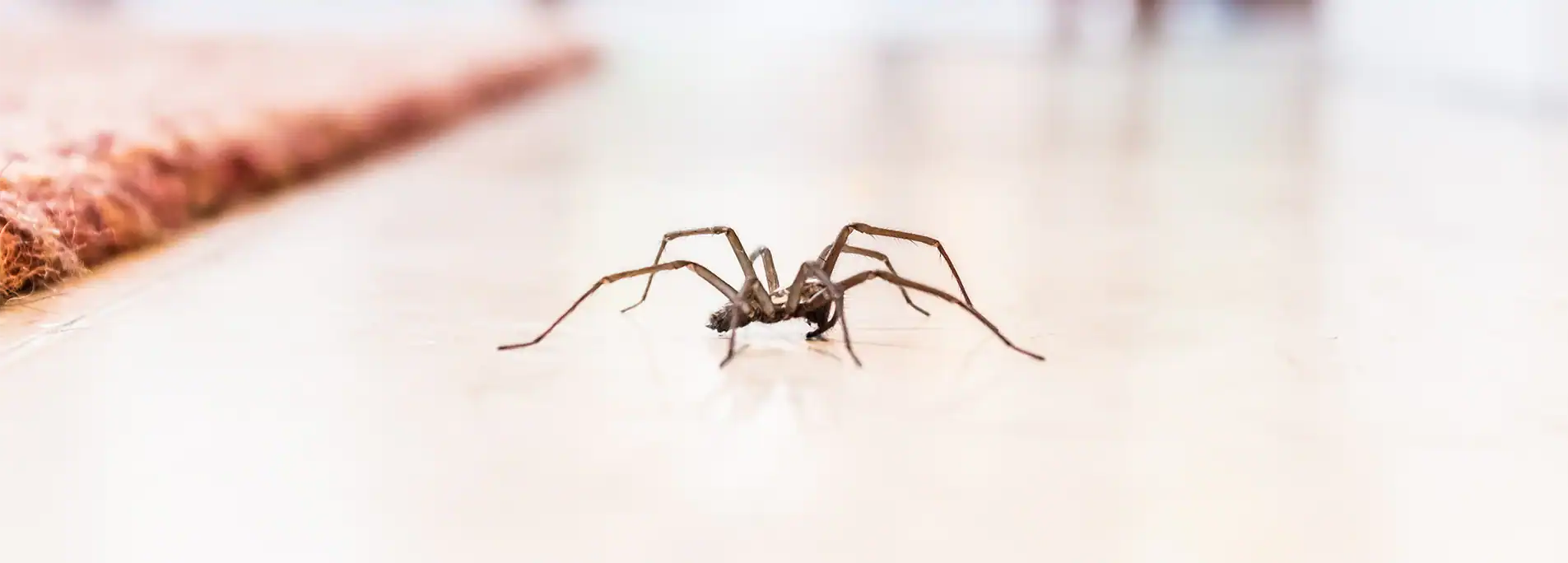
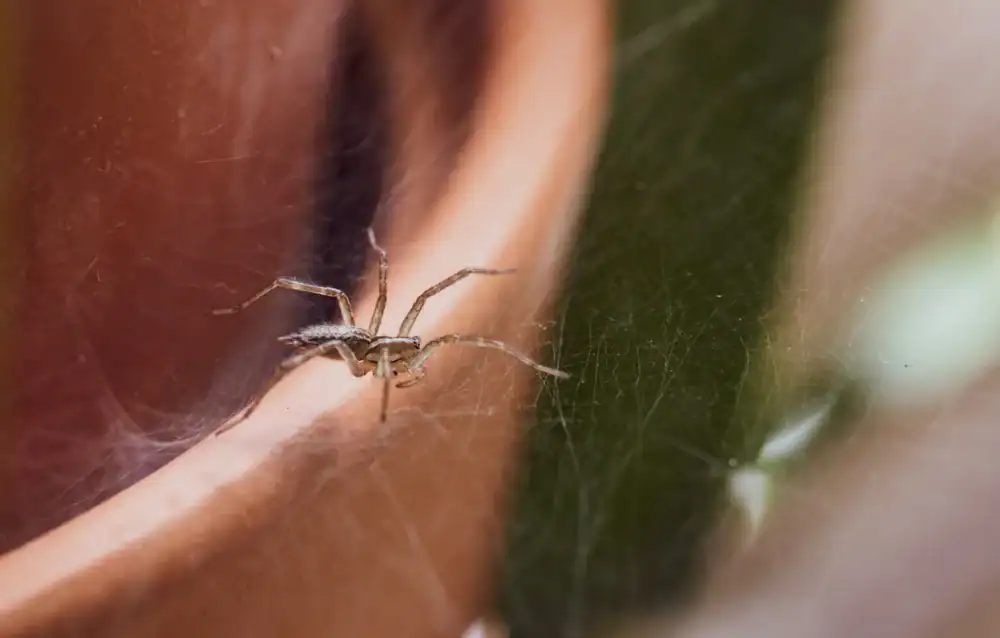
You stop finding webs every time you walk out to the lanai. You stop second-guessing whether that spider in the corner is something to worry about or not. That’s what a real treatment does — it removes what’s there and keeps new ones from moving in.
Spring Hill’s location along the Weeki Wachee corridor means homes on the western and northern edges of town sit right up against natural wooded habitat. Spiders follow their prey, and that prey follows the warmth and moisture that Florida’s Nature Coast produces all year long. If your home backs up to mature landscaping or sits near one of Hernando County’s wooded edges, you’re dealing with consistent pressure — not a one-time problem.
Older homes throughout Spring Hill’s established subdivisions — Forest Oaks, Berkeley Manor, and the neighborhoods built during the 1970s and 1980s boom — have had decades for gaps to form around utility lines, weatherstripping to wear down, and eaves to accumulate undisturbed web-building space. A thorough treatment addresses those entry points directly, not just the spiders you can already see.
Around The Clock Pest Service is a family-owned, owner-operated business serving Spring Hill, Hernando County, and the surrounding area. When you call, you reach the owner — the same licensed professional who holds FDACS license LF286842 and will be the one showing up at your door. There’s no call center, no rotating crew, and no one who doesn’t know the history of your home.
We carry BBB Accreditation and have earned a 5.0 rating across 109 Google reviews — a record built by real homeowners across Spring Hill, Timber Pines, and the broader Hernando County area. That kind of rating doesn’t happen by accident. It happens when someone answers the phone on a Saturday, gives you a straight quote, and actually follows through.
Special discounts are available for new homeowners and military families — two groups well-represented in Spring Hill’s growing and active community.

It starts with a phone call. Most quotes for spider control in Spring Hill are handled right over the phone — no in-home sales visit required, no pressure to commit before you know what you’re paying. You describe what you’re seeing, where you’re seeing it, and the owner walks you through what treatment makes sense for your specific situation.
When the visit happens, the first step is a thorough inspection of the areas where spiders are most active — eaves, screened lanais, garage interiors, exterior foundation lines, utility penetrations, and any landscaping close to the structure. In Spring Hill, that inspection often turns up more than the spider that triggered the call. Brown widows, in particular, tend to establish themselves in outdoor furniture, screen frame corners, and mailboxes — spots that don’t get checked until someone reaches in without looking.
Treatment includes physical de-webbing to remove existing webs, egg sacs, and debris, followed by a targeted barrier application around the exterior of the home. That barrier is what keeps new spiders from moving in after the initial treatment clears out what’s already there. For homes with consistent pressure from the surrounding natural areas — which describes a large portion of Spring Hill — a quarterly prevention schedule keeps that barrier active year-round.

Ready to get started?
Spider control in Spring Hill covers more than a spray around the perimeter. The service includes physical de-webbing of eaves, entry points, screened enclosures, and outdoor structures — because leaving webs in place signals to incoming spiders that the location is already established and suitable. Removing them, along with the egg sacs they contain, eliminates the habitat, not just the current occupant.
Venomous spider removal is handled with accurate species identification first. Both the black widow and the brown widow are confirmed present throughout Hernando County, and misidentifying one as harmless is a real risk. The brown widow has expanded significantly across Florida in recent years and is now commonly found in exactly the spots Spring Hill homeowners reach without thinking — patio furniture, pool screen frames, under eaves, inside mailboxes. Correct identification drives the treatment approach.
The outdoor spider barrier uses EPA-registered professional products applied around the foundation, windows, doors, and utility entry points. These are not the same products available at a hardware store, and the application technique matters as much as the product itself. For Spring Hill’s year-round subtropical climate — where there is no cold season to naturally suppress spider populations — quarterly retreatment keeps the barrier effective as it breaks down over time. Most homes in Spring Hill genuinely benefit from ongoing prevention, not just a one-time visit.
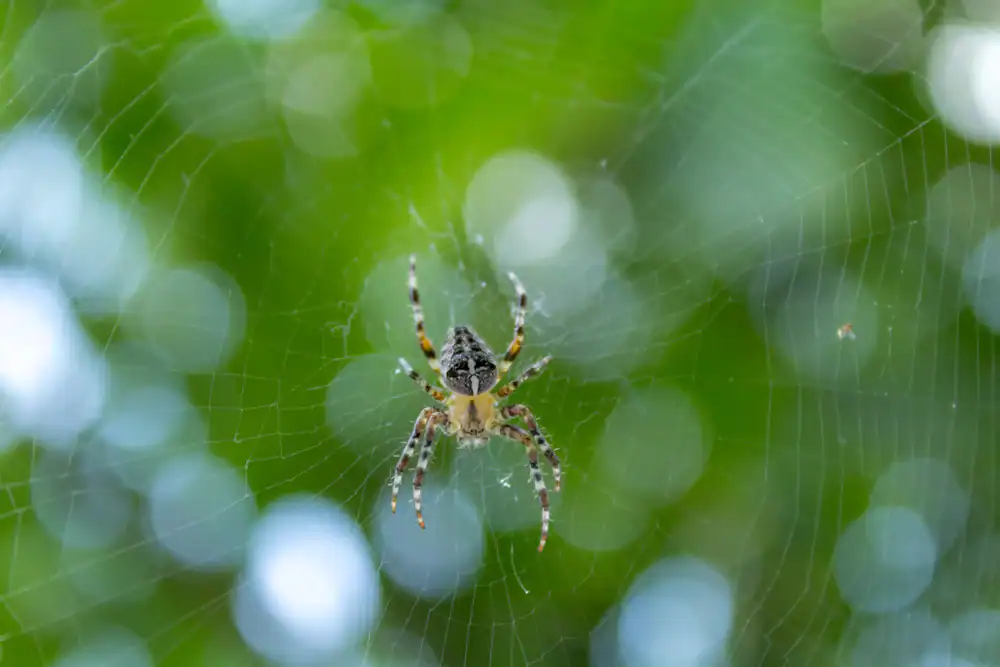
Both species are confirmed present in Hernando County and throughout the Spring Hill area. The black widow is the one most people recognize — shiny black body, red hourglass marking — and it tends to nest in dark, undisturbed spots like garage corners, wood piles, and the undersides of outdoor furniture. The brown widow is less well-known but has expanded aggressively across Florida over the past two decades and is now found regularly in residential areas throughout Spring Hill.
What makes the brown widow particularly relevant here is where it nests. It favors sheltered outdoor locations that homeowners interact with regularly — the underside of patio chairs, the corners of pool screen frames, inside mailboxes, under eaves near entry doors. It’s not hiding in a crawl space. It’s in the spots you reach into without looking first. Professional identification and targeted removal matters for both species, and both are reasons to take a spider problem seriously rather than assume it’s harmless.
The honest answer is that most spiders in a Spring Hill home are not medically significant — wolf spiders, orb weavers, cellar spiders, and jumping spiders are all common here and none of them pose a real threat to a healthy adult. The problem is that most homeowners aren’t confident in the identification, and that uncertainty is completely reasonable. A wolf spider is large, fast, and alarming-looking, even though it’s not dangerous. A brown widow is smaller and easy to overlook, but it is venomous.
The practical approach is to treat any spider you can’t confidently identify as something worth having looked at, especially if you’re seeing multiple spiders, finding egg sacs, or noticing activity near areas where children or elderly family members spend time. Spring Hill’s above-average senior population means a lot of households have residents who are more vulnerable to a venomous bite than a healthy adult would be. When in doubt, a professional inspection gives you a clear answer without guessing.
This is the most common frustration people call about. Store-bought sprays applied inside the home treat the symptom — the spiders already present — but they don’t address the reason spiders keep arriving. Spiders enter from outside. They follow insect prey populations, and they’re drawn to the warmth, moisture, and structural shelter that Spring Hill homes provide year-round. If the exterior entry points aren’t treated and the harborage conditions around the structure aren’t addressed, new spiders will continue moving in regardless of what you spray inside.
The other factor is that spiders don’t absorb chemicals the way crawling insects do. They walk on the tips of their legs, which limits contact with treated surfaces. A professional exterior barrier treatment, applied correctly around the foundation, eaves, and entry points, is structurally different from an indoor spray. It intercepts spiders before they enter rather than reacting to the ones that already have. That’s the difference between a short-term fix and an actual solution.
De-webbing is the physical removal of spider webs, egg sacs, shed skins, and the debris that accumulates in and around them — from eaves, screened enclosures, exterior light fixtures, window frames, and anywhere else spiders have established themselves. It’s not the same as knocking a web down with a broom, which leaves the anchor points, the egg sac if one is present, and the environmental signal that the spot is suitable for habitation.
Webs left in place — even partially — communicate to other spiders that a location is already established. New spiders arriving from the surrounding area will gravitate toward spots where prior occupants have been. In Spring Hill, where screened lanais and pool enclosures are nearly universal, web accumulation in screen corners and frame junctions is a persistent and highly visible issue. De-webbing as part of a full treatment removes the habitat signal, not just the current resident, which is why it’s included as a standard component of spider control rather than an optional add-on.
Spring Hill doesn’t have a spider off-season. Florida’s subtropical climate means spider populations stay active in every month of the year, and the warm, humid conditions along Hernando County’s Nature Coast corridor sustain the insect prey populations that spiders feed on regardless of the calendar. A single treatment provides meaningful immediate relief, but chemical barriers break down over time — typically within 60 to 90 days depending on weather exposure, rainfall, and the specific product used.
For most Spring Hill homes, a quarterly prevention schedule is the practical answer. It keeps the exterior barrier active, allows for early identification of new activity before it becomes a visible infestation, and addresses the seasonal peaks — spring when temperatures rise and prey populations expand, late summer when spider populations are at their most mature, and the fall months when spiders move toward structures as outdoor conditions shift. Homes near the Weeki Wachee corridor or adjacent to wooded areas in western Spring Hill tend to see higher consistent pressure and benefit the most from ongoing prevention rather than reactive one-time treatments.
Yes — new homeowners receive special pricing, and it applies for a straightforward reason. Spring Hill is actively growing, with new construction communities like Avalon West, Sterling Hill, and Seven Hills bringing in a steady stream of residents who are establishing their first local service relationships. A lot of those homeowners are discovering what was already living in their home — or what’s moving in from the surrounding natural areas — and they’re doing it without an established relationship with a local pest control provider yet.
The discount is a way of making that first step easier. It’s also available to military families, which reflects the values of a family-run business that has been serving Spring Hill and Hernando County directly — not through a franchise or call center. If you’ve recently purchased a home in Spring Hill and you’re dealing with spiders for the first time, or if you’re a military family looking for a reliable local provider, call and ask about current pricing. Most quotes are handled over the phone, so you’ll know what you’re looking at before anyone comes to your door.
Other Services we provide in Spring Hill