
Fast, reliable pest control from Hernando County’s most trusted family-owned team—with most quotes given over the phone.
Contact Info
Fast, reliable pest control from Hernando County’s most trusted family-owned team—with most quotes given over the phone.
Contact Info
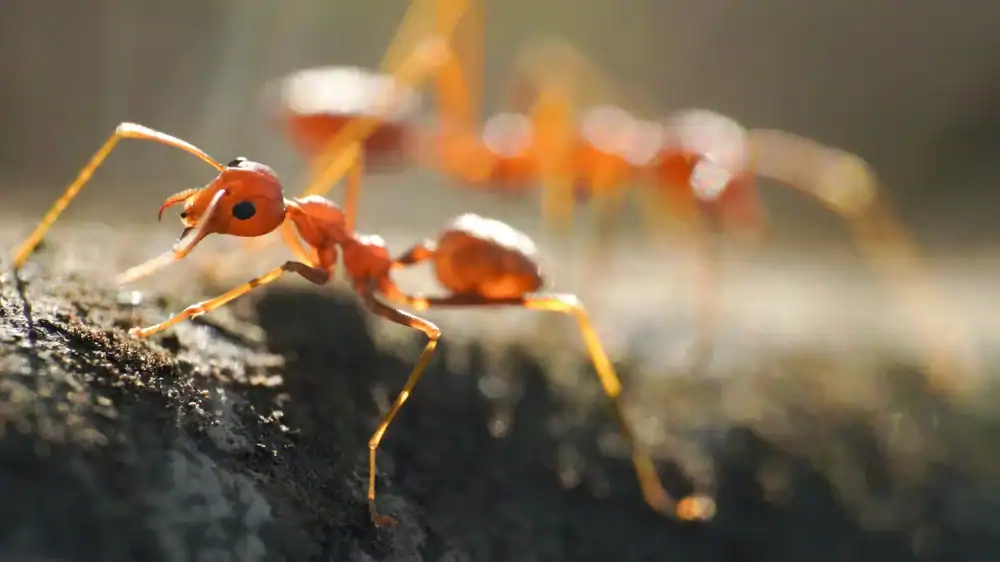
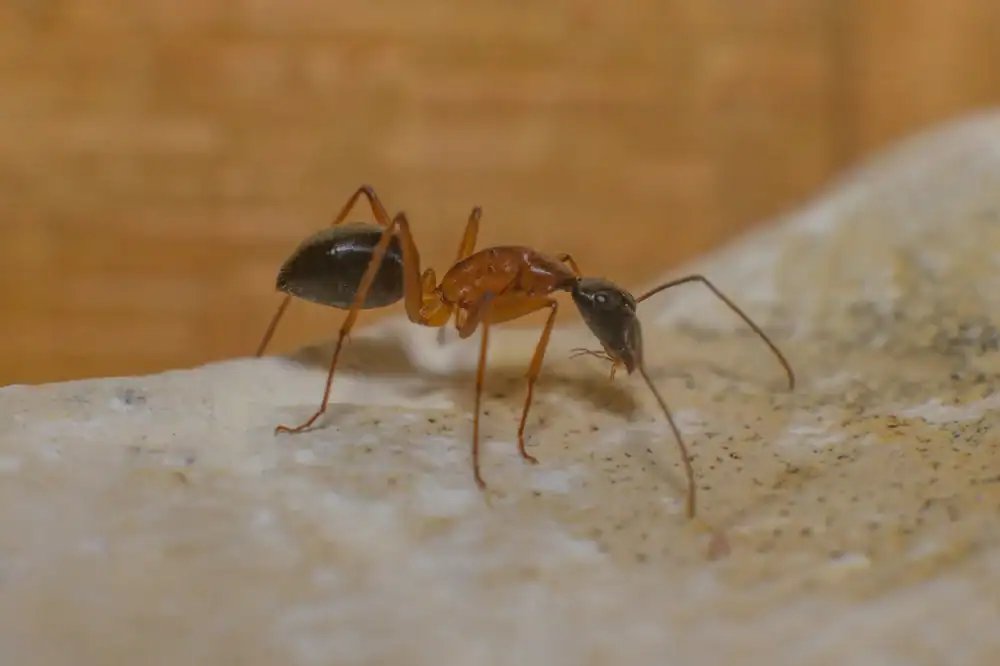
You stop finding trails across your kitchen counter at 7 a.m. You stop wondering whether that fire ant mound near the back fence is going to be a problem the next time your kids are outside. That’s the difference between a treatment that works and one that just moves the problem around — and in Ehren, that distinction matters more than most people realize.
Homes along Ehren Cutoff Road and inside communities like Wilderness Lake Preserve sit right up against conservation land and wetland buffers. That’s not a coincidence — it’s one of the reasons people choose to live here. But that same natural land is permanent ant habitat. Fire ant queens, ghost ant colonies, carpenter ants nesting in moisture-softened wood near the lake — they’re not passing through. They’re established, and they’ll keep pressing toward your home as long as the conditions favor it.
Effective ant colony elimination means the pressure stops at your perimeter, not inside your walls. When the right treatment is applied correctly — matched to the actual species in your home, not just whatever’s in the spray tank — you get real relief. Not a two-week reprieve. Not ants that relocated to your garage. Actual results that hold.
We’re family-owned and owner-operated, serving Pasco County and Hernando County with no franchises, no subcontractors, and no call centers between you and the person doing the work. When you call, the owner picks up. When the truck pulls into your driveway, it’s the same person you spoke with — someone who knows your property, knows the Ehren area, and is personally accountable for the outcome.
That matters in a community like Ehren. This isn’t a high-density suburb where any exterminator can roll through and apply a generic treatment. The conservation corridors along Ehren Cutoff, the spring-fed lake environment inside Wilderness Lake Preserve, the new construction soil disturbance pushing fire ant colonies into established yards — these are real, local conditions that require someone who actually knows what they’re looking at.
Over 100 verified five-star Google reviews from Hernando and Pasco County homeowners back that up. So does an A+ BBB rating and FDACS state certifications current through 2027. We offer discounts for military families and new homeowners — because a lot of the families moving into this part of Pasco County are discovering Florida’s ant pressure for the very first time, and that first experience should be a good one.

It starts with a phone call — not a scheduled in-home sales visit, not a form submission that goes into a queue. You describe what you’re seeing, where you’re seeing it, and how long it’s been going on. Most quotes are given right there on the phone, transparently, so you know what you’re committing to before anyone shows up.
When our technician arrives, the first step is identification. This is where a lot of DIY treatments and even some professional ones go sideways. Ghost ants and pharaoh ants — both extremely common in the humid, lake-adjacent environment around Wilderness Lake Preserve — will split into multiple satellite colonies if a repellent spray is applied incorrectly. The colony doesn’t die. It spreads. So before any product touches your property, the species is confirmed and the treatment is matched to it. Non-repellent bait systems for budding-prone species. Mound drenching or broadcast bait for fire ants. Targeted nest location and direct treatment for carpenter ants in moisture-affected wood.
After treatment, you’ll know what was done, why it was done that way, and what to watch for over the following days. For properties along the Ehren corridor that back up to conservation land or wetland buffers, a quarterly perimeter ant defense plan is often the most practical long-term approach — because the source of pressure doesn’t go away, and staying ahead of it is always easier than reacting to it.

Ready to get started?
Florida has more than a dozen commonly encountered pest ant species, and Pasco County’s inland, wetland-rich environment hosts a good portion of them. Our ant control services in Ehren are built around that reality — not a one-size treatment applied to every home on the route.
Fire ant mound treatment in Ehren targets the entire colony, including the queen, using either direct mound drenching or broadcast granular bait depending on the property layout and proximity to conservation land or water features. For homes in Wilderness Lake Preserve or along the Ehren Cutoff corridor with wetland buffers nearby, product selection accounts for FDACS guidelines on pesticide application near sensitive environmental areas — something our certified technician handles as a matter of standard practice, not an afterthought.
Ghost ant extermination relies on professional-grade non-repellent bait systems applied to active trails and entry points. Sugar ant prevention in kitchens — which in Florida almost always means ghost ants, pharaoh ants, or odorous house ants, not a species actually called “sugar ants” — focuses on eliminating the food and moisture sources driving indoor activity alongside the bait treatment itself. Carpenter ant removal starts with locating the nest, which in moisture-rich Ehren-area properties is often inside a wall void or exterior wood member near a water source. And for properties that face constant pressure from adjacent natural land, a recurring perimeter ant defense plan keeps the boundary treated before colonies get the chance to move in.
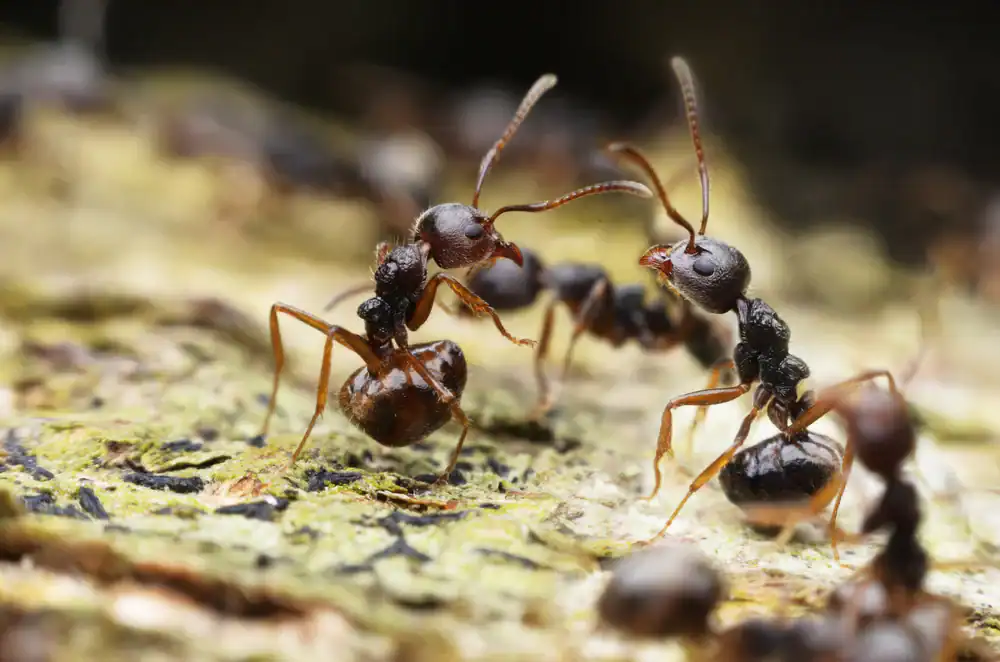
Rain disrupts ant activity in a pretty predictable way. When the ground saturates — which happens fast in south-central Pasco County during the summer rainy season — ants move. Fire ant colonies push upward and outward, which is why you’ll see fresh mounds appear almost overnight after a heavy storm. Ghost ants and other moisture-seeking species move indoors because their outdoor food and water sources have been flooded or disturbed.
For homes along the Ehren Cutoff corridor, this is especially pronounced because the natural land surrounding the area maintains established ant populations year-round. The rain doesn’t create the problem — it just triggers movement that was already going to happen eventually. If you’re seeing ants inside consistently after rain events, that’s a sign the exterior perimeter isn’t holding them back, and a professional treatment — not another round of store-bought spray — is the right next step.
Technically, there is no ant species in Florida called a “sugar ant.” That name gets applied loosely to any small ant found near food, but the species you’re almost certainly dealing with in an Ehren-area home are ghost ants, pharaoh ants, odorous house ants, or occasionally Argentine ants. Ghost ants are the most common in humid, lake-adjacent communities like those along the Ehren corridor — they’re tiny, pale, and trail along countertops, cabinet edges, and behind appliances.
The reason this distinction matters is treatment. Ghost ants and pharaoh ants are what pest control professionals call “budding” species. Apply a repellent spray to an active trail and the colony doesn’t die — it fractures into multiple satellite nests and spreads deeper into your home. That’s why professional indoor ant baiting with non-repellent products is the correct approach, and why a lot of DIY treatments and even some professional ones make the problem worse before it gets better. Knowing the species before treating isn’t optional — it’s the whole job.
This is a fair and important question, and the honest answer is: it depends entirely on who’s doing the treatment and what products they’re using. Our technicians hold active FDACS state certifications, which include training on pesticide application near wetlands, water features, and conservation easements — the exact conditions present in Wilderness Lake Preserve and other communities along the Ehren Cutoff corridor.
Product selection in these areas is deliberate. Certain granular bait formulations and non-repellent liquid treatments are appropriate for use near sensitive environmental zones; broadcast sprays and some residual products are not. A certified technician knows the difference and applies treatments accordingly. If you’ve been hesitant to call a pest control company because you’re concerned about the lake or the preserve buffer behind your property, that concern is valid — and it’s exactly the kind of question you should ask before anyone starts treating your yard.
New construction displaces fire ant colonies. When builders break ground — and Connerton has been actively expanding with the new Connerton Boulevard extension now connecting directly to Ehren Cutoff Road — the soil disturbance forces fire ant queens out of their existing locations. They relocate, and the nearest established property with good ground cover and minimal foot traffic is often where they land.
If you’ve noticed new mounds appearing in your yard since construction picked up nearby, that’s likely what’s happening. The mounds you’re seeing aren’t necessarily new colonies that appeared from nowhere — they’re relocated ones, and they’ll keep expanding if left alone. A single fire ant colony can exceed 250,000 individuals, and a queen that’s been displaced is actively looking to re-establish. Professional fire ant mound treatment that targets the queen — not just the surface activity — is the only way to stop that cycle before it gets worse.
It’s a common question, and the confusion is understandable — both can be in your walls, both can cause structural damage, and both can go unnoticed for a long time. The clearest visual distinction is the ant itself: carpenter ants are large, usually black or reddish-black, and you’ll sometimes see individual workers foraging at night. Termites are smaller, pale, and you’re more likely to see swarmers (winged reproductives) than workers.
The damage also looks different. Carpenter ants excavate smooth, clean galleries in wood — they don’t eat it, they hollow it out to nest. Termite damage tends to follow the grain of the wood and often has a muddy or layered appearance. In Ehren-area homes built near wetlands or with landscaping that holds ground moisture, carpenter ants are a real structural risk because they specifically target moisture-damaged wood. If you’re seeing large dark ants inside your home — especially near windows, door frames, or anywhere with a moisture history — that’s worth a professional inspection before the damage gets deeper.
Yes — and in this part of Pasco County, that discount exists for a reason that goes beyond a promotional offer. A significant number of families moving into communities like Wilderness Lake Preserve, Pristine Lake Preserve, and the newer sections of Connerton are purchasing their first Florida home. They’re coming from other states or other parts of the Tampa Bay area, and they’re often completely unprepared for what pest pressure looks like in a subtropical environment bordered by conservation land and wetlands.
The new homeowner discount is a way of starting that relationship on the right foot. You’re already dealing with the costs of a new home — the last thing you need is a pest control company that overcharges for a first visit and locks you into a contract you didn’t fully understand. The discount applies at initial service, quotes are given over the phone before anyone shows up, and there’s no pressure to commit to anything beyond what actually makes sense for your property. Military families also qualify for a separate discount — because that community deserves straightforward service without the runaround.